

How to Estimate Costs for Custom Kraft Labels by Run and Finish
As a custom merchandising consultant, I often see businesses get quotes for kraft labels that seem straightforward, only to face unexpected costs later. A low initial price can be tempting, but it often hides variables in finishing, adhesive performance, and print methods that determine the final landed cost and whether the label will even work for your product. Sourcing custom kraft labels without understanding these cost drivers is a significant risk that can lead to budget overruns or labels that fail in the field.
My name is Alin, and for the past 12 years, I’ve worked on the factory floor, helping brands navigate these exact challenges. The difference between a successful project and a costly mistake often comes down to asking the right questions before placing an order. This guide will break down the cost structure of kraft labels, show you which specifications materially affect your price, and help you compare supplier quotes with confidence.
Decoding Your Quote: A Landed-Cost Model for Kraft Labels
A comprehensive quote is more than a single unit price. It’s a transparent breakdown of every component that contributes to your final investment. When we build a quote, we follow a landed-cost model to ensure there are no surprises. Understanding this model helps you compare offers from different suppliers and identify where costs can be optimized.
Here’s a look at the key components that should be itemized in any professional quote:
| Cost Component | Description & Impact on Price | Example Scenario |
|---|---|---|
| Material Stock | The base cost of the kraft paper itself. Prices vary based on paper weight (GSM), texture (smooth, ribbed), and recycled content. Thicker or specialty stocks cost more per square meter. | A 70 GSM standard brown kraft paper is more affordable than a 90 GSM textured white kraft stock. |
| Printing & Ink | This includes the number of colors and the printing method. Digital printing (like our HP presses) has minimal setup costs, making it ideal for smaller runs. Offset printing has higher initial plate fees but a lower per-unit cost on large orders (typically 1,000+ units). | A one-color black print is the most cost-effective. A full-color design with a white ink underbase will be more expensive due to ink consumption and complexity. |
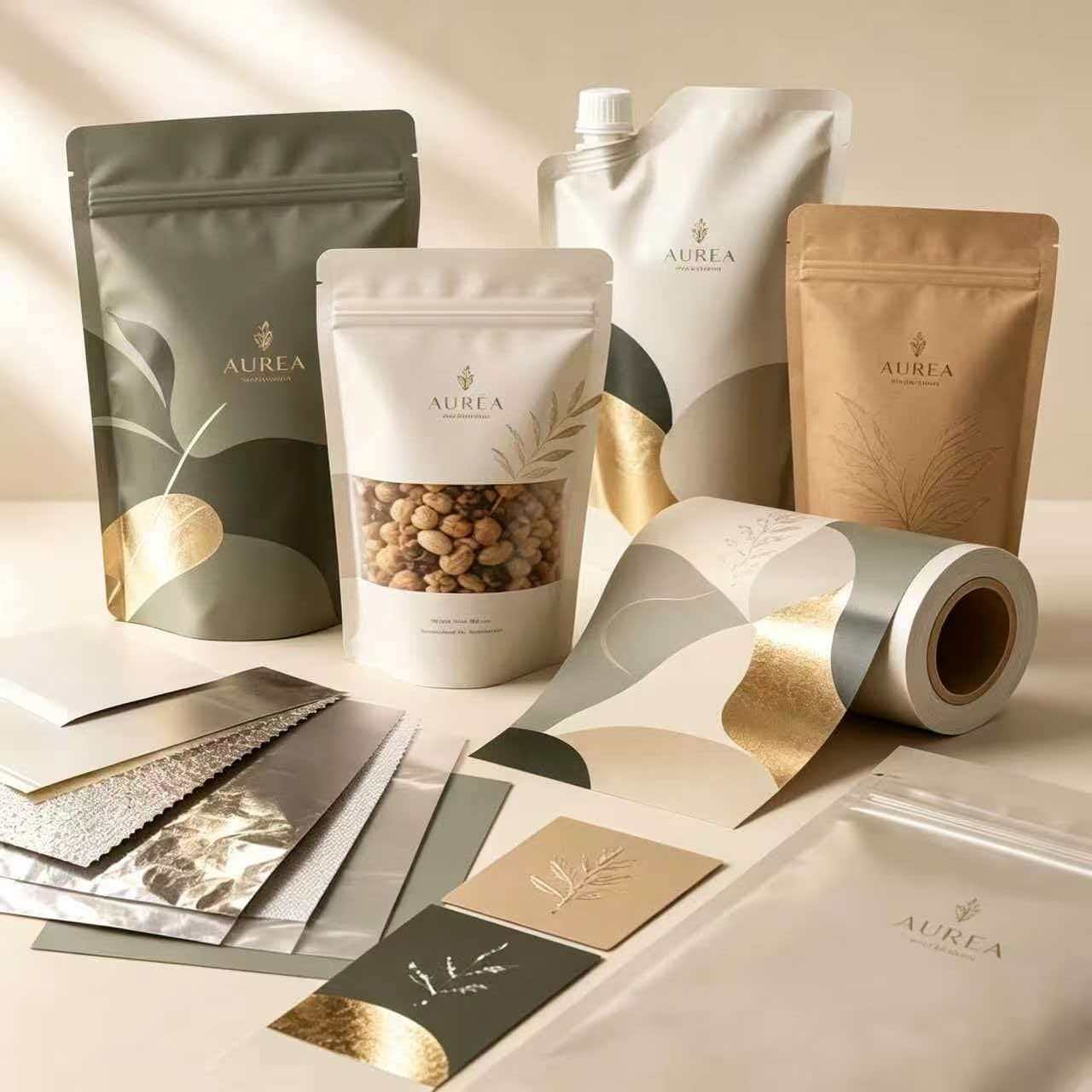
| Finishing & Lamination | Optional processes that add durability and aesthetic appeal. This includes matte/gloss BOPP lamination, custom foil stamping, or embossing. Each finish adds a separate process and cost per label. | Adding gold foil stamping to a logo can increase the unit cost but significantly enhances shelf appeal, as we’ve done for health supplement brands in Australia. |
| Format & Cutting | The final format of your labels—on rolls, sheets, or as individual die-cut pieces. Rolls are standard for machine application. Custom die-cut shapes require a unique cutting tool, which adds a one-time setup fee. | Standard circle or rectangle labels are cheaper to produce than a complex, custom-shaped logo label. |
| Setup & Tooling | One-time fees associated with preparing your job for production. This mainly applies to offset printing (plate fees) and custom die-cutting (die tool fees). Digital printing typically has no setup fees. | For a 10,000-label offset order, a $150 plate charge is spread thin, but for a 1,000-unit order, it represents a larger portion of the cost. |
| Shipping & Freight | The cost to deliver the final product to your facility. This can vary by weight, volume, and destination. We simplify this by offering Free Shipping on our orders. | A large, heavy shipment of label rolls will have a higher freight cost than a small box of sheeted labels. |
Key Specifications That Impact Your Kraft Label Price
Beyond the high-level cost model, specific technical choices will directly influence your final quote. Selecting the right options for your application is critical for balancing budget with performance. Here are the primary specifications you’ll need to define.
Paper Stock and Adhesive
The core of your label is the paper and its adhesive. Kraft paper’s natural, fibrous look is its main appeal, but not all kraft stock is the same.
- Paper Weight: Measured in GSM (grams per square meter), this affects the label’s rigidity and feel. A higher GSM feels more premium but costs more.
- Paper Color/Texture: Options range from standard brown to off-white, with smooth or slightly textured surfaces. The base color will affect how your printed colors appear.
- Adhesive Type: This is a non-negotiable performance factor. A standard permanent adhesive is fine for dry goods packaging like custom coffee labels. However, for products exposed to moisture or temperature changes, you’ll need a specialized adhesive (e.g., freezer-grade, removable) to prevent peeling—a common failure point I’ve seen countless times.
Printing Method: Digital vs. Offset
Our 8,000 m² ISO 9001:2015 certified facility is equipped for both digital and offset production, allowing us to match the right technology to your project’s needs.
- Digital Printing (HP Indigo): We operate 6 HP digital presses, making this our go-to for most jobs. It’s perfect for orders with no minimum quantity, designs with many colors, or variable data. The per-label cost is higher than offset at massive volumes, but the absence of plate fees makes it economical for small-to-medium runs. It also allows for a fast sample lead time of just 3 days.
- Offset Printing: This traditional method is the workhorse for high-volume orders (our MOQ is 1,000 units). While it involves initial setup costs for creating printing plates, the per-unit price drops significantly as the quantity increases. It’s best for static designs running in the tens or hundreds of thousands.
Finishes and Embellishments
Finishes protect the print and elevate your brand. While they add to the cost, they also add perceived value. Options for printed kraft labels include:
- Lamination: A thin layer of BOPP film (matte or gloss) is applied over the label. This protects the ink from scuffing and moisture, making the label more durable.
- Foil Stamping: A metallic or pigmented foil is applied to specific areas of your design using heat and pressure. We offer a wide range of custom foil colors beyond the standard gold and silver.
- Varnish: A clear coating that can be applied to the entire label (flood varnish) or specific areas (spot varnish) to add sheen and minor protection.
Common Sourcing Mistakes and How to Avoid Them
Over my career, I’ve seen brands make the same preventable mistakes when ordering labels. These errors often stem from focusing solely on the lowest unit price without considering the application. Here are four common pitfalls and how our process helps you avoid them.
-
Choosing the Wrong Adhesive: A client once ordered 20,000 labels for a refrigerated food product with a standard adhesive. They peeled off within days in cold storage due to condensation.
Solution: Always specify the product’s end-use environment. For cold or damp conditions, a high-tack or freezer-grade adhesive is necessary. We guide you through this selection process to ensure your labels adhere properly throughout the product lifecycle. This is especially important for oil & waterproof labels for bottles & cosmetics, where performance is key. -
Ignoring the Impact of Kraft Paper on Colors: The natural brown color of kraft stock acts like a filter, altering the appearance of inks printed directly on it. Lighter colors can look muted or “dirty.”
Solution: For designs requiring bright or precise brand colors, we print a layer of opaque white ink first and then print the colors on top of it. This underbase ensures color accuracy and vibrancy. Our color mismatch free reprint guarantee gives you peace of mind. -
Paying for the Wrong Print Method: Ordering a small batch of 500 labels using offset printing results in high setup fees that inflate the unit cost. Conversely, ordering 200,000 labels via digital printing is inefficient.
Solution: We analyze your order volume and design to select the most cost-effective method. For small runs, our no-MOQ digital printing is perfect. For bulk orders, we leverage offset to lower your per-unit cost. Our daily capacity of over 1,000,000 labels ensures we can scale with your needs. -
Submitting Low-Resolution Artwork: Providing a 72 dpi jpeg for a label design will result in a blurry, unprofessional final product.
Solution: We require vector artwork (AI, EPS, PDF) for the sharpest results. If you don’t have it, our Free Design Assistance service can help recreate your logo or design in a print-ready format, and we always provide a digital sample for your approval before full production begins.
Our Production Capabilities and Quality Guarantees
When you partner with us, you’re working directly with a manufacturer committed to quality and transparency. Our Disney FAMA and ISO 9001:2015 certifications are not just badges; they are integrated into our daily operations across our 6 production lines.
We solve common industry problems head-on. If you’ve ever dealt with labels where the white ink wasn’t opaque enough on a clear or dark substrate, or colors didn’t match your brand guidelines, you’ll appreciate our quality-first approach. We stand by our work with concrete guarantees:
- Color Mismatch Free Reprint: If the final product doesn’t match the approved proof, we’ll reprint it at no cost.
- Proportional Defect Replacement: We provide proportional replacements for any verified defects, ensuring you get exactly what you paid for.
- Photo & Digital Sample Confirmation: You see and approve a digital representation of your label before we start the 8-9 day bulk production run. No surprises.
- 100 Bonus Pieces: We include 100 extra labels with every bulk order, giving you a buffer for application or promotional use.
This commitment to quality is why brands from the United States to Australia trust us for their premium product labels on rolls. We combine advanced technology with hands-on expertise to deliver labels that perform reliably and represent your brand perfectly.
To receive an itemized quote that reflects the true cost of your project, send our team your design files and specifications. We’ll provide a transparent breakdown and expert recommendations.