

How to Prepare Your Artwork for a Custom Pin Order?
The Design That Looks Great on Screen Might Fail in Metal
You have probably spent hours perfecting a design on your computer. The colours are exactly right. The lines are crisp. The typography is flawless. And if you are honest, you assume it will look exactly the same when it comes back as a finished pin. Nobody mentions that part when they talk about custom pins.
But here is what nobody tells you either: a design that looks perfect on a screen can fail completely in production. Colours shift. Fine lines disappear. Small text becomes unreadable. Gradients turn into muddy patches. The gap between what you see on a monitor and what comes out of a mould is wider than most people expect.
The brands actually getting great results from custom lapel pins this year are not sending rough sketches and hoping for the best. They are preparing their artwork properly before they place an order. That single step is the difference between a pin people keep and a pin people forget.
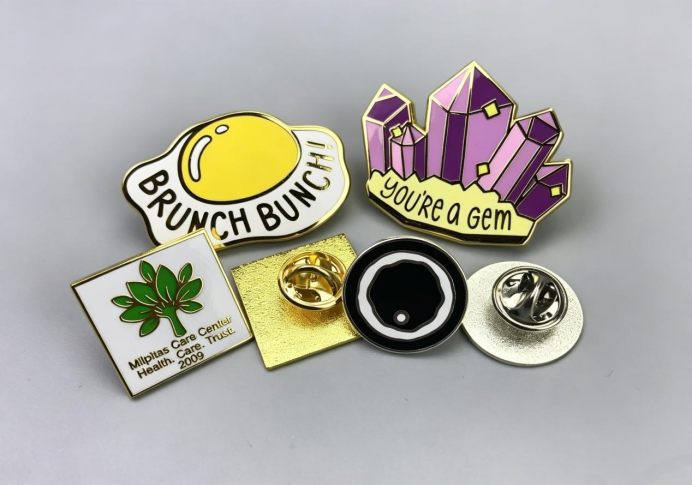
Why Vector Files Are Non-Negotiable?
The most important decision you will make in preparing your artwork is choosing the right file format. Vector files in formats like AI, EPS or PDF are absolutely essential for anyone serious about quality work. These files maintain their sharpness no matter how much they are scaled because they are based on mathematical equations rather than pixels.
Raster images such as JPGs, PNGs or PSDs tend to get blurry around the edges and cause alignment problems when creating those metal screens used in the plating process. The result is pins that look less professional and might not meet expectations.
Think of it this way: a vector file describes a shape mathematically. A circle is defined by its centre point and radius. A raster file describes a shape pixel by pixel. When you scale a vector file up, it stays sharp. When you scale a raster file up, it becomes blocky and pixelated. For custom pins, which are often scaled down from a large design to a small finished product, that difference matters enormously.
If you only have a raster file, do not panic. Most reputable manufacturers can convert your artwork into a production-ready vector file. However, the conversion process can introduce errors, especially with complex designs. The best results always come from starting with a vector file from the beginning.
Colour: What You See Is Not What You Get
Colour is where most artwork preparations go wrong. The colours you see on your screen are generated by light. The colours on a finished pin are created by physical pigments mixed into enamel and applied to metal. These are entirely different processes, and they produce different results.
Use Pantone Colours, Not RGB or CMYK
Screen-based RGB values misrepresent how pigments interact with metal substrates. When it comes to getting colours right, go with actual Pantone Matching System codes instead of relying on CMYK estimates or RGB samples. Enamel pigments get mixed in physical batches, so using PMS gives much better consistency.
For the most accurate colour matching, use the Pantone Solid Coated guide. Clearly indicate which areas of your designs you would like to be coloured by using the correct colour values when creating your artwork.
Gradients Do Not Work in Enamel
Traditional hard and soft enamel pins do not support true gradient colours because each colour area must be separated by a metal line. Enamel is a physical material that is poured into recessed areas. It cannot transition smoothly from one colour to another like ink on paper.
Replace gradients with flat, contiguous colour blocks. If your design absolutely needs a gradient effect, offset printing is an alternative. But for standard enamel pins, solid colours are the only option.
Limit Your Colour Palette
Restrict palettes to 6-8 solid Pantone colours for cost-effective production. Each additional colour adds cost and complexity to the manufacturing process. A limited palette also tends to look cleaner and more professional on a finished pin.
Line Thickness: The Rule That Makes or Breaks Your Design
This is the single most common mistake in pin artwork preparation. Designers create thin, elegant lines on screen. Those lines are too thin to survive the manufacturing process.
Minimum Metal Line Thickness
Metal lines must be carefully controlled, typically between 0.2-0.3mm. These lines are engraved directly into the mould, and if the dimensions are incorrect, several issues can occur in the finished pins.
The minimum thickness depends on the pin type. For soft enamel, the metal lines in your design must be at least 0.2mm thick. For hard enamel, 0.15mm is acceptable. Some manufacturers recommend maintaining 0.15mm metal barriers between colours to prevent enamel bleeding during filling.
Minimum Colour Areas
It is not just lines that have minimum sizes. You need to avoid tiny colours. The smallest area for enamel colour is around 0.3-0.4mm. Any smaller than that, and the enamel will not fill properly or will bleed into adjacent areas.
Eliminate Micro-Details
Eliminate any element thinner than 0.15mm, including hairlines, subtle textures, or facial contours. Simplify rather than shrink. What looks like a subtle detail on a large screen will simply disappear when the design is reduced to pin size.
Text: Keep It Bold and Legible
Text on a custom pin requires special attention. The smallest text recommended for enamel pins is 5pt, based on a plain font like Helvetica. More complex fonts will require a larger font size.
Any raised metal areas of text should be no thinner than 0.2mm and should contain no recessed areas of colour smaller than 0.3mm. All text must be converted to outlines. This ensures that your chosen font will be preserved exactly as designed, regardless of whether the manufacturer has that font installed.
Use sans-serif fonts at 8pt minimum, and avoid intricate scripts or thin strokes that vanish at scale. Bold, simple fonts are almost always the better choice for custom pins. The extra weight ensures the text remains readable after the design is stamped into metal.
Closed Shapes and Clean Layers
Every area you want to fill with colour must be enclosed by metal lines. Enamel is a liquid that is poured into recessed areas. If an area is not fully enclosed, the enamel will flow out and ruin the design.
Keep all colours separated into their own layers or objects within the file. This makes the metal die cutting process much cleaner and allows for individual enamel fills. Organised files also make it easier for the manufacturer to understand your design intent and catch potential issues before production.
The Mistake That Wrecks a Pin Order Before It Starts
The “It Looks Fine on My Screen” Trap
Someone spends days perfecting a design on screen, sends the file to a manufacturer, and three weeks later gets pins where the colours are wrong, the text is unreadable, and the fine details have vanished. What happened is that they never considered how their design would translate to metal and enamel. A cool design is not necessarily the same as being ready for production.
What a Real Manufacturer Gives You
A real pin manufacturer can review your artwork before production starts, point out potential issues, and suggest fixes. They understand the technical requirements that most designers do not know about. They can tell you whether your lines are thick enough, whether your text is readable, and whether your colours will work in enamel.
Before placing an order, ask straight up: Can you review my artwork before production? What issues do you see? What adjustments do you recommend? That conversation saves more trouble than any design tweak ever will.
Why Choose Custom Panda for Your Custom Pin Artwork?
Getting your artwork right is half the battle. The other half is finding a manufacturer who understands that great pins start with great artwork preparation. Custom Panda brings over 15 years of expertise to the custom pin industry. We combine premium materials, expert craftsmanship, and flexible service to bring your vision to life.
Beyond custom pins, our core product lines also include custom patches (embroidered, chenille, PVC, leather, and more), and custom labels:making us your comprehensive partner for all garment identification and branding needs.
We run our own production facility. That means when you talk to us about your pin design, you are talking directly to the people who will actually make it. Not a middleman who forwards your order and marks up the price. Just the people who understand that the difference between a great pin and a mediocre one often comes down to the artwork preparation.
Here is what you get when you choose us:
Free Design Proof Within 12 Hours:You do not need to be a designer to work with us. Share your rough idea, logo, or sketch, and our team will turn it into a professional digital proof. No obligation. No hidden fees. We review your artwork for production viability and make adjustments as needed before any metal is cut.
Artwork Review and Optimisation:Our team reviews every artwork submission for common issues: line thickness, text legibility, colour accuracy, and file format. We catch problems before they become production problems. If your design needs adjustment, we tell you. If a colour is not going to work, we suggest an alternative.
No Minimum Order: Whether you need 50 pins for a small project or 50,000 for a global campaign, we accept orders of any size. Small brands deserve the same quality as large ones.
Fast Production:Once you approve the proof, production takes just 2 to 3 days. Samples are ready in 3 to 5 working days, with worldwide delivery in 5 to 7 days.
Factory Direct Pricing:As a direct manufacturer, we eliminate middlemen to deliver premium quality at the best price.
Real People Who Actually Answer:We do not have a script. You send us a message, you get a human who knows what they are talking about and actually cares whether your order turns out right. The one who answered your email within an hour. The one who caught that tiny issue in your artwork before it went into production. That is who we are.
At the end of the day, we are not trying to be the biggest. We are trying to be the one you actually remember. The one who helped you turn your artwork into a pin that people actually keep. Send us your artwork today, and let us show you what proper preparation looks like.
FAQs
Q:What file format should I submit for my custom pin artwork?
Vector files like AI, EPS, or PDF are the preferred formats. They maintain sharpness at any size and ensure accurate reproduction. If you only have a raster file like JPG or PNG, most manufacturers can convert it, but starting with a vector file gives the best results.
Q:What is the minimum line thickness for custom pins?
The minimum metal line thickness is typically 0.2mm for soft enamel and 0.15mm for hard enamel. Lines thinner than this may not survive the manufacturing process.
Q:Can I use gradients in my enamel pin design?
No. Traditional hard and soft enamel pins do not support true gradient colours because each colour area must be separated by a metal line. Replace gradients with flat, solid colour blocks.
Q:How many colours can I use in a custom pin design?
For cost-effective production, limit your palette to 6-8 solid Pantone colours. Each additional colour adds cost and complexity to the manufacturing process.
Q:How small can text be on a custom pin?
The minimum recommended text size is 5pt for a plain font like Helvetica. More complex fonts will require a larger size. All text must be converted to outlines.
Q:Do I need to be a designer to submit artwork?
No. You can share a rough sketch, logo, or even a clear description of your idea. Most manufacturers offer free design assistance to turn your concept into a professional proof.
Q:Can I get a sample before placing a bulk order?
Yes. Most reputable manufacturers offer sample production so you can inspect quality, colour accuracy, and finish before committing to a full order.
Q:Do you ship custom pins internationally?
Yes. Custom Panda ships worldwide via DHL, FedEx, and UPS with door-to-door tracking and customs assistance.