

How to Proof Custom Business Labels Before You Print
Placing a bulk order for Custom Business Labels only to find a typo, a non-scanning barcode, or the wrong adhesive is a nightmare. It wastes your budget, delays product launches, and forces costly reprints. After 12 years on the factory floor, I’ve seen these preventable mistakes happen far too often. The single most effective way to avoid them is a meticulous pre-production proofing process. It’s the final firewall between your design concept and thousands of finished labels.
Approving a digital proof is more than just a quick glance. It’s a formal agreement that the artwork is ready for production. This guide outlines a professional framework for reviewing your label proofs to ensure what you approve is exactly what you get. We'll cover the technical checks that protect your investment and brand integrity, from bleed margins to barcode readability.
The Pre-Production Proofing Framework That Prevents Errors
A digital proof is your last chance to catch issues before we commit your design to our HP digital presses. At Custom Panda, our free design assistance includes creating a production-ready proof, but the final approval rests with you. Here is a five-point checklist to review every time you receive a proof for your labels.

- Bleed and Safety Margins: The bleed is extra artwork (usually 1/8 inch or 3mm) that extends beyond the label’s final trim edge. This ensures there are no unprinted white slivers if the cutting machine has a minor shift. The safety margin is an inner boundary to keep important text and logos from being cut off. Your Action: Confirm all background colors and images extend to the bleed line, and all critical elements are within the safety line.
- Barcode and QR Code Readability: A non-scannable barcode is useless. For reliable scanning, check for high contrast (black on white is best), ensure it meets minimum size requirements for your scanner type, and verify there is a "quiet zone" of empty space around it. Your Action: If possible, print the proof at 100% scale and test the barcode with a scanner app on your phone. Question any codes that appear blurry or too small.
- Color Tolerance (CMYK vs. Pantone): Your computer screen displays color in RGB, but we print in CMYK. This can cause slight color shifts. A digital proof gives a close approximation, but it cannot perfectly replicate the final printed color. For precise brand color matching, providing a Pantone (PMS) code is the best method. Your Action: Review the CMYK values on the proof. If color accuracy is paramount, request a physical sample. Our policy includes a free reprint for significant color mismatches against an approved proof.
- Adhesive Selection: The wrong adhesive causes label failure. Will your product be refrigerated, frozen, or exposed to heat and moisture? For example, a standard adhesive can fail in cold storage due to condensation. Your Action: The proof should specify the material and adhesive type. Verify that it matches your application. If you’re labeling for cold chain logistics, you need freezer grade food labels with an aggressive, cold-tolerant adhesive.
- Final Approval Responsibility: Signing off on a proof confirms you have checked all text for spelling and grammar, verified all graphics and layouts, and accepted the technical specifications. Once approved, the job moves into production, and changes are no longer possible without incurring costs. Your Action: Have a second person on your team review the proof. Read every word carefully. This final check is your responsibility.
Material and Finish Verification: Beyond the Digital Screen
A digital proof can't convey the feel, texture, or durability of a label. Choosing the right material and finish is just as important as the artwork itself. These choices impact brand perception and performance, especially for premium product labels on rolls that need to look good on the shelf and hold up to handling.
Our ISO 9001:2015 certified facility handles a wide range of substrates, and selecting the correct one is key to avoiding common failures like tearing or water damage.
Choosing the Right Label Substrate
The material your label is printed on determines its look, feel, and resilience. Here is a breakdown of common choices for custom business labels.
| Material Type | Best For | Key Characteristics | When to Avoid |
|---|---|---|---|
| Paper (Glossy, Matte) | Dry goods, short-term use, box labels, wine bottles. | Cost-effective, excellent print quality, classic look. | Products exposed to moisture, oil, or condensation. |
| Kraft Paper | Artisanal products, organic goods, rustic branding. | Earthy, natural texture, and eco-friendly appearance. | When you need bright, vibrant colors or waterproof performance. |
| BOPP (Polypropylene) | Cosmetics, beverages, food jars—anything needing water/oil resistance. | Waterproof, oil-resistant, durable. Available in white, clear, or metallic. | Applications requiring extreme heat resistance. |
| PET (Polyester) | Industrial equipment, electronics, outdoor use. | Very durable, heat-resistant, UV-resistant, and chemical-resistant. | When budget is the primary concern; it's a premium material. |
| Vinyl | Outdoor gear, warning labels, anything needing high durability and flexibility. | Thick, weatherproof, conforms to curved surfaces, very strong adhesive. | Indoor product packaging where BOPP is more cost-effective. |
Lamination and Specialty Finishes
A finish protects the print and adds a tactile, premium quality to your packaging. For a natural health supplement brand in Australia, we used a matte BOPP film with scratch-proof lamination and metallic foil stamping. This combination created a high-end retail presence while ensuring the premium product labels could withstand shipping and handling.
- Lamination: A thin protective film applied over the label. A gloss lamination makes colors pop, while a matte lamination provides a subtle, elegant finish. Our BOPP lamination adds a critical layer of protection against scuffs and moisture.
- Foil Stamping: Adds metallic elements (gold, silver, copper, or custom colors) to your design for a luxury look. It’s perfect for custom wine labels with gold foil & embossing or high-end cosmetic labels.
- UV-Resistant Inks: If your product will be exposed to sunlight, these inks prevent fading and ensure your branding remains sharp and clear over time.
Common but Critical Oversights in Label Artwork
After reviewing thousands of artwork files, our design team sees the same preventable issues repeatedly. Catching these before you submit your file saves time and avoids production delays. Our live human support is always available to help, but a clean file from the start ensures the fastest turnaround.
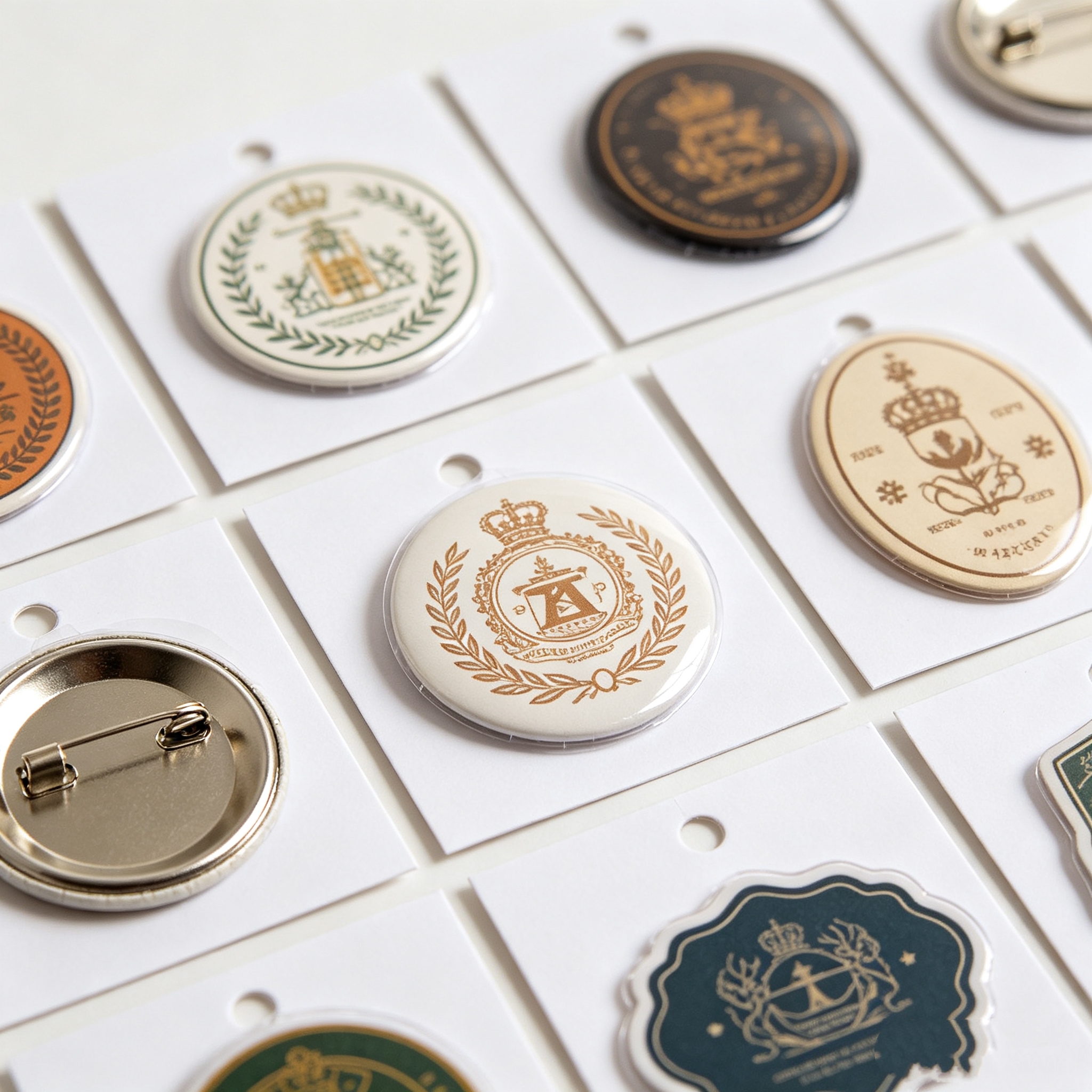
Here is a checklist of common artwork mistakes to avoid:
- Using Low-Resolution Images: Any raster images (like photos) in your artwork should be at least 300 DPI at their final print size. Anything less will result in a blurry or pixelated final product.
- Not Embedding or Outlining Fonts: If you use a special font that isn't installed on our systems, it will be automatically substituted, changing your design. To prevent this, either embed the font file or convert all text to outlines (vector shapes).
- Ignoring White Ink Requirements for Clear Labels: When printing on a clear substrate like BOPP, any areas that should be white or opaque must be backed with a layer of white ink. Without it, your colors will appear transparent. Clearly define where white ink should be applied in a separate layer of your artwork file. This is a frequent issue we help clients solve.
- Placing Elements on the Dieline: The dieline is the path the cutting blade will follow. Any text or graphic elements placed directly on this line risk being partially trimmed off. Always respect the safety margin shown in your proof.
- Incorrect Color Mode: Submitting files in RGB color mode will force a conversion to CMYK for printing, which can lead to unexpected color shifts. Always design and save your artwork in CMYK from the start.
Addressing these points early streamlines the process, leveraging our fast production times of just 1-2 days for many items and getting your labels to you sooner.
Our Commitment to Quality and Reliable Production
Choosing a manufacturer is about more than just price; it's about trusting their process and quality control. We built our 8,000 m² facility to provide consistent, high-quality results for brands worldwide, from independent designers to large-scale enterprises.
Our production capabilities and quality guarantees are designed to give you peace of mind:
- Certified Quality: We are an ISO 9001:2015 and Disney FAMA certified manufacturer, adhering to strict international standards for quality management and ethical production.
- High-Capacity Output: With six HP digital label presses and a daily capacity exceeding 1,000,000 labels, we can handle high-volume orders without compromising on delivery speed. Bulk orders are typically produced in 8-9 days.
- No Minimums for Digital: For businesses testing a new product, we offer no MOQ on digitally printed items, allowing you to order exactly what you need. For larger offset runs, our minimum is 1,000 units, with better pricing at higher quantities.
- Pre-Production Confirmation: We provide photo or digital samples for confirmation before any bulk production begins, ensuring you are 100% confident in the final product.
- Service Guarantees: We stand by our work. If there is a color mismatch against the approved proof, we offer a free reprint. For other defects, we provide proportional replacement. We also include 100 bonus pieces with every bulk order to cover any minor issues.
This commitment to quality is why brands trust us with their projects, whether it's producing oil & waterproof labels for bottles & cosmetics or durable custom box labels for international shipping.
By following a rigorous proofing process and partnering with a reliable manufacturer, you can ensure your custom labels arrive exactly as you envisioned. Ready to move forward with confidence? Submit your design for a free quote and professional artwork review.