

How to Source Custom Adhesive Labels for Cold Storage
A cold-storage label can look acceptable in a digital proof yet fail after application when condensation forms, a container enters refrigeration, or the release liner does not separate cleanly on the packing line. For packaging buyers, the regret usually comes from approving a quote before confirming the application temperature, package surface, adhesive behavior, and dispensing method.
Versatile custom adhesive labels should be sourced as a packaging component, not merely as a printed design. The right supplier discussion starts with the product’s cold chain conditions: whether labels are applied before chilling or after chilling, whether bottles or packs are wet, and whether the finished pack needs to resist water, rubbing, oil, or temperature changes.
Custom Panda supplies custom labels for packaging buyers who need printed label options, including BOPP lamination, UV resistant inks, custom foil stamping colors, and a wide selection of substrates. Our ISO 9001:2015 Quality Management System Certified and Disney FAMA Certified facility has operated since 2012, with an 8,000 m² production site, six production lines, and six HP digital label presses. Those facts support production scope, but they do not replace application-specific qualification. A cold-storage order still needs the buyer and supplier to agree on actual use conditions before approval.
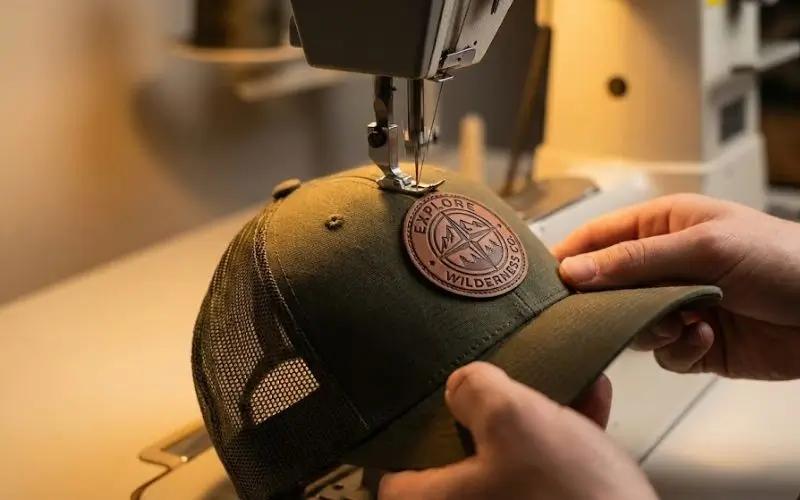
Shortlist suppliers by cold-chain fit rather than label appearance
Choose a supplier that can discuss the label as a combined system: face material, print finish, adhesive, liner, packaging surface, and handling conditions. This matters because a label can be waterproof on paper yet still fail if it is applied to a wet container, if the adhesive is unsuitable for the application temperature, or if the liner causes problems during automatic dispensing.
For refrigerated foods, frozen packs, chilled drinks, and similar applications, ask suppliers to separate two conditions that are often confused:
- Application condition: The temperature and surface state when the label is first applied. This is the condition that affects initial tack and bond formation.
- Service condition: The temperatures, moisture exposure, friction, and handling the pack experiences after labeling. This affects whether the printed face and bond remain suitable through distribution and retail handling.
The conclusion is simple: do not accept a general statement that a label is “cold resistant” without clarifying both conditions. That statement may fit a dry package labeled before refrigeration, but it does not automatically fit containers labeled inside a cold room or packs covered with condensation.
Buyers also need to distinguish between a label for product identity and a label for operational identification. A retail-facing product label may require brand color control, barcode readability, and moisture resistance. A warehouse label may prioritize dispensing consistency, writable space, or a different adhesive approach. For shipping and warehouse use, review direct thermal labels for shipping and barcodes separately from printed retail packaging labels, because the use case and approval criteria differ.
Supplier questions that expose an incomplete specification
- At what temperature will the packaging be when labels are applied?
- Will the surface be dry, damp, wet, frosted, oily, dusty, or textured?
- What is the container material: glass, metal, plastic, flexible film, coated board, or corrugated carton?
- Is labeling done manually, with a semi-automatic applicator, or on a high-speed production line?
- Will the product face condensation after labeling, or will it be immersed, washed, or exposed to oil?
- Does the artwork require opaque white ink on a clear substrate, metallic foil, lot coding space, or a hand-written area?
These questions suit any cold-chain project. They are less relevant for dry room-temperature cartons with simple paper labels, where application temperature and moisture are not material risks.
Match material and finish choices to the packaging environment
Material selection should follow the package surface and handling exposure, not a preference for one label stock. Custom Panda offers a wide substrate selection, BOPP lamination, UV resistant inks, and custom foil stamping colors. These options allow a buyer to request a configuration aligned with appearance and handling requirements, but the final substrate and adhesive selection must still be confirmed against the buyer’s actual application conditions.
| Requirement | What to request from the supplier | Best-fit scenario | Limit to address before approval |
|---|---|---|---|
| Moisture exposed package | Water resistant face material and suitable protective finish | Chilled bottles, jars, food tubs, and refrigerated packs | Water resistance does not confirm adhesion to a wet or frosted surface |
| Clear container appearance | Clear substrate with verified white ink coverage where needed | Clear beverage bottles and cosmetic containers | Ask for a physical proof because weak white opacity can change brand appearance |
| High-end shelf presentation | Matte or gloss finish with custom foil stamping colors | Supplement, beverage, cosmetic, and premium food packaging | Decorative finish should not be treated as evidence of cold-chain bond performance |
| Outdoor or light exposure | UV resistant inks | Products stored or displayed where light exposure is expected | Confirm whether the expected exposure is part of the real use case |
| Waterproof retail packaging | Substrate and finish selected for water exposure | Bottles, jars, and packaged foods | Confirm package surface condition at the point of application |
For example, clear custom bopp labels may be relevant when a buyer needs a clear presentation and a film-based construction. However, selecting BOPP label film alone does not answer whether the adhesive will bond to a condensation-prone package. Request that the supplier address the adhesive and liner as separate parts of the quotation.
A buyer choosing waterproof food labels should also provide the intended pack format. A smooth chilled glass jar, a flexible pouch, and a textured plastic tub can behave differently during application. For food and beverage formats, compare the label type with the actual package rather than approving based on a flat swatch.
A sourcing checklist for verifying application temperature, surface condition, adhesive tack, and liner release before approving a cold-storage order
Use the following checklist as an RFQ attachment or pre-production approval record. The purpose is not to assume a particular adhesive will work. It is to force a documented answer for the four factors most likely to cause label failure in refrigerated or frozen distribution.
| Verification point | What the buyer must provide | What to ask the supplier to confirm | Approval decision |
|---|---|---|---|
| Application temperature | State the package temperature when labeling begins and whether application occurs before or after refrigeration. | Confirm that the proposed adhesive is intended for the stated application condition. | Do not approve based only on storage temperature. |
| Surface condition | Provide photos and state whether the package is dry, damp, wet, frosted, oily, dusty, smooth, curved, or textured. | Confirm whether the proposed construction is suitable for that surface condition. | Request a sample if moisture or frost is present. |
| Adhesive tack | Describe the package material, label size, curved areas, edge exposure, and expected handling. | Confirm the adhesive selection and any limitations for initial tack or long-term bond. | Reject vague descriptions such as “strong adhesive.” |
| Liner release | State manual or machine application, applicator type if known, label format, and dispensing direction. | Confirm liner and roll configuration compatibility with the intended application method. | Test dispensing before full production for automated lines. |
| Print durability | Identify water, oil, rubbing, freezer handling, and any hand-written marking needs. | Confirm the print and finishing approach, including lamination where appropriate. | Check samples after the expected handling cycle. |
| Artwork visibility | Provide brand color references and identify clear substrates or small text areas. | Confirm proof approval requirements, white ink coverage, and color matching process. | Approve a photo or digital sample before production. |
The practical conclusion is that no cold-storage order should move directly from artwork approval to a bulk purchase order when the application surface is wet, chilled, or unknown. A sample is the appropriate next step because the risk comes from the combination of package, adhesive, temperature, and application process. This checklist is less necessary for a previously validated pack and unchanged label construction, although a new substrate, new container supplier, or new cold-chain process should trigger requalification.
Use samples and documentation to qualify a supplier before bulk pricing
For a new cold-chain label program, request evidence in a sequence that keeps commercial and technical questions separate. First, qualify whether the supplier understands the application. Next, review the physical or documented sample. Then compare final commercial terms once the construction is identified.
- Submit the use case. Send package photographs, substrate details, artwork, label dimensions, roll direction if applicable, application temperature, storage conditions, and expected exposure to moisture or handling.
- Ask for a proposed construction. Require the supplier to state the face material, print treatment, adhesive approach, liner format, and any conditions the buyer must validate.
- Review the visual proof. Check brand colors, barcode space, small text, white ink on clear material, and areas intended for hand-written information.
- Approve a relevant sample. Apply it to the actual production container, not a substitute surface, and inspect after the handling conditions that matter to the buyer.
- Confirm bulk terms. Agree quantity, label format, approval reference, shipping plan, acceptance criteria, and corrective action route before issuing the purchase order.
Custom Panda provides photo or digital sample confirmation before production. Sample lead time for labels is 3 days, while stated bulk production is 8–9 days. U.S. shipping is listed at 5–6 business days, and same-day dispatch is available for select ready-stock or digital items. Those timeframes help a buyer plan an RFQ, but they should not be treated as a guarantee for every label construction, order size, destination, or approval delay.
For labels with multiple stock keeping units, roll labels often reduce handling at the packing stage. Buyers can review custom printed roll labels when the order requires a roll format, while cut sheets or individual formats may suit manual or lower-volume application. The proper format depends on the buyer’s equipment and workflow; roll format alone does not solve liner-release issues.
Compare supplier terms that affect cold-storage order risk
Price is only one part of supplier fit. For cold-storage packaging, a lower initial quote can become expensive when labels peel, colors miss brand requirements, or rework disrupts packing. Buyers should compare the commercial terms that affect the cost of a correction.
| Supplier qualification area | Custom Panda stated term or capability | Buyer relevance | Boundary to confirm |
|---|---|---|---|
| Quality management | ISO 9001:2015 Quality Management System Certified | Provides a documented certification signal during supplier shortlisting | Certification does not by itself validate a specific cold-storage adhesive application |
| Production capacity | Daily label capacity of 1,000,000+ | Relevant for larger repeat programs and bulk label requirements | Confirm available production timing for the chosen specification |
| Minimum order quantity | No MOQ for digital printing and select custom items; 1,000 units minimum for offset printing and standard bulk items | Allows buyers to consider a smaller digital run before a larger program | Confirm which printing method applies to the quoted label |
| Defect support | Color mismatch free reprint, proportional replacement for defects, and 5-day fast re-stocking or repair | Gives buyers defined remedies to discuss during contracting | Agree the defect evidence, acceptance standard, and claim process for the order |
| Bulk allowance | 100 bonus pieces included with every bulk order | May help cover normal packing-line losses or sample retention | Do not treat bonus pieces as a replacement for adequate production planning |
Custom Panda’s label scope is also supported by a relevant market example. For an Australian natural health supplement brand, the company delivered metallic foil-stamped roll labels using matte BOPP film with scratch-proof lamination for a premium retail presentation. This is useful evidence of experience with a film label and finished roll format. It is not proof that the same construction will meet a refrigerated or frozen package requirement, because the case does not state cold application conditions or condensation exposure.
Avoid the mistakes that cause cold-chain label failures
- Specifying storage temperature only. A label may be stored cold after application, but that does not answer whether it can be applied to a chilled or damp pack. State both the application condition and service condition.
- Approving a sample on the wrong container. A flat dry panel is not a substitute for the actual curved bottle, flexible pouch, or textured tub. Use the intended production packaging whenever possible.
- Assuming waterproof means freezer suitable. Waterproof face material addresses one concern. It does not confirm adhesive tack, edge lift resistance, or dispensing behavior.
- Leaving liner details out of a machine-labeling RFQ. This can cause release or feed problems even when print quality is acceptable. Provide equipment and roll-direction details.
- Approving clear-label artwork without a white-ink check. White ink opacity can affect contrast and brand colors on transparent substrates. Require a proof that reflects the intended packaging.
- Using permanent adhesive labels without defining removal needs. A permanent bond may suit retail identification but may not suit returnable containers, temporary promotions, or reusable crates. For temporary use, assess repositionable custom removable labels against the actual surface and removal requirement.
The strongest RFQ is specific but not overprescriptive. Tell the supplier what the package experiences, ask for the proposed construction and limitations, and approve only after checking the actual package and labeling method. This approach gives procurement, packaging, quality, and operations teams a common basis for supplier comparison.
Send your package photos, application temperature, surface condition, label format, and expected order quantity to request a cold-storage label specification review and sample quote.