

Sourcing Custom Brand Label Pins That Actually Sell
Ordering a bulk shipment of lapel pins only to discover they feel cheap, the colors are off, or the backings fall off is a buyer's worst nightmare. These aren't just quality control issues; they are direct threats to your brand's reputation and bottom line. A poorly made pin leads to customer returns, negative reviews, and wasted marketing budget. The difference between a pin that gets thrown in a drawer and one that becomes a cherished piece of brand merchandise lies in the technical specifications you define before production ever begins. This guide covers the critical sourcing decisions that ensure your custom brand label pins are ready for retail success from day one.
As a manufacturing consultant, I've seen brands stumble on preventable errors. They focus on the visual design but overlook the structural integrity, material weight, and attachment security—all factors that determine the product's real-world performance. We'll bypass the fluff and focus on the production-level choices that protect your investment and deliver a product customers will be proud to wear.
Choosing the Right Pin Type for Your Brand Aesthetic
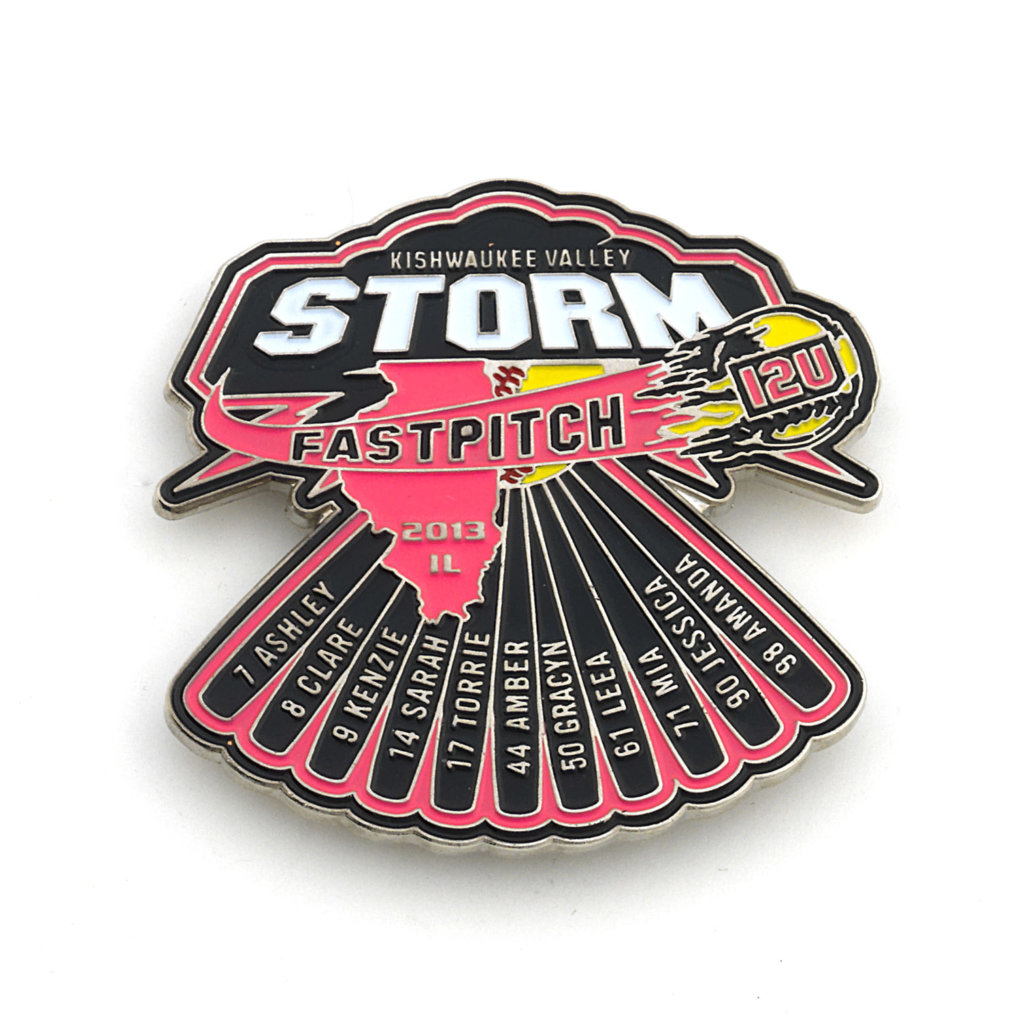
The manufacturing process you choose fundamentally dictates the pin's final look, feel, and perceived value. Hard enamel, soft enamel, and die-cast pins serve different brand goals and price points. Selecting the wrong type can result in a product that mismatches your brand identity—for example, a playful, textured soft enamel pin for a luxury brand that requires a smooth, jewelry-like finish.
Here’s a breakdown to help you align the production method with your intended market positioning.
| Pin Type | Key Characteristics | Best For | Common Sourcing Pitfall |
|---|---|---|---|
| Hard Enamel Pins | Smooth, polished, jewelry-quality surface. Colors are filled level with the metal lines, creating a flat, durable finish. Often made from brass or high-quality zinc alloy for a heavier feel. | Premium retail, corporate gifts, membership recognition, and brands with a high-end aesthetic. The smooth finish communicates quality and permanence. | Color bleed or inaccurate color matching. Ensure your supplier uses Pantone matching and provides a digital proof. We guarantee color accuracy with a free reprint policy if the final product doesn't match the approved proof. |
| Soft Enamel Pins | Recessed enamel creates a textured, dimensional feel. The metal lines are raised above the color fills. An optional epoxy coating can be added for a smooth, domed finish. | Promotional giveaways, event merchandise, and designs with a more casual, artistic, or playful vibe. They are generally more cost-effective in bulk than hard enamel. | Uneven enamel fill or low-detail resolution. This happens when the mold isn't precise. A manufacturer with in-house die-casting facilities ensures sharp lines and consistent depth. |
| 3D Die-Cast Pins | Made entirely from metal (zinc alloy, brass, or iron) without color fills. The design is rendered in raised and recessed metal, creating a sculptural, high-relief effect with depth and shadow. | Architectural replicas, heritage branding, logos with intricate textures, and souvenir merchandise. The antique bronze finish on pins for a Tokyo museum exhibition is a perfect example of capturing detailed aesthetics. | Loss of fine detail. Complex 3D designs require expert mold making. Vetting your supplier's experience with similar projects is key. Always request a photo sample of the mold before bulk production begins. |
The Retail-Ready Sourcing Checklist: From Material to Packaging
A successful retail pin is more than just a great design. Its material, backing, and packaging must be deliberately chosen to meet customer expectations and withstand the rigors of a retail environment. Use this checklist during the sourcing process to cover all your bases and prevent common points of failure.
-
Material & Plating: Match Perceived Value
The material determines the pin's weight and heft, a key indicator of quality. Zinc alloy is a versatile and cost-effective standard, while brass offers a heavier, more premium feel for high-end products. The plating—such as polished gold, antique bronze, or matte black nickel—is just as important. For an esports tournament in Canada, we used polished gold plating on their championship pins to create a high-value, trophy-like feel that fans and players proudly wear. -
Attachment Backing: Secure for the Intended Use
A pin that falls off is a guaranteed customer complaint. The standard butterfly or rubber clutch is fine for basic promotional use, but for pins intended for jackets, backpacks, or daily wear, a more secure option is necessary.- Rubber Clutch: Standard, good for lanyards and display boards.
- Butterfly Clutch: Traditional metal clutch, can loosen over time.
- Locking Pin Back: A secure mechanism that locks onto the post, ideal for retail products to prevent loss.
- Magnetic Backing: A strong magnet for attaching to clothing without piercing the fabric. Not suitable for thick materials like denim or leather.
-
Packaging: Elevate the Unboxing Experience
How the pin is presented is part of the product. Shipping in a simple poly bag is cost-effective for bulk giveaways but falls short for retail. A custom-printed backer card not only protects the pin but also provides a canvas for branding, storytelling, or social media handles. For a German coffee brand's anniversary, their interactive spinning pins were attached to branded cards that explained the unique feature, boosting unboxing engagement significantly. -
Quality Gates: Insist on Pre-Production Confirmation
Never move to bulk production without seeing a sample. Reputable manufacturers provide photo or digital sample confirmation before the full run. This is your final chance to catch errors in color, text, or mold details. Our process includes this checkpoint to eliminate surprises, ensuring the 1,000+ unit order is exactly what you approved.
Decoding Production Timelines and Minimums for Your Launch
Aligning your production schedule with a product launch or event is critical. Understanding a manufacturer's capacity, lead times, and minimum order quantities (MOQs) helps you plan effectively and avoid last-minute rush fees or stock shortages. Our 8,000 m² ISO 9001:2015 certified facility is structured to handle both small, custom runs and large-scale orders with predictable timelines.
Here’s a typical production timeline for an order of custom logo pins:
- Design & Proofing (1-2 Days): Once you submit your artwork, our team provides free design assistance to create a production-ready proof. This includes confirming colors, dimensions, and backing type.
- Sample Production (3 Days): After proof approval, we create a physical sample. We provide high-resolution photos for your final confirmation before proceeding with the full order.
- Bulk Production (8-9 Days): With a daily capacity exceeding one million units for some product lines, our six production lines ensure your order is manufactured efficiently and consistently.
- Shipping (5-6 Business Days to the U.S.): We offer free shipping, providing a reliable delivery window for planning your marketing and distribution.
MOQs are another key consideration. While some processes like offset printing require a minimum of 1,000 units to be cost-effective, we also offer options with no MOQ for digitally printed items or certain custom projects. This flexibility allows brands to test a new design without a large upfront investment.
Common Production Flaws and How to Prevent Them
Even with a solid design, small technical oversights can lead to disappointing results. Here are the most common production flaws I’ve encountered and how to proactively address them in your RFQ and proofing process.
- Issue: Colors Don't Match Your Brand Guidelines.
Prevention: Always provide specific Pantone (PMS) color codes in your design files. Describing a color as "sky blue" is subjective and leaves room for error. A Pantone code is a universal standard that ensures the factory mixes the enamel to the exact shade you require. We also offer a free reprint guarantee for any confirmed color mismatches. - Issue: The Pin Backs Are Loose or Unstable.
Prevention: Specify the attachment type based on the pin's intended use. For heavy pins or those designed for activewear, request two posts on the back for added stability and to prevent spinning. For high-value retail pins, specify a locking pin back to give your customers peace of mind. - Issue: Fine Text or Details Are Blurry and Illegible.
Prevention: Ensure your artwork is in vector format (.AI, .EPS, .SVG). Vector files can be scaled to any size without losing resolution, which is essential for creating a sharp mold. If your design includes very fine details, consider a slightly larger pin size or an offset printed style, which allows for photorealistic detail. Our free design assistance service can help optimize your art for clarity. - Issue: The Final Product Is Too Heavy for Clothing.
Prevention: Pay attention to the material and dimensions. A large, 2-inch pin made from brass will be significantly heavier than a 1-inch zinc alloy pin. Ask your supplier for the estimated weight in your quote. This is especially important for pins intended for dress shirts or other lightweight fabrics where sagging could be an issue.
By specifying these details upfront, you move from hoping for a good result to engineering one. These are the details that separate amateur merchandise from professional, retail-quality products.
Ready to create pins that reflect your brand's quality? Submit your design to our team for a detailed quote and a free digital sample to see how your vision will translate into a finished product.