

How to Source Custom Handmade Labels for Your Crafts
The wrong label can ruin a perfect product. A beautifully crafted item can be cheapened by a label that frays after one wash, peels off in a customer’s home, or features a logo that fades over time. For creators of handmade goods, sourcing labels isn’t just a final touch; it’s a critical decision that impacts brand perception and product longevity. Choosing incorrectly means risking returns, negative reviews, and a tarnished reputation you’ve worked hard to build.
Before you place an order for custom handmade labels, you need a clear understanding of how materials, attachment methods, and print quality will perform with your specific product. This guide breaks down the essential checkpoints from a manufacturing perspective, ensuring the labels you order not only look professional but also last.
Choosing the Right Material for Your Brand’s Aesthetic and Product Function
The material of your label communicates your brand’s values and must be compatible with your product’s use case. A rustic, eco-friendly brand will have different needs than a luxury apparel line. Selecting the wrong substrate can lead to common failures like tearing, ink smudging, or a mismatch with the product’s feel.
Here are the most common material choices and their ideal applications:
- Woven Damask: For high-end apparel and textile goods, nothing surpasses the quality of high-density woven damask. As we produced for a luxury knitwear brand in the United Kingdom, these labels use fine threads to create a soft, non-irritating finish that is perfect for neck tags on garments. They offer exceptional detail resolution for complex logos and are extremely durable through countless wash cycles.
- Printed Cotton: Ideal for brands emphasizing a natural, organic, or rustic feel. Printed cotton labels are soft, flexible, and comfortable against the skin. They are a popular choice for children’s clothing, like the organic line we supplied for a client in Spain, where skin-safe, fade-resistant inks are essential. However, their edges must be finished (e.g., looped) to prevent fraying.
- Satin: Printed satin labels offer a smooth, silky finish with a subtle sheen, lending a touch of luxury to products like lingerie, baby blankets, or high-end bedding. They are soft and pliable but can be prone to snagging if not placed carefully.
- Faux Leather: For rugged and durable applications like jeans, bags, and outerwear, embossed or debossed faux leather patches add a premium, tactile element. We created embossed patches for an Italian denim line designed specifically to withstand harsh industrial stonewashing, proving their resilience.
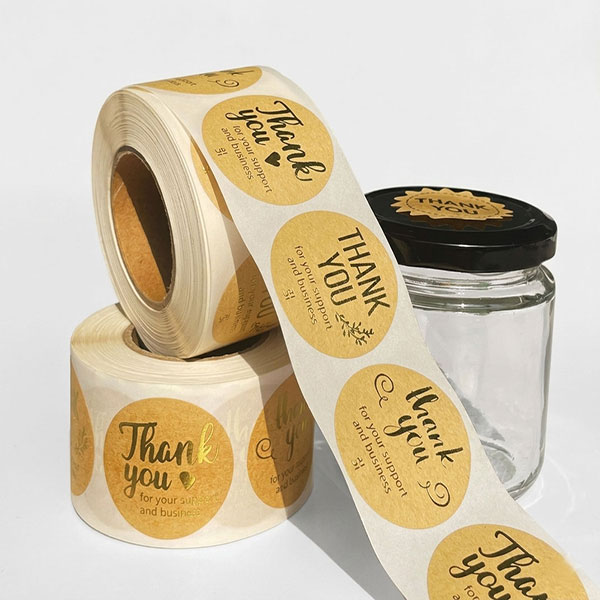
- Kraft Paper: An excellent choice for secondary packaging, hang tags, or labeling on jars and boxes. Custom kraft labels provide an earthy, eco-conscious look perfect for candles, soaps, and artisanal foods. They are not typically washable.
- BOPP (Biaxially Oriented Polypropylene): When you need waterproof and oil-resistant performance for products like cosmetics or food jars, BOPP is the industry standard. For an Australian health supplement brand, we combined a matte BOPP film with scratch-proof lamination and metallic foil to create a label with a commanding retail shelf presence.
Attachment Methods Decoded: Sew-In vs. Iron-On vs. Adhesive
How a label attaches is just as important as what it’s made of. The right choice depends entirely on your product’s material, its intended use, and your production process. Choosing an iron-on for a heat-sensitive fabric or an adhesive for a product that will be washed is a recipe for failure. Our ISO 9001:2015 certified process ensures that whichever backing you choose, it meets strict quality standards for adhesion and durability.
This table compares the three main application formats to help you decide.
| Attachment Method | Best For Craft/Fabric Types | Durability & Permanence | Application Notes |
|---|---|---|---|
| Sew-In | All textiles: cotton, wool, denim, knits, canvas, leather. The most versatile option for apparel and fabric goods. | Highest. The only method guaranteed to last the lifetime of the garment through repeated, heavy washing and drying. | Requires sewing equipment. Offers the most professional and permanent finish for any textile product. This is the standard for high-quality woven labels. |
| Iron-On (Heat Seal) | Stable, heat-resistant fabrics like cotton, polyester, denim, and canvas. Good for hats, jackets, and bags. | Medium to High. A high-quality heat seal backing can withstand 25-50 wash cycles. Longevity depends on adhesive quality, application temperature, and pressure. | Warning: Do not use on heat-sensitive materials like silk, nylon, leather, or certain synthetics, as it can melt or damage the fabric. Application must be even and thorough for a secure bond. |
| Adhesive (Sticker) | Rigid, non-porous surfaces: glass jars, metal tins, cardboard boxes, plastic containers, paper packaging. | Varies. Permanent adhesives are strong but not washable on fabric. Removable adhesives allow for repositioning. Durability depends on the surface and environment (e.g., moisture, temperature). | Not suitable for fabrics or any item that will be washed. Excellent for product packaging, such as the oil & waterproof labels for bottles & cosmetics we produce for many brands. |
Critical Details to Confirm Before Production to Avoid Errors
Small oversights in the design and proofing stage can lead to major headaches and wasted inventory. From my 12 years on the factory floor, I’ve seen brands make the same preventable mistakes. A digital proof looks perfect on screen, but real-world materials and printing processes can reveal hidden issues. With our daily capacity of over 1,000,000 labels, we’ve refined our pre-production process to catch these problems early.
Here are the most common production issues and how to prevent them:
Common Production Pitfalls & Prevention
-
The Problem: Color Mismatch. Your brand’s specific shade of blue looks different when printed. This happens because screen colors (RGB) don’t translate directly to print colors (CMYK or Pantone).
The Solution: Always provide Pantone (PMS) color codes for your brand colors. This is the universal standard for color matching in manufacturing. If PMS codes are unavailable, request a physical sample to approve the color before committing to a bulk run. At Custom Panda, we offer a color mismatch free reprint guarantee for this very reason. -
The Problem: Illegible Small Text or Details. Tiny letters or fine lines in your logo become blurry and unreadable on the final label.
The Solution: Every material has a different resolution limit. Woven damask can handle finer detail than printed cotton. Ask your supplier for the minimum text height and line thickness for your chosen material. Simplify complex logos for smaller labels. Our free design assistance service can help you optimize your artwork for clarity. -
The Problem: Adhesive Failure. Your sticker labels peel off products in cold storage or bleed adhesive in hot environments.
The Solution: Specify the exact conditions your product will face. A label for a frozen food product requires a freezer-grade adhesive, while a cosmetic product sold in a hot climate needs a high-tack, heat-resistant adhesive. Be explicit about your needs—don’t assume a “standard” adhesive will work. -
The Problem: Fraying or Unraveling Edges. Cut fabric labels start to fall apart after minimal handling or the first wash.
The Solution: Choose the right finishing. For printed fabric labels, specify a “loop fold” or “end fold” so there are no raw, cut edges exposed. For woven labels, a hot-cut or ultrasonic-cut edge seals the threads and prevents fraying.
Your Final Sourcing Checklist for Handmade Product Labels
Before you approve that quote, run through this final checklist. It will help you partner with a manufacturer who understands the unique needs of craft businesses and can deliver a product that elevates your brand.
- Confirm Minimum Order Quantity (MOQ): Does the supplier’s MOQ fit your production scale? Many small businesses don’t need 1,000+ labels at once. We recognize this, which is why we offer no MOQ on our digitally printed labels, allowing you to start small.
- Verify Sample & Production Lead Times: How long will it take to get a sample? And how long for the full order? Fast turnarounds are key to keeping your business moving. We provide samples in just 3 days and complete bulk production in 8-9 days.
- Request a Physical Sample Pack: Never order in bulk without first seeing and feeling the materials. A digital proof cannot show you the texture of woven damask, the thickness of faux leather, or the tackiness of an adhesive.
- Check for Quality Guarantees: What happens if there’s a defect? A reliable partner will stand behind their work. We offer proportional replacement for defects and include 100 bonus pieces with every bulk order to cover any minor issues.
- Discuss Artwork & Proofing: Ensure the supplier provides a final digital proof for your approval before any production begins. Confirm they can work with your file types and match your Pantone colors. Take advantage of free design assistance to ensure your art is optimized.
- Clarify Shipping Costs and Times: Are there hidden fees? Is shipping included? We provide free shipping with clear delivery timelines (5-6 business days to the U.S.) so you can budget accurately.
Taking the time to address these points upfront will ensure your custom labels arrive exactly as you envisioned, ready to add a professional, lasting touch to your handmade creations.
If you’re ready to source labels but are unsure which material or finish is right for your product, our team can provide expert advice and a custom quote. Contact us to discuss your project specifications.