

Sourcing Custom Logo Label Pins Starts With Asking the Right Questions First
Most procurement headaches with custom pins don't show up at the quote stage. They show up three weeks later, when a box of 2,000 units arrives with loose butterfly backs, bleeding enamel colors, or a logo that's slightly off-register from the approved proof. By then, the trade show date is locked, the retail launch is scheduled, and reordering isn't an option. If you're sourcing custom logo label pins for a brand rollout, the real risk isn't price — it's picking a supplier without checking the handful of details that actually predict whether your order ships clean the first time.
This guide walks through what to check before you send an RFQ, how pin types and finishes compare, what typically goes wrong on bulk orders, and roughly what you should expect to pay. We'll also reference a few real production scenarios to show what "getting it right" actually looks like.
A Supplier Vetting Checklist Before You Commit to an Order
Every line item below exists because a buyer somewhere got burned by skipping it. Here's why each one matters and what happens when it's ignored.
| Check Item | Why It Matters | Risk If Skipped |
|---|---|---|
| Artwork proof (digital + physical) | Enamel colors shift slightly between screen and metal; a physical or photo proof catches color drift before mass production | Pantone mismatches across a full batch, with no fix except a costly reprint |
| Material sample request | Zinc alloy, brass, and iron each hold detail and plating differently | Fine logo lines blur or edges corrode faster than expected on cheaper base metals |
| Backing selection | Butterfly clutch, rubber clutch, magnetic, or safety pin backs each suit different wear scenarios (lapel vs. uniform vs. retail packaging) | Pins fall off jackets or lanyards within weeks, generating complaints and replacement costs |
| MOQ confirmed in writing | Offset printing and standard bulk pins usually carry a 1,000-unit minimum; digital printing often has none | Budget surprises mid-negotiation, or paying bulk tooling fees for a small run |
| Production lead time, not just shipping time | Sample turnaround and bulk production run on different clocks — confusing them wrecks event timelines | Missed launch dates because "lead time" quoted was shipping-only, not manufacturing |
As a reference point: our own sample lead time runs 3 days for pins, patches, and labels, with bulk production typically completed in 8-9 days and U.S. shipping adding another 5-6 business days. Knowing these numbers upfront — and asking your supplier for their equivalent breakdown — lets you build a realistic production calendar instead of guessing.
Comparing Pin Types, Finishes, and Materials
Not every logo design suits every pin style. Picking the wrong format is one of the most common and avoidable sourcing mistakes.
| Pin Type | Best For | Material Options | Visual Effect |
|---|---|---|---|
| Soft enamel pins | Logos with gradients, multiple colors, or textured looks | Zinc alloy, iron | Recessed enamel with visible metal lines; slightly raised texture |
| Hard enamel pins | Corporate logos needing a polished, flush-finish look | Zinc alloy, brass | Smooth, glass-like surface; enamel sits level with metal |
| 3D die-cast pins | Mascots, crests, or designs needing depth and dimension | Zinc alloy | Sculpted relief, no enamel fill required |
| Offset printed pins | Photo-realistic logos, fine gradients, small text | Iron, brass | Full-color print under epoxy coating |
| Laser engraved pins | Minimalist or single-tone brand marks | Brass, zinc alloy | Etched line detail, often paired with antique or dual-plated finish |
A specialty coffee brand we worked with in Germany needed something beyond a static logo pin for an anniversary release — they chose a die-cast base with a smooth 360-degree rotating element, which turned a simple giveaway into something customers photographed and shared during unboxing. That's the kind of decision that should happen at the design-brief stage, not after tooling has already started.
For brands weighing hard enamel against soft enamel specifically: hard enamel reads as more "premium" on retail shelf packaging because of its flush polish, while soft enamel tends to work better for designs with five or more colors, since the recessed cells keep each color cleanly separated. Neither is objectively better — it depends on your artwork complexity and how the pin will be worn or displayed.
Common Mistakes That Derail Bulk Pin Orders
- Approving a digital mockup instead of a physical sample. Screen colors and plated metal colors don't match 1:1 — always request a photo or physical sample confirmation before the full run starts.
- Choosing the cheapest backing without considering end use. A butterfly clutch is fine for retail packaging but loosens quickly on daily-wear uniform pins; rubber or locking pin backs hold up better there.
- Ignoring enamel bleed risk on fine detail. Designs with lines thinner than 0.5mm are prone to color bleeding or overflow in soft enamel — ask your supplier whether your artwork needs simplifying before quoting.
- Not confirming plating type for outdoor or uniform use. Gold or nickel plating wears differently under friction; dual-plated finishes last longer on items handled daily, like security or hospitality uniform pins.
- Skipping the question of defect policy. Ask in advance how a supplier handles color mismatches or loose pin backs discovered after delivery — not every vendor offers free reprints or proportional replacement for flawed units.
What Drives Pricing on a Bulk Pin Order
Pricing on custom logo label pins isn't a flat per-unit number — it moves based on a few specific variables:
- Base material: Zinc alloy is the most common and cost-efficient; brass adds weight and cost but holds engraving detail better.
- Finish complexity: Dual-plating, antique coloring, or glitter/translucent enamel fills add per-unit cost over a standard single-plated hard enamel pin.
- Order quantity: Offset and standard bulk production typically starts at a 1,000-unit minimum, with unit price dropping as quantity rises. Digital printing or select ready-stock items carry no MOQ, which suits smaller test-market runs.
- Backing hardware: Magnetic backs and deluxe clutches cost more per unit than standard butterfly clutches.
- Rush timelines: Compressing the 8-9 day bulk production window usually means an added rush fee, if the factory can accommodate it at all.
A useful habit: ask every supplier for a price breakdown by these five factors, not just a single bottom-line quote. It makes comparing vendors on equal footing much easier, and it exposes hidden costs — like tooling fees — before you sign off.
A Step-by-Step Process for Placing Your First Order
- Send vector artwork (AI, EPS, or high-res PDF) along with your target pin size and quantity.
- Request a digital proof showing Pantone color matching against your brand guidelines.
- Approve a physical or photo sample before bulk production begins — this single step prevents the majority of color-mismatch disputes.
- Confirm backing type, plating, and packaging (poly bag, velvet pouch, or card backing) in writing.
- Lock production and shipping timelines separately, so your internal launch date accounts for both.
- Inspect the first bulk shipment against the approved sample before distributing to teams or retail.
For buyers running esports, sports, or fan merchandise programs, this process matters even more. A Canadian esports organizer sourcing championship pins needed polished gold plating and dual-tone color accuracy sharp enough for close-up photography on jackets and lanyards — the kind of result that only comes from sample approval before mass production, not after.
Pins Are Rarely the Only Branding Item on the Order
Brand managers sourcing pins are frequently sourcing labels and patches in the same production cycle — packaging labels for the same product line, or woven patches for apparel tied to the same campaign. If your order includes packaging, it's worth reviewing options like oil & waterproof labels for bottles & cosmetics or custom kraft labels at the same time, since consolidating vendors can simplify quality control and shipping. Apparel-adjacent brands often pair pins with custom embroidery patches for apparel & uniforms, particularly for uniform or team-wear programs where consistent branding across hard goods and soft goods matters.
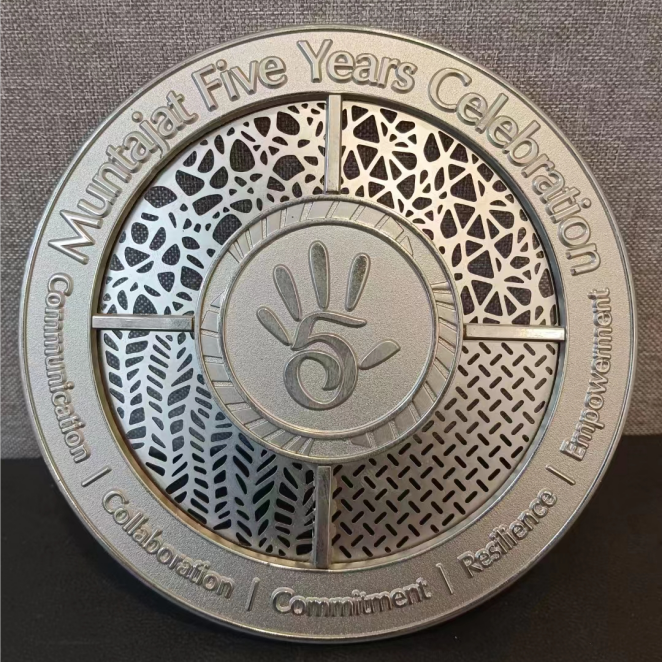
If your pins are part of a museum, souvenir, or heritage product line, a 3D die-cast format with antique bronze plating and cut-out detail — similar to a project produced for a Tokyo museum exhibition — can better capture architectural or historical artwork than a flat enamel fill.
A Quick Buyer's Decision Checklist
- Have you confirmed MOQ against your actual order size, not an assumed number?
- Did you request a physical sample, not just a digital mockup?
- Does your backing choice match how the pin will actually be worn or displayed?
- Do you know the supplier's defect policy — reprint, replacement, or refund?
- Have you separated production lead time from shipping time in your project calendar?
A facility that's ISO 9001:2015 certified and produces across 6 dedicated lines — including metal die-casting and embroidery — tends to handle multi-SKU brand orders (pins plus patches plus labels) more predictably, since quality checks follow the same documented process across product types. That consistency matters most when you're coordinating a launch across several branded items at once.
If you're ready to move forward, send over your logo artwork and target quantity, and request a sample proof before committing to a bulk run — it's the single step that prevents most color and backing issues down the line.