

Sourcing Custom Name Patches for Uniform Teams Means Matching Backing to Fabric
Most procurement teams find out the hard way. A batch of 2,000 custom name patches arrives, looks fine on the sample, then fails after six industrial washes — edges fraying, Velcro peeling off polyester, adhesive backing cracking on a heavyweight canvas jacket. By the time that happens, the uniform season has already started and there's no time for a reorder. The mistake almost always traces back to one decision made too early: picking a backing and border style without checking it against the actual fabric and laundering cycle the patch has to survive.
This guide walks through the sourcing decisions that actually matter before you send an RFQ — not generic patch trivia, but the specification choices that determine whether a name patch survives a laundry contract, a security uniform's daily wear, or a hospitality brand's weekly commercial wash.
What Goes Wrong When Teams Order Name Patches Without a Spec Sheet
Buyers who skip the fabric-to-backing match tend to repeat the same five mistakes. Recognizing them before quoting saves a reorder cycle.
- Enamel-style thinking applied to soft goods: treating patch backing like a pin attachment (just pick "the cheap one") instead of matching it to garment weight.
- No wash-cycle number specified: "durable" isn't a spec. A patch rated for 20 home washes will not survive 150 commercial laundering cycles for a hotel uniform.
- Border style ignored on stretch fabrics: a flat merrowed border on a stretch polo will pucker and pull at the seam within weeks.
- Velcro chosen for permanent uniforms: hook-and-loop is great for swappable name tags, but it loosens stitching anchor points on heavy-duty jackets under daily abrasion — better suited to tactical or seasonal-swap gear.
- No re-order buffer for defects: ordering exact headcount with zero spares means a single mis-embroidered name stalls uniform distribution for an entire department.
Matching Patch Backing, Border Style, and Attachment to Your Uniform Fabric
This is the checklist most sourcing guides skip. It's also where the actual risk lives — a mismatch here doesn't show up on the first inspection, it shows up after the third or fourth industrial wash cycle. Each row below explains not just what to pick, but why the wrong pick fails and where the correct pick has limits.
| Uniform Fabric / Use Case | Recommended Backing | Border Style | Why It Matters / Where It Fails |
|---|---|---|---|
| Heavy cotton twill (security, utility) | Sew-on or heat-seal iron-on | Merrowed (overlock) edge | Twill holds stitching well; merrowed edges resist fraying under daily friction. Iron-on alone loosens on fabric that's ironed at high heat repeatedly — sew-on backup is safer for long-term wear. |
| Polyester blend uniform shirts (hospitality, retail) | Heat-seal iron-on | Merrowed or hot-cut border | Polyester bonds cleanly under heat press. Hot-cut borders avoid the bulk a merrowed edge adds on thin fabric, reducing scratch discomfort against skin. |
| Tactical / modular vests and packs | Velcro hook-and-loop | Merrowed edge | Allows quick swaps between shifts or roles. Limit: hook-and-loop backing is not recommended where patches need to survive commercial laundering at scale — loop fabric degrades faster than stitched thread. |
| Stretch fabrics (athletic uniforms, activewear) | Sew-on only | Hot-cut, no merrow | Merrowed borders resist stretch poorly and pucker at seams. A hot-cut edge with sew-on stitching flexes with the fabric instead of fighting it. |
| Leather or vinyl outerwear | Adhesive-backed or rivet attachment | Die-cut edge | Stitching through leather weakens the material over time. Adhesive or riveted patches avoid puncturing, but aren't suitable for items going through regular washing. |
One risk buyers underweight: lamination and laundering chemicals interact differently depending on detergent strength. If your uniform contractor uses industrial bleach-based detergents, confirm thread type (polyester threads hold color better under bleach than rayon) before locking the spec. This is the same logic we apply when specifying oil & waterproof labels for bottles & cosmetics — matching the material to the actual environmental stress, not the average case.
Choosing Between Embroidery, Woven, and PVC Construction
Backing and border solve attachment risk. Construction type solves legibility and texture risk — especially for names, which are small text elements that blur easily at low stitch density.
| Construction | Best For | Text Clarity | Limit |
|---|---|---|---|
| Flat embroidery | Standard uniform names, classic look | Good for fonts above 10mm height | Fine script fonts below 8mm can blur; borders may fray without merrow finishing |
| Woven label-style | Thin fabrics, luxury or minimalist uniform lines | Sharp on small text, low profile | Less texture/dimension than embroidery — some teams find it "too flat" for branding |
| PVC / soft rubber | Outdoor gear, tactical, waterproof environments | Excellent for bold block lettering | Not ideal for fine script; heavier than fabric patches, adds bulk on lightweight shirts |
| Heat transfer print | Short-run pilot programs, seasonal staff | Sharp initially, fades under heavy commercial wash | Shortest lifespan of the four — not recommended for patches expected to last a full uniform cycle |
For most uniform teams ordering names in bulk, flat embroidery with a merrowed border remains the default — it balances cost, durability, and legibility for standard name lengths (under 18 characters). Teams handling stretch fabric or tactical gear should look at custom hook & loop patches or custom iron on patches depending on the swap frequency needed.
A Worked Example: Sourcing Name Patches for a 400-Person Hospitality Staff
A regional hotel group needs name patches for front-desk and housekeeping uniforms — 400 staff, two uniform styles (polyester polo for desk staff, heavy cotton tunic for housekeeping), weekly commercial laundering.
- Step 1 — Separate by fabric: polo shirts get heat-seal iron-on with hot-cut borders; tunics get sew-on with merrowed edges, since tunics see more abrasion and higher-heat industrial pressing.
- Step 2 — Confirm wash cycle count: hotel laundry contract specifies commercial washing twice weekly. This rules out heat transfer print (too short-lived) and confirms embroidery or woven construction.
- Step 3 — Request a digital proof: before bulk production, confirm font legibility at actual patch size — a common failure point for short names under 10mm stitch height.
- Step 4 — Order with buffer stock: 400 staff plus a 10% reorder buffer for turnover and defects avoids a costly small-batch reorder mid-season.
- Step 5 — Confirm color-match policy: since uniform brand colors must stay consistent across two fabric types, confirm the supplier's reprint policy for color mismatch before production runs.
What a Realistic Cost and Lead-Time Breakdown Looks Like
Pricing on name patches depends heavily on construction and order size. A rough breakdown for budgeting purposes:
- Digital printing / small-run specialty patches: no minimum order quantity, suited for pilot programs or single-department trials.
- Offset or standard bulk embroidery: minimum order typically starts at 1,000 units, with per-unit pricing dropping meaningfully past that threshold.
- Sample lead time: around 3 days for pins, patches, and labels — enough to test fabric adhesion and font legibility before committing to bulk.
- Bulk production: roughly 8-9 days once artwork and backing are confirmed.
- Shipping to the U.S.: typically 5-6 business days after production.
Factories running high-capacity digital label presses alongside embroidery lines — our facility handles over 1,000,000 labels daily across 6 production lines — can usually run patch and label orders in parallel, which matters if your uniform program also needs matching custom labels printed in bulk for care instructions or size tags.
Buyer's Decision Checklist Before Sending the RFQ
- Have you specified the exact fabric weight and weave for each garment type receiving a patch?
- Does your laundering schedule (home wash vs. commercial, wash frequency, detergent type) match the backing and border you're requesting?
- Have you confirmed font height and style at actual finished patch size, not just on the digital proof?
- Is your order size above or below the 1,000-unit threshold where offset pricing improves?
- Have you requested a physical or photo sample before bulk production — not just a flat digital mockup?
- Does your supplier offer a defect policy (proportional replacement, color mismatch reprint) in case of a production run issue?
- Have you ordered a small reorder buffer (5-10%) to cover staff turnover without triggering a new minimum-order run?
Suppliers with ISO 9001:2015 certified quality systems typically build these checks into their pre-production workflow — including photo or digital sample confirmation before the bulk run starts, proportional replacement for defective units, and fast 5-day re-stocking if a batch needs correction. These aren't universal guarantees across the industry, but they're worth asking any supplier to confirm in writing before you commit to quantity pricing.
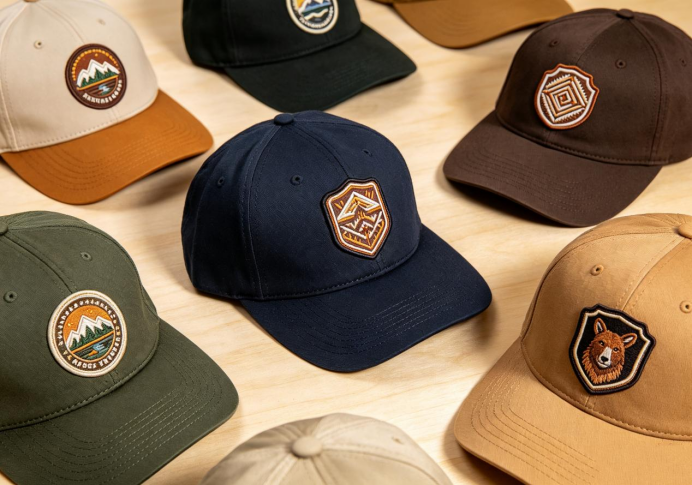
Teams sourcing across multiple garment types often end up mixing constructions — sew-on for jackets, iron-on for shirts, woven for lightweight polos. That's normal. The goal isn't picking one universal patch style; it's matching each fabric and laundering reality to the right backing, the way you'd match custom sew on patches for uniforms & apparel to heavier garments and reserve iron-on or Velcro for lighter or swappable gear.
If you're finalizing a uniform patch order, send over your fabric type, laundering frequency, and headcount — we can recommend a backing and border combination, confirm sample lead time, and quote based on your actual production volume.