

Sourcing Custom Paper Labels for Your Business
Choosing the wrong format for your custom paper labels is a costly mistake that can halt a production line before it even starts. Ordering labels on sheets when your equipment requires rolls leads to expensive downtime and manual labor costs. Conversely, ordering rolls for a small-batch, hand-applied product creates inefficiency and waste. This decision between roll and sheet format is the first critical checkpoint in sourcing labels that integrate perfectly with your operations, not disrupt them.
As a manufacturing consultant, I've seen brands invest heavily in product design only to be stalled by an incompatible label order. The key is to match the label format, material, and adhesive to your specific application method and environment from the very beginning. This guide covers the essential technical checkpoints to ensure you get it right the first time, backed by insights from our ISO 9001:2015 certified facility.
Roll vs. Sheet Labels: Key Differences for Commercial Use
The choice between rolls and sheets directly impacts your application speed, cost per unit, and operational efficiency. While both formats can deliver a high-quality finished look, they are engineered for entirely different production scales and workflows. Understanding these differences is fundamental to making a cost-effective sourcing decision.
Here’s a direct comparison of the two formats for business applications:
| Feature | Labels on Rolls | Labels on Sheets |
|---|---|---|
| Application Method | Designed for high-speed automated and semi-automated machine applicators. | Best suited for manual, hand-application processes. |
| Ideal Order Volume | Cost-effective for large quantities (typically 1,000+ units), offering a lower price per label. | Economical for small to medium quantities and prototype runs. We offer no MOQ for digital printing. |
| Production Speed | Enables rapid, continuous application, labeling thousands of products per hour. | Slower, deliberate application limited by human speed. Ideal for detailed or careful placement. |
| Dispenser Compatibility | Requires specific core sizes, roll diameters, and winding directions to fit machinery. | Requires no special equipment; can be peeled directly from the backing sheet. |
| Common Use Cases | High-volume product lines (e.g., beverage bottles, food jars, cosmetic tubes, shipping boxes). | Promotional giveaways, short-run products, packaging seals, address labels, and craft goods. |
The Sourcing Checklist: Matching Format to Your Operations
Before you request a quote, running through this sourcing checklist will help you define your technical requirements. Answering these questions ensures the labels you order will be perfectly compatible with your production environment, preventing costly errors and delays. For every bulk order, we include 100 bonus pieces to account for any initial machine setup adjustments.
1. What is your application method?
- Why it matters: This is the most important factor. Automated labeling machines are built exclusively for rolls. Forcing your team to peel labels from sheets to feed a high-volume line is impractical and defeats the purpose of the machinery. Hand-applying from a large, heavy roll is equally inefficient.
- Action: If you use any form of automatic or semi-automatic label applicator, you must order custom printed roll labels. For all manual processes, sheets provide greater flexibility and ease of use.
2. What is your order quantity?
- Why it matters: Production methods and cost structures differ significantly between formats. Rolls are typically produced using offset or flexographic printing for large runs, which involves higher setup costs but results in a much lower cost per label at high volumes (1,000 units or more). Sheets are often printed digitally, which has minimal setup cost and is ideal for smaller batches.
- Action: For runs under 1,000 pieces or for projects with multiple design variations, sheets are more economical. For mass production of 1,000+ units, rolls will deliver a better return on investment.
3. Do you know your machine's specifications?
- Why it matters: If you order rolls, compatibility is non-negotiable. An incorrect specification will render the entire batch unusable. Key specs include:
- Core Diameter: The size of the cardboard tube the labels are wound on (e.g., 3 inches).
- Maximum Roll Diameter: The largest roll your machine can hold.
- Winding Direction: The orientation of the label as it comes off the roll (e.g., top-first, right-side first). There are eight standard options.
- Action: Consult your labeling machine's manual or manufacturer to confirm these three specifications before placing an order. Our team can help you interpret these requirements with our free design assistance service.
4. What is the nature of your packaging?
- Why it matters: The product itself can dictate the best format. Applying labels to large, flat boxes is straightforward with either method. However, applying a small label to a curved bottle cap or a delicate piece of jewelry by hand is far easier and more precise when using sheets.
- Action: Evaluate the physical steps of your labeling process. If it requires precise, one-at-a-time placement on an unusual surface, sheets are often the better choice.
Common Sourcing Mistakes and How to Avoid Them
Beyond the roll-versus-sheet decision, several other details can make or break a label project. I've seen these preventable mistakes cause adhesion failure, unreadable text, and brand inconsistency. Here’s how to avoid them.
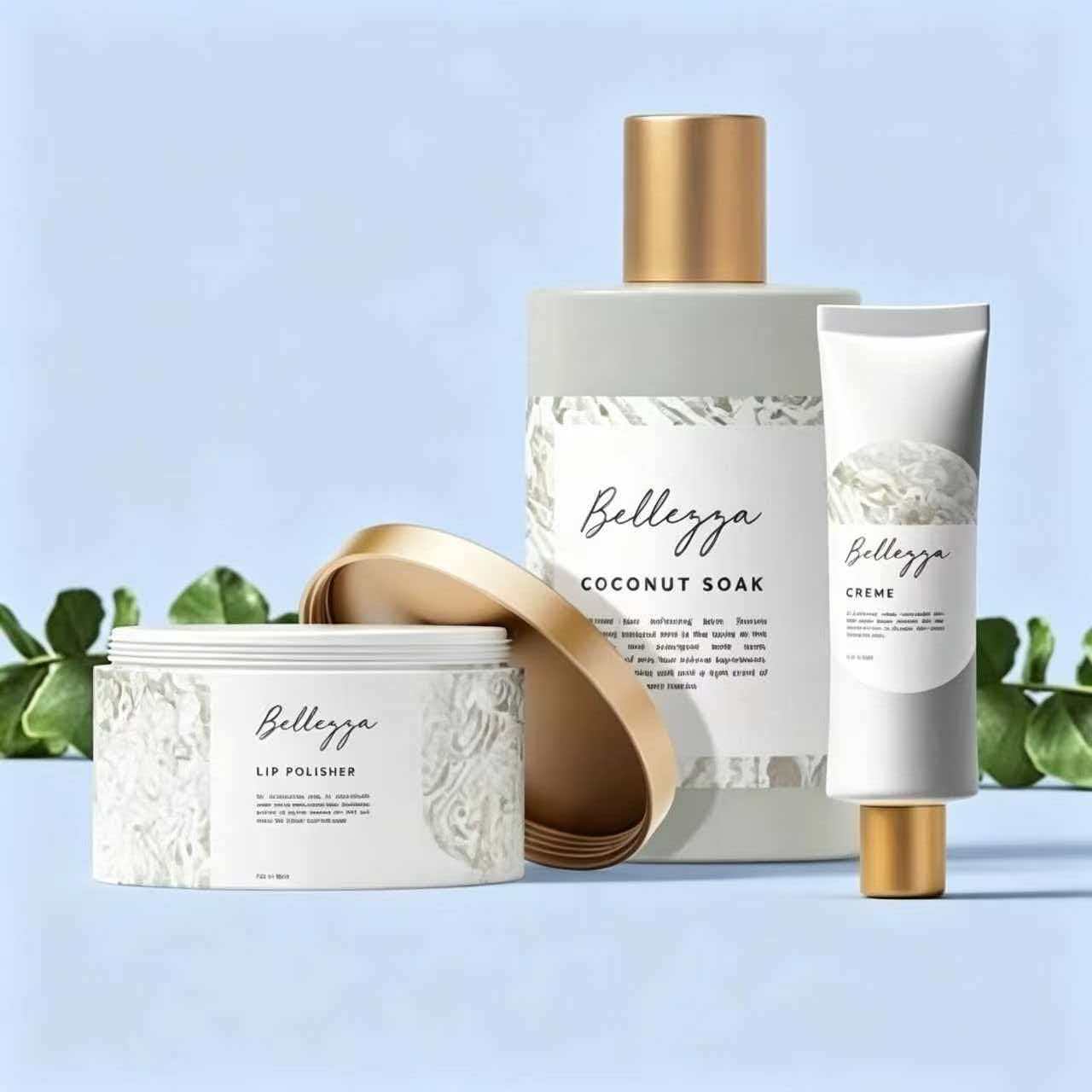
- Mistake 1: Ignoring the End-Use Environment. A standard paper label with a general-purpose adhesive will fail in a freezer. Condensation will cause the paper to degrade and the adhesive to lose its bond. Similarly, a label on a cosmetic product exposed to oils needs a protective lamination to prevent smudging and staining.
Solution: Always define the product's lifecycle. Will it be refrigerated, frozen, exposed to moisture, or handled frequently? For a natural health supplement brand in Australia, we produced metallic foil-stamped roll labels on a matte BOPP film with scratch-proof lamination. This combination ensured durability and a premium look for a competitive retail environment. For products like jams or sauces, consider waterproof custom jar labels for food & candles. - Mistake 2: Using Low-Resolution Artwork. Submitting a low-resolution logo or text file results in blurry, pixelated labels. This is especially problematic for ingredient lists, warning labels, or QR codes where readability is essential.
Solution: Always provide vector artwork (AI, EPS, PDF) for your designs. This ensures clean lines and sharp text, no matter the label size. At Custom Panda, we use advanced HP digital label presses that reproduce colors and details with exceptional clarity. We also offer a free reprint for any color mismatches against approved proofs. - Mistake 3: Guessing the Winding Direction. This is a classic mistake for roll labels. If your machine needs the label to dispense top-first but you ordered them to dispense bottom-first, the applicator cannot use them. The entire roll is effectively useless without tedious and costly manual intervention.
Solution: Do not guess. Use a winding direction chart (readily available online or from your supplier) and confirm the correct orientation with your production team or equipment manual before finalizing the order.
Material and Finish Options That Impact Performance
The material and finish of your paper labels are just as important as the format. They communicate your brand's quality, protect the design, and ensure the label performs as expected in its intended environment. A wide substrate selection allows you to find the perfect balance between aesthetics, durability, and cost.
Paper Substrates
The base paper material sets the tone for your product. Each type offers a different look and feel suitable for various markets.
- Glossy Paper: Creates a bright, shiny appearance that makes colors pop. It's a popular choice for food, beverage, and retail product labels.
- Matte Paper: Offers a non-reflective, elegant finish. It is easy to write on and is often used for high-end cosmetics, wine bottles, and artisanal goods. Explore our premium custom matte labels for a sophisticated look.
- Kraft Paper: Brown, textured paper that provides an earthy, organic, and rustic feel. It’s perfect for handmade products, natural foods, and eco-conscious brands. We specialize in producing custom kraft labels for this aesthetic.
- Textured Paper: Materials like vellum or linen paper add a tactile, luxurious quality, often used for premium wine and spirit labels.
Protective Finishes and Laminations
A finish is a clear coating or film applied over the printed label. It's not just for looks—it's for protection.
- Lamination: A thin plastic film (like BOPP) is applied over the label, making it waterproof, oil-resistant, and tear-resistant. It's available in gloss or matte finishes and is essential for products exposed to moisture or frequent handling.
- UV Varnish: A liquid coating cured with ultraviolet light. It adds a high-gloss sheen and provides good scuff and abrasion resistance, all while being powered by UV-resistant inks that prevent fading.
With a daily label capacity exceeding one million units, we can accommodate large-scale orders with complex finish requirements, ensuring every label meets your quality standards.
Making the right choices upfront on format, material, and adhesive will save you time, money, and production headaches. By aligning your label specifications with your operational reality, you ensure a smooth process from sourcing to final application.
If you're unsure which specifications are right for your project, our team can provide a technical consultation and a detailed quote to get you started.