

How to Source Custom Supplement Labels That Last
Ordering custom supplement labels based on the lowest price-per-piece is one of the costliest mistakes a brand can make. A label that peels, smudges, or fades after bottling not only destroys shelf appeal but can force a complete product recall if regulatory information becomes unreadable. The expense of re-labeling an entire production run far outweighs any initial savings. Before you request a quote, it's essential to define the durability requirements for your product to ensure your packaging looks professional from the warehouse to the customer's hands.
Getting it right means understanding how your product will be stored and used. A label for a refrigerated probiotic has vastly different needs than one for an oil-based softgel or a protein powder tub tossed in a gym bag. Matching the label's material, adhesive, and protective finish to its real-world environment is the only way to guarantee performance and protect your brand's reputation.
The High Cost of a "Cheap" Label: Common Durability Failures
From my 12 years on the factory floor, I've seen brands forced into expensive reprints because their initial labels failed in predictable ways. A flimsy label suggests a low-quality product, undermining customer trust before they ever open the bottle. These are the most common points of failure we engineer our labels to prevent.
- Adhesive Failure: The label peels or "flags" at the edges. This often happens with refrigerated products like probiotics, where condensation attacks a weak or incorrect adhesive. It's also common in humid environments like bathrooms, where many supplements are stored. Once a label starts peeling, it looks unprofessional and can easily be torn off.
- Ink and Lamination Damage: The printed text smudges or the surface scuffs, rendering barcodes unscannable and ingredients illegible. This is a frequent issue for products containing oils (fish oil, MCT oil) that can degrade inks, or for powders in large tubs that are subject to abrasion during shipping and handling.
- Substrate Tearing: An inappropriate material, like standard paper, is used on a flexible or squeezable container. The label wrinkles and tears with normal use, making the entire package look worn and cheap.
- Color Mismatch: The final printed label's colors don't align with your established brand guidelines. This creates an inconsistent customer experience and can damage brand recognition. At our ISO 9001:2015 certified facility, we guarantee our work and offer a free reprint for any color mismatch to ensure your branding is always accurate.
These issues are not just aesthetic; they are business risks. A durable, well-specified label is a critical component of your product packaging strategy.
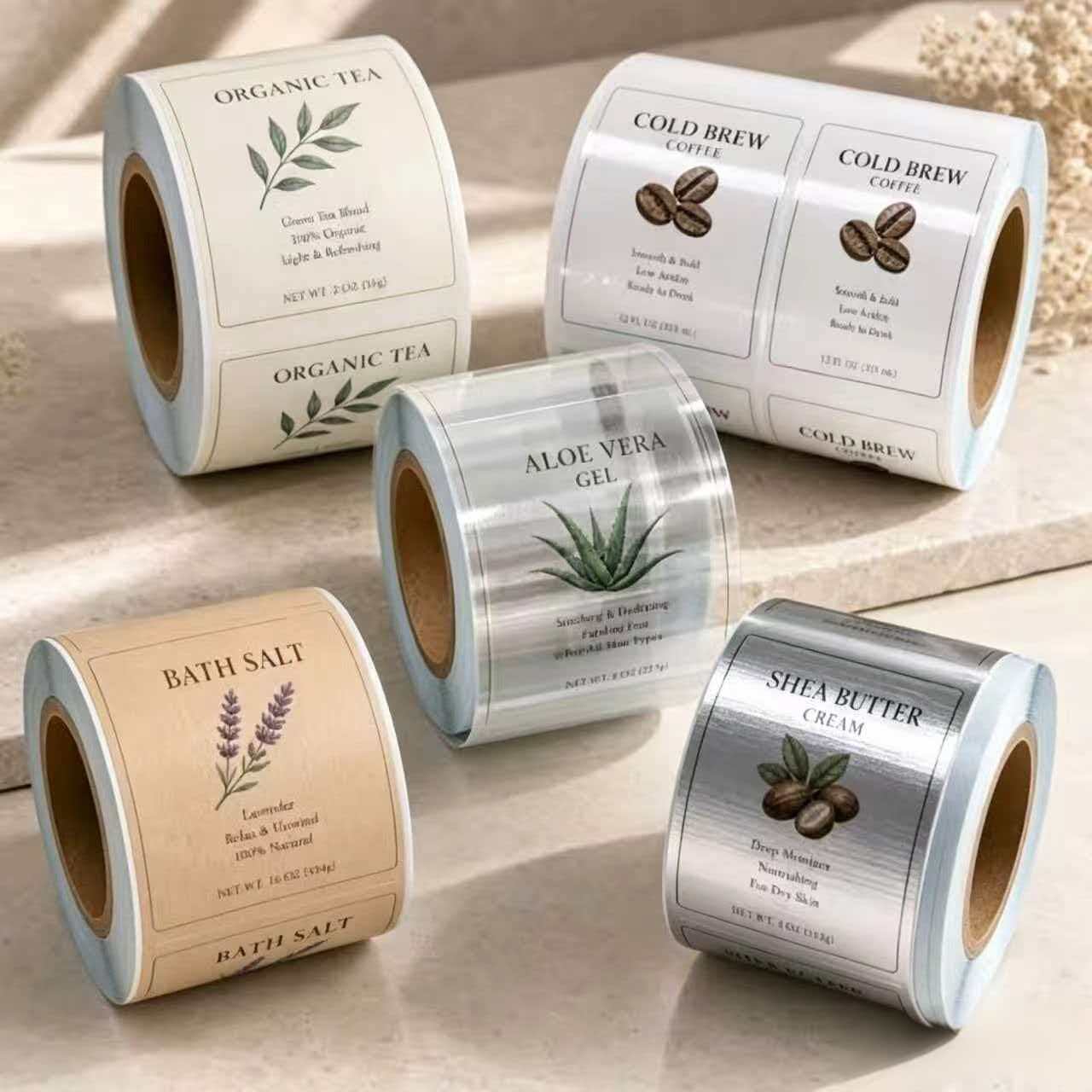
Matching Materials to Your Supplement's Environment
The single most important step in sourcing durable waterproof custom supplement labels for hdpe & pet bottles is to correctly specify the three core components: the facestock (the material itself), the adhesive, and the laminate (the protective top layer). Each must be selected based on the specific stresses your product will face. Use this guide to communicate your needs clearly to your supplier.
| Environmental Challenge | Recommended Facestock | Recommended Adhesive | Recommended Laminate | Why It Matters |
|---|---|---|---|---|
| High Moisture / Condensation (e.g., refrigerated probiotics, bathroom storage) |
White or Clear BOPP (Polypropylene), PET (Polyester) | Permanent, acrylic-based emulsion | Gloss or Matte BOPP Lamination | Paper absorbs moisture, which causes it to wrinkle, weaken, and peel. A BOPP film facestock is fully waterproof, preventing these issues and keeping the label intact. The laminate adds a second sealed layer of protection. |
| Oil & Chemical Exposure (e.g., fish oil, MCT oil, essential oils) |
BOPP, Vinyl (PVC) | Strong permanent, solvent-based | Gloss Lamination (oil-resistant) | Oils can break down paper fibers and cause certain inks to bleed or smudge. A non-porous film facestock combined with a protective gloss laminate creates an impermeable barrier, ensuring text and graphics remain crisp. |
| Abrasion & Scuffing (e.g., protein tubs in gym bags, shipping) |
BOPP, PET, Vinyl | Strong permanent | Scratch-proof Matte or Gloss Lamination | A durable laminate is the key defense against scuffing that can remove ink, damage branding, and make critical FDA compliance information unreadable. This is not just for looks; it's for safety and legality. |
| Squeezable Containers (e.g., gummy supplement bottles, tubes) |
White or Clear Squeezable BOPP | Flexible, strong permanent | Flexible BOPP Lamination | Standard materials can wrinkle, bubble, or peel at the edges ("flagging") when applied to a curved, flexible surface that is repeatedly squeezed. A conformable film and adhesive are designed to move with the container. |
Key Specifications to Finalize Before Requesting a Quote
Providing a potential supplier with detailed specifications is the fastest way to get an accurate quote and avoid production errors. Before you reach out, make sure you have answers for the following. Our team offers Free Design Assistance to help you finalize these details and ensure your design is optimized for production.
Buyer's Pre-Quote Checklist
- Container Material: Specify if your container is high-density polyethylene (HDPE), polyethylene terephthalate (PET), glass, or metal. Different surfaces have different energy levels, which directly impacts how well an adhesive will bond.
- Container Shape & Size: Provide the exact height and diameter of the label area. Note if the container is tapered, as this requires a specially shaped label to avoid wrinkling. Sending a physical sample to your supplier is the best way to ensure a perfect fit.
- Application Method: Will the labels be applied by hand or by machine? Machine application is faster and more consistent for large runs, but it requires custom printed roll labels, premium quality & fast shipping with a specific core size and unwind direction.
- Finishing Embellishments: Do you want to add a premium feel with effects like metallic foil stamping, embossing, or a spot UV varnish? These details make a product stand out on the shelf. For example, we worked with an Australian natural health brand to produce metallic foil-stamped roll labels that gave their product a high-end retail presence.
- Regulatory Text & Barcodes: Double-check that all legally required text (e.g., "Supplement Facts," warnings) is included and legible at the final print size. Ensure your barcode is high-resolution and large enough to be easily scanned.

Evaluating a Supplier: Beyond Price Per Label
The reliability of your supplier is just as important as the quality of the label itself. A low-cost provider who misses deadlines or delivers inconsistent quality can jeopardize your entire product launch. Look for a manufacturing partner who demonstrates a commitment to quality through their processes, capabilities, and support.
With a daily capacity of over 1,000,000 units from our six HP digital label presses, we are equipped to handle high-volume orders for growing brands in the United States, Australia, and the UK. More importantly, we have the quality systems in place to ensure every label meets your standards.
Ask potential suppliers about the following:
- Quality Management Systems: Are they certified under a recognized standard like ISO 9001:2015? This certification indicates they have documented, repeatable processes for maintaining quality control from order intake to final shipment.
- Sampling and Proofing: A good supplier will insist on a proofing process. We provide photo and digital sample confirmation before any bulk production begins. For a small fee, physical samples can be produced in just 3 days, allowing you to test the fit, finish, and adhesive on your actual container, completely de-risking the full order.
- Production Guarantees: What happens if there is a defect? Look for a partner who stands behind their work. We offer proportional replacement for any defects and include 100 bonus pieces with every bulk order to cover any minor issues during application.
- Technical Support: Can you speak directly with a knowledgeable human who can answer technical questions about adhesives, substrates, and FDA labeling guidelines? Direct access to expertise saves time and prevents costly errors.
Sourcing custom vitamin labels is an investment in your brand's physical presence. By prioritizing durability and partnering with a capable manufacturer, you ensure your product looks its best and builds the customer trust you've worked hard to earn.
If you're ready to produce supplement labels that protect your brand and withstand real-world use, our team can help. Contact us to discuss your project specifications or request a free sample.