

How to Source Custom Uniform Label Pins That Survive Daily Staff Wear
Most procurement teams discover the real problem only after the first shipment arrives: pins with loose clutches, enamel that chips after two weeks on a hotel blazer, or plating that dulls under daily handling. By then the budget is spent, the uniform rollout is scheduled, and reordering means another 8-9 day production cycle plus shipping. The real risk in sourcing Custom Uniform Label Pins isn't the design — it's picking a spec that looks fine on a sample sheet but fails under the friction, washing, and clothing-fabric stress of actual daily wear.
This guide walks through what to check before you send an RFQ, what trips up first-time buyers, and how to match pin construction to the uniform type your staff actually wears.
Why Uniform Pins Fail Differently Than Promotional Pins
A trade-show giveaway pin gets worn once and tossed in a drawer. A staff ID pin gets attached and removed hundreds of times a year, often on polyester blazers, security vests, or starched cotton shirts that get washed weekly. The stress points are different:
- Repeated attach/detach cycles loosen butterfly clutches within months if the post gauge is too thin.
- Fabric abrasion from vests and jackets wears down soft enamel faster than hard enamel.
- Washing and sweat exposure corrode plating that isn't properly sealed or dual-plated.
- Color-coded roles (security, management, service staff) demand enamel fills that stay sharp under fluorescent retail lighting, not just daylight.
Buyers who treat this like a standard promotional pin order usually end up re-ordering within a year — at full price, with no proportional defect coverage, because the original spec was simply wrong for the use case.
A Sourcing Checklist for Daily-Wear Uniform Pins
Before approving any quote, run it against this checklist. Each item maps to a specific failure mode we see in uniform-pin returns.
| Check Item | Why It Matters | Risk If Skipped |
|---|---|---|
| Pin size vs. garment fabric | Thin fabrics (polyester shirts) need lighter pins; thick fabrics (wool blazers, vests) can support heavier die-cast builds | Oversized pins sag or tear fabric; undersized pins look cheap on thick uniforms |
| Attachment type | Butterfly clutch suits light daily removal; magnetic backs avoid fabric holes for leased uniforms; safety-pin catch suits security roles needing quick swap | Wrong attachment causes loosening, fabric damage, or loss during physical work |
| Plating and base metal | Zinc alloy with nickel or gold dual-plating resists daily handling oxidation far better than single-layer plating | Plating flakes or discolors within 3-6 months of regular wear |
| Proof approval before production | Photo or digital sample confirmation catches color and size errors before 1,000+ units are cast | Mismatched role-color coding across departments, costly rework |
| Enamel type (hard vs. soft) | Hard enamel is polished flush and resists scratching on rough vest fabric; soft enamel shows texture but wears faster under friction | Soft enamel on tactical or outdoor uniforms chips within one season |
None of these checks are optional if the pin is going on a uniform worn five days a week. A size that looked balanced on a rendering can still overwhelm a thin shirt collar, and a clutch rated for occasional wear won't hold on staff who remove and reattach pins daily for laundering.
Matching Pin Construction to Uniform Type
Different staff roles call for different builds. Here's a practical breakdown based on common procurement scenarios:
| Uniform Context | Recommended Build | Reasoning |
|---|---|---|
| Hotel and service staff | Soft enamel, gold or nickel plating, magnetic back | Lighter fabric, frequent handling, no fabric puncture needed for leased uniforms |
| Security and safety teams | Hard enamel or die-struck, deep-color fill, locking pin back | Durability against outdoor conditions and accidental tugging |
| Corporate office uniforms | Hard enamel, dual-plated finish, butterfly clutch | Polished look for daily professional wear, resists tarnish over years of use |
| Airline and transit staff | 3D die-cast or offset printed, secure locking clutch | Withstands frequent travel handling and uniform changes between shifts |
If you're outfitting a mixed workforce — office staff plus security plus frontline service — it's common to run two or three pin specs rather than one, since a single build rarely satisfies both a blazer and a safety vest. Our uniform lapel pins line is typically split this way for clients ordering across departments, and we also build role-specific options under corporate pins for professional uniforms and security pins for safety teams.
Common Mistakes That Delay Uniform Rollouts
- Skipping the digital proof step. Teams in a hurry approve designs by email thread instead of a formal photo sample, then discover the role-color coding is off once 2,000 pins arrive.
- Choosing soft enamel for rough-fabric uniforms. It looks identical to hard enamel on a screen render but wears faster against tactical vests or canvas jackets.
- Ignoring post length for layered uniforms. A standard post that works on a thin shirt won't clear a jacket plus an undershirt — pins end up bent or crooked.
- Ordering one attachment type for every department. Magnetic backs are great for front-desk staff but unreliable for warehouse or security roles involving physical movement.
- Not confirming plating warranty terms upfront. If the plating flakes within weeks, you want a proportional replacement policy already agreed, not negotiated after the fact.
Production Timeline and Cost Factors to Plan Around
Budgeting a uniform pin order means accounting for both the sample cycle and the bulk run, not just unit price. A realistic sequence looks like this:
- Design and digital proof — confirm colors, size, and attachment type on a photo sample before production starts.
- Sample production — physical pin samples typically take around 3 days once artwork is approved.
- Bulk production — standard bulk runs for pins commonly take 8-9 days for offset or enamel finishing, depending on plating complexity.
- Shipping — for U.S.-based buyers, allow roughly 5-6 business days after production closes.
Offset printing and standard bulk builds typically carry a 1,000-unit minimum, which also brings better per-unit pricing than small-batch digital runs. If your uniform rollout covers fewer than 1,000 staff across multiple sites, it's worth consolidating the order into one spec where practical, rather than splitting into several sub-1,000 batches that lose the bulk discount.
What to Confirm Before You Send the RFQ
- Is the facility certified for quality management (ISO 9001:2015 is a reasonable baseline to ask for)?
- What happens if colors arrive mismatched — is reprint covered, or only partial credit?
- Is there a bonus-unit allowance for breakage or loss during the rollout (some suppliers include 100 extra pieces per bulk order as standard practice)?
- Can the supplier show a comparable case — for example, dual-tone gold-plated hard enamel pins produced for an esports tournament in Canada, or die-cast pins built for a Tokyo museum exhibition — demonstrating they've handled similar plating and finish requirements?
- Is proof approval done by photo or physical sample before the bulk run is cast?
These questions matter more than the unit price quoted on page one of an RFQ response, because a cheap pin that needs reordering in six months costs more than a slightly higher-priced pin that survives two years of daily wear.
Pairing Pins With Other Staff ID Elements
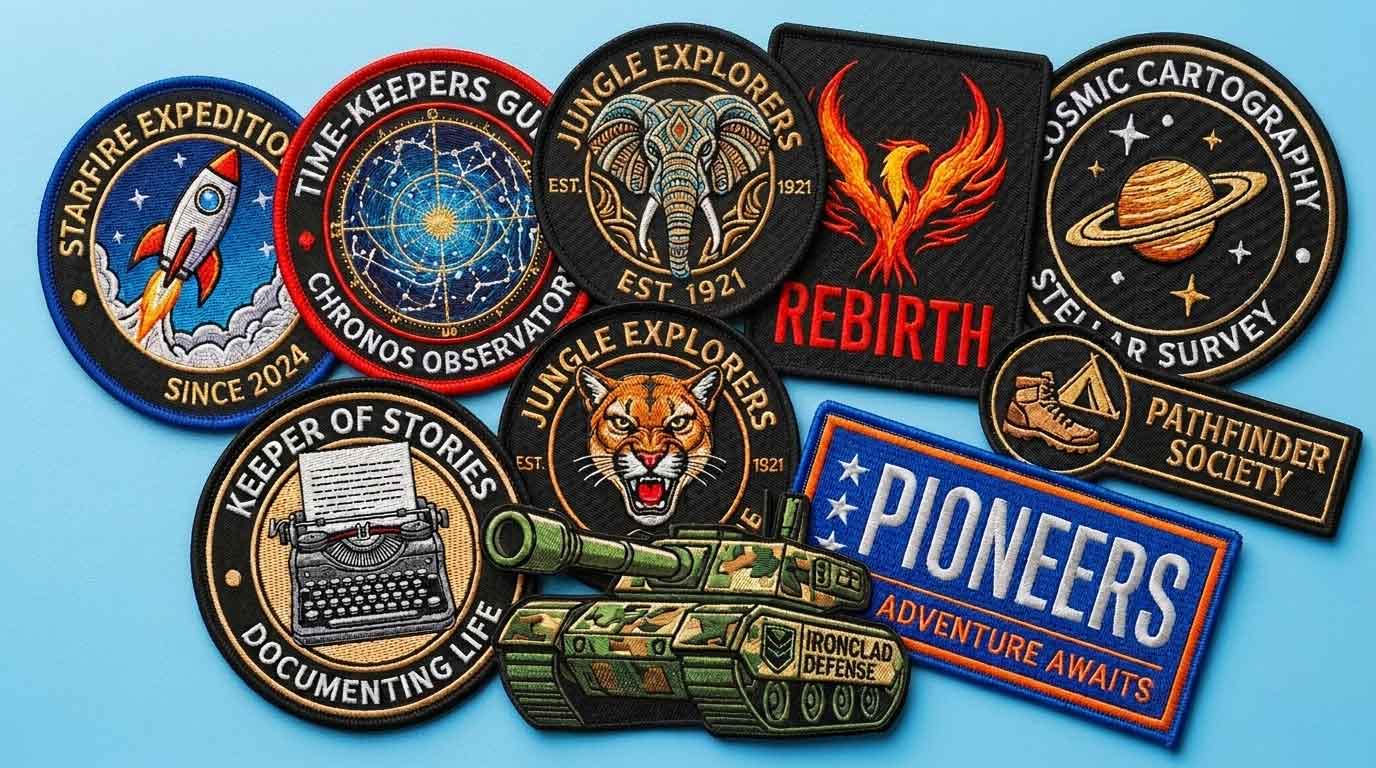
Many procurement teams sourcing staff pins are also ordering name badges, embroidered patches, or woven uniform tags in the same cycle. If your uniform program includes printed labels for internal garment tagging, it's worth reviewing custom woven clothing labels & neck tags alongside your pin order, since both typically go through design approval at the same stage. Teams combining metal pins with embroidered patches for jackets or vests often check custom badges options too, particularly for departments needing a flatter, lower-profile ID than a die-cast pin.
Final Spec Checklist Before Ordering
- Pin size confirmed against garment fabric weight and placement
- Attachment type matched to role (clutch, magnetic, or locking pin back)
- Plating confirmed dual-layer for daily handling durability
- Enamel type chosen based on fabric roughness and wash frequency
- Digital or photo proof approved before bulk production starts
- Reprint and defect policy confirmed in writing
If you're ready to move forward, send over your uniform fabric type, staff count per role, and any existing brand colors — we can help match a pin build to your daily-wear conditions and get a digital proof started before committing to bulk production.