

How to Source Hard Enamel Pins for Premium Giveaways
A premium giveaway order can fail long before production starts. The usual problem is not the artwork alone; it is an RFQ that leaves metal, plating, backing, quantity, approval timing, or delivery ownership undefined. The supplier may then quote a technically different product from the one your team expects.
When sourcing Hard Enamel Pins, procurement teams should treat the pin as a branded manufactured item rather than a small promotional extra. The right specification protects perceived value at executive events, product launches, membership programs, retail campaigns, and collector-focused giveaways. A polished surface, controlled color areas, stable fastening, and a fitting finish all affect whether recipients keep and wear the item.
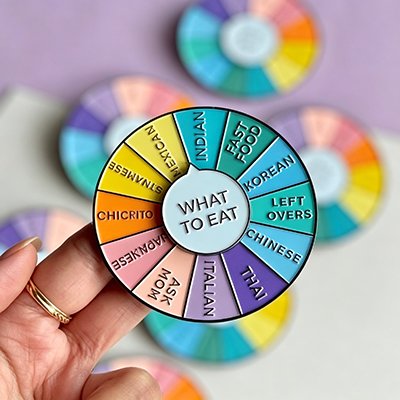
At Custom Panda, pin production is supported by an ISO 9001:2015 Quality Management System Certified facility and Disney FAMA certification. We established our manufacturing operation in 2012 and operate an 8,000 m² facility with six production lines, including complete metal die-casting capabilities. Those facts can support supplier qualification, but they do not replace a review of your own design, finish, attachment method, and campaign deadline.
Define the requirements before asking suppliers for quotes
Start with the campaign purpose, then define the pin specification. A pin intended as a high-value speaker gift requires different choices from a large-volume event handout. The best sourcing decision is not automatically the lowest-priced offer or the most decorated option. It is the option that meets the recipient experience, budget, and delivery conditions without adding features that do not serve the campaign.
Separate your inputs into three groups before issuing an RFQ.
| Requirement group | What to define | Why it changes the buying decision | When it may remain open |
|---|---|---|---|
| Essential requirements | Artwork, quantity, target delivery date, intended wearer, metal color, backing need, and destination | These details affect manufacturing method, quote scope, production planning, and shipment planning. | Do not leave them open if the giveaway date is fixed or the pin will be worn on uniforms. |
| Campaign preferences | Polished or antique appearance, custom shape, card packaging, collector appeal, or a premium plated look | Preferences help suppliers offer alternatives without changing the core purpose of the order. | Keep these flexible when budget approval is still pending. |
| Open questions | Final recipient count, garment thickness, brand color approval, whether each pin needs individual packaging, and who approves samples | Unresolved points can create scope gaps between quotes. | They can remain open early, but must be confirmed before production approval. |
For example, a conference organizer may know that 1,000 VIP gifts are needed but not know whether attendees will wear pins on suit jackets, backpacks, or lanyards. That is not a minor detail. A fastening suitable for a thin lapel may not be the preferred choice for a heavier fabric application. Ask the supplier to state the proposed backing in writing and explain why it fits the use case.
Also distinguish enamel artwork from highly detailed photographic art. If the logo contains tiny text, gradients, or fine portrait-style details, ask whether an offset printed pins option should be quoted alongside the enamel version. This does not mean printed pins are always better. Hard enamel construction generally suits clean color blocking and defined metal outlines; offset printing may be a more suitable alternative where artwork detail cannot be simplified. The limitation is visual preference: a printed surface may not deliver the same metal-and-enamel character desired for a premium recognition piece.
A supplier-vetting workflow for matching metal, plating, backing, MOQ, and delivery timing to premium giveaway campaigns
Use a fixed comparison workflow rather than asking every supplier for a general price. This approach makes quote differences visible and gives purchasing teams a record of what was checked. It is especially useful when several stakeholders own different parts of the decision, such as marketing approving the appearance, procurement approving commercial terms, and event staff owning the deadline.
| Sourcing check | Why it matters | How to verify it | What can change if it is overlooked |
|---|---|---|---|
| Metal selection | Zinc alloy, brass, and iron have different visual and construction considerations. | Ask the supplier to identify the proposed metal on the quote and tie it to the artwork and desired finish. | Quotes may look comparable but refer to different base materials. |
| Plating finish | Polished, antique, or dual-plated finishes influence the final presentation and how metal lines frame enamel areas. | Request a named plating finish and a photo or digital sample confirmation showing the intended appearance. | A generic “gold” or “silver” description can leave room for an unwanted finish interpretation. |
| Backing method | The attachment affects stability, wearer comfort, and the type of garment or item receiving the pin. | State the application surface and ask for the recommended pin back in the quote. | Loose or unstable pin backs can reduce usability and create replacement work after distribution. |
| MOQ and quantity breaks | MOQ affects whether a campaign can order exactly what it needs or should consolidate a larger run. | Ask for the minimum order quantity, quantity tiers, and whether the selected process has a different minimum. | A low unit price may depend on a volume that does not fit the campaign. |
| Production and delivery timing | A giveaway has a fixed date, unlike a replenishment product. | Request sample approval timing, bulk production timing, dispatch point, transit estimate, and responsibility for shipment booking. | A supplier’s manufacturing schedule may fit while the delivered date does not. |
| Defect remedy | Premium campaigns need a clear path if approved specifications are not met. | Ask for the written reprint, replacement, repair, and claim process before releasing the order. | Teams may have no agreed route for handling color mismatch or physical defects. |
At Custom Panda, pins can be made in zinc alloy, brass, or iron and can use hard enamel, soft enamel, offset printing, 3D die-casting, laser engraving, and dual-plated finishes. That breadth helps when a buyer needs alternatives, but it should not lead to feature stacking. Choose one construction path that fits the artwork and recipient expectation. A simple corporate logo with distinct areas may suit enamel and polished plating. A museum souvenir built around sculpted architecture may instead call for a cast approach.
A real example illustrates the difference. For a Tokyo museum exhibition, Custom Panda produced 3D cast metal souvenir lapel pins using antique bronze relief and cut-out details to reflect architectural aesthetics. That result supports considering 3d cast lapel pins when depth and relief are central to the design. It does not mean a 3D cast option is necessary for every premium giveaway, particularly when a flat logo and clear color fields are the main brand assets.
Match construction choices to the giveaway’s perceived value
Select hard enamel when the campaign needs a smooth, polished presentation with defined metal borders. This is often a sound fit for executive gifts, anniversary items, brand launches, staff recognition, and retail-ready designs. It is less suitable when the design depends on photo-like imagery, very fine tonal changes, or deep sculpted relief.
| Option | Best-fit design or campaign | What to ask the supplier | Where it may not fit |
|---|---|---|---|
| Hard enamel construction | Clean logos, bold icons, commemorative artwork, and premium branded giveaways | Confirm metal, plating, enamel color areas, pin back, and digital or photo sample approval. | Not the first choice for gradients or photographic artwork. |
| Soft enamel construction | Campaigns wanting visible recessed color fields or a more textured look | Ask how raised metal borders and color areas will appear in the proof. | May not match a brief that requires a smooth, polished surface. |
| Offset printed construction | Artwork with small text, gradients, or detailed illustration | Provide original artwork and ask for the readable-detail assessment. | May not provide the enamel-and-metal look expected for a formal commemorative item. |
| 3D die-cast construction | Souvenirs, mascots, heritage themes, or designs built around raised relief | Request a proof showing relief areas, cut-outs, and proposed finish. | Less appropriate when brand color is the main visual requirement. |
Do not assume that more colors or more plating always creates a better premium item. The better decision is to preserve brand recognition at the size recipients will actually see and wear. If the design relies on two strong colors and a polished gold frame, adding extra treatments can increase approval complexity without improving the giveaway.
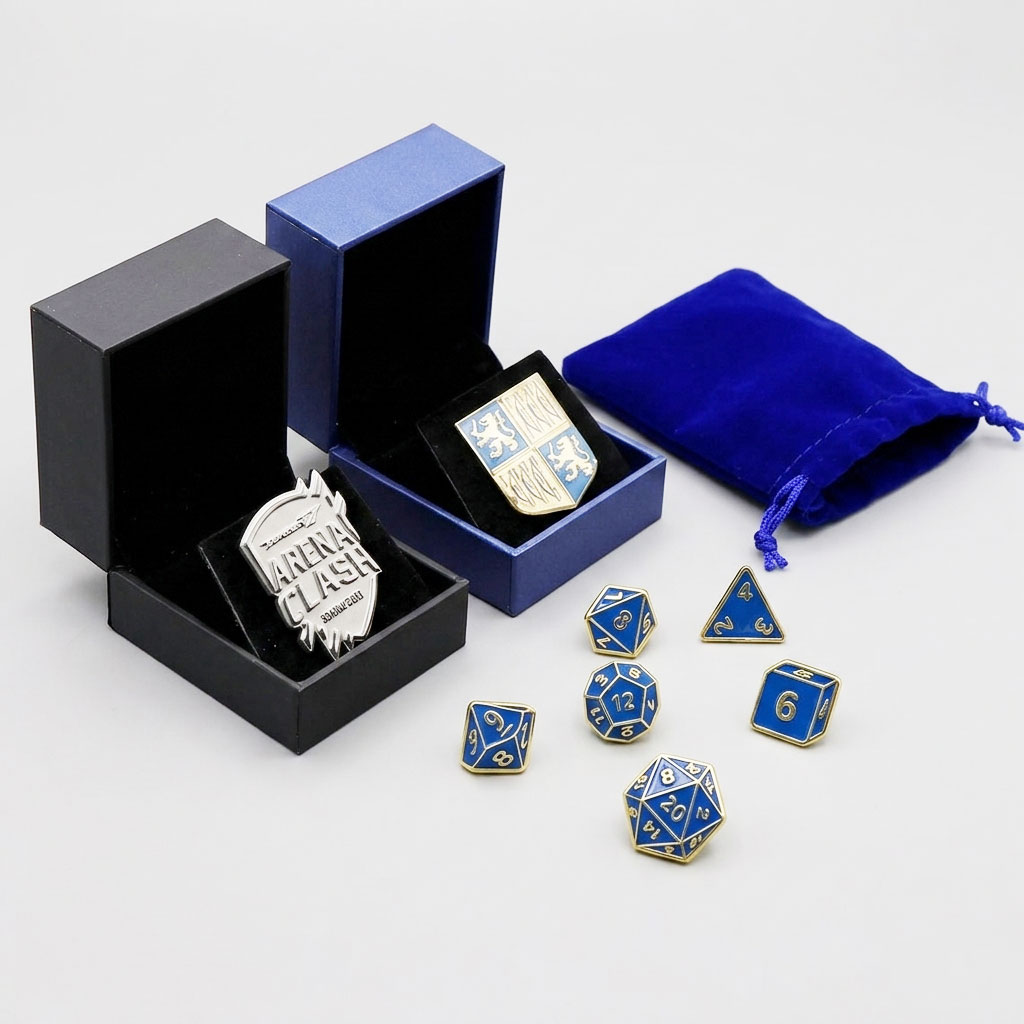
A relevant customer case came from Canada, where custom hard enamel pins for an esports tournament championship used polished gold plating and dual-tone colors. Fans and players wore them on jackets and lanyards. That case shows why buyers should specify both plating and color treatment rather than approving artwork without a finish description. It does not establish that polished gold or dual-tone colors are right for your own brand.
Qualify supplier evidence without treating claims as proof
Ask for evidence that relates directly to your risk. Certification, facility scale, and a broad product catalog can support confidence, but none proves that a supplier has interpreted your specific artwork correctly. The most useful verification combines company qualification with project-level confirmation.
- Quality-system evidence: Confirm the supplier’s stated certification and its scope. Our ISO 9001:2015 Quality Management System Certified status supports a documented quality-management basis. It does not by itself confirm that your exact plating, artwork, or backing selection is approved.
- Factory capability evidence: Ask whether the proposed item will be supported by the supplier’s in-house metal die-casting and enamel capabilities. Custom Panda has complete metal die-casting facilities and six production lines. This is relevant when pin construction is central to the order; it does not remove the need for artwork approval.
- Proof evidence: Request a photo or digital sample confirmation before production. This is the direct check for plating direction, logo placement, color area separation, text content, and backing placement.
- Relevant reference evidence: Review examples that resemble your campaign objective. For a commemorative award, a championship or museum example may be more useful than a general logo pin gallery.
- Conditional physical sampling: Consider a physical sample when the program has a high approval risk, a formal brand standard, an unusual attachment need, or a large commercial commitment. It is not mandatory for every straightforward reorder or simple design.
For buyers comparing supplier claims, ask each candidate to answer the same questions. “Can you make this?” is weak because it invites a broad yes. “Which metal, plating, backing, approval method, production schedule, and defect remedy are included in this quote?” creates a response that can be checked line by line.
Color mismatch is one of the risks worth addressing before release. Custom Panda offers a color-mismatch free reprint, proportional replacement for defects, 5-day fast re-stocking or repair, and 100 bonus pieces with every bulk order. These terms should be confirmed against the order scope and should not be treated as a substitute for careful sample approval. A remedy helps after an issue; an approved proof reduces the chance of one.
Make commercial quotes comparable before selecting a supplier
Compare scope, not only the total amount. If one supplier includes plating, a chosen backing, digital proofing, and delivery terms while another lists only a pin unit price, the totals are not comparable. Request a quote sheet that states what is included, what requires an added charge, and what remains subject to confirmation.
| Commercial item | What the quote should state | Why buyers need it |
|---|---|---|
| Unit and total price | Price by quantity tier, currency, and all stated inclusions | Allows procurement to compare like-for-like order volumes. |
| Tooling or setup | Whether tooling, mold, artwork setup, or proofing is included or separate | Prevents a low displayed unit price from masking one-time charges. |
| Finish and backing | Named plating, enamel type, metal, and pin back configuration | Ensures the quoted product matches the approved concept. |
| Packaging | Bulk packing, individual packaging, backing cards, or other requested presentation | Packaging affects giveaway readiness and internal handling work. |
| MOQ | Minimum order quantity for the selected construction and price breaks above it | Shows whether a smaller campaign must buy excess inventory. |
| Schedule | Sample lead time, approval assumption, bulk production period, and shipping estimate | Lets the event owner assess the delivered-date risk. |
| Warranty or remedy terms | How defects, color mismatch, replacement, and repair are addressed | Sets expectations before payment and production release. |
Custom Panda states a sample lead time of 3 days for pins, patches, and labels. Bulk production is listed as 8–9 days, while U.S. shipping is listed as 5–6 business days. Those timings are useful planning inputs, not a delivered-date guarantee for every order. The buyer should still ask when the clock starts, whether artwork is ready, what approval date is assumed, whether the shipment destination is in the United States, and whether the proposed order needs any special treatment.
For standard bulk items, the stated minimum is 1,000 units, with better pricing at higher quantities. Digital printing and selected custom items have no MOQ, but that statement should not be applied automatically to a metal pin order. Ask for the MOQ that applies to the exact pin construction in your RFQ.
Release the order only after the final decision path is complete
Screen suppliers first, clarify gaps second, and approve production last. This sequence avoids approving artwork before the product definition and commercial scope are aligned. It also helps marketing and procurement divide responsibilities cleanly.
- Prepare one RFQ brief. Include vector artwork, desired quantity, delivery destination, in-hand date, target recipient, brand color references, proposed plating, and any packaging request.
- Ask suppliers to identify open inputs. A reliable response should flag missing decisions instead of silently making assumptions about metal, backing, or finish.
- Request comparable quote lines. Use the commercial table above and require every supplier to state MOQ, production assumptions, shipping assumptions, and remedies.
- Review the construction recommendation. Confirm that the proposed option suits the design. If the artwork includes fine printed detail, ask for an alternative process rather than forcing the art into enamel areas that cannot reproduce it well.
- Approve the photo or digital proof. Check spelling, brand colors, metal finish, line separation, placement, backing, and any packaging copy. Record the approved version.
- Confirm the delivery plan. Compare the required in-hand date against approved-artwork timing, bulk production timing, and transit timing. If there is no contingency, avoid treating the schedule as fixed.
- Release production with named acceptance terms. Ensure the purchase order matches the approved proof, quote, quantity, delivery details, and agreed remedy path.
Use this short pre-production checklist:
- Metal, enamel method, plating, and backing are named.
- Quantity and applicable MOQ are confirmed.
- Artwork proof has an identified approver.
- Packaging requirements are in the quote.
- Production and shipping assumptions support the event date.
- Defect, color-mismatch, and replacement terms are documented.
- The final quote matches the exact product being approved.
Send your artwork, target quantity, and delivery date to request a quote or selection advice for your premium giveaway pin program.