

How to Use Iron On Patches for Easy DIY Branding?
What Makes Iron On Patches Different from Sew On Patches?
You have probably seen iron on patches before, tucked into gift boxes, handed out at events, or sold as merch. And if you are honest, most of them ended up sitting in a drawer or tossed into a junk bowl on someone’s desk within a month. Nobody mentions that part when they pitch patches as great branding tools
A patch only earns its place if the person using it has a reason to keep using it. Hand one out once with nothing behind it, and it is just a piece of fabric with a logo on it, not a brand touchpoint. The businesses actually pulling value from patches this year aren’t ordering more of them. They are using the same budget more smartly.
Custom Iron on patches are fundamentally different fromcustom sew on patches. Sew-on patches require needle and thread, a sewing machine, or a trip to the tailor. iron on patches have a heat-activated adhesive backing. You place the patch on the fabric, apply heat with a household iron or heat press, and the adhesive bonds the patch to the garment. No sewing skills required. No expensive equipment needed. No waiting for a professional to do it for you.
That simplicity is exactly what makes iron on patches such a powerful tool for DIY branding. Anyone can do it. Any brand can use it. And when done right, the result looks professional enough that nobody can tell it was done in a kitchen or at a pop-up booth.
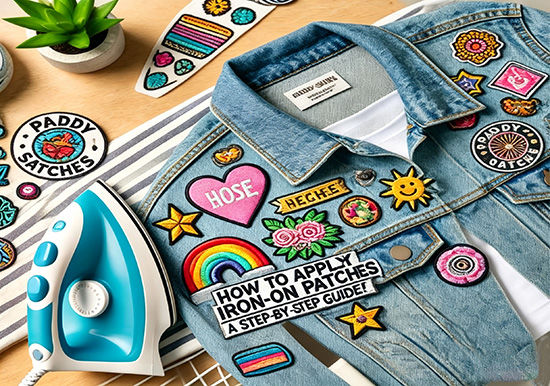
Why Iron On Patches Get Noticed When Digital Ads Do Not
Most people scroll past four or five ads before they have finished their morning coffee. Skip the pre-roll, mute the story ad, or block the pop-up. It is automatic at this point, nobody really has to think about it. A banner ad is gone in two seconds, and a sponsored post disappears the moment someone closes the app.
A patch does not get that same instant dismissal. Someone has to actively choose to stop wearing it, and most people do not bother unless it falls apart or they simply do not like it anymore. That is the gap businesses are sitting on right now.
A well-made iron on patch holds up well on a jacket, a backpack, or a cap for months without fading or peeling. The same small badge keeps showing up in front of new people every single day, on a commute, at work, in line somewhere. No algorithm decides who sees it. No budget runs out halfway through the month. It just sits there doing its job until someone removes it, and most people never bother.
Think about what that means for a small business. A single order of iron on patches, say 100 pieces, can generate thousands of impressions over the life of those patches. Each patch becomes a mobile billboard that moves through the world attached to someone who actually chose to put it there. That is not just visibility. That is endorsement.
The Mistake That Wrecks a Patch Order Before It Ships
The Reseller Trap
Someone finds a seller online offering iron on patches for half the going rate, places an order, and three weeks later gets patches where the colours came out completely wrong and the adhesive barely sticks. What happened is that the seller never made anything themselves. They took the order, forwarded it to a factory overseas, marked up the price, and disappeared the second something went wrong.
What a Custom Panda Gives You
Custom Panda can show you proof photos before production starts, tell you exactly how many days the run will take, and fix a mismatched colour before it ships instead of after you have already paid for 500 pieces you cannot use.
Another common mistake is ordering patches without testing the adhesive on the actual fabric you plan to use. Different fabrics react differently to heat and adhesive. What works perfectly on cotton might fail on nylon or polyester blends. Always test a sample patch on your actual garment fabric before committing to a full production run.Inform your requirements and Custom Panda will assist you to test.
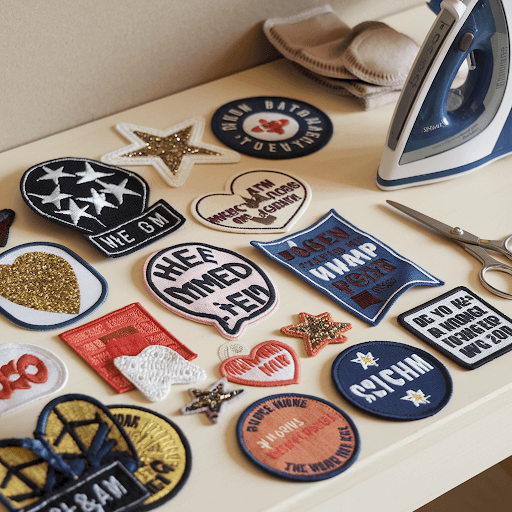
Iron On Patches or Woven Patch: Which One Fits Your Brand?
Before you pick a design, you need to pick a material and finish, because this decision changes how the patch looks and feels long after the order ships. It is not just a manufacturing detail, it is the first thing someone notices when they pick the patch up.
Embroidered Iron On Patches
Embroidered patches have a slightly raised texture. You can actually feel the thread under your finger. They cost less to produce, which makes them the easier pick for streetwear drops, band merch, or anything meant to feel fun and a little rough around the edges. If your brand leans casual or your audience collects patches like stickers, this is usually the right call.
Woven Iron On Patches
Woven patches use thinner threads and a tighter weave, resulting in a flat, smooth finish. They can reproduce fine details, small text, and complex logos that embroidered patches cannot handle. They cost more and take a bit longer to produce, but they read as premium the second someone holds one. Corporate gifts, professional uniforms, and anything tied to a polished image usually lean this way because the finish does some of the convincing on its own.If you are choosing based on price alone, you are picking the wrong way. Pick based on what your brand is supposed to feel like in someone's hand, and the right finish becomes obvious.
Not Every Branding Project Needs to Be a Big One
Not every situation calls for a 500-piece patch run, and that is fine. iron on patches cost less per unit at smaller quantities, take less time to produce, and do not require the same minimum order size most woven runs do. They are the practical call when you are testing a new design, ordering for a one-day event, or working with a budget that does not justify a bigger run yet.
This is usually where small-batch iron on patches make the most sense:
Trying out a few design options before locking in one for a bigger batch
Handing something out at a local market or pop-up without overspending
Giving staff or volunteers a quick patch for a single event
Testing whether your audience actually wants patch merchandise before investing more
These are the situations where spending less actually makes sense, not because the design matters less, but because you do not know yet if it is worth scaling. Once you know which design people actually reach for, that is when it makes sense to move into a bigger run.
How to Apply Iron On Patches: A Step-by-Step Guide?
Getting the application right is the difference between a patch that stays on for years and one that peels off after a week. Here is how to do it properly.
Step 1: Prepare Your Fabric
Wash and dry the garment before applying the patch. This removes any sizing, dirt, or oils that could interfere with the adhesive bond. Do not use fabric softener, it leaves a residue that can prevent the adhesive from sticking properly.
Step 2: Position the Patch
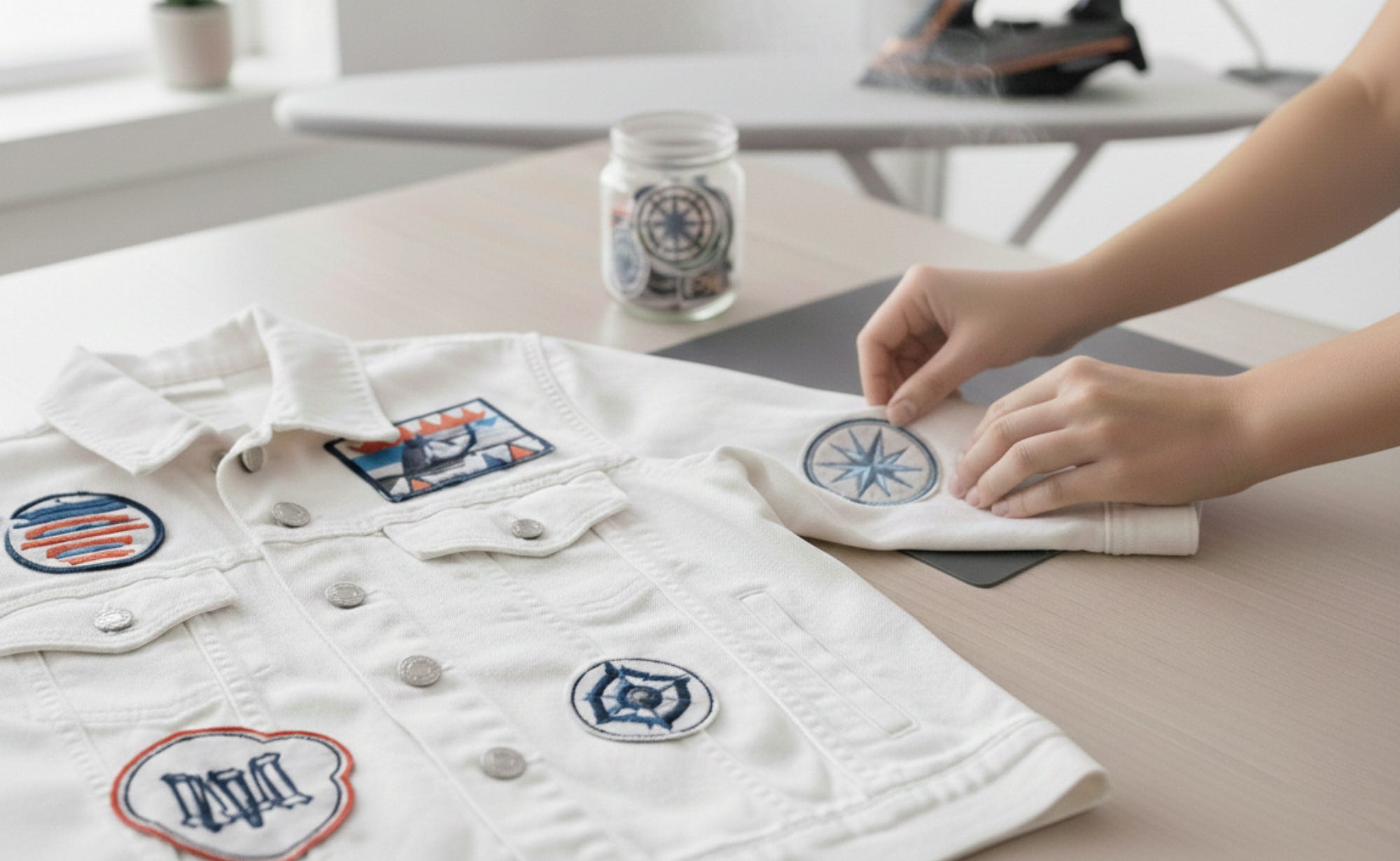
Place the patch on the desired location with the adhesive side down. Use a ruler or measuring tape to ensure it is centered and straight. Once the heat is applied, you cannot reposition it.
Step 3: Apply Heat
Preheat your iron to the highest setting that is safe for your fabric, typically cotton or linen setting. Do not use steam. Place a thin cotton cloth or parchment paper over the patch to protect it and the iron. Press firmly and hold for 15 to 20 seconds. Apply even pressure across the entire patch surface.
Step 4: Flip and Repeat
Turn the garment inside out and press the back of the patch area for another 10 to 15 seconds. This step ensures the adhesive penetrates the fabric from both sides for a stronger bond.
Step 5: Cool and Check
Let the patch cool completely, about 10 to 15 minutes. Gently try to lift one edge. If it lifts, repeat the pressing process. Once cool and secure, the patch is ready to wear.
Give People a Reason to Earn the Patch
The businesses getting real mileage out of iron on patches are not placing them at the front counter for anyone to grab. They are attaching the patch to something the customer actually does. Sign up for the newsletter, hit a certain order amount, post a photo and tag the brand, or show up to an in-person event. The patch becomes a small reward for taking action instead of a freebie sitting in a bowl that anyone walks off with.
Make the drop feel limited. A patch that is only available for one week or only goes to the first 200 people who complete an action is discussed in a way an unlimited giveaway never is. People want what feels earned or limited, not what is sitting out for free.
Set a small trigger, set a small limit, and the same patch that used to disappear into a drawer starts actually doing something for the brand.
Patches Do Not Have to Live on a Jacket
Most people picture a patch on a denim jacket or a backpack strap when they think about branded patches, but that is a narrow view of where they actually work. Look around any street, any campus, any office, and you will see patches on caps, tote bags, lanyards, and backpacks far more often than on a traditional jacket.
Your audience is already wearing the surfaces. You just have not given them something to put on them yet. Add an iron on patch to a cap giveaway instead of just printing the logo on the front, and people notice the difference. It feels like a detail someone chose instead of a default. The same goes for tote bags and lanyards, both already covered in patches for people who collect them.
You are not introducing a new habit. You are just giving people one more reason to add your brand to something they were already going to wear.
Why Choose Custom Panda as Your Iron On Patch Partner?
Most patch companies treat you like an order number. You send a file, they send a quote, you pay, and three weeks later a box shows up. If something goes wrong, good luck getting anyone on the phone. That is not how we work, and it never will be.
We are Custom Panda. We make custom iron on patches, custom embroidered patches, woven patches, PVC patches and more for people who actually care about how their brand feels in someone else's hands.
Beyond patches, our core product lines also include custom pins, and custom labels – making us your comprehensive partner for all garment identification and branding needs.
Not because we are the biggest factory out there, but because we are the kind of people who notice when a colour is slightly off and fix it before you even have to ask.
Here is what that looks like in practice. No minimum order requirements, because we believe small brands deserve the same quality as Fortune 500 companies. Free digital proofs within 12 hours, because waiting around for a week to see your own design is just ridiculous.
Production in 2 to 3 days after approval, because your timeline matters more than our convenience.Sample production takes 3 to 5 working days, and bulk production takes 7 to 15 working days (depending on the order volume). not two weeks later with a vague excuse.
We run our own production facility. That means when you order from us, you are talking to the people who actually make your patches, not a middleman who forwards your order to someone else and marks up the price. We handle everything in-house, from artwork optimisation and material selection to cutting, embroidery, and adhesive application. That is how we catch problems before they become your problems.
We do not have a script. We do not have a call centre in a time zone that makes it impossible to reach anyone. You send us a message, you get a human who knows what they are talking about and actually cares whether your patches turn out right. If a design needs adjusting, we tell you. If a colour is not going to work, we suggest an alternative. If you are not sure what material fits your brand, we walk you through it until you are.
At the end of the day, we are not trying to be the biggest. We are trying to be the one you actually remember. The one who answered your email within an hour. The one who caught that tiny misalignment in your artwork before it went into production. The one who shipped your order a day early because we knew you had a deadline.
That is Custom Panda. That is who we are. And we would love to make something great with you.
FAQs
Q:How long do iron on patches last?
With proper application and care, iron on patches can last for years. The adhesive bond is strong enough to withstand regular washing if the garment is turned inside out and washed in cold water.
Q:Can I apply iron on patches to any fabric?
iron on patches work best on cotton, cotton blends, denim, and canvas. They do not adhere well to nylon, polyester, leather, or fabrics with water-repellent coatings. Always test on a sample first.
Q:What is the minimum order quantity for custom iron on patches?
Custom Panda has no minimum order requirement. Whether you need 50 patches for a small event or thousands for a large campaign, we accept orders of any size with complete flexibility.
Q:Can I get a sample before placing a bulk order?
Yes. We strongly recommend ordering samples first to inspect quality, colour accuracy, adhesive strength, and overall finish before full production.
Q:How long does production take for custom iron on patches?
Sample production takes 3 to 5 working days, and bulk production takes 7 to 15 working days (depending on the order volume).
Q:Do you ship iron on patches internationally?
Yes. We ship worldwide via DHL, FedEx, and UPS with door-to-door tracking and customs assistance.