
Iron On Patches Custom Quotes: Factors Beyond Stitch Count
Comparing quotes for a bulk order of heat-applied patches can be misleading. One supplier’s price might seem low, but it often hides costs in setup fees, backing quality, or freight charges that surface later. A quote based solely on stitch count and size is incomplete and puts your budget at risk. To make an informed sourcing decision, you need to understand every variable that contributes to the final unit price, ensuring you compare equivalent quality and services.
With over a decade in custom manufacturing, I’ve seen countless brands overpay or receive subpar products because their initial request for a quote wasn’t specific enough. This guide breaks down the key factors that influence the cost of custom iron on patches. We’ll go beyond the basics to help you create a detailed specification sheet, evaluate supplier quotes accurately, and secure high-quality patches that represent your brand perfectly.

Choosing the Right Patch Type: The First Major Cost Factor
Before calculating stitch counts or border types, the fundamental construction of the patch itself sets the baseline cost. Different patch styles use unique materials and production processes, each suited for different designs and budgets. Choosing the wrong type can lead to poor detail resolution or unnecessary expense.
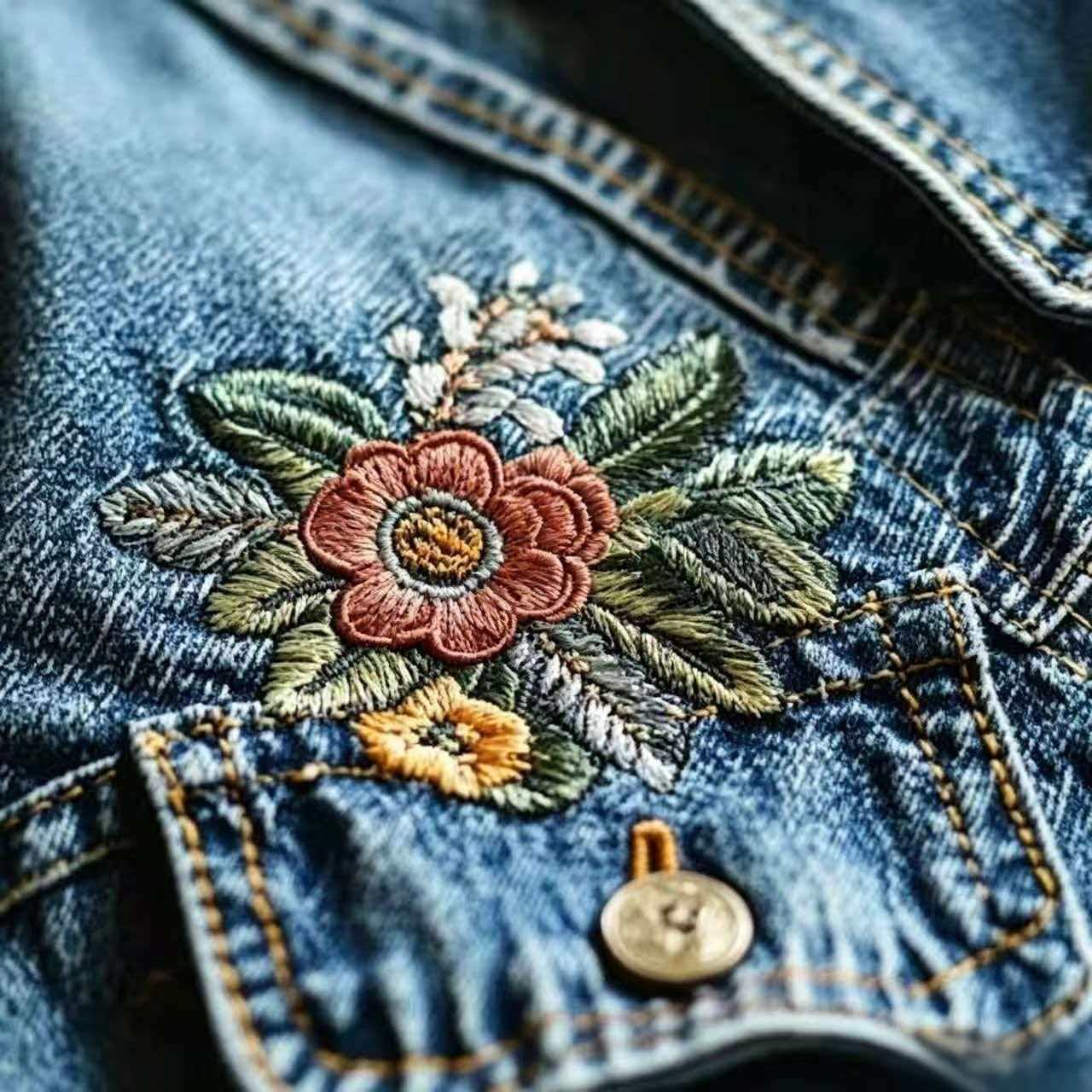
- Embroidered Patches: The classic choice, known for its raised, textured feel. Ideal for bold logos, text, and designs without fine gradients. The cost is heavily influenced by thread coverage. For instance, we manufactured heavy-duty custom embroidery jacket patches for a U.S. outdoor gear brand, where durability and a classic look were key.
- Woven Patches: Made by weaving thinner threads together rather than embroidering onto a substrate. This allows for much finer detail and smaller text, making them perfect for complex logos. For a luxury knitwear brand in the United Kingdom, we produced ultra-soft damask woven labels to ensure high-end detail without scratching the skin.
- Chenille Patches: Known for their fuzzy, retro look, commonly seen on varsity jackets. They are constructed with yarn loops, creating a plush, high-pile texture. Chenille is excellent for large, simple shapes and letters, like the prominent university sports team patches we delivered to a client in Sweden. Due to the materials and process, they are typically more expensive than embroidered patches.
- PVC Patches: Made from soft rubber, PVC patches are waterproof, durable, and can feature 3D-molded designs. They are ideal for tactical gear, outdoor brands, and any application requiring weather resistance. The primary cost is in the mold creation, which makes them more cost-effective at higher volumes.
- Leather Patches: Offered in genuine or faux leather, these patches provide a premium, rugged aesthetic. Designs are typically debossed, embossed, or laser-engraved. We supplied embossed faux-leather patches for an Italian premium denim line, specifically engineered to withstand industrial stonewashing processes.
Deconstructing Your Patch Quote: A Line-by-Line Breakdown
A transparent quote should itemize every component of your patch’s cost. When a supplier only gives you a single unit price, you lose visibility into where your money is going. Insist on a detailed breakdown to prevent surprises and ensure you’re comparing apples-to-apples between potential manufacturers. Our process, managed within an ISO 9001:2015 certified system, ensures every variable is accounted for upfront.
Here are the critical cost variables you should see on any professional quote:
| Quote Variable | How It Impacts Cost | What to Specify |
|---|---|---|
| Size & Shape | Price is calculated based on the longest dimension (height or width). Complex, irregular shapes require more precise cutting (laser-cut) and may cost more than simple circles or squares. | Provide exact dimensions in inches or millimeters. Note if the shape is intricate with many cut-outs. |
| Embroidery/Design Coverage | This is the percentage of the patch surface covered by thread. Standard tiers are 50%, 75%, and 100%. Higher coverage means more thread and longer machine time, increasing the cost. | Specify your desired coverage. A 100% covered patch has no visible twill backing. |
| Backing Type | The standard heat-seal (iron-on) backing is most common. However, industrial-grade adhesives for workwear, pressure-sensitive sticker backing for temporary use, or hook-and-loop (Velcro) backings all have different price points. | State the intended application (e.g., cotton t-shirts, polyester backpacks, work uniforms) so the right backing can be recommended. |
| Border Type | A merrowed border is a thick, raised edge best for simple shapes like circles and squares. A hot-cut or laser-cut border is a flat, sealed edge necessary for complex, custom shapes. Laser-cutting is more precise but can be slightly more expensive. | Your patch shape will usually determine the border type, but it’s good to confirm. |
| Thread Type & Color Count | Most quotes include up to 7-9 standard colors. Specialty threads like metallic, glow-in-the-dark, or UV-reactive threads cost extra. The number of colors can also add to the cost, though less significantly than coverage. | Provide Pantone (PMS) codes for all colors. Specify if you need any specialty threads. |
| Setup/Digitizing Fee | This is a one-time fee to convert your digital artwork into a stitch-ready file for the embroidery machines. It covers the skilled labor required for this technical setup. Be wary of suppliers who waive this; they may build the cost into the unit price. | Confirm if this is a one-time fee per design. For reorders, this fee should not be charged again. |
| Freight & Shipping | Shipping costs, especially for international bulk orders, can be a significant part of the total. Some suppliers quote ex-factory prices, leaving you to handle shipping and customs. | Clarify shipping terms (e.g., FOB, DDP). We offer Free Shipping to provide clear, all-inclusive pricing from the start. |
Common Quality Failures and How to Prevent Them
Low-cost quotes can sometimes signal compromises in quality that only become apparent after you’ve received your order. From fraying borders to weak adhesive, these issues can ruin your product and brand reputation. The key to prevention lies in providing clear specifications and partnering with a manufacturer who has robust quality control processes.
Here are common problems I’ve helped clients solve and how to avoid them:
-
Problem: Weak Adhesive That Fails After Washing.
Not all iron-on backings are created equal. A standard backing designed for promotional cotton t-shirts will fail quickly on a polyester jacket or a flexible canvas bag. The adhesive loses its bond due to fabric type, texture, or improper heat application.
Prevention: Specify the exact fabric your patch will be applied to (e.g., 100% cotton, 50/50 poly-cotton blend, nylon). A reliable manufacturer will recommend an industrial-grade or specialty adhesive for non-standard materials. We always confirm application details and provide a digital sample for approval before bulk production, which takes only 8-9 days.
-
Problem: Fraying Embroidery Borders.
This often occurs with hot-cut borders on simple shapes where a more durable merrowed border would have been appropriate. It can also happen if the cutting process wasn’t properly heat-sealed, leaving threads loose and prone to unraveling over time.
Prevention: Discuss the border type with your supplier. For standard shapes, a merrowed border is generally more durable. For intricate shapes, ensure the supplier uses a high-quality laser-cutting process. As a guarantee, we offer proportional replacement for any defects and a 5-day fast re-stocking service.
-
Problem: Low Detail Resolution and Blurriness.
This is a classic case of using the wrong patch type for the design. Trying to recreate fine text or complex gradients with standard embroidery will result in a messy, illegible final product. The thickness of the thread simply cannot capture that level of detail.
Prevention: If your design is highly detailed, consider a woven patch instead of an embroidered one. Alternatively, a printed patch can replicate a design with photographic precision. Our Free Design Assistance service includes a review of your artwork, where our experts will recommend the best patch type to ensure your design is rendered clearly. We also provide photo confirmation before starting the full run.
A Practical Comparison of Backing Options
While this guide focuses on iron-on applications, it’s important to know when another backing type might be a better fit. The right backing depends on the garment, the wearer, and the desired permanence. For example, for the heavy-duty backpacks of a U.S. outdoor brand, we used rugged custom hook & loop patches for their versatility and durability.
Use this table to decide which backing best suits your project’s needs:
| Backing Type | Best For | Durability | Cost Impact | Application Method |
|---|---|---|---|---|
| Iron-On (Heat Seal) | Permanent application on hats, jeans, t-shirts, and cotton/poly-blend fabrics. Great for retail products and giveaways. | High, but can weaken with repeated high-temperature washes. Not recommended for nylon or heat-sensitive fabrics. | Standard/Baseline | Heat press or household iron. |
| Sew-On (No Backing) | The most permanent and durable application. Essential for leather, thick jackets, and items that will be washed frequently and harshly (e.g., workwear). | Extremely High. Will last the lifetime of the garment. | Lowest (no backing material cost). | Sewing machine or by hand. |
| Velcro (Hook & Loop) | Uniforms, tactical gear, bags, and any item where patches need to be swapped out. Includes both the hook (hard side) and loop (soft side) backing. | Very High. Allows for thousands of applications and removals. | Highest | Hook side is sewn onto the patch; loop side is sewn onto the garment. |
| Adhesive (Peel & Stick) | Temporary use for events, conferences, or trade shows. Functions like a sticker. | Low. Not designed to withstand washing. | Low to Medium | Peel off the paper liner and press onto the surface. |
By understanding these quote variables and quality checkpoints, you can approach manufacturers with a clear, comprehensive request. This not only ensures you receive accurate, comparable pricing but also empowers you to specify the quality your brand deserves. Remember, every bulk order with us includes 100 bonus pieces, giving you extra value and peace of mind.
Ready to get a clear, itemized quote for your project? Submit your design for free, professional assistance from our manufacturing consultants.