
Lower Beverage Label Costs With Roll Specifications
By Alin, Senior Custom Merch & Manufacturing Consultant

Hi there! I’m Alin—a custom merchandising specialist with 12 years of experience in the manufacturing trenches. Whether it’s perfecting the enamel color fill on custom pins, selecting the most durable backing for embroidered patches, or solving substrate challenges for printed labels, I’ve tackled it all. Here, I share my hard-won lessons from the factory floor—so you can avoid costly mistakes and get premium pins, patches, and labels right the first time. Let’s make your brand shine!
When you’re sourcing custom beverage labels, it’s easy to focus solely on the design, material, and per-unit print price. But failing to consider the technical roll specifications for your automatic or semi-automatic applicator is a costly oversight. In my 12 years on the factory floor, I’ve seen brands pay significantly more in labor and downtime because their label rolls weren’t optimized for their equipment. An RFQ that omits core size, roll diameter, or wind direction isn’t just incomplete—it’s a recipe for hidden operational expenses that erode your margins long after the labels are delivered.
Understanding these specifications allows you to partner with a manufacturer who can align production with your application process, reducing both your per-label price and your total cost of ownership. It transforms your label from a simple packaging component into an efficient part of your production line.
Why Your Applicator’s Needs Dictate Label Roll Costs
The total cost of labeling a beverage bottle extends beyond the price of the label itself. It includes the labor and machine time required to apply it. Efficient application is a numbers game: the fewer times your production line has to stop to change a label roll, the lower your cost per unit. This is where roll specifications become a critical factor in your budget.
Think of it this way: a small-diameter roll may seem inconsequential, but it forces frequent changeovers. Each stop adds minutes of non-productive time, which accumulates to significant labor costs over a large production run. By providing your manufacturer with detailed specifications for your application machinery, you enable them to produce rolls that maximize uptime. This is a simple but powerful way to reduce operational friction. At our 8,000 m² ISO 9001:2015 certified facility, we operate 6 HP digital label presses, giving us the flexibility to produce rolls tailored to diverse application needs, from small-batch craft drinks to high-volume production lines with a daily capacity exceeding 1,000,000 labels.
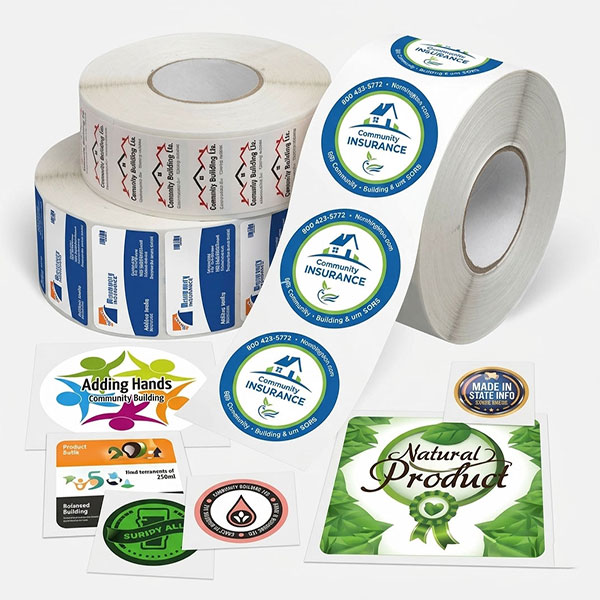
Breaking Down the Cost: How Roll Specs Impact Your Price Per Bottle
When preparing a request for a quote, including the following five specifications is non-negotiable for accurate pricing and operational efficiency. Each one directly influences machine compatibility, application speed, and ultimately, your landed cost per bottle.
Key Roll Specifications and Their Cost Impact
-
Maximum Outer Diameter (OD): This determines how many labels fit on a single roll.
- Cost Impact: A larger OD means more labels per roll and fewer roll changes. This significantly reduces machine downtime and labor costs during application. While the per-roll price is higher, the applied cost per bottle decreases. Always specify the largest OD your applicator can handle.
-
Core Inner Diameter (ID): This is the diameter of the cardboard tube the labels are wound on. Common sizes are 1 inch (25.4mm) and 3 inches (76.2mm).
- Cost Impact: This is a hard compatibility requirement. Ordering rolls with the wrong core ID will make them unusable on your equipment without special adapters, causing major production delays. There is typically no price difference between standard core sizes, but getting it wrong is expensive.
-
Label Orientation (Wind Direction): This defines how the label is oriented on the roll relative to the direction it unwinds. There are 8 standard wind directions.
- Cost Impact: Like the core ID, this is a critical compatibility factor. The wrong wind direction means your applicator will apply the label upside down or sideways. Correcting this requires manually re-rolling thousands of labels, leading to massive labor costs and potential damage. Specifying the correct orientation from the start costs nothing extra but prevents expensive errors.
-
Run Length (Quantity per Roll): This is tied to the outer diameter but can also be specified as a set number of labels per roll.
- Cost Impact: For high-volume orders (over 1,000 units), longer runs generally offer a lower per-unit price due to production efficiencies. Digital printing allows for cost-effective short runs with no minimum order quantity, but for offset printing, larger quantities amortize setup costs. We offer bulk pricing to make larger orders more economical.
-
Finishing Choices (Lamination & Foiling): This includes protective laminates (matte, gloss) and decorative foils.
- Cost Impact: Lamination adds a small cost per label but provides essential protection against moisture, scuffing, and UV rays, preventing costly re-labeling or damaged product returns. Finishes like the custom foil stamping we used for an Australian supplement brand add to the unit cost but can dramatically improve shelf appeal and justify a higher retail price. The key is to balance the added cost with the functional benefit or perceived value.
Choosing Materials and Adhesives for Demanding Beverage Environments
Beverage products face a gauntlet of environmental challenges from production to consumption. They are refrigerated, submerged in ice buckets, exposed to sunlight on patios, and handled frequently. A label that peels, fades, or wrinkles in these conditions undermines brand quality. The most common failure I see is selecting a paper-based label for a product that will encounter condensation. The moisture causes the paper to weaken and the adhesive to fail.
To avoid these issues, it is essential to match the substrate and adhesive to the product’s lifecycle.
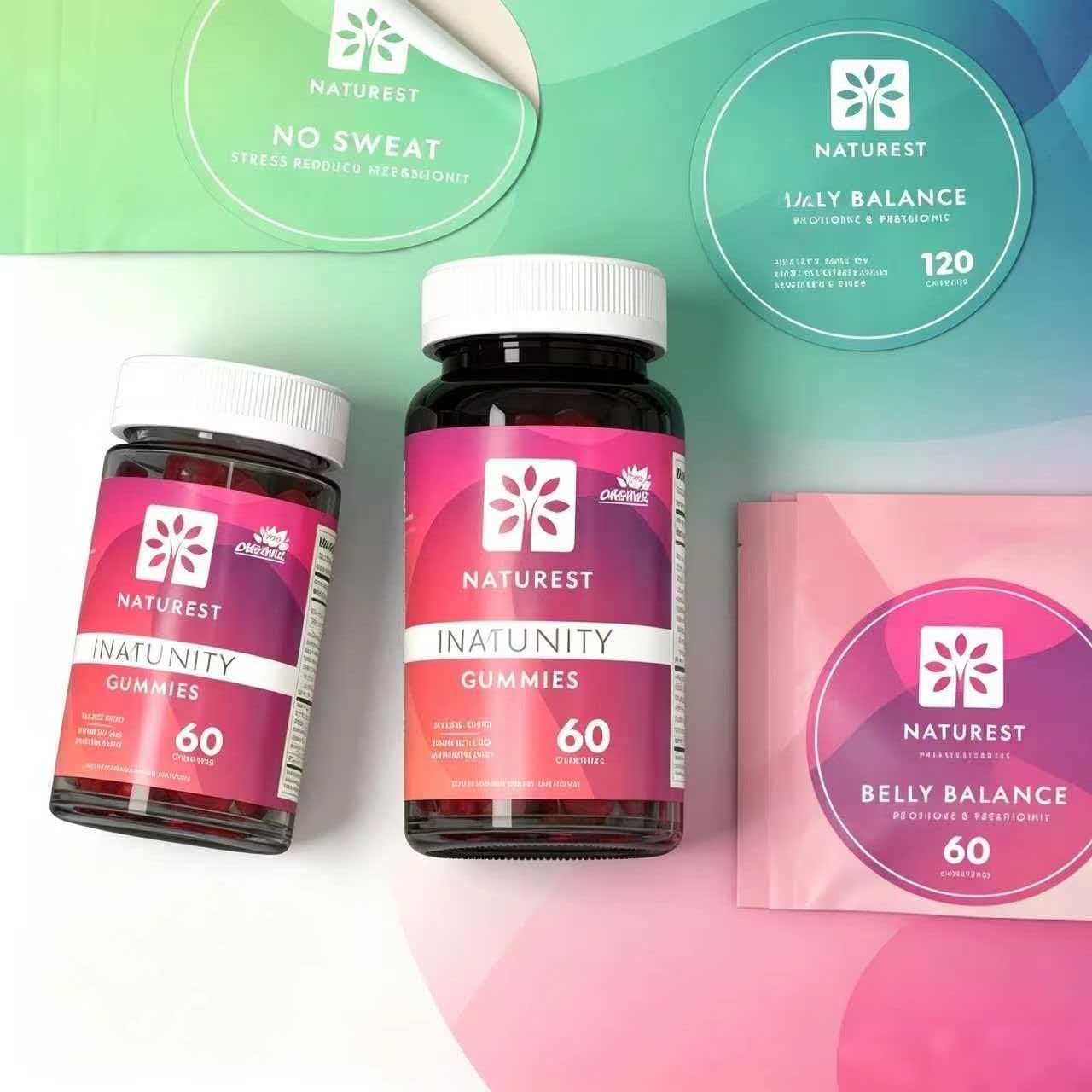
A Buyer’s Checklist for Durable Beverage Labels
| Environmental Challenge | Recommended Solution | Why It Works |
|---|---|---|
| Condensation & Refrigeration | BOPP (Biaxially Oriented Polypropylene) substrate with a permanent, cold-temp adhesive. | BOPP is a waterproof film that doesn’t absorb moisture. A cold-temp adhesive is formulated to maintain its bond in cool, damp conditions, preventing peeling. This is a core feature of our oil & waterproof labels for bottles & cosmetics. |
| Scuffing & Abrasion (Shipping) | Add a BOPP lamination (matte or gloss) over the printed label. | The laminate acts as a durable, scratch-proof layer, protecting the ink and substrate from damage during transit and handling. |
| Fading from Sunlight (Outdoor Use) | UV-resistant inks and a UV-blocking laminate. | These specialized inks and coatings are designed to resist breakdown from ultraviolet light, ensuring your brand colors remain true and vibrant even with outdoor exposure. |
| “No-Label” Premium Look | Ultra-clear BOPP substrate with a clear adhesive. | When applied to a bottle, this combination becomes virtually invisible, making the printed design appear as if it were screen-printed directly onto the surface. Our clear custom bopp labels are perfect for this application. |
Common Sourcing Mistakes and How to Prevent Them
Even with the right materials, simple oversights during the sourcing process can lead to unusable labels and production headaches. Here are a few common mistakes I’ve helped clients correct over the years.
- Mistake 1: Not Confirming Applicator Specs. Many brands guess their roll diameter or wind direction. This is the most frequent and costly error. Before you even request a quote, get the technical specification sheet for your labeling machine.
- Mistake 2: Ignoring Color Matching. Your brand’s colors are not negotiable. A “close enough” match can damage brand consistency. We solve this by requiring photo or digital sample confirmation before bulk production begins. In the rare event of a mismatch, we offer a free reprint guarantee.
- Mistake 3: Overlooking the Liner. The backing paper, or liner, that the label peels from is also important. If it’s too thick or too thin for your machine’s sensors, it can cause application errors. Mentioning your machine model helps the manufacturer select a compatible liner.
- Mistake 4: Sacrificing Durability for a Lower Price. Opting for a cheaper, non-laminated paper label for a beverage that will be refrigerated is a classic example of false economy. The money saved on the label will be lost tenfold in product appearance issues or returns. Always invest in a material built for the product’s intended environment.
By specifying your needs clearly and anticipating these potential issues, you can ensure a smooth production process from start to finish. Our fast 3-day sample lead time allows you to test a small batch on your equipment, confirming compatibility before committing to a bulk order of thousands of custom printed roll labels.
Optimizing your custom beverage labels for cost and performance requires looking beyond the artwork. By providing detailed roll specifications and choosing materials suited to your product’s environment, you can significantly lower your applied cost per unit and avoid disruptive production delays.
If you have your specifications ready, send them to our team for a detailed quote. We’re here to help you get it right the first time.