

How to Reduce Costs on Custom Officer Label Pins Without Sacrificing Quality
One of the most common budget challenges in sourcing custom officer label pins is selecting a finish that looks premium without inflating the unit cost. A request for "gold pins" can return a quote that's double what you expected, forcing a difficult choice between quality and budget. The key isn't to choose cheaper materials, but to make smarter specification choices, particularly around metal plating and enamel style. Getting this wrong means overpaying for a finish you don't need or, worse, choosing one that fails to represent your organization's standards.
As a manufacturing consultant, I've seen countless teams save thousands of dollars by simply adjusting a plating spec from genuine gold to a polished brass or by opting for a die-struck finish over a complex multi-color enamel. These decisions maintain a high-perceived value while aligning with procurement realities. Our process, backed by an ISO 9001:2015 certified quality management system, ensures that whether you choose an economical or premium finish, the structural integrity and detail of your pin remain top-tier.
Understanding Plating Options and Their Visual Impact
The metal plating on a pin does more than add color; it defines the pin's character, perceived value, and durability. For officer pins, the finish must convey authority and professionalism. While polished gold is a classic choice, other options can achieve a specific aesthetic at a different price point. Understanding these differences is the first step to optimizing your budget.
Here’s a breakdown of common plating choices:
- Gold/Silver Plating: This is the standard for a bright, reflective, high-value appearance. It's perfect for award pins and high-ranking insignia. However, you can choose between genuine gold and imitation gold (polished brass) to manage costs. For most applications, high-polish brass offers a visually identical finish.
- Nickel Plating: Available in polished or black, nickel is a durable and versatile choice. Polished nickel provides a silver-like shine but is more scratch-resistant. Black nickel offers a modern, sleek "gunmetal" look that creates high contrast with bright enamel colors.
- Bronze & Copper Plating: These finishes provide a warm, classic, or vintage feel. They are often used for commemorative or long-service awards. An "antique" version of these platings adds a dark wash in the recessed areas, which enhances fine details and gives the pin a sense of heritage and depth. We used this exact technique to produce custom souvenir lapel pins for a Tokyo museum, where deep antique bronze relief captured the building's traditional aesthetic perfectly.
- Dual Plating: For complex designs featuring two different metal tones (e.g., a silver shield with a gold eagle), dual plating is an excellent option. It adds to the cost but creates a distinctive, multi-dimensional look that can't be achieved otherwise.
Your choice should balance visual goals with practical needs. A high-polish pin for daily uniform wear may show scuffs more easily than an antique-finish pin, where minor wear can blend into the design.
Cost Analysis: Enamel Finishes and Plating Impact on Unit Price
The single biggest factor influencing your pin's final cost—beyond quantity—is the style of enamel fill. Hard enamel, soft enamel, and no-enamel (die-struck) pins occupy different price tiers due to their unique manufacturing processes. Understanding the landed cost implications is essential for any procurement team. Below is a comparative breakdown to guide your decision-making for both small-batch and large-scale orders.
Note: These figures are estimates for comparison. Final pricing depends on design complexity, size, and plating choice. Our minimum for standard bulk orders is 1,000 units, which unlocks the best per-unit pricing.
| Finish Type | Estimated Cost (100-200 Units) | Estimated Cost (1,000+ Units) | Best For | Key Considerations |
|---|---|---|---|---|
| Soft Enamel | $$ - Moderate | $ - Most Affordable | Promotional giveaways, high-volume events, designs with texture. | Recessed enamel creates a textured feel. An optional epoxy dome can be added for a smooth, protective finish. Colors appear very bright. |
| Hard Enamel | $$$ - Premium | $$ - Moderate | Corporate gifts, official insignia, retail merchandise, and premium uniform lapel pins. | Enamel is filled to be level with the metal, then polished smooth for a durable, jewelry-quality finish. Colors are slightly more muted than soft enamel. |
| Die Struck (No Enamel) | $$ - Moderate | $ - Very Affordable | Elegant corporate logos, membership pins, designs where metal texture is the focus. | The design is created entirely from raised and recessed metal. Sandblasting recessed areas can create a matte contrast against polished raised lines. |
For many organizations, the perceived value of premium hard enamel pins justifies the higher cost, especially for items intended for long-term wear or as prestigious awards. For example, the custom hard enamel pins we created for a Canadian esports tournament were finished with polished gold plating to give them the championship feel fans and players expected. However, for large-scale distribution, a well-executed soft enamel pin can deliver a fantastic visual result at a much lower unit price.
Common Sourcing Mistakes That Inflate Pin Costs
From my 12 years on the factory floor, I’ve seen clients make the same costly assumptions time and again. Avoiding these common pitfalls can protect your budget and improve the final product. Before you sign off on a proof or a purchase order, review this checklist.
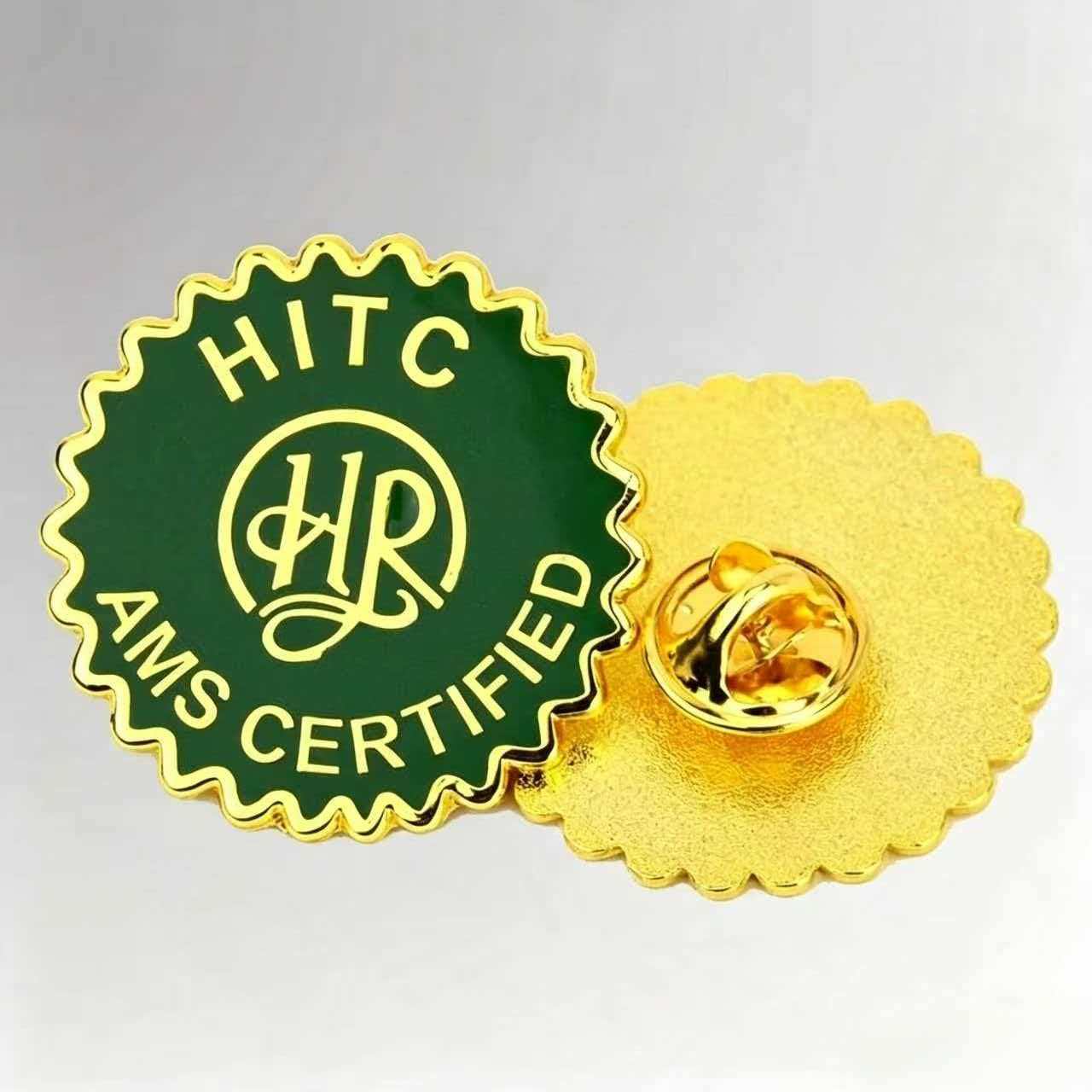
- Mistake 1: Defaulting to 24k Gold Plating. Many buyers request "gold plating" without specifying the type. Genuine gold is expensive. For nearly all applications, imitation gold (polished brass) provides the same bright, reflective appearance at a fraction of the cost. Unless the pin is a high-value commemorative item for a special recipient, polished brass is the smarter economic choice.
- Mistake 2: Overlooking Die-Struck for Text-Heavy Designs. If your design is primarily a logo or text without color, enamel fill is unnecessary. A die-struck pin uses sandblasted or antique finishes to create contrast between raised and recessed metal, resulting in a clean, professional, and highly affordable pin.
- Mistake 3: Paying for Per-Color Fees on Complex Artwork. Designs with gradients, photographs, or subtle color transitions cannot be reproduced with enamel. Instead of trying to simplify the art and paying for 10+ enamel colors, the correct process is offset printing. An offset printed pin features the full-color image applied to the metal base and sealed with an epoxy coating for protection.
- Mistake 4: Not Leveraging Bulk Order Discounts. The per-unit cost of a pin drops dramatically with quantity. Ordering 200 pins might seem safer, but if you anticipate needing more within the year, ordering 1,000 at once could cut your unit cost by 30-50%. Our factory is equipped with six production lines, allowing us to efficiently manage high-capacity orders and pass the savings to you.
- Mistake 5: Ignoring the Value of Design Support. A design that looks good on screen may not translate well to metal. Thin lines can disappear, and small text can become unreadable. Our free design assistance service helps you optimize your artwork for production, preventing costly errors like enamel bleed or low-detail resolution. We provide a photo or digital sample for your confirmation before any bulk production begins.
Matching Materials and Finishes to Real-World Use Cases
An officer's pin is not a disposable giveaway; it is part of a uniform and must withstand daily wear. The material and finish must be selected for durability to prevent issues like chipping, fading, or loose backings. Here’s how to choose the right combination for pins that last.
Base Materials
The metal base of your pin determines its weight, detail fidelity, and cost.
- Iron: The most cost-effective option, suitable for soft enamel promotional pins. It is magnetic and best for simple designs.
- Brass: A premium, heavier option ideal for hard enamel and die-struck pins. It allows for sharp detail and polishes beautifully, making it a great choice for high-end corporate or service pins.
- Zinc Alloy: This material is best for pins with 3D sculpting or sharp cut-outs. It is injected into a mold as a liquid, allowing it to capture complex shapes that are difficult to stamp.
Durability-Enhancing Finishes
For pins worn daily on uniforms, consider these factors:
- Hard Enamel: This is the most durable color option. The enamel is polished flat with the metal, creating a smooth, scratch-resistant surface that won't easily chip or snag on fabric.
- Epoxy Coating: Adding a clear epoxy dome over order soft enamel pins or offset printed pins provides a layer of protection against scratches and moisture. It also creates a smooth, glossy finish.
- Secure Backings: A standard butterfly clutch is fine for occasional wear, but for a uniform, a more secure option like a locking deluxe clutch or a flat magnetic backing is recommended to prevent loss.
We stand by our manufacturing quality. If you encounter issues like enamel colors bleeding or pin backs becoming unstable, we offer proportional replacement for defects and a 5-day fast restock service to resolve the problem quickly.
By carefully selecting your materials, plating, and enamel style, you can source impressive, durable, and professional officer pins that meet strict budget requirements. It’s about making informed choices, not compromises.
If you're ready to start your project, submit your design for a custom quote. Our team can provide a detailed cost analysis and recommend the best specifications for your needs.