

Custom Beverage Labels Cost Less When You Fix These Five Specs First
Most procurement teams don't lose money on beverage labels because of a bad supplier. They lose it because the spec sheet was finalized before anyone compared how size, substrate, finish, and order volume actually interact on a quote. By the time three vendor quotes land side by side, the numbers look wildly different and nobody can explain why. That's the regret moment — discovering after the RFQ closes that a small spec change could have dropped unit cost by a meaningful margin. Custom beverage labels are one of the easiest packaging line items to overpay for, simply because the pricing logic behind rolls, substrates, and finishes isn't obvious to buyers outside the print industry.
This guide breaks down what actually drives unit price, where the real savings sit, and which mistakes we see repeated across beverage label RFQs — beer, wine, energy drinks, kombucha, and ready-to-drink cocktails alike.
The Spec Variables That Quietly Change Your Unit Price
Before comparing quotes, it helps to know which variables a printer actually prices against. Four factors move the needle the most:
- Label size and shape — irregular die-cut shapes waste more substrate per sheet than standard rectangles or circles, raising material cost per label.
- Substrate choice — paper, BOPP film, PP, and PET each carry different base material costs and different durability profiles for wet, cold, or outdoor conditions.
- Finish and decoration — foil stamping, spot UV, and embossing add tooling and run-time steps that standard flat-color printing doesn't require.
- Roll count and splicing — more individual rolls (versus one continuous run) mean more changeovers, which adds labor time even if total label count stays the same.
None of these factors act alone. A small label on BOPP film with a simple one-color design can cost less per piece than a large paper label with foil — even though paper is the cheaper base material. That's the part buyers miss.
Cost Comparison Model: Size, Substrate, Finish, Roll Count, and Volume
Rather than quoting invented price points, here's how each variable typically shifts cost direction. Treat this as a framework for reading your own quotes, not a universal price list — actual numbers depend on your supplier's press setup and your artwork.
| Spec Variable | Lower-Cost Direction | Higher-Cost Direction | Why It Happens |
|---|---|---|---|
| Size | Standard rectangle/circle under 4" | Oversized or irregular die-cut shapes | Less substrate waste per sheet, simpler die tooling |
| Substrate | Coated paper | BOPP, PP, or PET synthetic film | Film substrates cost more per square inch but resist moisture and tearing |
| Finish | Standard gloss/matte lamination | Foil stamping, embossing, spot UV | Extra decoration steps add tooling and press time |
| Roll Count | Fewer, larger rolls | Many small rolls with multiple SKUs | Each roll change requires press recalibration |
| Order Volume | 1,000+ units per SKU | Small digital runs under 500 units | Offset and bulk runs spread setup cost across more labels |
To separate what's reliable from what's a planning estimate:
- Confirmed: digital printing and select custom items carry no minimum order, while offset printing and standard bulk runs require a 1,000-unit minimum per SKU to access volume pricing. Every bulk order also includes 100 bonus pieces, which effectively lowers the per-unit cost of your production run.
- Estimated: switching from paper to a synthetic film substrate generally adds a moderate per-unit premium — the exact percentage depends on your size, quantity, and the specific film grade quoted.
- Unknown until quoted: foil stamping color count, exact roll splicing fees, and freight for split shipments vary by order and should be confirmed in writing before you lock a budget.
If your brand ships through cold storage or humid retail environments, substrate is not just a cost line — it's a failure-prevention line. Paper labels that look fine in a dry warehouse can bubble or peel once condensation forms on a chilled can or bottle. That's why many beverage brands move up to waterproof custom labels or film-based stock even when the base cost is higher, because reprints from field failures cost more than the substrate upgrade ever would.
Common Spec Mistakes That Inflate Reorder Budgets
These show up repeatedly in beverage label RFQs, often because the first order was built around looks rather than how the product will actually be stored and handled:
- Choosing glossy paper for refrigerated beverages — adhesive bleeds or the label edge lifts once condensation sets in, leading to a full reprint.
- Specifying a different size for every SKU in the same product line, which forces multiple die sets and roll setups instead of one shared tooling run.
- Adding foil stamping to a limited seasonal run without checking whether the volume is high enough to justify the tooling cost per label.
- Underestimating white ink opacity needs on clear bottles — labels that look fine on paper mockups can turn translucent and unreadable once applied to glass.
- Skipping a physical sample check before bulk production, which is the single most common reason reorders happen at all.
A Worked Example: Craft Beer Label RFQ
A mid-size craft brewery preparing four seasonal beer releases initially specced four different label sizes, each in a small 400-unit batch, all with spot UV coating on a coated paper stock. The quote came back high per unit because of the finish and small run size.
After review, the brewery consolidated to two shared label sizes across the four releases, swapped spot UV for a standard gloss lamination (saved for a flagship label only), and raised total order volume to 2,000 units to clear the 1,000-unit offset threshold. The result: fewer die changes, one shared roll-splicing setup, and volume pricing that applied across all four SKUs instead of none of them. This is the kind of adjustment that's easy to make at the RFQ stage and expensive to fix after printing plates are already cut — a pattern that shows up often in craft beer labels and energy drink labels orders alike, where multi-SKU product lines are the norm.
Buyer's Decision Checklist Before Submitting an RFQ
- Have you confirmed whether your product will sit in cold storage, humid shelving, or direct sun exposure at any point before purchase?
- Can two or more SKUs share one label size and die to cut tooling cost?
- Is your decoration (foil, embossing, spot UV) justified by order volume, or would standard lamination look nearly as good at lower cost?
- Does your order volume clear 1,000 units per SKU to access offset pricing, or is a no-minimum digital run the better fit for a small test batch?
- Have you requested a physical or digital sample confirmation before committing to full production?
- Does your supplier offer a defect remedy — proportional replacement, free reprint for color mismatch, or fast re-stocking — in case something slips through?
On that last point: color mismatches and defects happen even in controlled print runs. Ask upfront what the remedy looks like — a proportional replacement policy and a 5-day re-stocking turnaround matter more once you're reordering at scale, not just on the first run.
Matching Substrate to Beverage Category
Different beverage categories put different stress on a label. Matching substrate to end use avoids both overspending and under-protecting:
| Beverage Type | Typical Condition | Suggested Substrate Direction |
|---|---|---|
| Canned cold beverages, kombucha | Condensation, refrigeration | Waterproof film or BOPP |
| Wine, spirits | Room temperature, display focus | Coated paper with foil accents |
| Energy drinks, RTD cocktails | Handling, transport abrasion | Synthetic PP or PET film |
| Craft beer bottles | Ice buckets, wet handling | Waterproof synthetic, clear or opaque base |
Clear bottles raise a separate issue — white ink needs enough opacity to block the liquid color behind it, otherwise the label print looks washed out. This is worth testing on a physical sample before bulk production, not after. Brands working with clear BOPP labels or film-based custom roll labels should request a printed proof under the actual liquid color, not just a blank substrate swatch.
What Production Timing Means for Your Budget Planning
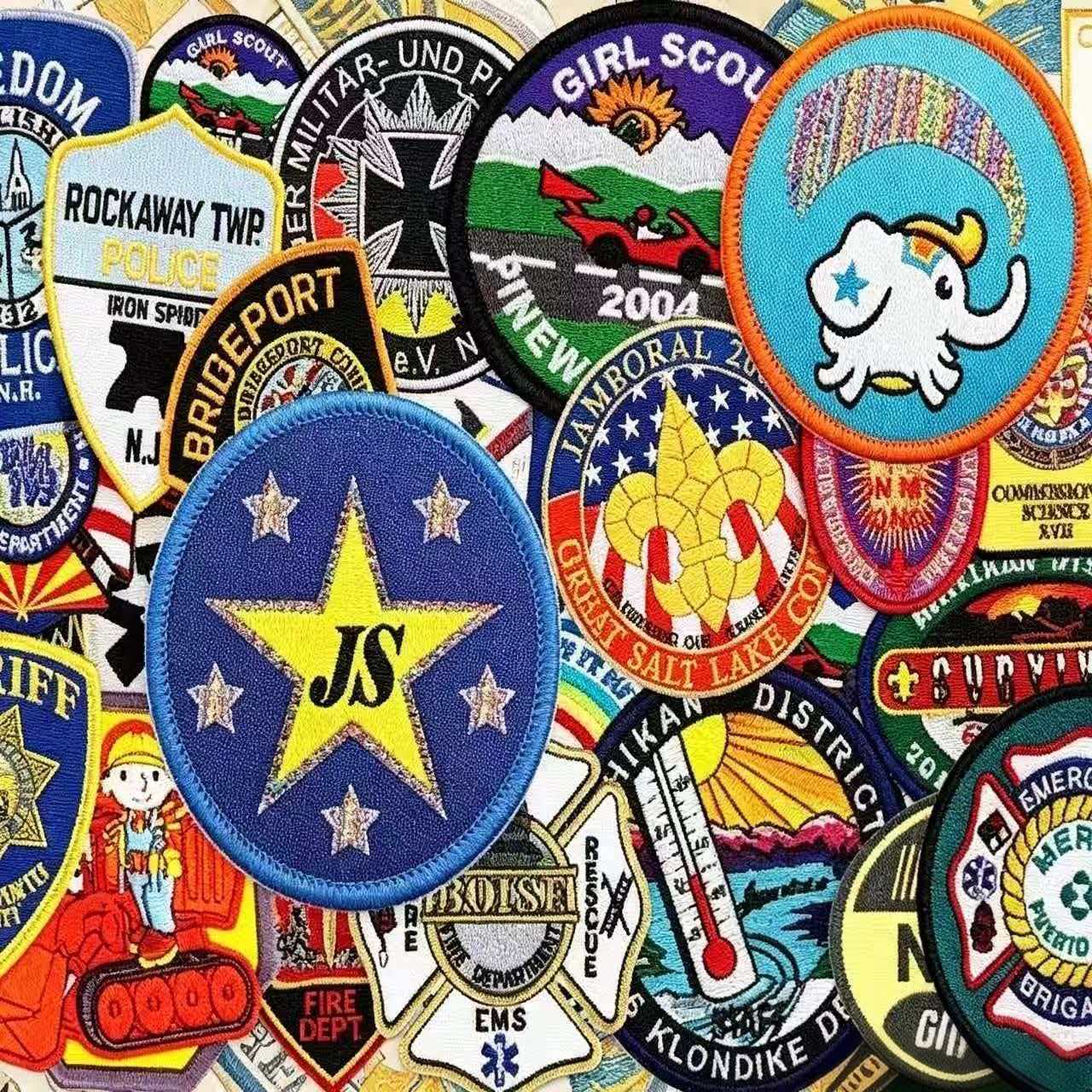
Lead time affects cost indirectly — rush orders and split shipments both add expense that doesn't show up on the per-unit line. Sample lead time for pins, patches, and labels typically runs around 3 days, with bulk production following at 8-9 days and standard U.S. shipping adding another 5-6 business days. Planning your RFQ timeline around these windows avoids rush fees and lets you use photo or digital sample confirmation before committing a full production run, rather than approving blind and risking a reprint.
Production facilities certified under ISO 9001:2015 — and in this case also Disney FAMA certified — follow documented quality checkpoints at each stage, which matters most when you're running multiple SKUs through the same press schedule and can't afford a batch mismatch mid-run.

Where to Go From Here
If you're comparing quotes across suppliers, request pricing broken out by size, substrate, finish, and volume separately — not as one bundled number. That's the only way to see which spec is actually driving your cost up. Our team can walk through your current label spec and flag where a substrate or finish swap would lower unit cost without changing how the label performs in the field. Send over your current artwork or a sample label, and we'll provide a quote comparison across a few reasonable alternatives before you commit to a bulk run.