

Choosing the Right Plating Makes Custom Logo Label Pins More Affordable
Here's the sourcing mistake we see most often: a buyer locks in artwork, picks a plating finish because it "looks premium," then gets a quote that's 30-40% higher than budgeted. By the time the revision cycle starts, the launch date is already at risk. If you're preparing a spec sheet for Custom Logo Label Pins, the plating decision you make before requesting a quote determines most of your per-unit cost — not the logo complexity people usually worry about.
This matters because plating, color count, pin size, and attachment hardware interact with each other. Change one variable and the other three shift the math. Below is how each factor actually behaves, what it costs relative to baseline options, and where buyers typically overspend without realizing it.
What Actually Drives the Price of a Pin
Four variables account for almost all price variation on a standard enamel pin order. Everything else — packaging, rush fees, backing cards — sits on top of this base.
- Plating/finish: standard gold or nickel vs. dual-plate, antique, or black nickel
- Color count: each enamel color added increases fill time and tooling complexity
- Pin size: larger pins use more metal and more plating surface area
- Attachment hardware: butterfly clutch, rubber clutch, magnetic back, or deluxe locking pin
Order volume changes the weight of each factor. At 100 pieces, tooling and setup dominate. At 5,000 pieces, plating and material cost per unit matter more because setup cost is already spread thin.
Plating Options Compared
Plating is the single biggest lever for both appearance and cost. Zinc alloy and brass are the standard base metals for order soft enamel pins and hard enamel pins alike, but the finish applied on top of that base is what buyers actually pay extra for.
| Plating Type | Relative Cost | Durability | Best Use Case |
|---|---|---|---|
| Standard gold or nickel | Baseline | Good, standard tarnish resistance | Corporate giveaways, trade show pins |
| Antique gold/silver/copper | +5-10% | Very good, hides fine scratches | Heritage logos, museum or souvenir pieces |
| Dual-plating (two-tone) | +10-15% | Good | Logos needing two metal tones, esports or sports branding |
| Black nickel | +8-12% | Very good | Tactical, security, or dark-theme branding |
| Dual-plated with rotating element | +20-30% | Good (more moving parts) | Interactive collector pins, anniversary editions |
A dual-plated pin with a rotating element was exactly what we built for a specialty coffee brand in Germany celebrating an anniversary — the spinning element pushed cost up but delivered the unboxing engagement they wanted. For a straightforward logo giveaway, that upgrade would be wasted spend.
Cost Breakdown: Plating, Color Count, Size, and Hardware by Volume
The numbers below are directional, not a quote — actual pricing depends on artwork detail and current material costs, so treat this as a planning framework, not a fixed price list. What's confirmed is the pattern: plating and color count scale differently than size and hardware do as volume increases.
| Variable | 100 units | 1,000 units | 5,000 units |
|---|---|---|---|
| Standard plating, 2 colors, 1 inch | Highest per-unit cost (tooling-heavy) | Baseline per-unit cost | Lowest per-unit cost |
| Add dual-plating | +10-15% over baseline | +10-15% over baseline | +8-12% over baseline |
| Add 2 extra colors (4 total) | +15-20% | +10-15% | +8-10% |
| Increase size to 1.5 inch | +10-15% | +8-12% | +6-10% |
| Upgrade to deluxe locking clutch | +$0.05-0.10/unit | +$0.05-0.10/unit | +$0.03-0.07/unit |
What's confirmed from our production side: offset-printed and standard bulk pin runs carry a 1,000-unit minimum for the better per-unit pricing tier, while digital printing and select items run with no minimum at all. Bulk production typically finishes in 8-9 business days once artwork is approved, and every bulk order ships with 100 bonus pieces included — a buffer worth factoring into your reorder math instead of ordering an extra batch later.
What's still unknown until you submit specs: exact die cost for unusual shapes, and whether your logo's fine lines will need hard enamel instead of soft enamel to stay crisp at small sizes. Both affect final pricing more than plating alone.
Common Mistakes That Inflate Pin Costs
- Choosing hard enamel for a design that doesn't need it. Hard enamel pins cost more to polish flat; soft enamel works fine unless your artwork has thin gradient lines.
- Specifying dual-plating on a single-tone logo. If your logo only uses one metal color, dual-plating adds cost with zero visual benefit.
- Ordering below the bulk threshold by accident. Placing a 900-unit order instead of 1,000 misses the pricing break entirely under offset production.
- Skipping the digital proof stage. Reprints from color mismatch are avoidable — confirm the photo or digital sample before production starts.
- Defaulting to deluxe clutches for simple giveaways. A standard butterfly clutch is fine for trade show handouts; save locking hardware for uniform or security pins that need to stay fastened.
Step-by-Step: Building a Cost-Effective Spec Sheet
- Count your actual colors from the logo file — not the brand guide, which often includes shades you won't use on a 1-inch pin.
- Decide if plating needs to match brand metal tone exactly, or if "close enough" gold/silver is acceptable.
- Pick pin size based on where it's worn — lapel pins under 1 inch read fine on jackets; anything smaller than 0.75 inch loses detail with more than 3 colors.
- Select attachment hardware based on use: giveaway (butterfly clutch), uniform (locking pin), hat or bag (rubber clutch).
- Request a digital sample before bulk production — this catches color drift before it becomes a reprint.
- Confirm your quantity against the 1,000-unit break point if you're using offset/standard bulk production.
Buyer's Decision Checklist
- Have you confirmed whether your order qualifies for no-MOQ digital production or needs the 1,000-unit offset minimum?
- Does your logo actually require hard enamel, or will soft enamel hold the detail at your chosen size?
- Is dual-plating solving a real two-tone need, or just adding cost?
- Have you matched attachment hardware to how the pin will be worn or displayed?
- Did you request a digital proof before committing to the full run?
- Does your supplier's quality certification (ISO 9001:2015 in our case) match your buyer's compliance requirements?
Plating choice is also where fan-facing and collector pins earn their keep. A Canadian esports tournament, for example, used polished gold plating with dual-tone color fill for championship pins that fans still wear on jackets and lanyards — proof that the right plating pick, not the most expensive one, is what makes a pin last in someone's daily rotation. If your project leans toward bulk custom lapel pins for a season-long giveaway, or something closer to premium hard enamel pins for brands for a retail product line, the plating tier should follow the use case, not the other way around.
Pins aren't the only branded item where cost structure hides in the finish choice. If your merchandising plan also includes custom labels printed in bulk or woven patches, the same logic applies: substrate and attachment method usually matter more than color count.

For medal or coin-style branding instead of lapel pins, die-struck options under die struck custom challenge coins follow a similar plating-driven cost curve, so the same spec-sheet checklist above still applies.
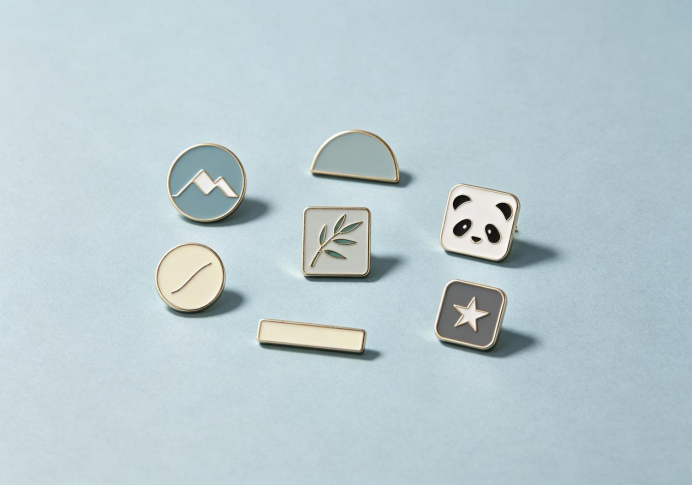
If you're ready to turn this into a real quote, send over your logo file, preferred plating, and target quantity — we'll confirm which production tier (digital or offset) fits your order and return a sample timeline before you commit to bulk production.