

Standardized Patch Dies Can Cut Your Custom Iron On Patches Reorder Costs
Here's what most apparel brands miss before they place their first patch order: the die shape you approve for round one quietly decides what every reorder costs for the next five years. A buyer who picks a one-off oval or a custom mascot outline without thinking ahead often pays for a new die, a new thread match, and a new approval cycle every single time production volume runs out. That's the sourcing risk nobody flags on the quote sheet. Custom Iron On Patches priced well on order one can still become expensive on order four if the spec was never built to repeat.
This matters most for uniform programs, franchise rollouts, and multi-location retail brands — anyone placing the same patch order two, three, or more times a year. The fix isn't complicated, but it requires locking a few decisions early: shape, size tier, and thread palette.
Why Reorder Costs Balloon When Every Order Starts From Scratch
Every embroidery or heat-transfer run starts with digitizing the artwork, cutting a die if the shape is non-standard, and matching thread colors against a reference file. When a brand changes the patch outline slightly between orders — even a 2mm border tweak — the factory often has to redo the die and requote the setup. Over a five-year span with biannual reorders, that's up to ten separate setup cycles instead of one.
Standardizing early removes that repeat cost. A fixed die shape and size tier means the factory pulls the existing tooling, confirms thread stock against your approved palette, and moves straight to production. For buyers sourcing custom embroidery patches for apparel & uniforms, this single decision tends to matter more than material choice or backing type.
Where This Breaks Down in Practice
- Marketing teams approve a new patch shape for a seasonal campaign without checking it against the existing die library — this resets setup costs even if 90% of the design is unchanged.
- Thread colors get "refreshed" for a rebrand, forcing a full repalette instead of a partial substitution.
- Size is adjusted per garment (small patch for caps, larger for jackets) without standardizing to two or three fixed tiers, multiplying the number of unique production files.
A Five-Year Reorder-Cost Model for Standardized Patch Programs
The table below separates what we can confirm from documented production terms, what's a reasonable estimate based on typical repeat-order behavior, and what remains unknown until you get a quote for your specific artwork and volume.
| Cost Factor | Standardized Die/Palette | New Die Each Reorder | Confidence Level |
|---|---|---|---|
| Sample lead time | 3 days | 3 days | Confirmed (same for both paths) |
| Bulk production time | 8-9 days | 8-9 days plus re-approval delay | Confirmed base time; delay is estimated |
| Minimum order quantity | 1,000 units (offset/standard bulk) | 1,000 units, resets per new design | Confirmed |
| Setup/tooling cost per reorder | Waived or reduced when reusing an existing die | Charged again for each new outline | Estimated — confirm against your supplier's quote |
| Defect allowance | 100 bonus pieces included per bulk order | Same allowance, but applies to a smaller effective run if redesign shrinks batch size | Confirmed |
| Unit price trend over 5 years | Generally flattens or declines with repeat volume | Can spike with each redesign cycle | Unknown — depends on annual volume and material mix |
The honest takeaway: we can confirm the production timelines and the defect-replacement terms because they're fixed policy. We cannot promise exact dollar savings from standardization, because tooling fees vary by supplier and by how complex the original die is. What's consistent across most reorder programs is the pattern — fewer unique setups means fewer billable setup events, and that's the lever worth controlling.
Choosing Shapes, Sizes, and Thread Palettes That Scale
Three decisions made at the RFQ stage determine whether reorders stay cheap or get expensive again:
| Decision | Scales Well | Scales Poorly |
|---|---|---|
| Shape | Rounded rectangle, circle, shield — standard die shapes reusable across garment types | Custom mascot silhouette, irregular logo outline requiring a unique die per variant |
| Size | 2-3 fixed size tiers (e.g., 2", 3", 4") covering caps, jackets, and bags | One-off dimensions per department or per store location |
| Thread Palette | 5-6 core Pantone-matched threads reused across all SKUs | New thread match for every seasonal color update |
This approach fits best for brands running repeat programs — franchise uniforms, retail staff badges, sports club merchandise. It doesn't apply as cleanly to one-time event patches or limited drops, where a custom shape is the whole point and reorder savings aren't the priority.
If your patch program includes both woven garment tags and iron-on badges, standardizing thread stock across both product types compounds the benefit — fewer unique spools the factory has to stock and match. We've seen the same logic work for fluffy chenille varsity patches supplied for a Swedish university's letterman jackets, where plush felt backings and consistent stitching density were locked once and reused across multiple seasonal reorders.
Common Mistakes That Break a Standardized Patch Program
- Letting design teams freelance new shapes mid-contract. Even small outline changes trigger new tooling. Route all variations through one approval gate.
- Skipping the pre-production sample on reorders. Thread dye lots shift over time; a photo or digital sample confirmation before each production run catches embroidery borders that might fray or colors that drift from the original palette.
- Choosing backing type per order instead of per program. Mixing heat-seal iron-on backing with sew-on or Velcro across the same product line adds setup complexity without functional benefit.
- Ignoring wash-durability specs for backings. Weak adhesive can fail after repeated washing — this is a documented failure mode for budget iron-on backing and worth testing before locking a five-year spec.
- Underestimating detail resolution limits. Fine text or thin lines below a few millimeters often render blurry in embroidery; standardizing on a tested minimum detail size avoids reorder complaints later.
A Step-by-Step Procedure for Setting Up a Reorder-Ready Spec
- Lock a shape library of 2-4 approved outlines before the first production run, not after.
- Fix size tiers (commonly 2", 3", and 4") covering every garment or accessory the patches will attach to.
- Build a core thread palette of 5-6 colors, confirmed against a physical sample, not just a digital proof.
- Document backing type per product category — iron-on for retail apparel, Velcro for tactical or swappable gear.
- Request a photo or digital sample confirmation before every bulk run, even on repeat orders, to catch dye-lot drift early.
- Keep a written spec sheet on file with your supplier so reorders reference the same die number instead of a fresh design brief.
Worked Example: A Multi-Location Uniform Program
Consider a retail chain with 40 store locations ordering staff uniform patches twice a year. If each location's manager submits a slightly different shape or size request, the factory may treat each submission as a new setup — even though the artwork is 95% identical. Standardizing to one approved die, one size tier, and one five-color palette across all 40 locations means every reorder after year one reuses the same production file. The factory confirms thread stock, pulls the die, and the only variable left is quantity. This is the same logic behind a custom hook & loop patches program supplied to a U.S. outdoor gear brand, where weather-resistant threads and backing choice were fixed once and reused across repeat shipments for hiking and tactical lines.
Buyer's Decision Checklist Before Submitting an RFQ
- Have you fixed a shape library instead of allowing a custom outline per order?
- Are sizes limited to 2-3 standard tiers across all garment types?
- Is your thread palette locked and documented with Pantone references?
- Does your supplier confirm MOQ terms (1,000 units for standard bulk runs) up front?
- Will you receive a photo or digital sample before each production run, including reorders?
- Does your contract include a defect-replacement policy, such as proportional replacement and bonus pieces?
- Have you asked what happens to tooling costs on reorder — waived, reduced, or charged in full?
Our facility has operated since 2012 across an 8,000 m² plant with six production lines, and we run both embroidery and heat-transfer processes under ISO 9001:2015 certification. For buyers testing a new standardized spec, sample turnaround runs 3 days with bulk production at 8-9 days, and every bulk order includes 100 bonus pieces plus proportional replacement for any defects found after delivery. If a shape or palette doesn't need to change between orders, that system is built to keep it that way — whether you're sourcing custom iron on shape patches for retail uniforms or woven badges for a club program.
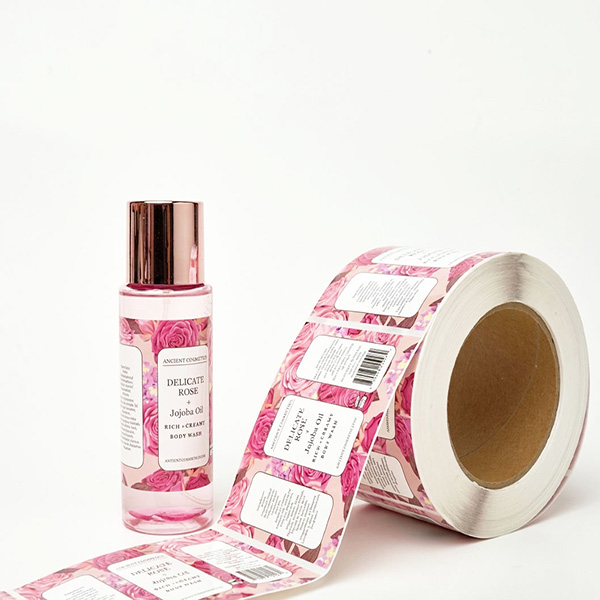
Patches aren't the only product where repeat-order specs save money. Brands running parallel packaging programs apply the same logic to custom labels printed in bulk — fixed substrate, fixed finish, fewer approval cycles per reorder.
If you're planning a multi-year patch program and want to see whether your current design can be standardized without losing brand detail, send us your artwork and reorder schedule. We'll confirm die reusability, size tiers, and thread match before you commit to a bulk quote.