

No-Minimum Custom Patches Proof-to-Ship FAQs
A small patch order can become expensive when the buyer approves artwork that cannot reproduce cleanly, selects the wrong backing, or assumes “no minimum” means every option can ship immediately. Before placing an RFQ, confirm the patch construction, artwork detail, attachment method, proof process, and delivery deadline.
Custom Patches No Minimum can be a practical option for testing a new uniform badge, launching a limited retail drop, replacing a small set of name patches, or approving a design before a larger program. The key is to treat a small order as a production project, not simply a one-piece purchase.
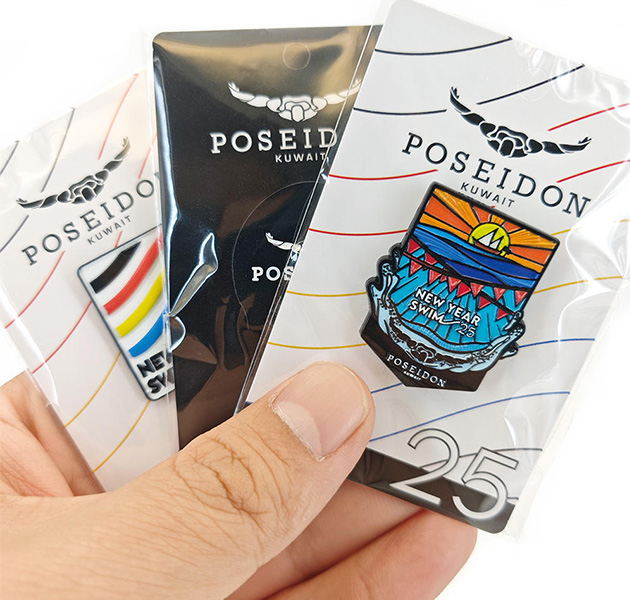
Can I order one custom patch?
Yes, for select custom and digitally produced items there is no MOQ. This suits buyers who need a small test run, a prototype, a replacement patch, or a limited quantity for a short event. It does not mean that every material, finish, or production route is equally suitable for a one-piece order.
Digital printing and select custom items can be ordered without a minimum. Standard bulk or offset-printing work has a minimum order quantity of 1,000 units. For patches, the appropriate route depends on the visual result and the requested construction. A photo-heavy artwork file may point toward a printed solution, while a simple logo with thread texture may suit embroidery. A very small request can still require artwork setup, material preparation, and manual quality checks.
Choose a no-minimum order when you need to verify one of the following before scaling:
- Wearability: Confirm the patch size, edge shape, and placement on a garment, cap, bag, or tactical vest.
- Artwork legibility: Check whether small lettering, thin outlines, and color separation remain readable in the chosen patch style.
- Attachment fit: Test iron-on, sew-on, or hook-and-loop attachment on the actual fabric rather than on a substitute.
- Buyer approval: Provide a physical reference for an internal brand, procurement, or licensing review.
Do not use a one-piece order as a substitute for a bulk price quote. Small-run pricing reflects setup and handling across fewer pieces, while higher quantities usually provide better unit economics. If the final program is likely to exceed 1,000 pieces, ask for the bulk specification at the same time as the sample request.
Which patch type should I choose for my artwork and application?
Select the patch construction based on the image style and how the finished item will be used. The wrong construction is a frequent cause of blurred detail, frayed borders, or an attachment that fails after washing. Start with the end use, then review artwork.
| Patch option | Best fit | Why it works | When not to choose it |
|---|---|---|---|
| Embroidered patch | Bold logos, uniforms, clubs, workwear, and traditional badge designs | Fine embroidery creates a textured, familiar stitched appearance. | Avoid it when the artwork relies on tiny text, close color transitions, or photographic detail. |
| Woven patch | Small lettering, fine line art, and detailed garment branding | High-density yarn weaving can hold more visual detail than a heavily stitched surface. | Do not select it solely for a raised, heavily textured look; embroidery or chenille may suit that aim better. |
| Printed or heat-transfer patch | Detailed illustrations, gradients, and artwork that needs a flatter image surface | Printed production can reproduce visual detail that thread may simplify. | It may not deliver the traditional thread texture expected for heritage uniforms or varsity apparel. |
| PVC soft-rubber patch | Outdoor gear, tactical applications, and designs that benefit from molded relief | PVC can create layered 2D or 3D visual areas and suits hard-use identity patches. | Do not use it where a soft textile hand feel is required against skin. |
| Chenille patch | Varsity letters, sports teams, and statement apparel | The plush surface reads clearly on heavy jackets and fashion garments. | It is not the best route for compact logos with fine copy or dense illustration. |
| Faux-leather patch | Denim, hats, premium casualwear, and debossed logos | Embossed or debossed branding creates a restrained, material-led appearance. | Do not choose it if the design requires multiple small colors or complex image reproduction. |
A real use case shows why material selection matters. For a United Kingdom luxury knitwear brand, we produced ultra-soft damask woven garment labels with high-density yarn weaving to support scratch-free comfort against sensitive skin. That approach fits skin-contact branding and detailed woven information; it would not be the first choice for a thick, raised varsity emblem.
For apparel programs that need a classic stitched look, review custom embroidery patches for apparel & uniforms. If the patch must be removed and reattached to equipment, custom hook & loop patches are better aligned with that task than a permanent backing.
When “no minimum” still has limits on design complexity, production lead time, attachment methods, and rush shipping
No minimum refers to order quantity, not unlimited production conditions. A supplier still needs to verify whether the art can be made in the requested material, whether the backing suits the base fabric, and whether the requested ship date allows time for proof approval and manufacturing.
| Question | Direct answer | What changes the answer | Buyer action |
|---|---|---|---|
| Can any artwork be made as one patch? | No. Detail must match the selected construction. | Tiny lettering, closely spaced lines, gradients, photographic images, and very small design areas may not translate well into embroidery or molded PVC. | Send the original vector artwork where available and identify any details that cannot be simplified. |
| Does no minimum mean immediate production? | No. Custom work still needs art review and proof confirmation. | New shapes, multiple colors, selected materials, proof revisions, and factory scheduling can add time. | Approve the digital or photo sample promptly and state the in-hand deadline before production begins. |
| Can every backing be added to every patch? | No. The attachment must match the patch material and end use. | Garment wash cycles, textured fabrics, curved surfaces, removable gear use, and heat sensitivity affect the choice. | Provide the base material, intended placement, and whether the item will be washed or exposed outdoors. |
| Can rush shipping solve a late approval? | Not always. Shipping time cannot replace uncompleted manufacturing steps. | Rush options depend on the finished goods being ready, destination, shipping service availability, and the approved production schedule. | Separate the event date from the required dispatch date and allow time for approval. |
Our stated sample lead time for pins, patches, and labels is 3 days. Bulk production is generally 8–9 days, followed by U.S. shipping of 5–6 business days. These are planning figures, not a substitute for a confirmed schedule for a particular design. Same-day dispatch is available only for select ready-stock or digital items, so it should not be assumed for a newly made embroidered, chenille, or PVC patch.
Attachment selection deserves special attention. Heat-seal iron-on backing may be useful for appropriate fabrics and controlled application, but it is not the automatic answer for heavily washed uniforms, difficult textiles, or removable equipment identifiers. Sew-on construction is a better fit where mechanical attachment is preferred. Hook-and-loop is practical for interchangeable field gear, but it needs the matching loop surface or a clear plan for applying it.
What should I provide for a production-ready patch proof?
Provide the artwork, intended size, patch type, backing, quantity, and use conditions in the first request. That information lets the production team flag problems before a proof is approved. A logo file alone does not identify whether the patch is for a knit beanie, a tactical backpack, a washed denim jacket, or a staff uniform.
- Send the best available artwork. Vector files are preferred when available because they show intended lines and color areas clearly. If only a raster image exists, submit the highest-quality original rather than a screenshot.
- State the finished size and shape. Include whether the size refers to width, height, or the longest side of an irregular outline.
- Name the patch construction. If uncertain, state the visual priority: thread texture, fine lettering, molded relief, soft hand feel, or full-color imagery.
- Specify the backing. Identify sew-on, heat-seal iron-on, hook-and-loop, or another required attachment method. Include the receiving material.
- Declare use conditions. Mention washing, outdoor exposure, frequent removal, skin contact, or hard-wearing gear use.
- Give the required date and destination. Ask for a production schedule based on proof approval, not just the date the inquiry is submitted.
- Review the proof against the actual use case. Check spelling, color callouts, border shape, backing direction, and placement before approval.
At Custom Panda, we provide photo or digital sample confirmation before production. This stage is where a buyer should correct issues that commonly become expensive later: an edge that is too thin, copy that is too small, a border that does not match the brand file, or a backing that was selected without considering fabric and washing.
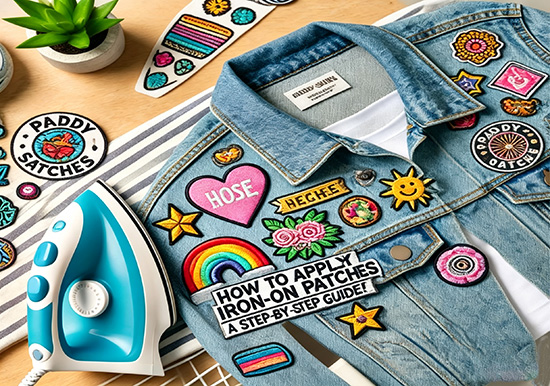
How do I avoid artwork and backing mistakes on a small patch order?
Reduce the number of unconfirmed variables before approval. Small orders have less room to absorb rework, especially when the patch is tied to a launch, tournament, staff issue date, or event opening.
- Do not force detailed art into embroidery. Thread can soften very fine features. Use woven or printed construction when precise small detail matters more than a raised stitch effect.
- Do not approve a backing without naming the substrate. A backing chosen for a smooth garment may not suit a thick backpack fabric, curved cap panel, or frequently washed item.
- Do not treat a mockup as an installation instruction. If iron-on is selected, confirm who will apply the patches and whether the receiving material is suitable for heat.
- Do not assume color is self-explanatory. Supply brand color references where available and review the proof carefully. Color mismatch is a stated risk in custom production.
- Do not wait to disclose a deadline. Production and shipping need to be evaluated together. A late date disclosure can remove practical options.
- Do not skip a quantity forecast. Even if the immediate order is small, telling the supplier about a later roll-out allows a more useful comparison between prototype and bulk routes.
Our facility is ISO 9001:2015 certified and Disney FAMA certified, with an 8,000 m² production facility, 6 production lines, and embroidery and metal production capabilities. For defect handling, Custom Panda offers color mismatch free reprints, proportional replacement for defects, 5-day fast re-stocking or repair, and 100 bonus pieces with every bulk order. These policies support bulk programs, but they do not remove the buyer’s responsibility to approve the proof and attachment specification before production.
What does a realistic proof-to-ship plan look like?
Plan from approved proof, not from the day you send an inquiry. This prevents a common purchasing error: booking an event date around an unapproved design and then expecting freight to compensate for design changes.
For example, an outdoor gear brand may need a small set of removable identification patches for backpacks and tactical vests. The buyer should select a weather-oriented patch material, request hook-and-loop attachment, provide the size of the loop panel, and explain the expected outdoor use. In the United States, we manufactured heavy-duty embroidered Velcro patches for an outdoor gear brand using weather-resistant threads and rugged hook-and-loop backings for hiking backpacks and tactical vests. That case supports the fit between the application and the backing choice; it does not mean every patch request uses the same material or schedule.
A workable purchasing sequence is:
- Confirm the actual use and attachment surface.
- Choose embroidery, woven, printed, PVC, chenille, or faux leather based on the artwork.
- Submit art and request a proof with the exact size, shape, colors, and backing.
- Approve only after checking text, edge treatment, and attachment details.
- Receive the confirmed production and shipping schedule for the destination.
- For a planned expansion, request a separate bulk quotation rather than assuming prototype pricing applies.
This approach also helps when patches are part of a wider merchandise release. A club launching a small patch alongside event merchandise may pair it with custom enamel pins for promotional campaigns & branding, but each item should have its own proof and production review. A shared logo does not guarantee identical color appearance across thread, PVC, metal enamel, and print.
What should I ask before requesting a quote?
Ask questions that let the supplier confirm feasibility, rather than asking only for a unit price. A complete brief produces a more reliable quote and prevents scope changes after artwork approval.
- Which patch construction best preserves this artwork?
- Can the small text and thin outlines reproduce at my requested finished size?
- Which backing suits my fabric or gear surface, and will it face washing or outdoor wear?
- Is this item eligible for no-minimum ordering, or does the requested process require a bulk minimum?
- What proof format will I receive before production?
- What is the schedule from proof approval to dispatch for my order?
- Which delivery options are available for my destination after the goods are complete?
- What specification would you recommend if this test order becomes a larger program?
Send your artwork, quantity, backing preference, destination, and required in-hand date for a patch feasibility review and quote.