

How to Plan Your Custom Jar Label Costs Around Size and Run Length
Ordering custom jar labels without a clear understanding of the cost structure is a significant risk. You might overspend on a small batch or, worse, choose a cheaper option that fails spectacularly on the shelf. I’ve seen it happen: labels peeling off jam jars in a cold display case due to condensation, or cosmetic label ink smudging from contact with essential oils. These failures don't just waste money; they damage brand perception. The key to avoiding this is to treat your label not as a commodity, but as a technical component engineered for a specific environment and application.
Before you request a quote, you need to know how material choices, printing methods, and order volume interact to determine your final per-unit price. This guide breaks down the cost factors I’ve seen trip up brand managers for over a decade, helping you make informed decisions that protect your product and your budget.
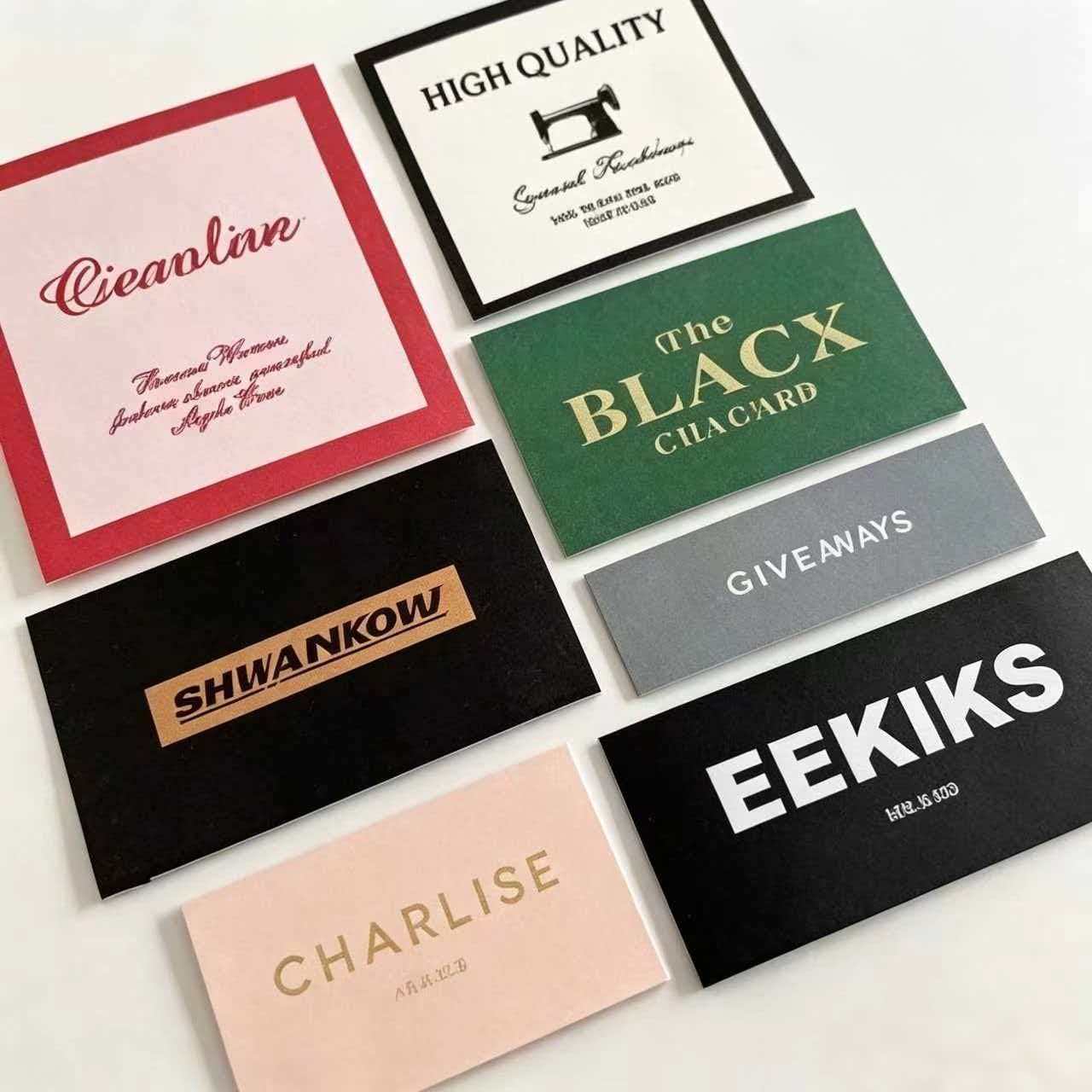
Key Material and Adhesive Choices That Impact Durability and Price
The foundation of any successful label project is selecting the right combination of face stock (the material itself), adhesive, and protective finish. These choices have the largest impact on both performance and cost. Getting this wrong means you could be paying for durability you don’t need or, more commonly, ordering a label that isn't tough enough for its job.
For example, a simple paper label is perfect for a dry goods product stored at room temperature. But place that same label on a jar of pickles destined for refrigeration, and it will wrinkle and tear. At our ISO 9001:2015 certified facility, we guide clients through these technical choices daily to prevent such costly mismatches.
Here’s a comparison of common materials for jar labels:
| Material Type | Best Use Cases | Durability & Resistance | Relative Cost |
|---|---|---|---|
| Paper (Kraft, Semi-Gloss) | Dry goods (spices, coffee), candles, gift items. Products not exposed to moisture or oil. | Low resistance to water, oil, and abrasion. Best for indoor, dry environments. | $ (Most affordable) |
| BOPP (Biaxially-Oriented Polypropylene) | Food products (jams, sauces), beverages, cosmetics. The go-to for a "no-label" look on clear jars. | Excellent resistance to water, oil, and most chemicals. Very durable. Ideal for oil & waterproof labels for bottles & cosmetics. | $$ (Mid-range) |
| Vinyl (PVC) | Products facing outdoor exposure, harsh chemicals, or heavy handling. Ideal for industrial or heavy-duty applications. | Highest resistance to UV light, chemicals, and abrasion. Conforms well to curved surfaces. | $$$ (Higher cost) |
| Polyester (PET) | Electronics, high-temperature applications, or products needing a premium metallic look (silver/chrome PET). | Exceptional resistance to heat, tearing, and chemicals. More rigid than BOPP or Vinyl. | $$$$ (Premium) |
Adhesives and Laminations
The material is only half the story. The adhesive determines if your label stays put.
- Permanent Adhesive: Standard for most retail products. Designed for a strong, one-time application.
- Removable Adhesive: Useful for promotional labels or products where the user might want to remove the label cleanly.
- Freezer-Grade Adhesive: This is non-negotiable for any product that will be refrigerated or frozen. Standard adhesives crystallize and fail in cold, moist environments, causing labels to peel off—a common problem we engineer our waterproof custom food labels to solve.
Finally, a lamination provides a protective top layer. A matte or gloss BOPP lamination makes the printed surface scratch-proof and enhances its resistance to moisture and UV light. For a natural health supplement brand in Australia, we combined a matte BOPP film with a scratch-proof lamination for their metallic foil-stamped labels, ensuring they maintained a high-end look through shipping and handling.
Deconstructing Your Unit Price A Cost Model for Jar Labels
Understanding how your per-label price is calculated is essential for budgeting. The cost isn't linear; it’s a combination of fixed, one-time charges and variable per-unit costs. The magic of bulk production is its ability to spread those fixed costs over a larger number of labels, dramatically lowering your price per piece.
Let's break down the typical cost components for custom printed roll labels, which are standard for automated application.
Cost Factor Breakdown
- One-Time Fixed Costs: These are setup charges that are paid once per design. They have a huge impact on small runs but become almost negligible on large orders.
- Die Charge: A die is a custom-shaped "cookie cutter" used to cut your labels. For a unique shape, there's a one-time fee to create the die. Standard shapes like circles or rectangles may not incur this charge.
- Plate Charge (Offset Printing): For traditional offset printing (which we recommend for orders over 1,000 units for best pricing), each color in your design requires a separate printing plate. This is a fixed setup cost.
- Variable Costs (Per Label): These costs scale directly with the number of labels you order.
- Material: The cost of the face stock and adhesive. As shown above, paper is less expensive than durable synthetics like Polyester.
- Printing: This depends on the method. Our HP digital presses have no plate costs and no minimum order quantity, making them perfect for short runs or designs with many variations. For larger runs, offset printing becomes more cost-effective per label.
- Finishes: Special additions like custom foil stamping, embossing, or spot UV varnish add a per-label cost.
Example: The Power of Quantity
To illustrate, let's imagine a 2" x 3" BOPP label with a custom die shape and 4-color printing.
(Note: These are illustrative prices to demonstrate the principle of amortization.)
| Cost Component | 1,000 Labels | 5,000 Labels | 10,000 Labels |
|---|---|---|---|
| Fixed Costs (Die + Plates) | $200.00 | $200.00 | $200.00 |
| Variable Cost (Material + Print) | $0.10 / label | $0.09 / label | $0.08 / label |
| Total Variable Cost | $100.00 | $450.00 | $800.00 |
| Total Project Cost | $300.00 | $650.00 | $1,000.00 |
| Final Cost Per Label | $0.30 | $0.13 | $0.10 |
As you can see, jumping from 1,000 to 10,000 units reduces the per-label cost by 66%. This is why planning your run length is so important for achieving a target unit price.

Avoiding Common and Costly Jar Label Failures
Over my 12 years on the factory floor, I’ve seen brands make the same preventable mistakes. A great design is worthless if the label itself fails. Here are the top issues to watch out for when specifying your labels.
- Ignoring Environmental Conditions: Will your jar be refrigerated? Stored in a humid bathroom? Exposed to sunlight on a shelf? Each scenario demands a different material and adhesive. For refrigerated products, you need both a waterproof material like BOPP and a freezer-grade adhesive to prevent peeling.
- Mismatching Adhesive to the Jar Surface: A smooth glass jar and a slightly textured, squeezable plastic jar require different adhesive formulations for optimal bonding. A weak adhesion is one of the top failure points we see from low-quality suppliers. Always specify your container material.
- Poor White Ink Opacity on Clear Labels: When printing on a clear BOPP label, a strong, opaque white ink base layer is necessary to make your colors pop. Without it, colors look translucent and washed out. We ensure a solid white base is printed behind your design for maximum impact.
- Skimping on Protective Lamination: Jars get handled, bumped, and scuffed during shipping and on retail shelves. An unlaminated label, especially a paper one, can be easily damaged. A thin, clear lamination is an inexpensive insurance policy against this, which is why it's a standard recommendation for premium custom cosmetic labels.
- Inaccurate Color Matching: Your label color must perfectly match your brand guidelines and other packaging elements. Relying on a screen proof alone is risky. We provide photo samples for confirmation before mass production and back our quality with a free reprint guarantee if the colors don't match the approved proof.
Our Manufacturing Process and Guarantees for Quality
A reliable supply chain is built on transparency and trust. We believe in showing our clients how we ensure quality at every step, from the initial design to the final delivery.
It starts with our Free Design Assistance. Our team helps you finalize your artwork, ensuring it's optimized for production. Before any bulk order begins, you will receive a photo or digital sample for approval, so you know exactly what you're getting. Our standard lead time for samples is just 3 days.
Once approved, your order moves to our 8,000 m² facility, which has a daily capacity of over one million labels. This high-capacity production allows us to turn around most bulk orders in just 8-9 days. This entire process is governed by our ISO 9001:2015 Quality Management System, ensuring consistency and accountability.
We stand firmly behind our output with several guarantees:
- Color Match Guarantee: Free reprints for any confirmed color deviations from the approved proof.
- Defect-Free Promise: Proportional replacement for any labels with manufacturing defects.
- Bulk Order Bonus: We include 100 extra pieces with every bulk order, free of charge, to cover any minor application issues on your end.
Should you ever have a question or need to make an adjustment, you'll have access to our live human support, not a chatbot. We believe in direct communication to solve problems quickly and efficiently.
If you're ready to get a precise quote for custom jar labels based on your specific design, material, and quantity, submit your artwork for a free review and detailed pricing.