

How Bulk Orders Reduce Your Custom PET Label Costs
Ordering small batches of labels often leads to unexpectedly high unit costs and potential supply chain disruptions. Before approving your next purchase order, understanding the specific cost drivers behind high-volume production can protect your budget and ensure product consistency. Miscalculating the total cost of ownership by focusing only on a low initial quantity price is a common sourcing error. This guide provides a clear framework for analyzing the financial benefits of ordering Custom PET Labels in bulk from an industrial-scale supplier.
At custom panda, our ISO 9001:2015 and Disney FAMA certified facility is structured for high-capacity production. With a daily output of over 1,000,000 labels, we manage large-volume orders that provide significant cost savings to our clients. We will break down the factors that influence landed unit cost, helping you make an informed purchasing decision that aligns with your inventory and financial strategy.
Analyzing the Total Landed Cost of Your PET Labels
The price per label is not a single, static number; it is influenced by multiple production and material factors. Understanding these components is the first step toward optimizing your procurement budget. While digital printing allows for no-minimum-order-quantity (No MOQ) projects, offset printing for bulk orders (starting at 1,000 units) delivers superior economies of scale. Here is a breakdown of how different elements affect your final unit cost.
| Cost Factor | Impact on Unit Price | Explanation & B2B Buyer Considerations |
|---|---|---|
| Order Quantity | High (Inversely Proportional) | This is the most significant factor. Fixed setup costs (plate creation, press calibration) are amortized over more units in a larger run. An order of 50,000 labels will have a substantially lower per-label cost than an order of 1,000. Action: Forecast your annual label needs to consolidate smaller orders into larger, less frequent ones. |
| Label Size & Shape | Medium | Larger labels consume more raw PET substrate and ink. Complex die-cut shapes require custom tooling, which adds a one-time setup fee. The more labels that can fit onto a single master roll of material, the lower the waste and cost. Action: Standardize label sizes across product lines where possible to maximize material usage. |
| Color Count & Type | Medium | Each additional color in offset printing requires a separate plate and press run, increasing setup time and cost. Specialty inks, like UV-resistant or metallic inks, are more expensive than standard CMYK process colors. Action: Evaluate if a 4-color process (CMYK) can achieve your branding goals instead of using multiple spot Pantone colors. |
| Finishing & Lamination | Medium to High | Finishes add both aesthetic value and durability, but they also add cost. Options like BOPP lamination (matte or gloss), custom foil stamping, and spot UV coating are separate production steps. Lamination is critical for waterproof product labels that need to resist abrasion and moisture. Action: Choose a finish that matches the product's lifecycle. A cosmetic product may need high-end foil, while an industrial part requires only a protective matte lamination. |
| Adhesive Type | Low to Medium | The choice of adhesive depends on the application surface and environment (e.g., cold storage, high heat). A general-purpose permanent adhesive is standard. A specialized, high-tack, or freezer-grade adhesive will increase the unit cost slightly. Action: Specify the exact application environment to ensure you get the right adhesive without overpaying for unnecessary performance. |
| Packaging (Roll vs. Sheet) | Low | Labels supplied on rolls are standard for machine application and are generally the most cost-effective format. Supplying them as individual sheets requires an extra cutting step, which can add minor labor costs. Action: If you use an automatic label applicator, specify the roll core size and winding direction to avoid post-delivery issues. |
Why PET Substrate Is an Economical Choice for Demanding Applications
Polyethylene terephthalate (PET) is a polyester film known for its exceptional durability, clarity, and resistance to environmental factors. While it may have a slightly higher initial material cost than paper, its performance characteristics prevent costly failures that erode profit margins. Choosing a cheaper, less suitable material often leads to product returns, reprints, and brand damage.
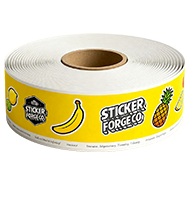
Here are common label failures that durable PET material helps you avoid:
Moisture & Condensation Damage: Standard paper labels peel or disintegrate in cold, damp environments like refrigerators. PET is inherently waterproof, ensuring brand integrity on beverages, frozen foods, and bath products.
Adhesive Bleeding in Heat: Low-quality adhesives can soften and ooze at high temperatures, creating a sticky mess. Our PET labels use stable adhesives formulated to withstand storage and shipping temperature fluctuations.
Tearing and Abrasion: Products that face rough handling during shipping or on retail shelves need labels that resist scuffs and tears. The high tensile strength of PET, especially when combined with BOPP lamination, protects the printed graphics.
Chemical & Oil Contamination: For industrial or automotive products, labels must resist degradation from contact with oils and chemicals. PET provides a reliable barrier that paper cannot. A client in Australia successfully used our metallic foil-stamped PET roll labels on natural health supplements, where resistance to essential oil contact was a key requirement for maintaining a premium shelf presence.
Investing in the correct substrate from the start is a long-term cost-saving measure. It eliminates the direct and indirect costs associated with label failure, such as relabeling labor, product recalls, and lost customer trust.
Planning Your Bulk Order: Production and Logistics Timeline
Committing to a large order requires confidence in your supplier's ability to deliver on time. A clear understanding of the production and shipping timeline is essential for effective inventory management. At our 8,000 m² facility, we operate six production lines, including advanced HP digital label presses, to ensure we meet demanding schedules. Our process is transparent and designed for B2B efficiency.
Here is a typical timeline for a bulk order of PET labels:
Design & Confirmation (1-2 Days): Our free design assistance helps finalize your artwork. We provide a digital proof for your approval, confirming colors, dimensions, and material specifications. We will not proceed until you are 100% satisfied.
Sample Production (3 Days): For large or complex orders, we can produce a physical sample. This allows you to test the adhesive, inspect the print quality, and confirm the finish before committing to the full production run.
Bulk Production (8-9 Days): Once the sample is approved, we initiate mass production. Our high-capacity equipment ensures consistent quality across tens of thousands of units.
Quality Control & Packaging (1 Day): Every batch undergoes a final quality inspection. We also include 100 bonus pieces with every bulk order to cover any minor application discrepancies on your end.
U.S. Shipping (5-6 Business Days): We handle all shipping logistics to ensure your order arrives safely. With our free shipping service, the price you are quoted is the price you pay.
This streamlined process provides a predictable lead time of approximately 17-21 days from final design approval to delivery in the United States. This allows your team to plan inventory replenishment cycles accurately, avoiding both stockouts and excess holding costs associated with ordering too early.
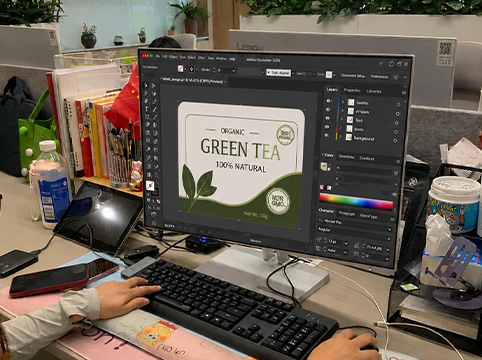
A Buyer's Checklist for Placing High-Volume Label Orders
Placing a large-volume order involves more than just uploading a design file. A systematic approach ensures you avoid common mistakes and receive labels that meet your exact technical and brand requirements. Use this checklist before submitting your next request for a quote (RFQ).
[ ] Confirm Material Specifications: Is standard clear PET or a specialized white or metallized PET required? Specify the exact substrate thickness (e.g., 2 mil).
[ ] Verify Adhesive Properties: Have you clearly communicated the application surface (e.g., glass, corrugated cardboard, HDPE plastic) and the temperature range the product will experience?
[ ] Provide Pantone Color Codes: For brand-critical colors, provide Pantone (PMS) codes. Relying on CMYK conversion alone can lead to slight color variations. We offer a color mismatch free reprint policy to guarantee accuracy.
[ ] Request a Physical Sample: For any new design or first-time bulk order, always request a pre-production sample. A digital proof cannot show you how the finish looks in person or how well the adhesive performs on your product.
[ ] Specify Roll Winding Direction: If using an automatic label applicator, confirm the required winding direction and core size. An incorrect specification can bring your entire packaging line to a halt.
[ ] Understand the Defect Policy: Clarify the supplier's policy on defects. We offer proportional replacement for any confirmed defects and have a 5-day fast restock process to minimize disruption.
[ ] Ask About Bulk Packaging: Ensure the master cartons are properly labeled and protected to prevent damage during transit. Poor packaging can damage the edges of label rolls, rendering them useless for machine application.
By addressing these points upfront, you minimize production risks and ensure a smooth procurement process. Our live human support team is available to walk you through these technical details and provide expert guidance.
Ready to see how much you can save on your next high-volume label order? Contact our team for a detailed quote based on your project specifications.