

Reduce Rework on Hard Enamel Pins With Proofs
The most expensive mistake in a pin order is approving a proof you only skimmed. Once the dies are cut and the enamel is filled, a wrong Pantone code, a hairline gap in the metal, or a loose backing means a remake, a missed event date, or boxes of pins nobody wants to hand out. Hard enamel pins are less forgiving than most buyers expect, because the enamel is polished flush with the metal lines and the plating is part of the design. This guide covers what to check on a proof, which files to prepare, and where a proof stops protecting you.
I’m Alin, and I’ve spent 12 years on the manufacturing side of custom merchandise. Most remakes I have seen came from a handful of approval gaps, not from factory error. Those gaps are easy to close.
What exactly should a pin proof show before you approve it?
A usable proof is a production drawing, not a pretty mockup. At minimum it should show:
- The final dimensions of the pin, with the measured side marked.
- Every enamel color labeled with a Pantone reference.
- The metal line (raised border) and its plating color.
- The backing type and where the post sits.
- Any cut-outs, glitter, or special effects.
Conclusion: approve only a proof where every one of those items is written down or visible. Why: if a detail is not on the proof, the factory has to guess, and a guess is hard to dispute later. Limit: a flat digital proof shows layout and color assignment well. It cannot show how light reflects off polished gold or how a finished pin feels in the hand.
How do proof approvals for line thickness, Pantone colors, plating, and backing prevent costly production errors?
Each of these four checks maps to a defect we see in finished pins. If you catch the issue on the proof, it costs a revised file. If you catch it after production, it costs a remake.
| Proof item | What to verify | Error if skipped | Best fit |
|---|---|---|---|
| Line thickness | Metal lines are thick enough to separate neighboring colors; small text is not hairline. | Enamel colors bleeding or overflowing; small details closing up. | Logos with fine lettering or tight color blocks |
| Pantone colors | Each fill has a written Pantone code, not just an on-screen color. | Colors that miss brand guidelines and trigger a dispute about who was right. | Brand programs with strict color standards |
| Plating | Plating shade (gold, silver, dual-plated, antique) is named for the lines and any raised areas. | A bright gold when you wanted antique, or the reverse. | Awards, tournament pins, premium gifts |
| Backing selection | Backing type, post position, and pin size are confirmed against how the pin will be worn. | Pin backs that are loose or unstable; pins that tilt on a lapel or lanyard. | Heavy fabric, jackets, bulk giveaways |
This is why we confirm by photo or digital sample before production starts. Approval is the point where responsibility is clear: you approved the Pantone codes, plating, and backing on the proof, and we build to that proof.
Limit: a proof cannot fix weak artwork. If a design depends on a gradient or photographic detail, hard enamel is the wrong process, and no amount of proofing changes that. See the section on when a proof does not protect you, below.
What files and information should you prepare before requesting a proof?
Clean inputs shorten the revision loop more than anything else. Work through this list before you submit:
- Vector artwork. Send a vector logo file if you have one. A low-resolution screenshot forces redrawing and adds a revision round.
- Pantone codes. Write one code per color area. “Navy” is not a spec.
- Final size. State the size and which edge it applies to (height or width).
- Plating choice. Name the metal line color, and say if you want dual-plated finishes.
- Backing and wear. Say whether pins will go on a lapel, a hat, a lanyard, or a bag.
- Quantity and deadline. This lets us confirm which MOQ applies and whether your date is realistic.
If your artwork is not ready, our free design assistance can turn a rough sketch into a production-ready proof. Send the sketch with the six items above and flag what is still undecided.
What are the most common proof mistakes buyers make?
- Approving on a phone screen. Colors and line weights look different on a small display. Check the proof on a desktop monitor, and compare it to a printed Pantone swatch.
- Leaving colors unnamed. If the proof says “red,” you are trusting an interpretation. Fix: name the Pantone code in writing.
- Ignoring the actual pin size. A logo that reads well at 2 inches on screen can crowd at 1 inch. Print the proof at actual size and look at it.
- Skipping the backing line. Buyers confirm artwork and forget the backing. Fix: state the wear scenario in your first message.
- Treating “looks fine” as approval. Reply with a written item-by-item confirmation instead. It takes two minutes and makes disputes simple.
- Changing artwork after approval. Late edits restart the proof and can push your delivery date.
How long does proofing take, and what does it do to the schedule?
Proofing is a short step compared with a remake. Our sample lead time is 3 days for pins, patches, and labels, and bulk production runs 8 to 9 days. U.S. shipping typically takes 5 to 6 business days. Because we send a photo or digital sample for confirmation before production, the gap between approval and the bulk run is short. A one-day delay at the proof stage is far cheaper than a remake.
Scenario: you need pins for a conference and want them on site in about three weeks. Submit complete artwork and Pantone codes on day one, and approve the proof within a day or two. Add the sample, bulk, and shipping times above, and you still have buffer for one revision. If you send incomplete files and approve late, that buffer disappears.
On MOQ, it depends on the item and process. Digital printing and select custom items can run without a minimum, while standard bulk items under offset printing start at 1,000 units with better pricing at higher quantities. Ask for the MOQ for your pin type when you request the quote, and do not assume it.
What does a well-approved pin order look like in practice?
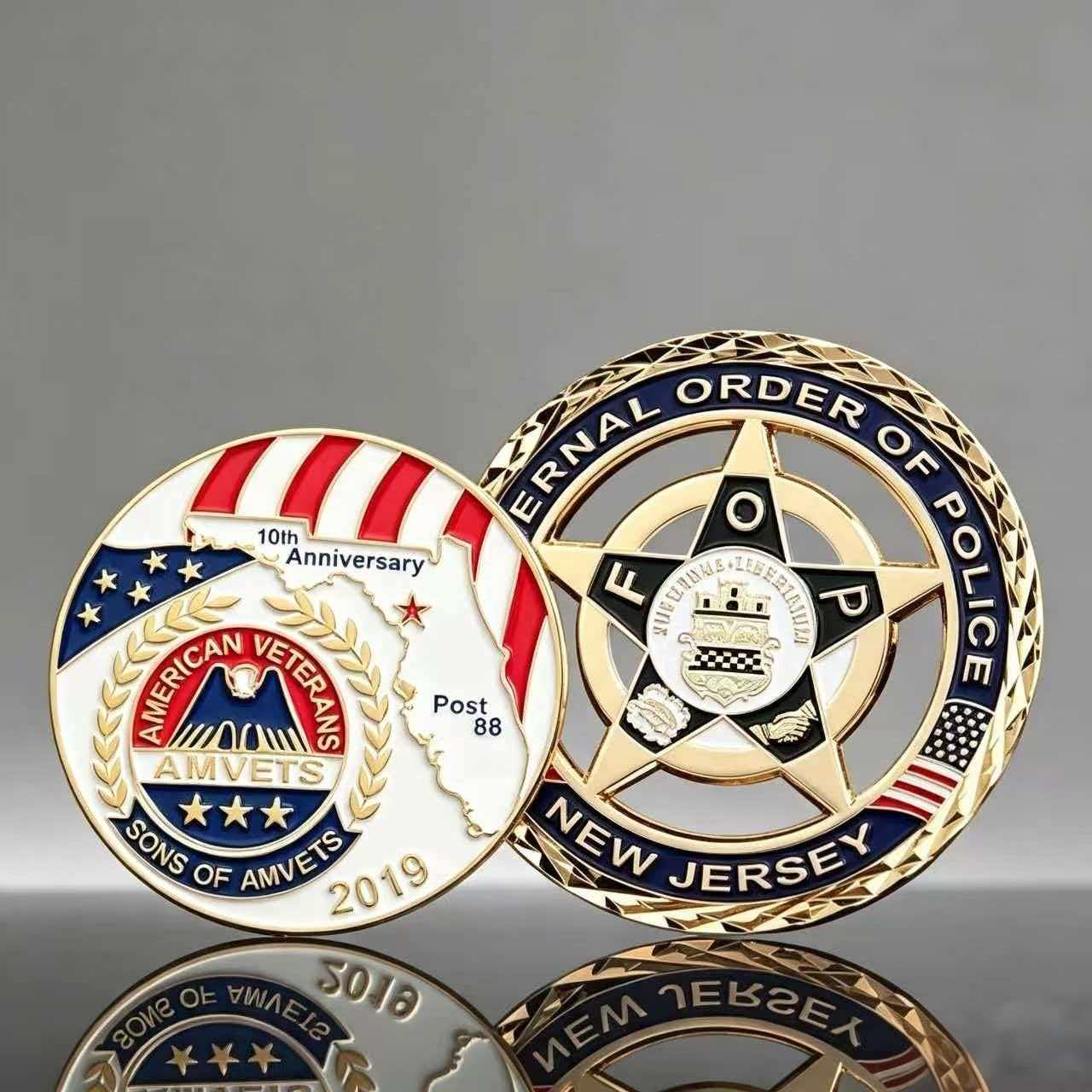
Our Canada customer case is a good example. We created custom hard enamel pins for an esports tournament championship, with polished gold plating and bold dual-tone colors. Fans and players wear them on jackets and lanyards. Plating shade and color pairing are the two things that make a pin like this look premium or cheap, and both were fixed at the proof stage.
For a different build, our Germany case was interactive spinning enamel pins for a specialty coffee brand’s anniversary, using custom die-casting with a smooth 360-degree rotating element. A moving part makes the proof even more important, because the mechanism has to be approved along with the artwork. If you are weighing designs like this, our custom interactive enamel pins page shows the format.
If you want a standard hard enamel build, see premium hard enamel pins for brands. For a wider range of formats, including trade shows and giveaways, browse bulk custom lapel pins.
When does a proof not protect you?
A proof reduces rework, but it has boundaries. Three situations need a different decision, not more proofing:
- Gradients and photo detail. Hard enamel fills solid color areas separated by metal. For gradients or portraits, look at offset printed pins instead.
- Textured or recessed looks. If you want a recessed, textured feel and a lower unit cost, compare order soft enamel pins with the hard enamel option before you finalize artwork.
- Sculpted relief. For deep dimensional detail like our Japan case, 3D cast metal souvenir pins in deep antique bronze with cut-out details, a flat proof is not enough. Use 3d cast lapel pins and ask for a physical or photo sample to judge the relief.
Also, a digital proof shows color assignment, not the exact shine of plating. If a plating shade is critical to your brand, say so and ask for a photo of the finished sample before bulk production.
What happens if the finished pins still differ from the approved proof?
Our terms cover this. If colors do not match the approved spec, we offer a free reprint for color mismatch. If there are defects, we provide proportional replacement, and we aim for fast re-stocking or repair within 5 days. Every bulk order also includes 100 bonus pieces. These terms are why a clean, written approval matters: it defines what “matching” means.
Our factory has been operating since 2012, with an 8,000 m² facility, 6 production lines, and full metal die-casting and embroidery capability. We are ISO 9001:2015 certified and Disney FAMA certified. That does not replace your proof review, but it means the build step follows a managed quality system.
Limit: replacement terms cover defects and mismatches against the approved proof. They do not cover changes you decide on after seeing finished pins that match what you signed off.
Buyer’s checklist before you click approve
- Are all Pantone codes written next to each color?
- Is plating named for lines and raised areas?
- Does the metal line look thick enough at actual size?
- Is the backing type and post position confirmed for your wear scenario?
- Are size, quantity, and deadline stated in the same message?
- Have you sent your approval in writing, item by item?
Ready to start? Send your artwork, Pantone codes, size, and deadline to our team for a proof and quote, or ask for selection advice if you are still choosing between hard enamel, soft enamel, and offset printing.