

Run Dispense Trials Before Buying Custom Labels in Bulk
The sourcing mistake buyers regret most is approving a flat sample, then discovering on the packing line that the roll will not dispense. Labels skip a sensor gap, edges lift on the liner, or the second roll prints half a millimetre off the first. A quote and a swatch cannot reveal any of that. For custom labels printed in bulk, the only evidence that counts is a trial on your own applicator, on your own containers, with rolls pulled from more than one position.
This guide is for procurement managers who already hold quotes and material samples and need to choose between two or three printers before a repeat or high-volume order. It sets out how to verify a custom label supplier through a label dispensing test, what to score, what to agree in writing, and which parts of our own terms you can rely on.
What a dispense trial proves that a quote and a flat sample cannot
A flat sample shows color and finish. It says nothing about how the web behaves under tension, how the liner releases at your line speed, or whether adhesive holds on a cold or curved surface. Most label failures happen in these gaps. They tend to appear after the order is placed, when switching suppliers costs the most.
A dispense trial answers four buyer questions:
- Does the roll feed cleanly? Label gaps, die-cut depth and liner strength decide whether the applicator jams.
- Does the adhesive suit the surface? Condensation, heat, oils and low-energy plastics each need a different adhesive.
- Does print registration hold? Drift across a roll shows up as clipped logos or misaligned barcodes.
- Is roll two the same as roll one? Repeat orders only work if production is consistent from roll to roll.
The limit: a trial verifies a specific material, size and application. If you change the substrate, container or applicator speed afterwards, the result no longer applies and you should retest.
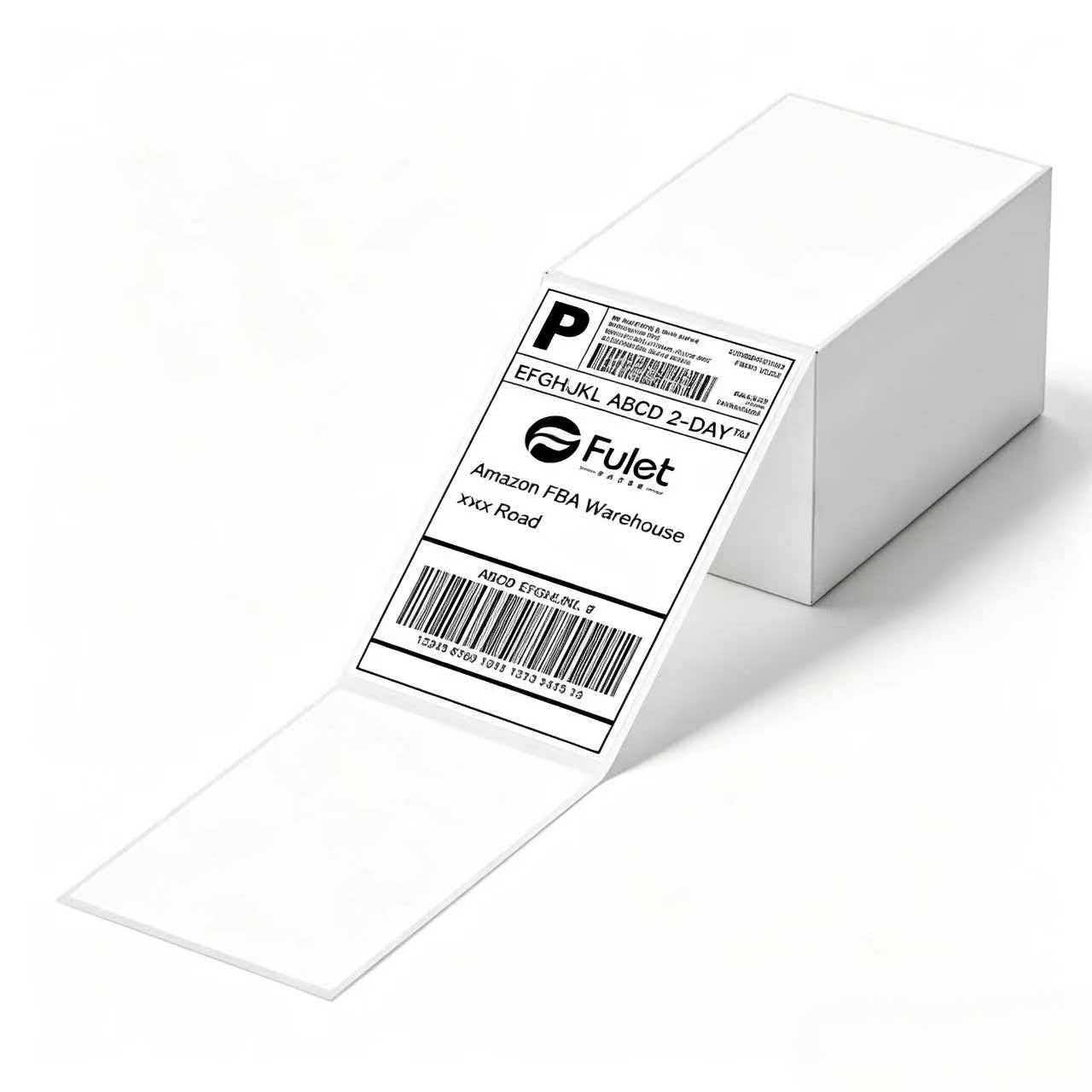
Where Custom Panda fits in a supplier comparison
Custom Panda has operated since 2012 from an 8,000 m² facility with six production lines, including six HP digital label presses. We work to an ISO 9001:2015 quality management system, and our stated capacity is over 1,000,000 labels per day. Each fact matters differently to a buyer running a trial.
| Buyer concern | Relevant supplied fact | What it does not tell you |
|---|---|---|
| Can the supplier run a small trial without a large commitment? | Digital printing and select custom items have no MOQ; offset and standard bulk items start at 1,000 units | Your specific job may fall under either route; confirm which one applies |
| How quickly can I get a trial roll? | Sample lead time is 3 days for labels; bulk production is 8-9 days | Complex finishes may change timing; ask for a dated confirmation |
| Will I see the artwork before production? | Photo or digital sample confirmation happens before production | This confirms appearance, not line performance; that is what your trial is for |
| Is the process documented? | ISO 9001:2015 quality management system | A certificate does not replace a trial on your application |
| What if the order does not match? | Free reprint for color mismatch; proportional replacement for defects; 5-day re-stocking or repair | Agree what counts as a defect before the trial, not after |
Our materials cover a wide range of substrates, BOPP lamination, UV-resistant inks and custom foil stamping colors. For wet or cold environments, buyers usually begin with waterproof custom synthetic labels or clear BOPP film. The right choice still depends on your surface, so we treat the trial as the deciding test rather than the datasheet.
A preproduction trial scorecard for dispense consistency, adhesive performance, print registration and roll-to-roll variation
Use one scorecard for every supplier so the comparison is fair. Agree the pass signals with each supplier before the samples ship. Setting thresholds after you see the results invites bias, and suppliers cannot design to a target they never saw. The thresholds below are for you to set from your own line requirements. We have not invented industry numbers here.
| Test area | What to check | How to record it | Red flag |
|---|---|---|---|
| Dispense consistency | Feed through applicator, sensor detection of gaps, liner tearing, label flagging at the peel edge | Count misfeeds and stoppages per fixed run length at your normal line speed | Repeated sensor misreads, liner breaks, or labels lifting before application |
| Adhesive performance | Initial tack, hold after a dwell period, edge lift on curved or textured surfaces, behavior under your temperature and moisture conditions | Photo log at set intervals; note lifting, bleed at edges, or residue | Edge lift on curves, adhesive ooze on the liner, failure after condensation |
| Print registration | Alignment of print to die-cut edge, barcode and text clarity, white ink opacity on clear film, foil placement | Measure offset on labels from start, middle and end of each roll; scan barcodes | Visible drift across the roll, thin white ink on clear stock, unreadable codes |
| Roll-to-roll variation | Color, finish, adhesive feel and unwind behavior across at least three rolls | Compare against the approved sample and each other under the same light | Color shifts between rolls, different unwind tension, inconsistent core or winding |
| Surface and handling | Scuff resistance, ability to hold hand-written markings if needed, tear resistance | Rub, write and flex tests on applied labels | Ink smearing, tearing at the liner, marks that will not hold |
Score each row as pass, conditional or fail, with a note. A supplier with one conditional on tack can often fix it with an adhesive change. A supplier that fails roll-to-roll variation is a much bigger concern for repeat orders.
How to run the label dispensing test, step by step
This sequence suits roll labels on semi-automatic or automatic applicators. It is also how to test label adhesion in a way you can repeat with every supplier.
- Lock the specification. Record size, material, adhesive type, core size, unwind direction, and the exact surface or container.
- Request rolls from different positions. Ask for at least three rolls, ideally not wound consecutively, so you see variation.
- Approve the digital proof first. We provide photo or digital confirmation before production, which removes artwork errors from your trial.
- Run the applicator at normal speed. Testing slowly hides feed issues that appear at full line speed.
- Apply to real containers. Use production bottles, boxes or pouches, not a test board. Surface energy and curvature change adhesion.
- Condition the applied labels. Let them dwell, then expose them to your real conditions: chill and condense, heat, wash, or handling.
- Inspect and photograph. Use the scorecard. Roll label quality inspection works best when two people score independently and compare.
- Share results with the supplier. Send photos and counts. A supplier worth keeping responds with a specific adjustment, not a general reassurance.
For waterproof or oil-exposed packaging, compare your trial against oil & waterproof labels for bottles & cosmetics constructions, because the liner, face stock and adhesive combination matters more than any single claim.
Common mistakes buyers make when verifying a label supplier
- Testing on a bench instead of the line. Hand-peeling a label proves nothing about applicator feed.
- Judging only the first roll. Variation appears between rolls, not within one. Pull from several positions.
- Skipping condition testing. A label that holds on a dry bottle can peel after cold storage condensation or fail when adhesive bleeds in heat.
- Comparing unequal samples. If one supplier sends a stock material and another sends your intended construction, the scores mean nothing.
- Leaving defect definitions vague. Without agreed criteria, a reprint or replacement claim becomes an argument.
- Treating custom sticker printing and roll production as the same thing. Sheet stickers and applicator-ready rolls have different liner and die-cut requirements. For sheet or shaped work, check die cut custom stickers separately.
Evidence from supplied cases, and what each one tells you
Three cases map closely to the concerns above. Each shows a specific construction, and none is a promise that every order will behave the same way.
- Australia, supplement brand: metallic foil-stamped roll labels using matte BOPP film with scratch-proof lamination, built for a high-end shelf look. The relevant buyer test is foil registration and scuff resistance after handling.
- Spain, children’s clothing line: organic cotton printed wash-care labels using skin-safe, fade-resistant inks that survive repeated industrial washing. The relevant test is color retention after wash cycles.
- United Kingdom, knitwear brand: ultra-soft damask woven garment labels with high-density yarn weaving for scratch-free comfort. The relevant test is hand feel and edge finish against sensitive skin.
The cases show we have produced these constructions. They do not replace your own trial on your own packaging. If you run rolls on an applicator, our custom printed roll labels range is the starting point for the specification.
Cooperation terms and what you still need to agree
Supplied terms you can plan around:
- MOQ: none for digital printing and select custom items; 1,000 units minimum for offset and standard bulk items, with better pricing at higher quantities.
- Lead time: 3 days for samples; 8-9 days for bulk production; 5-6 business days for U.S. shipping. Same-day dispatch applies only to select ready-stock or digital items.
- Support: free design assistance, live human support and free shipping.
- Quality remedies: free reprint for color mismatch, proportional replacement for defects, 5-day fast re-stocking or repair, and 100 bonus pieces with every bulk order.
Matters that are still yours to set in writing before the trial starts:
- The approved reference sample and the color tolerance you will accept.
- Which scorecard results count as a defect for replacement purposes.
- How many trial rolls, in which sizes, and whether the trial uses digital or offset production, since either choice changes MOQ and pricing.
- Who pays for retesting if you change surface, container or applicator.
- How roll-to-roll consistency will be checked on the first bulk delivery.
These points are not a universal workflow. They are the gaps most trial disputes come from, and settling them early costs nothing.
What to send us to qualify your trial
Before you ask any custom label supplier, ours included, for a quote, collect the following. It lets us propose a material and adhesive that suits your line, rather than a generic one.
- Label size, shape and quantity per roll, plus core size and unwind direction.
- Container or surface material, and its shape and finish.
- Environment: cold chain, heat, moisture, oils, washing or outdoor exposure.
- Applicator model and line speed.
- Artwork, brand color references, and any foil, white ink or varnish requirements.
- Your scorecard thresholds, or a request that we help draft them.
If you are comparing suppliers now, send us your specification and applicator details and ask for a trial roll set. We will confirm the material, the route (digital or offset) and the sample timing so you can score us against the others.