

Sourcing Custom Business Labels That Actually Work for Retail Products
Choosing the wrong label is a costly mistake that goes far beyond the initial price per unit. A label that peels in a cold deli case, fades under store lighting, or scuffs during shipping actively undermines customer trust before they even try your product. After 12 years on the factory floor, I’ve seen brands invest fortunes in product development only to have their image damaged by a failing label. Sourcing high-performance custom business labels isn't just about printing a logo; it's about ensuring your packaging survives the entire journey from production to the customer's hands.
A label that can't withstand its environment suggests a product that can't either. This guide cuts through the technical jargon to give you a practical framework for specifying labels that protect your brand, look great on the shelf, and prevent expensive reprints.
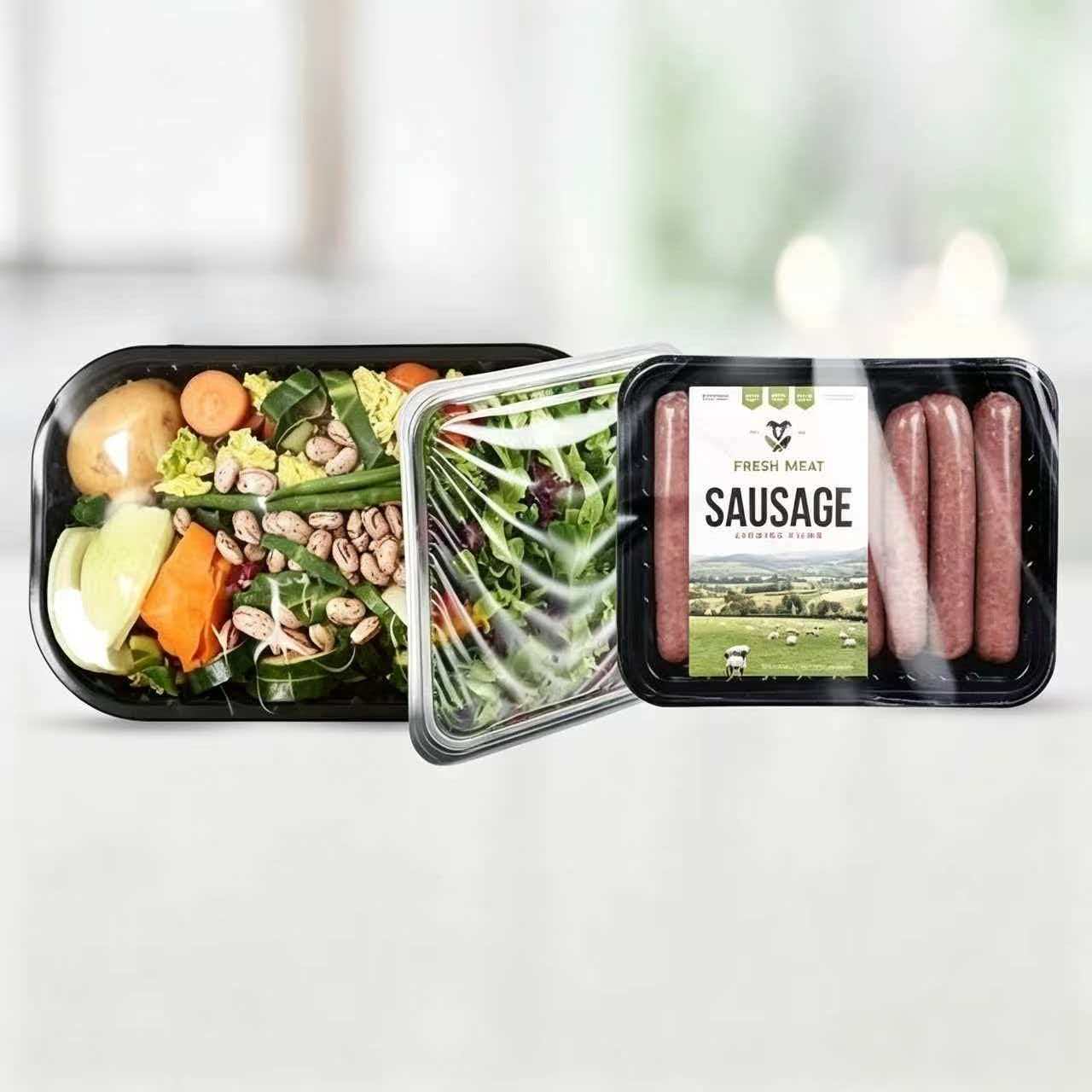
The Sourcing Checklist: Matching Label Specs to Retail Environments
Before you request a quote, you need to define your requirements. A label for a frozen food package has completely different needs than one for a luxury cosmetic jar. Answering these questions first prevents miscommunication with your supplier and ensures the final product is fit for purpose. This is the exact checklist I use with clients to avoid common failures.
- Check 1: Substrate (Material) Selection. The material is the foundation of your label's performance. Don't choose based on price alone.
- Why it matters: The substrate dictates durability, water resistance, and texture. A flimsy paper label will disintegrate on a beverage bottle exposed to condensation.
- Your options:
- Paper: Best for dry goods, short-term use, and cost-sensitive projects like durable custom box labels. Not suitable for moisture or oil exposure.
- BOPP (Biaxially Oriented Polypropylene): A versatile plastic film that is waterproof, oil-resistant, and tear-resistant. It's the standard for food, beverage, and bath products. Our work for an Australian health supplement brand used a matte BOPP film to achieve a premium, scratch-proof finish on their bottles.
- PET (Polyester): The toughest option. It offers excellent resistance to heat, chemicals, and UV light, making it ideal for industrial applications or products stored outdoors.
- Vinyl: Highly durable and conformable, often used for outdoor equipment or products with curved surfaces.
- Check 2: Adhesive Formulation. The wrong adhesive is the number one cause of label failure.
- Why it matters: Adhesive performance is directly tied to the application surface and temperature. A standard adhesive will fail on a frozen product or a highly textured surface.
- Your options:
- Permanent: Creates a strong bond intended to last the product's lifetime.
- Removable: Allows the label to be peeled off cleanly without residue. Ideal for price tags or temporary promotions.
- Freezer-Grade: Specially formulated to maintain adhesion in cold, moist environments down to -20°F or lower. Essential for any waterproof custom food labels on refrigerated or frozen goods.
- Check 3: Finish and Lamination. This protective layer affects both appearance and resilience.
- Why it matters: Lamination protects the ink from scuffing, moisture, and fading. The finish—matte or glossy—defines the product's aesthetic.
- Your options:
- Glossy Finish: Creates a shiny, high-contrast look that makes colors pop. It’s also highly resistant to moisture.
- Matte Finish: Provides a subtle, non-glare, and elegant appearance. It's easier to write on than a glossy surface.
- BOPP Lamination: We apply this clear film over printed labels to make them virtually scratch-proof and waterproof, a must for products that are handled frequently.
- Check 4: Print Method and Order Quantity. Your order volume determines the most cost-effective production method.
- Why it matters: Aligning your order size with the right technology saves money and ensures quality.
- Your options:
- Digital Printing: Perfect for short runs, multiple design variations, and jobs requiring fast turnarounds. Our HP digital presses have no minimum order quantity (MOQ), giving startups flexibility.
- Offset Printing: The best choice for large bulk orders (typically 1,000 units or more). The per-unit cost is significantly lower, but setup costs are higher.
Beyond the Basics: Critical Finishing Options That Protect Your Brand
Standard labels get the job done, but special finishes can elevate your packaging from generic to premium. These details are not just cosmetic; they communicate quality and can be a deciding factor for a customer comparing products on a crowded shelf. When you need your custom brand logo labels to stand out, these options are worth considering.
Custom Foil Stamping
Foil stamping adds a metallic, reflective element to your design. It's an immediate visual cue for a luxury product, often used for wine, high-end cosmetics, and gourmet foods. While gold and silver are classic, we offer a wide spectrum of custom foil colors to precisely match your brand guidelines. This technique adds texture and a premium feel that standard printing cannot replicate.
UV-Resistant Inks
If your product will be displayed near a window or under harsh retail lighting, UV-resistant inks are essential. Standard inks can begin to fade in a matter of weeks, making your product look old and cheapening your brand. This is a non-negotiable feature for any product with a long shelf life, from outdoor gear to automotive supplies.
Opaque White Ink on Clear Labels
One of the biggest challenges in label printing is achieving a truly opaque white on a clear substrate like BOPP. Many suppliers struggle with this, resulting in a washed-out, translucent white that looks unprofessional. A high-quality production process, like ours, uses multiple layers of ink to create a solid, crisp white base. This allows your colored graphics to appear bright and true on a clear label, creating a sophisticated "no-label" look on glass or plastic containers.
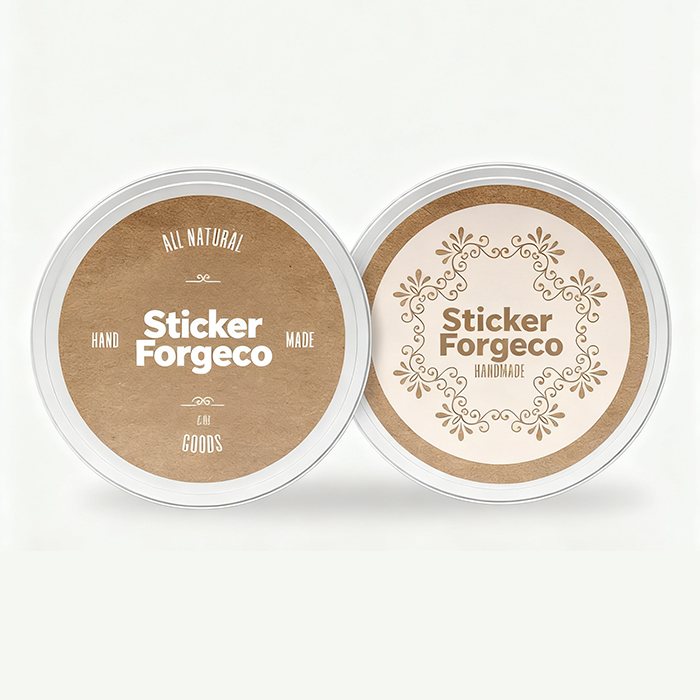
Common Sourcing Mistakes That Lead to Label Failure
Over the years, I've seen a few recurring sourcing errors that consistently lead to problems. Avoiding these simple but frequent missteps will save you time, money, and frustration.
Label Sourcing Pitfalls to Avoid
| The Mistake | Why It's a Problem | The Solution |
|---|---|---|
| Ignoring the Application Surface | Adhesive designed for smooth glass will fail on rough, recycled cardboard. The label will lift at the edges or fall off completely. | Specify the exact surface material (e.g., HDPE plastic, corrugated cardboard, powder-coated metal) to your supplier so they can match it with the correct adhesive. |
| Forgetting Environmental Exposure | Condensation, high heat, or contact with oils can cause inks to run, adhesives to bleed, or paper to disintegrate. This is a common failure for improperly specified oil & waterproof labels. | Clearly define the entire lifecycle environment: Will it be refrigerated? Exposed to sunlight? Squeezed? This dictates the need for lamination, waterproof substrates, and specialized adhesives. |
| Mismatching Artwork and Print Quality | A beautiful design with fine details and gradients will look blurry and pixelated if printed with low-resolution methods. | Discuss your artwork with the supplier. Our high-resolution HP digital presses excel at complex graphics, but it's always best to confirm capabilities first. Always request a pre-production proof. |
| Skipping the Physical Sample | A digital PDF proof cannot show you how the material feels, how the adhesive grips, or how the colors look on the actual substrate under real light. | Always request a physical sample. We provide samples in just 3 days because we know how important it is to test the label on your actual product and packaging before committing to a bulk run. |
Evaluating a Supplier: What to Look for Beyond Price
A low price-per-label is tempting, but a reliable manufacturing partner offers value that goes far beyond the quote. When you're sourcing premium product labels on rolls for a growing brand, your supplier's capabilities are as important as your own. Look for a partner who can scale with you and provides safeguards against production errors.
First, check for quality management certifications. Our facility is ISO 9001:2015 certified, which isn't just a plaque on the wall; it's a commitment to repeatable, documented processes that ensure consistency from your first order to your hundredth. This systematic approach minimizes defects and guarantees traceability.
Second, verify their production capacity and guarantees. Can they handle a sudden large order? Our 8,000 m² facility has a daily capacity of over one million labels, ensuring we can meet demanding schedules. Ask about their policies for errors. We offer a free reprint for any color mismatch against an approved proof and provide photo confirmation before any bulk run begins. For added peace of mind, we even include 100 bonus pieces with every bulk order.
Finally, look for real-world proof. For an eco-friendly children's clothing line in Spain, we supplied organic cotton labels with skin-safe, fade-resistant inks designed to survive dozens of industrial wash cycles. This kind of problem-solving expertise is what separates a simple printer from a true manufacturing partner.
Getting your labels right is a critical step in building a successful retail brand. By focusing on performance, matching specifications to your product's environment, and choosing a reliable supplier, you can ensure your packaging works as hard as you do.
Ready to get labels that perform as well as your product? Submit your design for a free quote and a pre-production sample review.