

How to Source Custom Glossy Labels That Perform on Cosmetic Bottles
Sourcing labels for cosmetic packaging goes beyond visual appeal. Choosing the wrong specifications can lead to costly failures: labels peeling off squeezable tubes in a customer's hand, ink smudging from contact with oily serums, or adhesives failing in humid bathroom environments. These issues not only create waste but also damage the premium perception of your brand. Before you request a quote, it is essential to define your technical requirements to ensure your Custom Glossy Labels perform flawlessly from the production line to the end user.
At our ISO 9001:2015 and Disney FAMA certified facility, we produce over one million labels daily, addressing these precise challenges for brands worldwide. This guide outlines the critical specifications to consider, helping you avoid common sourcing mistakes and secure labels that protect your product's integrity and enhance its shelf appeal.
Your Sourcing Checklist for Flawless Cosmetic Label Application
A mismatch between your label and its application environment is the primary cause of failure. Cosmetic products are often exposed to moisture, oils, and temperature fluctuations, and are packaged in containers of various shapes and materials. Use this checklist to align your label specifications with your product's reality, preventing costly reprints and application downtime.
Each item here represents a critical decision point. Overlooking one can compromise the entire project.
| Specification Area | Key Question for Your Supplier | Why It Matters (The Risk of Getting It Wrong) |
|---|---|---|
| Label Stock (Face Material) | Is the material flexible enough for squeezable tubes (e.g., BOPP) or rigid for glass jars (e.g., PET)? Is it waterproof? | Risk: Flagging & Peeling. A rigid label on a flexible tube will lift at the edges ("flagging") or peel off completely. Non-waterproof materials like paper will disintegrate in a shower or humid bathroom. |
| Adhesive Type | Do you need a permanent adhesive for regulatory compliance, or a removable one for temporary promotions? Is it rated for high humidity and oil resistance? | Risk: Application Failure. A standard permanent adhesive can fail when exposed to essential oils or solvents in the product formula, causing the label to slide or detach. An incorrect choice can also leave residue on premium packaging. |
| Gloss Finish & Lamination | Will the label be exposed to friction during shipping or handling? Does the product contain oils or alcohol that could smudge the ink? | Risk: Scuffing & Smudging. An unlaminated glossy label can easily scuff, cheapening the product's appearance. Direct contact with oil-based cosmetics can dissolve unprotected ink, making text unreadable and smearing the design. A BOPP lamination adds a protective, scratch-proof layer. |
| Container Material & Shape | Is your container smooth glass, textured plastic (HDPE), or a soft-touch squeezable tube? Is it a tight-radius curve? | Risk: Poor Adhesion. Low-energy surfaces like HDPE plastic require a specialized, high-tack adhesive to bond correctly. A standard adhesive will not stick properly, leading to widespread peeling. |
| Roll Wind Direction | What is the unwind direction required by your automatic labeling machine (e.g., #1, #2, #3, #4)? | Risk: Production Line Shutdown. Supplying rolls with the wrong wind direction will make them incompatible with automated applicators. This can halt your entire bottling and packaging line, causing significant delays and labor costs to re-roll manually. |
| White Ink Opacity | If printing on a clear label (no-label look), how opaque is the white ink underlayer? | Risk: Washed-Out Colors. When printing on custom clear labels, a semi-transparent white ink base will make the colors on top appear faded and weak, especially against a dark-colored liquid or container. A high-opacity white is necessary for color vibrancy. |
Choosing the Right Material and Finish for a Premium Look
The material, or "face stock," of your label is its foundation. For cosmetics, which demand both durability and aesthetic excellence, synthetic materials are almost always the best choice. Paper labels, while cost-effective, are prone to water damage and tearing, making them unsuitable for products used in bathrooms or kitchens.
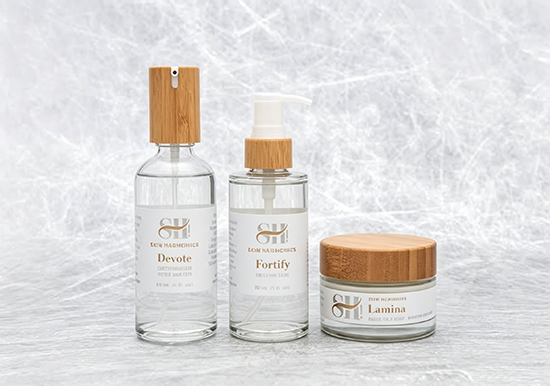
Comparing Common Glossy Label Materials
Your product's container and environment will dictate the ideal material. Here is a breakdown of the most effective options for achieving a high-end glossy finish.
White BOPP (Biaxially Oriented Polypropylene): This is the industry standard for most cosmetic products. It is waterproof, oil-resistant, and highly conformable, making it perfect for squeezable tubes and bottles. Its bright white base ensures that printed colors are accurate and brilliant. With a gloss laminate, it provides a durable, high-impact look seen on everything from lotions to shampoos.
Clear BOPP: Ideal for the popular "no-label" look, Clear BOPP lets the product's color and texture show through the packaging. It is essential to use a highly opaque white ink layer beneath your colors to prevent them from looking transparent. This material is excellent for serums in clear glass bottles or colorful bath gels.
Metallized PET (Polyester): For a luxury metallic effect, metallized polyester is a superior choice. It offers a mirror-like silver or gold base that can be printed on directly. It is also extremely durable and resistant to heat and chemicals, making it suitable for premium anti-aging creams or high-end hair oils. Our Australian client, a natural health supplement brand, used a metallic foil on a matte BOPP film with scratch-proof lamination to achieve a similar high-end retail presence for their waterproof custom supplement labels.
Finishing Options That Protect and Enhance
A simple glossy finish is just the beginning. Special finishes can add texture, visual interest, and an extra layer of protection.
Gloss Lamination: A thin, clear film applied over the printed label. This is the most robust method for protecting against scratches, moisture, and oils. It also adds depth and vibrancy to colors.
UV Varnish: A liquid coating cured with ultraviolet light. It provides good protection and a high-gloss sheen but is generally less durable than lamination against heavy abrasion.
Foil Stamping: Applying metallic foil (e.g., gold, silver, rose gold, holographic) to specific design elements. This creates a powerful visual contrast and is often used for logos and premium product names on premium custom cosmetic labels. We offer a wide range of custom foil colors to match your brand guidelines precisely.
Avoiding Common and Costly Production Defects
Even with the right materials, production errors can ruin a batch of labels. As a high-volume manufacturer, we have identified and solved the most frequent issues brands face when sourcing labels. Understanding these potential problems allows you to ask suppliers the right questions about their quality control processes.
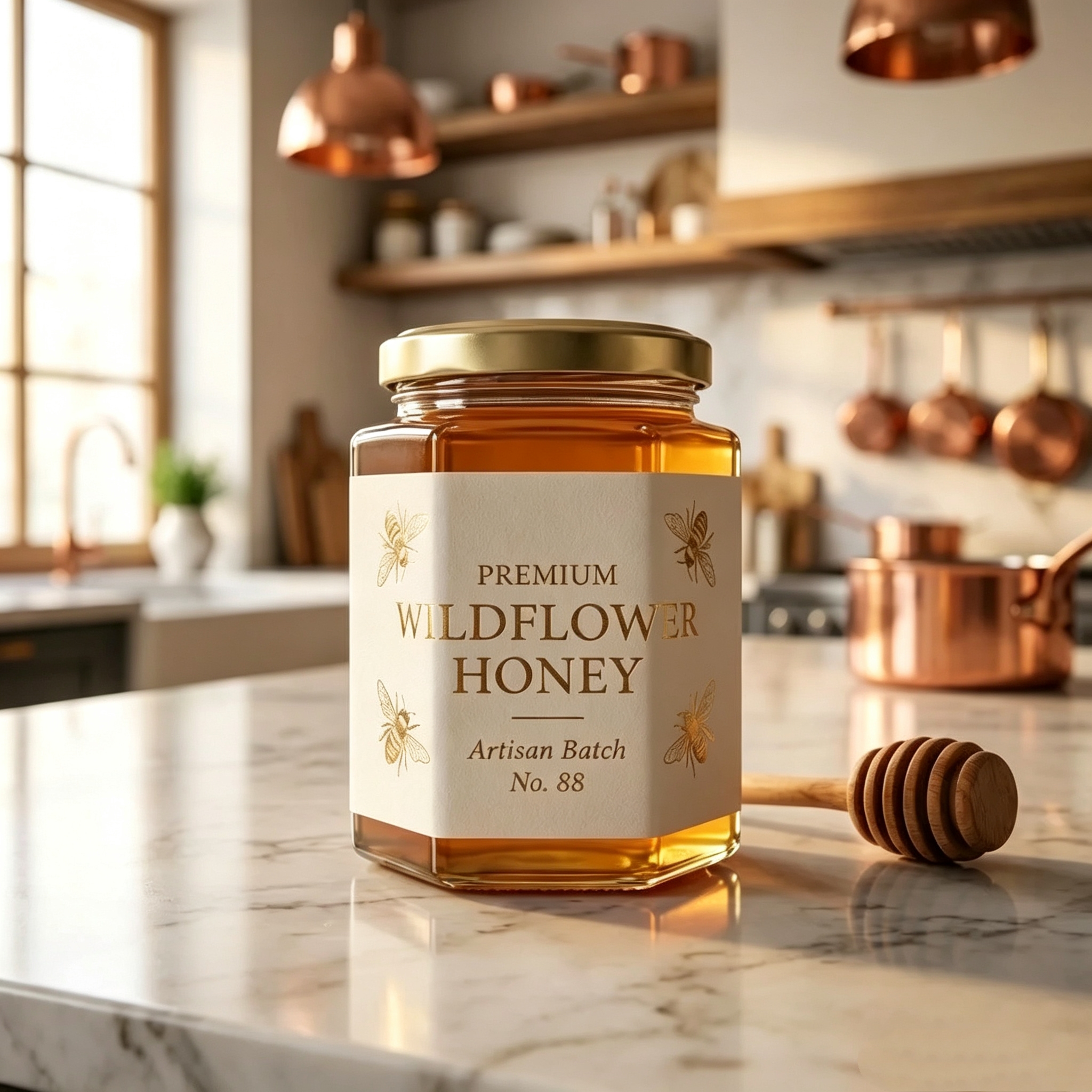
Common Defects and How to Prevent Them
Here are frequent problems that can arise during or after label application and the solutions we implement to prevent them.
Adhesive Bleeding: This occurs when adhesive oozes out from the label edges, creating a sticky residue that attracts dirt and cheapens the product's feel.
Cause: Using an adhesive with low temperature resistance or applying too much pressure during automated labeling.
Solution: We select adhesives rated for your specific storage and shipping temperatures. Our HP digital presses and die-cutting equipment ensure clean, precise cuts without squeezing the adhesive.
Color Mismatching: The printed colors do not match your brand's specific Pantone or CMYK values, disrupting brand consistency.
Cause: Improper color calibration on printing presses or failure to account for how ink appears on different substrates (e.g., white vs. clear BOPP).
Solution: We offer photo or digital sample confirmation before bulk production begins. With our free design assistance, our team can help ensure your files are calibrated for our presses. We also provide a color mismatch free reprint guarantee for peace of mind.
Low-Resolution Printing: Small text (like ingredient lists) or fine details appear blurry and are difficult to read.
Cause: Using low-quality printing plates or outdated digital printing technology.
Solution: Our facility is equipped with six advanced HP digital label presses, which deliver sharp, high-resolution results even for the most detailed designs and smallest fonts, ensuring full compliance and readability.
Labels Peeling in Cold Storage: Labels applied at room temperature begin to lift or fall off when products are moved into refrigerated environments.
Cause: Condensation forming on the container surface, breaking the adhesive bond. Standard adhesives are not formulated for cold, damp conditions.
Solution: We offer specialized freezer-grade adhesives designed to maintain a strong bond in cold and humid conditions, preventing this common point of failure for certain organic or natural cosmetic lines.
Streamlining Your Order from Design to Delivery
A successful label project depends on a reliable and efficient manufacturing partner. Our process is built for speed, quality, and clear communication, supported by live human support to answer your technical questions directly. We remove the typical barriers to ordering high-quality custom labels.
With no minimum order quantity for digital printing, you can test a new product line without committing to a large inventory. For larger runs, our offset printing offers better pricing at quantities of 1,000 units or more. Our production workflow is optimized for B2B needs:
Sample Lead Time: 3 days
Bulk Production: 8-9 days
U.S. Shipping: 5-6 business days
This streamlined process, combined with free shipping and the inclusion of 100 bonus pieces with every bulk order, ensures you receive production-ready labels quickly and predictably. Our commitment to quality is backed by our ISO 9001:2015 certification and policies like proportional replacement for any defects.
To ensure your cosmetic labels meet all technical and aesthetic requirements, send our team your product specifications for a detailed quote and material recommendation.