

Sourcing Custom Wine Labels That Survive Ice Buckets
There are few things more frustrating for a winery or beverage brand than seeing a beautifully designed label peel, wrinkle, or slide off a perfectly chilled bottle. This single point of failure, often happening right at the customer's table, can instantly undermine a premium brand image. The cause is almost always the same: the label wasn't specified for the wet, cold, and high-condensation environment of refrigeration and ice buckets. Sourcing effective custom wine labels requires more than just a great design; it demands a technical understanding of how materials interact with moisture and cold.
From my 12 years on the factory floor, I've seen countless brands invest heavily in design only to overlook the physical specifications that ensure performance. An adhesive that works perfectly in a dry warehouse can fail completely when submerged in ice water. A paper stock that feels luxurious to the touch can disintegrate into a pulpy mess from condensation alone. Getting this right from the start saves you from costly reprints and protects your brand's reputation where it matters most—in the hands of your customer.
The Science of Failure: Why Standard Labels Peel on Cold Bottles
When a room-temperature wine bottle is placed in a refrigerator or an ice bucket, its surface temperature drops rapidly. Warmer, more humid ambient air comes into contact with the cold glass, causing the water vapor in the air to condense into liquid droplets directly on the bottle. This process presents a dual threat to standard labels.
First, the moisture saturates non-waterproof facestocks, like uncoated paper. The paper fibers swell and weaken, leading to wrinkling, tearing, and ink bleed. Second, and more critically, the condensation works its way under the label's edge, attacking the adhesive. Most general-purpose adhesives are not formulated to maintain their bond when wet, causing them to lose tack and allowing the label to lift or peel away completely. This is why specifying your label's intended environment isn't just a suggestion; it is the most important instruction you can give your supplier.
At our ISO 9001:2015 certified facility, we approach every label project by first defining the application environment. This ensures the final product is engineered for success, whether it's for a dry pantry shelf or a restaurant ice bucket.
Critical Specifications for Ice-Bucket-Proof Labels
To prevent label failure on chilled products, you must specify three components correctly: the facestock, the adhesive, and the laminate or varnish. Each plays a distinct role in creating a durable, waterproof barrier. Getting just one of these wrong can compromise the entire construction.
Here is a breakdown of the requirements for labels intended for refrigeration and ice-bucket applications.
| Component | Recommended Specification | Why It Matters |
|---|---|---|
| Facestock (Label Material) | BOPP (Biaxially Oriented Polypropylene), PET (Polyester), or other synthetic films. Avoid uncoated paper. | Synthetic materials are non-porous and do not absorb water. Unlike paper, they won't swell, wrinkle, or degrade when exposed to condensation or direct water contact. This provides a stable and waterproof foundation for your design. For an eco-luxe feel, some wet-strength papers are available but require rigorous testing. |
| Adhesive | Permanent emulsion acrylic adhesive formulated for cold/wet applications. Specify the service temperature range. | This is the most critical element. A specialized "ice bucket" or "cold-temp" adhesive is engineered to maintain a strong bond even when submerged or covered in condensation. It resists moisture creep and won't emulsify (turn white and gummy) when wet, ensuring your label stays put. |
| Protective Layer | Film Lamination (BOPP) or a UV-cured Varnish. | This top layer seals the printed ink, protecting it from scuffing, moisture, and alcohol spills. A film laminate offers the highest level of protection, creating an impenetrable plastic barrier. A UV varnish provides good resistance and is a more cost-effective option for many applications. |
When you submit a request for a quote, providing these details is essential. Simply asking for oil & waterproof labels for bottles & cosmetics is a good start, but specifying "for chilled wine bottle application, frequent condensation, and potential ice bucket submersion" gives your manufacturer the exact information needed to build a label that will not fail.
Choosing Aesthetic Finishes That Endure Moisture
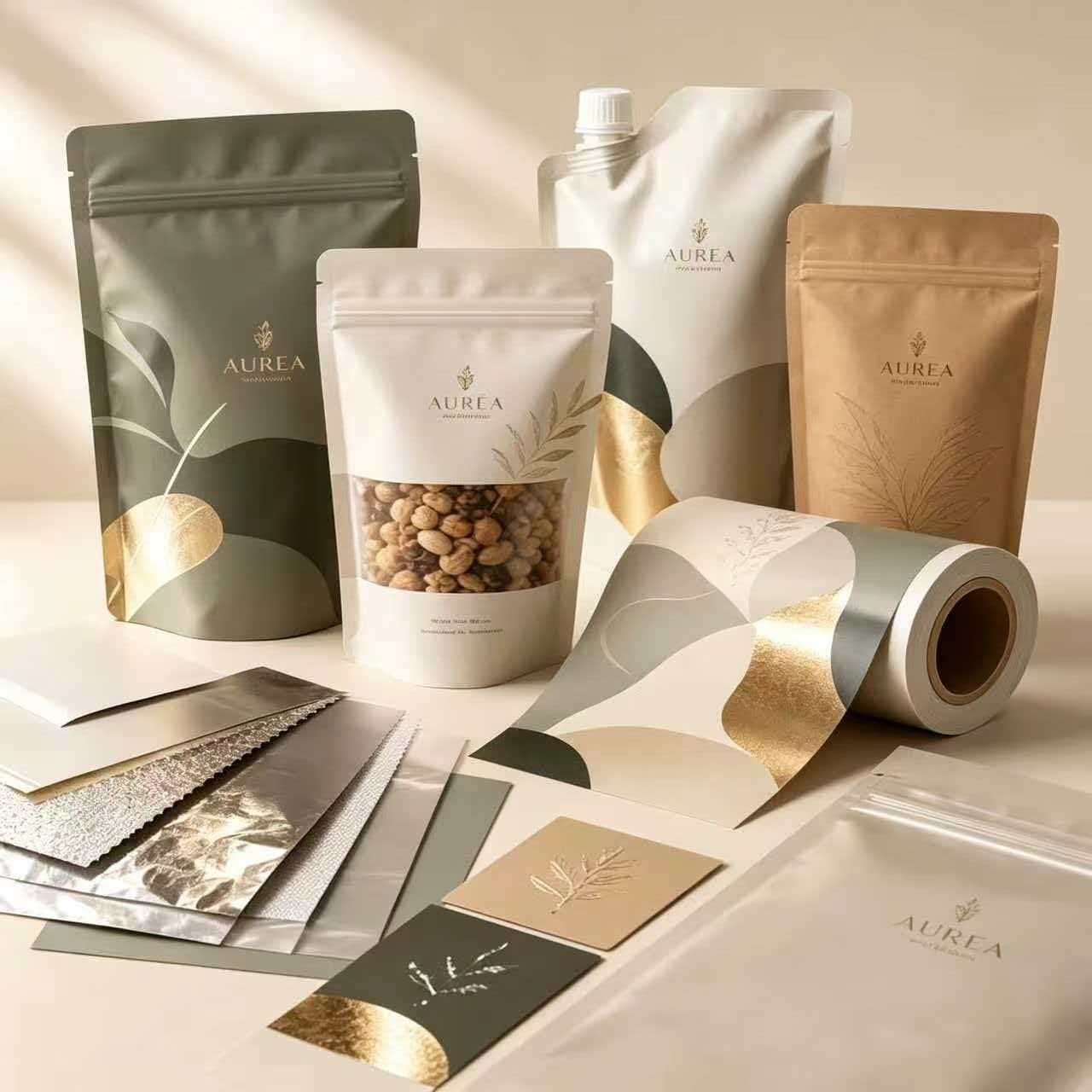
A waterproof construction doesn't mean you have to sacrifice premium aesthetics. Advanced techniques like foil stamping, embossing, and textured finishes can be applied to synthetic facestocks to create a high-end look that lasts.
The key is ensuring these embellishments are compatible with the base material and protective top layer. For example, when we produced custom printed roll labels for an Australian health supplement brand, we combined a metallic foil stamp with a scratch-proof matte BOPP lamination. This created a durable label that offered both a luxury feel and the resilience needed for retail handling. The same principle applies to wine labels.
Common Embellishments and Their Water-Resistance
- Hot Foil Stamping: When applied before lamination, the foil is sealed and fully protected from moisture and abrasion. This is an excellent way to add metallic flair to waterproof labels.
- Embossing/Debossing: This technique creates a raised or recessed texture on the label. On synthetic stocks, the effect is permanent and is not diminished by moisture. It adds a tactile element that customers notice.
- Spot UV Varnish: Applying a high-gloss varnish to specific parts of a matte label creates a striking contrast. A UV-cured varnish is inherently water-resistant and holds up well against condensation.
- Textured Facestocks: Synthetic materials that mimic the look and feel of traditional papers (like linen or felt) are available. These "estate" synthetic stocks offer the best of both worlds: a classic aesthetic and complete water immunity.
Common Sourcing Mistakes and How to Avoid Them
Over the years, I've seen brands make the same preventable mistakes when sourcing labels for challenging environments. Avoiding these common pitfalls will save you time, money, and stress.
- Choosing a Facestock Based on Feel Alone: A beautiful, uncoated paper stock feels great in a sample book but will fail quickly on a wet bottle. Solution: Always prioritize performance for the intended application. Request samples of synthetic stocks that mimic the texture you want.
- Forgetting to Specify the Application Temperature: A label applied to a warm, dry bottle in the warehouse behaves differently than one applied to a cold, wet bottle on a bottling line. Solution: Inform your supplier of both the application temperature and the final service temperature (e.g., applied at 20°C, stored at 4°C).
- Using a General-Purpose Adhesive: Assuming "permanent" adhesive means "waterproof" is a frequent error. Most standard permanent adhesives are not designed for prolonged moisture exposure. Solution: Explicitly request an adhesive rated for wet and cold conditions or for ice bucket performance.
- Not Testing Samples in Real-World Conditions: A label might look perfect on your desk, but the real test is an ice bucket. Solution: When you receive samples—which we can produce in just 3 days—submerge a labeled bottle in an ice-water bath for several hours. Try to peel the label. Rub the ink. This is the only way to confirm performance before committing to a bulk order of 1,000,000+ units.
Our free design assistance service includes a technical review to help you avoid these issues. A quick consultation with an expert can confirm if your material choices align with your application needs, preventing a costly mismatch before production begins.
By carefully specifying the facestock, adhesive, and protective coating, you can source custom wine labels with gold foil & embossing that not only look exceptional but also perform flawlessly from the winery to the customer's glass. This attention to technical detail is the hallmark of a truly premium brand.
Ready to create a wine label that looks great and withstands the chill? Contact our team for a technical consultation and a no-obligation quote.