

What Size and Shape Should Your Custom Label Be?
The Label Is the First Thing People See
You have probably stood in front of a shelf before, scanning products, and made a decision in seconds. And if you are honest, the label is what decided it. Nobody mentions that part when they talk about product quality. But the truth is, a product can be excellent, and a poorly designed label can still make it look cheap.
The size and shape of your custom label determine two critical things: how much information you can display, and how your product looks on the shelf next to competitors. Get these wrong, and your label becomes either cluttered and unreadable or invisible and forgettable.
The brands actually pulling value from custom labels this year are not printing more of them. They are choosing the right size and shape for their specific product, packaging, and shelf environment. That is where the real advantage lies.
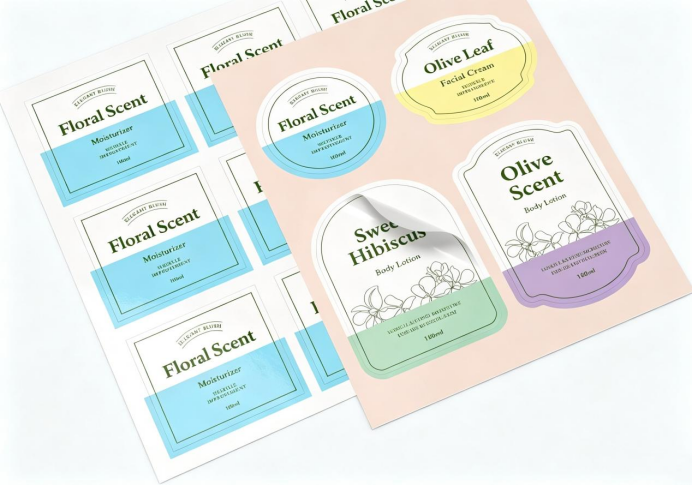
Why Size Matters More Than You Think?
The size of your label is not just about how much space you have to work with. It is about visibility, readability, and shelf presence.
Visibility from a Distance
Your label needs to be seen from the distance at which customers typically encounter your product. On a crowded retail shelf, that distance is often two to three feet. On a warehouse pallet, it is much farther. On a small bottle in a gift shop, it is much closer. The viewing distance should dictate the minimum size of your label.
A label that is too small for its viewing distance forces customers to lean in or pick up the product just to read it. That extra step might not seem like much, but in a busy retail environment, it is often the step that never happens.
Information Capacity
The size of your label determines how much information you can include. A small label might only accommodate a logo and a product name. A medium label can add ingredients, usage instructions, and a barcode. A large label can include detailed product stories, certifications, and multiple language translations.
The key is matching the information you need to display with the label size you choose. Trying to cram too much onto a small label makes everything unreadable. Leaving too much empty space on a large label wastes valuable packaging real estate.
Shelf Presence and Visual Impact
In a sea of products, size creates hierarchy. Larger labels naturally attract more attention. But they also communicate something about the product itself. A large label suggests confidence. A small label suggests subtlety. The right size depends on your brand positioning and the message you want to send.
Standard Label Sizes and What They Work For
While custom labels can be made in virtually any size, certain standard sizes have emerged as industry norms for specific applications.
Small Labels
These work best for small products like lip balms, sample sizes, travel-sized items, and small containers. They typically display just a logo, product name, and perhaps one key benefit. Any more text becomes unreadable.
Medium Labels
This is the most common size range for retail products. It accommodates a logo, product name, key benefits, ingredients or nutritional information, usage instructions, and a barcode. This size works well for standard bottles, jars, boxes, and cans.
Large Labels
Large labels are used for products that need to stand out on crowded shelves or that carry a lot of information. They are common on larger bottles, gift boxes, and premium products. The extra space allows for storytelling, detailed illustrations, and multiple language translations.
Extra Large Labels
These are used for floor-standing displays, large containers, and products where the label is the primary visual element. These labels often cover the entire front of the packaging and serve as the main design feature.
The Shape Says More Than People Think
The shape of your label is not just aesthetic. It communicates something about your brand and your product. And like the size, it affects readability and shelf presence.
Rectangles and Squares
Rectangular and square labels are the most common shapes. They are practical, easy to apply, and work well with most packaging surfaces. They convey a sense of professionalism, reliability, and straightforwardness. For products where the information itself is the selling point, such as supplements or cleaning products, rectangles are often the best choice.
Rounded and Oval Shapes
Rounded and oval labels soften the appearance of a product. They feel approachable, friendly, and organic. These shapes work well for natural products, food items, and brands that want to convey warmth. They also tend to stand out against the sharp corners of rectangular packaging.
Circles
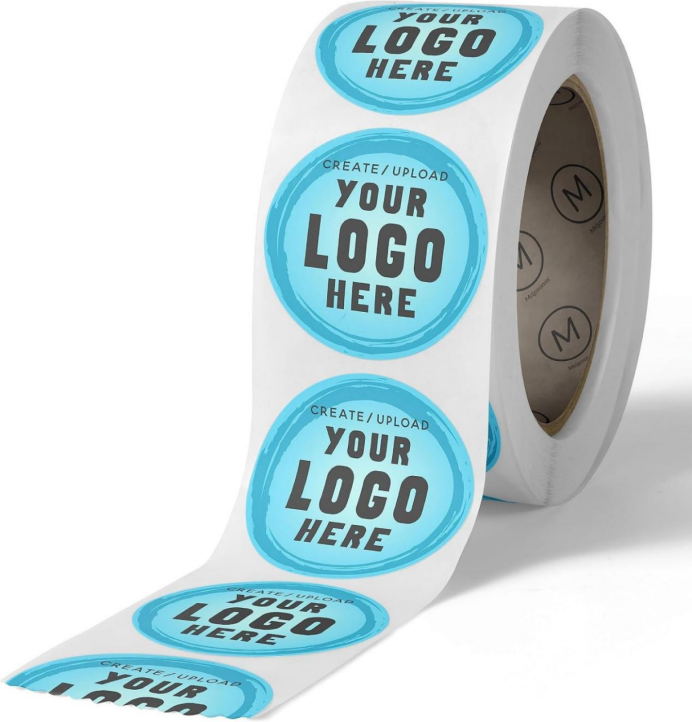
Circle labels are versatile and attention-grabbing. They work well as seal labels, lid labels, or as a primary label on cylindrical packaging. A circle draws the eye naturally and feels balanced and complete. However, circular labels have less usable space than rectangular labels of the same diameter.
Custom Shapes
Custom-shaped labels are cut to follow the contour of a logo, a product illustration, or a brand symbol. These labels create a strong visual impact and communicate that your brand pays attention to detail. A custom shape can make your product instantly recognisable, even from a distance. However, custom shapes often cost more and may be more difficult to apply evenly.
The shape chosen should match the message, not just look different for the sake of it. A badge shape might be chosen by a premium spirits brand. Something more playful might be preferred by a children's product. A classic rectangle might suit a professional skincare line far better than anything flashy.
How to Choose the Right Size and Shape for Your Product?
Several factors should guide your decision when choosing the size and shape of your custom label.
Consider the Packaging Surface
The surface you are applying the label to matters. Flat surfaces like boxes and bags accept any shape easily. Curved surfaces like bottles and jars require labels that can wrap without wrinkling. For curved surfaces, rectangular or oval labels that run vertically often work better than wide labels that must bend around the circumference.
Match the Shape to the Brand Personality
The shape of your label should reflect your brand personality. A minimalist brand might choose clean rectangles. A playful brand might choose circles or custom shapes. A heritage brand might choose ornate ovals. The shape should feel like a natural extension of your brand identity.
Think About the Viewing Distance
The distance from which your product is typically viewed should influence both size and shape. Products viewed from farther away need larger, simpler shapes. Products viewed up close can use smaller, more intricate designs.
Balance Information with White Space
A label that is too crowded is unreadable, regardless of size. Leave enough white space around text and graphics to ensure clarity. The shape of the label should accommodate the information you need to display without forcing you to shrink text to illegibility.
Why Choose Custom Panda for Your Custom Labels?
Getting the size and shape right is only half the battle. The other half is finding a manufacturer who understands that labels are not just about printing. They are about precision, application, and performance.
Custom Panda brings over 15 years of expertise to the custom label industry. We combine premium materials, expert craftsmanship, and flexible service to bring your packaging vision to life. Whether you need 100 labels for a small batch or 100,000 for a full retail launch, we treat every order with the same care and attention.
Beyond labels, our core product lines also include custom lapel pins, custom patches (embroidered, chenille, PVC, leather, and more), making us your comprehensive partner for all garment identification and branding needs.
We run our own production facility. That means when you talk to us about your label design, you are talking directly to the people who will actually make it. Not a middleman who forwards your order and marks up the price. Just the people who understand that the right size and shape starts with understanding your product and packaging.
Here is what you get when you choose us:
No Minimum Order Requirement:Whether you need a small test batch to check sizing or a large run for a full product line, we accept orders of any size.
Free Design Proof Within 12 Hours:Share your artwork or packaging concept, and our team will turn it into a professional digital proof. No obligation. No hidden fees.
Material Testing and Guidance:Not sure which size or shape works on your packaging? We test and recommend the right options for your specific application. We check how the label adheres to curved surfaces, how it scales across different packaging sizes, and how it performs in real-world conditions.
Fast Production:Once you approve the proof, production takes just 2 to 3 days. Samples are ready in 3 to 5 working days, with worldwide delivery in 5 to 7 days.
Factory Direct Pricing:As a direct manufacturer, we eliminate middlemen to deliver premium quality at the best price.
Real People Who Actually Answer:We do not have a script. You send us a message, you get a human who knows what they are talking about and actually cares whether your order turns out right. The one who answered your email within an hour. The one who caught that sizing issue in your artwork before it went to print. The one who recommended a different shape that worked better on your curved packaging. That is who we are.
At the end of the day, we are not trying to be the biggest. We are trying to be the one you actually remember. The one who helped you choose the right size and shape for your product. And we would love to help you do the same.
FAQs
Q:What is the minimum size for a readable custom label?
The minimum readable size depends on the amount of information you need to display. For a simple logo and product name, a 1-inch label can work. For detailed information, 2 to 3 inches is the practical minimum.
Q:Are custom-shaped labels more expensive?
Yes, custom-shaped labels typically cost more than standard shapes because they require custom die-cutting. However, the added visual impact often justifies the extra cost for premium products.
Q:Can I use the same label size on different packaging?
Sometimes, but not always. Different packaging surfaces and sizes may require different label dimensions to maintain visual balance and readability. Always test your label on actual packaging before committing to a full run.
Q:What shape works best on curved bottles?
For curved bottles, rectangular or oval labels that run vertically often work best. They follow the curve of the bottle without wrinkling and maintain readability.
Q:How long does production take for custom labels?
Once you approve the digital proof, production takes just 2 to 3 days. Samples are ready in 3 to 5 working days, with worldwide delivery in 5 to 7 days.
Q:Do you ship custom labels internationally?
Yes. We ship worldwide via DHL, FedEx, and UPS with door-to-door tracking and customs assistance.