
th
How to Choose the Right Label Size for Your Product
What Is “Label Size” and Why Does It Matter More Than You Think?
When most people hear “label size,” they think only of width and height. But in product packaging, label size is a far more sophisticated concept. It includes the actual dimensions (length × width), the aspect ratio, the corner radius (how rounded the corners are), and—critically—how the label’s dimensions interact with the container’s surface geometry, particularly its curvature.
Why does this matter more than most brands realize? The size of your label affects everything from how your design looks to how easily customers can read important information. Getting it wrong impacts three business-critical areas: legal compliance, production efficiency, and consumer perception.
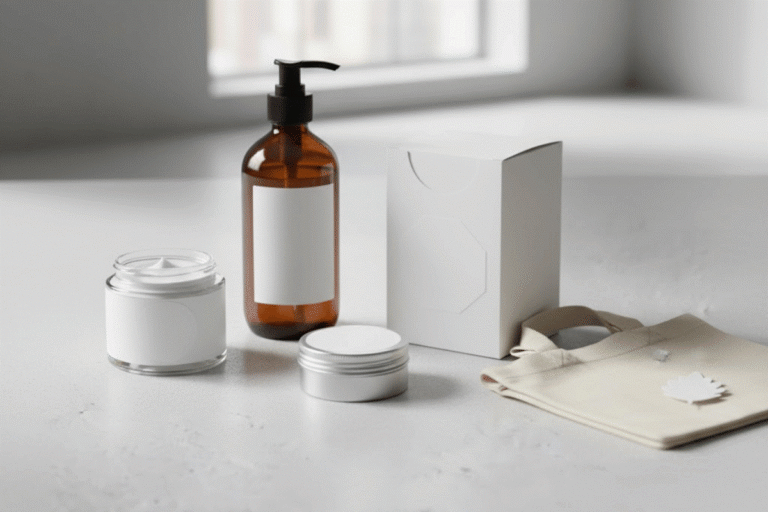
First, regulatory bodies mandate minimum font sizes for nutrition facts, ingredient lists, and warning statements. If your label is too small to legally accommodate required text, your product cannot be sold. Second, an incorrectly sized label jams automatic labeling machines, causing costly downtime. Third, consumers judge product quality within seconds. A label that wrinkles, peels, or looks “cut off” signals amateurish or counterfeit goods. In short: label size is not a graphic design afterthought—it is a strategic packaging decision.
Key Features of a Correctly Sized Label
A correctly sized label is not merely one that “fits.” Based on industry best practices, it possesses five non-negotiable features.
1. Readability zone adequacy. Every label has a usable area after accounting for safety margins. Within that zone, all mandatory text must remain legible. The label size must be large enough to contain these elements without crowding.
2. Sufficient adhesion margin. Adhesive needs a continuous, smooth surface to bond. A label that extends too close to a bottle’s shoulder or base curve will lift over time. Standard best practice: leave at least 2mm of clear, flat container surface on all sides of the label.
3. Curvature compatibility. On cylindrical containers, a label must bend. The smaller the diameter, the more severe the bend. Labels extending too far into curved areas tend to wrinkle or lift. For bottles under 30mm diameter, a single large label may never lie flat.
4. Visual balance with the container. The best label sizes feel like they belong on the container rather than competing with it. Larger labels give more room for graphics and make a strong shelf impact. Smaller labels create a minimalist or refined look where the container itself is part of the design.
5. Die-cutting practicality. Not every abstract shape is manufacturable at small scale. A correctly sized label respects the minimum bridge width required by the converting process.
How to Measure for the Perfect Label Size – Step by Step
A simple three-step framework—purpose → container shape → measurement—provides the perfect foundation. Here is how to execute each step professionally.
Step 1 – Start with your label’s purpose. What does your label actually need to say? Are you creating a bold logo label with very little text? Or do you need room for ingredients, instructions, or regulatory information? A label that’s too small might not leave enough room for essential information. A label that’s too large can overwhelm the container.
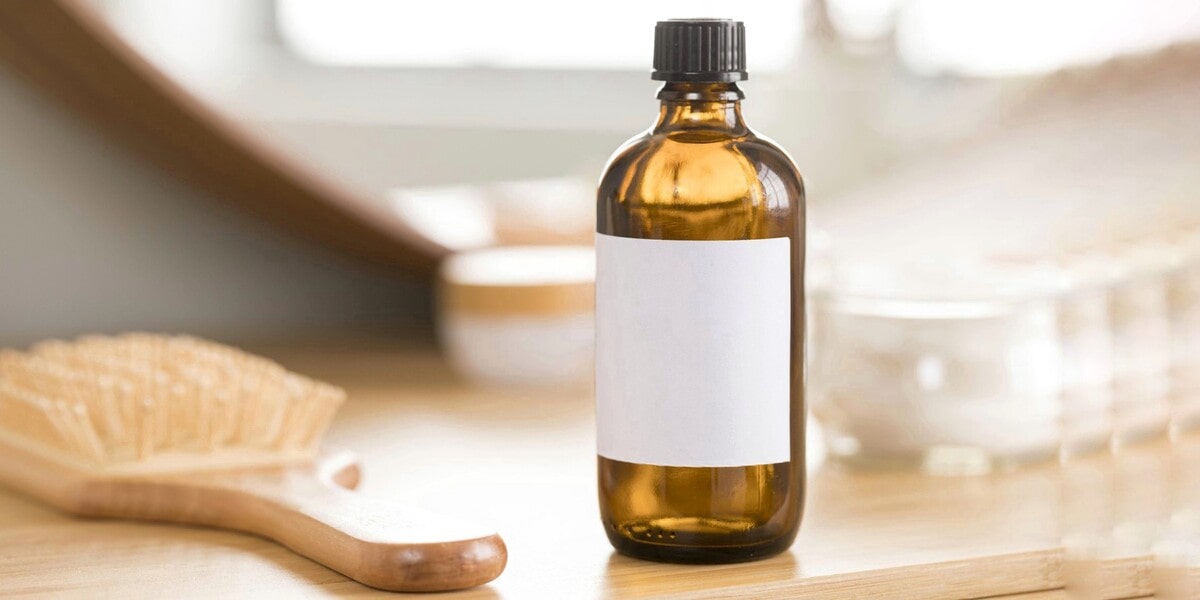
Step 2 – Consider your container shape. Identify the flattest surface where the label will sit. On jars and bottles, this is usually the straight section between the shoulder and the base. Curves, edges, and textured surfaces all affect how well a label fits. A label that works on a flat box may wrinkle badly on a curved bottle.
Step 3 – Measure the available label space. Use a flexible tape measure. For cylindrical containers, measure both the height (from just above the bottom curve to just below the shoulder) and the circumference at that vertical position.
Step 4 – Test with paper strips. Cut paper at your calculated dimensions. Wrap it around the bottle. Does it buckle at the edges? If yes, reduce width by 10% and test again. This is especially critical for diameters under 35mm.
Step 5 – Reference common size charts as a starting point. For example, a 3-inch round label often works well on a standard 20oz jar, while a 2-inch round label suits a 7oz jar. A 3-inch square label fits a larger square jar, and a 2-inch square label matches a smaller one. These are starting points—always verify with your actual container.
| Container Type | Recommended Label Size | Notes |
|---|---|---|
| 20oz Round Jar | 3″ round | Front center placement |
| 15oz Round Jar | 2.5″ round | Balanced visual |
| 7oz Round Jar | 2″ round | Compact & elegant |
| 20oz Square Jar | 3″ square | Clean modern structure |
| 15oz Square Jar | 2.5″ square | Proportional fit |
| 7oz Square Jar | 2″ square | Minimalist style |
The Function of Label Size in Product Design and User Communication
Label size is not decorative—it serves distinct functional roles in how customers interact with your product.
Visual hierarchy control. Size dictates what the eye sees first. A bottle with a very large label directs attention entirely to the branding. A very small label on a large jar creates a premium, minimalist aesthetic. The correct size creates a natural focal point, typically reserved for the brand name and hero product descriptor.
Mandatory information accommodation. In many jurisdictions, specific warnings require minimum type heights. For pharmaceutical products, the EU requires a minimum x-height of 0.7mm for critical safety information. Your label size must physically allow these type sizes.
Scanning functionality. Barcodes and QR codes have minimum and maximum recommended sizes based on scanning distance. A typical UPC barcode requires a quiet zone (blank margin) on both sides. If the label is too narrow to provide that quiet zone, the barcode will not scan reliably.
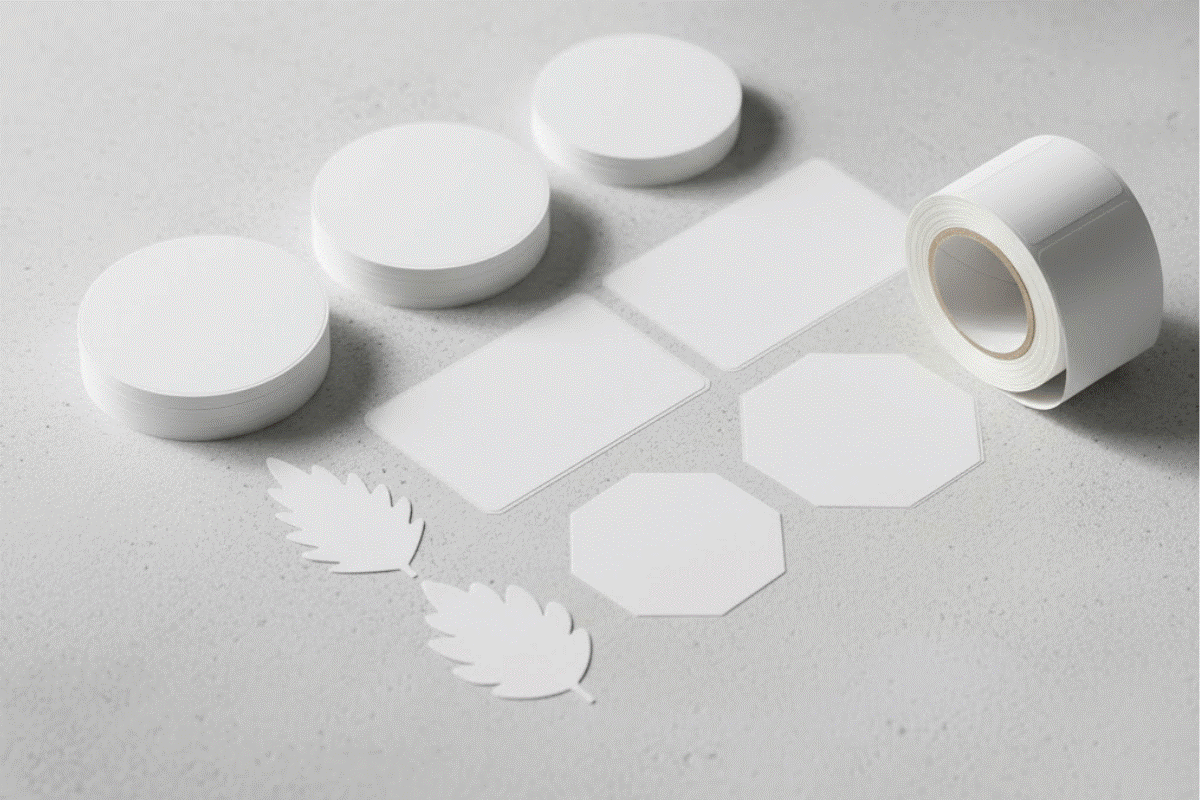
Shelf differentiation via shape as well as size. Even when two labels share the same dimensions, the shape you choose can completely change how your packaging looks. Round labels soften the look of jars, while square or rectangular labels feel more structured. Looking at similar products helps you decide whether to blend in or stand out.
Common Mistakes When Choosing a Label Size and How to Avoid Them
Mistake #1: Designing for a flat mockup, not the real container. A label that looks perfectly proportioned on a 2D screen will behave differently on a rounded bottle. Avoid by always testing on the actual 3D container before printing.
Mistake #2: Ignoring the container’s bottom and top curves. New designers often measure the bottle’s full height and assume the label can fill it. In reality, the bottom curve and neck shoulder require 3-5mm of clearance each. Avoid by measuring only the flat, straight section.
Mistake #3: Using the same size for all SKUs. A 50ml travel bottle and a 500ml family bottle have vastly different curvatures. Avoid by creating size-specific templates for each SKU rather than proportionally scaling one design.
Mistake #4: Forgetting the 95% rule for cylinders. A label that wraps fully around a small-diameter bottle will buckle. Avoid by always leaving a 5% gap—the label will lie flatter and apply more easily.
Mistake #5: Using only one label when two would work better. A main label on the front can highlight your brand, while a smaller label on the back or lid holds ingredients or instructions. This approach makes packaging more flexible while keeping the design clean.
How to Validate Your Label Size Choice Before Mass Production?
Validation saves thousands of dollars in reprints. Do not skip it.
Digital mockup with curvature simulation. Use tools like Esko Studio or even basic Photoshop with a cylinder distort filter to visualize how the label will wrap. This catches obvious proportion errors early.
Physical print-and-wrap test. Print at least 10 labels at final dimensions on the actual label stock. Apply to 10 product containers. Wait 24 hours, then inspect every edge, corner, and seam. If any label shows lifting, bubbling, or wrinkling, revise dimensions.
Scan test. Use a barcode scanner and a smartphone QR reader. Scan all applied labels from expected distances. Achieve 100% first-time scan success before approving production.
Automatic applicator test (if applicable). Run 50 labels through your actual labeling machine at normal speed. Check for jams, misplacements, or adhesive bleeding.
Consult your label converter’s minimums. Every converter has minimum label size limits. A good converter will provide these numbers upfront. If your design falls below their minimum, expect higher costs or quality issues.
Conclusion
Choosing the correct label size is a deceptively complex but entirely manageable process. By thinking about your label’s purpose, evaluating the shape of your container, and measuring the available label space, you can create labels that enhance product visibility and support your overall design. Measure your container’s usable surface, respect curvature limits (the 95% rule), test on real products, and always validate before running thousands of labels. The upfront effort of 1–2 hours of measurement and prototyping will save you from wasted inventory, production stoppages, and compliance fines. Remember: a beautiful design on the wrong label size is still a failed package.
Why Choose Custom Panda for Your Product Labels?
Custom Panda specializes in helping brands—from small-batch startups to mid-sized producers—get label dimensions exactly right before printing. Unlike large commercial printers that assume you already know your size, Custom Panda provides free dimension consulting, curvature testing with your actual product samples, and no-minimum prototyping.
Whether you need 50 labels for a market test or 50,000 for a retail launch, Custom Panda’s online platform allows you to upload your design, preview a 3D curvature simulation, and receive recommended size adjustments automatically. Customer support includes human experts who can review your container measurements and suggest the optimal width, height, corner radius, and even label combinations (front + back) for your specific bottle or box.
Additionally, Custom Panda offers custom printed labels delivered ready to apply, along with guidance on materials that suit your product’s environment (moisture-resistant, removable, etc.). With Custom Panda, you don’t guess label size—you know it works before you print.
FAQ: Choosing the Right Label Size for Your Product
A standard UPC-A barcode requires approximately 25mm × 20mm including quiet zones. QR codes can be as small as 10×10mm for close scanning, but 15×15mm is recommended for retail environments. Always test-scan your specific barcode at the intended size.
Technically yes, but it is rarely optimal. A label that works on a flat box will often wrap poorly on a small-diameter bottle due to curvature. Conversely, a label sized for a curved bottle may look disproportionately small on a box. Always evaluate the container shape separately.
High curvature (small diameter) forces the label to bend. If the label width exceeds approximately 95% of the bottle’s circumference, the edges will buckle, creating wrinkles and lifting points. For diameters under 30mm, consider front-and-back split labels instead of one wrap-around label.
Yes. Each machine model has minimum and maximum label length and width tolerances, typically ±0.5mm on length. Roll-fed machines also require specific gap (web) between labels. Always provide your machine specifications to your label converter before ordering. Custom Panda can verify machine compatibility as part of its consulting service.
Absolutely. Combining different label sizes and placements can make your packaging more flexible. A main label on the front highlights your brand, while a smaller label on the back or lid holds ingredients or instructions. This two-label strategy is especially effective for small-diameter bottles, tubes, and uniquely shaped containers.
Label Size Inspiration for Common Containers
Honey Jar
Recommendation: 2.5" - 3" round or oval label
Front focuses on brand, back label for ingredients
Cylindrical Lotion Bottle
Narrow label width < 90>Avoid wrinkling, keep breathing gap
Scented Candle
Top lid: 1.5" - 2" round label
Body: rectangular label 3" x 2"
Cosmetic Tube
Front: 60mm x 40mm main label
Back: smaller detail label
Square Gift Box
Square label 2" x 2" to 3" x 3"
Rounded corners for refined look
Vitamin Bottle
Tamper-evident seal + main body label
Regulatory area must meet minimum font size

