
th
How to Create Professional Coffee Labels in 2026
What Are Professional Coffee Labels?
Professional coffee labels are the primary communication tool between your brand and potential customers. They are not merely stickers that identify a product; they are strategic marketing assets that tell a story, convey quality, and influence purchasing decisions—often within three to five seconds.
A professional coffee label typically includes essential information such as the brand name, roast level, flavor notes, origin details, net weight, brewing recommendations, and company contact information. However, in 2026, the definition has expanded. Today's professional labels also integrate QR codes that link directly to brewing tutorials, sustainability reports, or loyalty programs. They are designed with specific materials that withstand moisture, heat, and friction—common challenges in coffee packaging and storage.
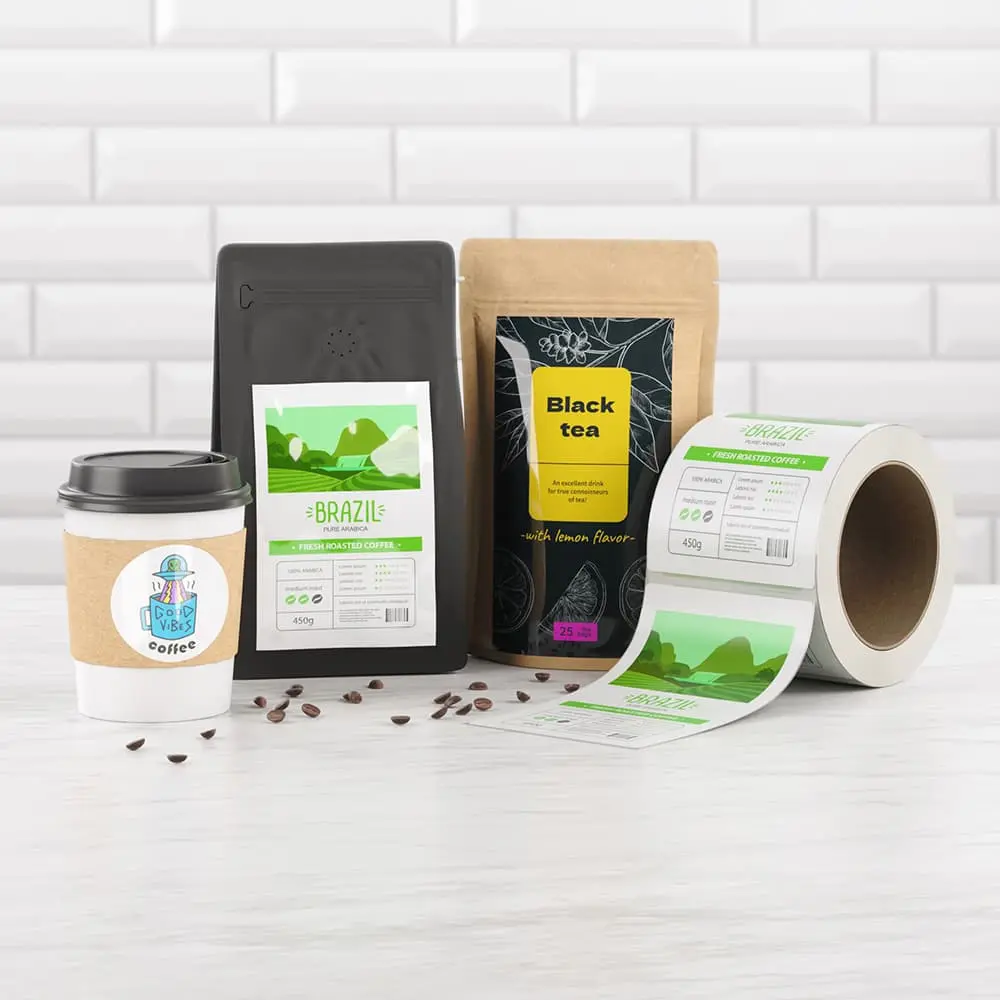
Furthermore, professional coffee labels must comply with regional labeling regulations. In the United States, for example, coffee labels must accurately declare net weight and caffeine content if the coffee is decaffeinated or enhanced. In the European Union, allergen and origin labeling requirements are even stricter. A truly professional label balances legal compliance, brand storytelling, and visual appeal, all while surviving the journey from warehouse to customer's pantry.
Ultimately, professional coffee labels serve as a silent salesperson on every shelf. They differentiate your product among over 43,000 global coffee manufacturers, turning casual browsers into loyal customers.
Key Features of a Coffee Label
An effective coffee label is built upon essential elements that work together to inform, persuade, and delight the consumer. Based on industry best practices and the original article's framework, the following eleven features constitute a complete and professional coffee label:
| Element | Description |
|---|---|
| A. Coffee Brand | Primary logo and brand name. Must be the most prominent visual element for brand recognition. |
| B. Coffee Flavor | Describes primary taste characteristics (e.g., "notes of dark chocolate, caramel"). |
| C. Packaging Phrase | Optional but powerful: highlights culture or emotional outcome (e.g., "Wake up to possibility"). |
| D. Caffeine Content | Shows level: decaf, regular, or espresso — transparency builds trust. |
| E. Net Weight | Displayed in grams and ounces; affects perceived value. |
| F. Brewing Recommendations | Water temperature, grind size, brewing time — reduces buyer hesitation. |
| G. Mission Statement | Connects via shared values (e.g., sustainability, ethical sourcing). |
| H. Roast Level | Light, medium, or dark — essential for regular drinkers. |
| I. Company Information | Address and phone number — builds trust through physical presence. |
| J. QR Code | Links to website, brewing videos, loyalty programs — bridges physical to digital. |
| K. Origin Information | Country, region, or specific farm — tells a quality story. |
When all eleven elements are present and clearly organized, the label does its job: it informs without overwhelming, and it persuades without deception.
What Makes a Coffee Label Visually Appealing?
The average consumer takes only three to five seconds to choose a product among dozens on a shelf. Within that short window, three psychological factors drive their decision: the brand's personality, differentiation from competitors, and emotional connection to the product's flavor or experience. To build a coffee label that resonates on this level, you must carefully consider typography, color psychology, and material selection.
Typography Hierarchy
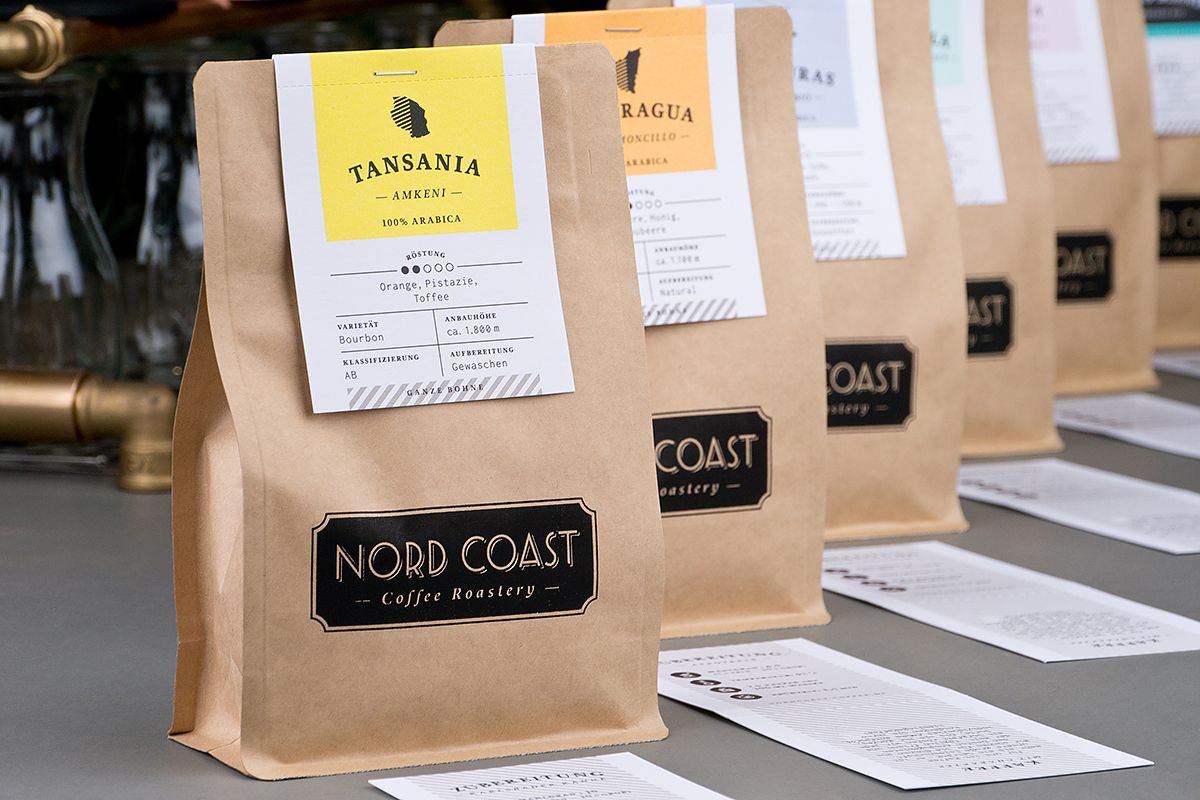
The key to effective typography is creating a clear hierarchy using no more than three fonts. Each font family conveys a different personality:
Serif fonts (Garamond, Baskerville, Playfair Display) – tradition, craftsmanship, heritage. Ideal for specialty/artisanal coffee.
Sans-serif fonts (Montserrat, Futura, Open Sans) – clean, modern, highly readable. Contemporary and approachable.
Handwritten or script fonts (Amatic SC, Pacifico) – elegance and personality, best used sparingly for accent words.
Professional coffee labels place the logo in the center or upper portion to ensure it remains the focal point. Secondary information (roast level, flavor notes) uses smaller font sizes, while tertiary details are smallest but legible.
Color Psychology
Color is one of the fastest ways to communicate brand personality. Different color families evoke distinct associations:
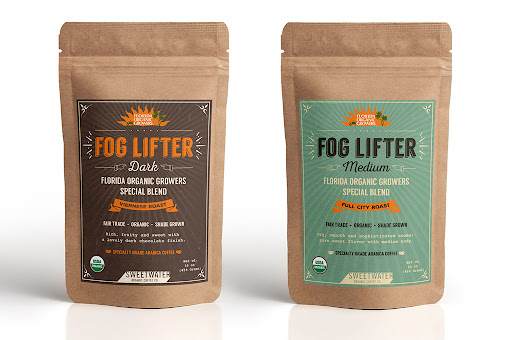
Brown tones and neutrals – warmth, earthiness, authenticity.
Deep blacks and rich gold – luxury, exclusivity, premium quality.
Bright reds and oranges – energy, bold flavors, excitement.
Blues and greens – freshness, calm, organic or decaf positioning.
Successful coffee brands maintain color consistency across their entire product line. A customer should be able to recognize your brand from across the room based on your color palette alone.
Material Selection
The material you choose for your coffee label is not just about durability—it also communicates brand values.
Weatherproof labels (made from polyester or vinyl) are designed to withstand moisture, humidity, and temperature changes. They are ideal for coffee bags that may be stored near a hot espresso machine, shipped across humid climates, or frozen to preserve freshness. Weatherproof labels feel slightly slick or glossy, which can imply modernity and precision.
Paper labels (uncoated, kraft, or textured) might not resist external conditions as well, but they provide a handcrafted, organic feel. Small-batch roasters and eco-friendly brands often choose paper labels because they align with values of simplicity, natural ingredients, and minimal environmental impact. A paper label can be written on with a pen, allowing for small-batch customization.
Permanent adhesive labels bond securely to the coffee bag and resist peeling. This is the standard choice for most coffee packaging because it ensures the label stays attached throughout the product's life.
Removable adhesive labels use a lighter adhesive, allowing the customer to peel them off without leaving residue. This is ideal for temporary branding, promotional labels, or reusable packaging. For example, a coffee brand could use removable labels on glass jars, encouraging customers to reuse the jar after the coffee is finished—keeping your brand visible in their kitchen.
The most visually appealing coffee label is one where typography, color, and material work in harmony. No single element dominates at the expense of others. Instead, they create a cohesive whole that the consumer can process almost instantly.
Common Coffee Label Design Pitfalls
Even experienced designers can make mistakes that hurt a coffee label's effectiveness. Understanding these pitfalls—and why they fail—will help you avoid them in 2026.
Cluttered Layout – When a label contains too much text, too many images, or overlapping elements, the viewer cannot process any single piece of information. The label in the original article's "bad example" demonstrated this problem perfectly: the title and logo were visible, but the overall design felt chaotic. Important details like roast level and flavor notes were hidden among secondary information. The solution is to establish a clear visual hierarchy. Ask yourself: what should the customer see first? Usually, it is the brand name or logo. What should they see second? The flavor or roast level. Everything else—company address, QR code, legal disclaimers—can be smaller and placed along the edges or bottom of the label.
Using Too Many Fonts – Using more than three fonts creates a visually overwhelming effect. Each new font competes for attention, forcing the viewer's brain to pause and adjust. This makes it harder to process information quickly—a critical failure when you only have three to five seconds to win a sale. The original article recommends using a consistent font style throughout the coffee label to maintain a cohesive look. For example, use one serif font for your brand name, one sans-serif font for body text (flavor notes, origin details), and perhaps one script font for a single accent word like "Artisan." Beyond that, you risk confusion.
Excessive Text Without Organization – Even if you use only one or two fonts, too much text can ruin a label. The original article pointed out that excessive text could be arranged more efficiently so the viewer can quickly pay attention to each piece of content. The solution is brevity and structure. Use short phrases instead of full sentences. Break information into small, scannable sections. For example, instead of writing "This coffee was grown in the high-altitude regions of Antioquia, Colombia, where it developed complex fruit notes," write "Origin: Antioquia, Colombia (1,800m) – Flavor: Red apple & honey."
Failing to Make the Logo the Focal Point – Some designers become so focused on flavor descriptions, origin stories, or artistic illustrations that they shrink the logo to a corner. This is a fatal error because the logo is the single most important element for building brand recognition. A customer who enjoys your coffee should immediately know who made it so they can buy it again. Always place your logo in the center or upper third of the label. Make it the largest typographic element. If you use an illustration or pattern, ensure it does not distract from the logo.
Ignoring Material Suitability – A beautifully designed label printed on the wrong material will fail in the real world. Paper labels on coffee bags stored in a humid kitchen will warp, smudge, or peel. Weatherproof labels on a kraft paper bag might look overly industrial and contradict an organic brand image. Test your label material on your actual coffee bag under realistic conditions. Leave a bag near a steaming kettle for a week. Place another in the freezer overnight. Only after these tests should you commit to a full print run.
How to Design Professional Coffee Labels
Designing a professional coffee label is a step-by-step process that balances creativity with practicality. The original article outlines a clear workflow using the Maestro Label Designer, but the principles apply to any design software (Adobe Illustrator, Canva, or even Photoshop).
Step 1: Define Your Coffee Brand Identity – Before opening any design software, ask yourself: what makes your coffee unique? Are you offering small batches or artisanal coffee with hand-picked beans? Do you focus on convenience and affordability, or do you opt for elegant, sophisticated ingredients? Your brand identity determines every subsequent design choice, from fonts to colors to materials. Write down three adjectives that describe your brand. Examples include "bold," "sustainable," "luxury," "fun," "traditional," or "innovative." Keep these adjectives visible while you design.
Step 2: Launch Your Design Software – Open your chosen label design software and either create a new project or select a pre-designed template. The original article recommends Maestro Label Designer, which offers coffee-specific templates. If you are using a different tool, search for a template sized for coffee bags (common dimensions include 4" x 3" for front labels and 4" x 2" for back labels).
Step 3: Choose a Template or Start from Scratch – For beginners, starting from a pre-designed template saves time and ensures proper dimensions. Use the search bar to browse for coffee label templates. Review several options to see how other designers have arranged the eleven essential elements. For advanced users, starting with a blank template offers maximum creative freedom. However, you must be disciplined about layout and hierarchy.
Step 4: Add Your Brand Elements – Place your logo in the center or upper portion of the label. Add your brand name if it is not already part of the logo. Then, begin adding the other ten essential elements one by one, starting with the most important (flavor, roast level) and ending with the least important (company address, QR code).
Step 5: Apply Typography and Color – Select two or three fonts based on your brand identity (see Section 3 for font psychology). Apply your brand colors, ensuring sufficient contrast between text and background. Dark text on a dark background is illegible; so is bright text on a bright background. Test your color choices by converting the label to grayscale temporarily; if the contrast disappears at that stage, it will be hard to read in real life.
Step 6: Review Layout and Hierarchy – Step back and look at your label as a stranger would. Where does your eye go first? If the answer is not your logo or brand name, adjust the layout. Ensure that the second thing the viewer sees is the flavor or roast level. All other information should be smaller and placed along the edges or bottom.
Step 7: Request a Free Digital Proof – Before printing, always request a digital proof from your label manufacturer. A good proof will show you exactly how the label will look at full size, including colors and typography. Use this opportunity to catch any errors in spelling, alignment, or hierarchy.
Step 8: Order a Physical Sample – Even the best digital proof cannot guarantee how a label will look on your actual coffee bag. Order a small physical sample first. Apply it to a bag. Check for readability in different lighting conditions. Test the adhesive by peeling a corner. Only after these tests should you approve a full production run.
Advantages of Well-Designed Coffee Labels
With 43,165 coffee manufacturers worldwide, a well-designed label is often the difference between a product that flies off the shelf and one that collects dust. The advantages fall into six categories:
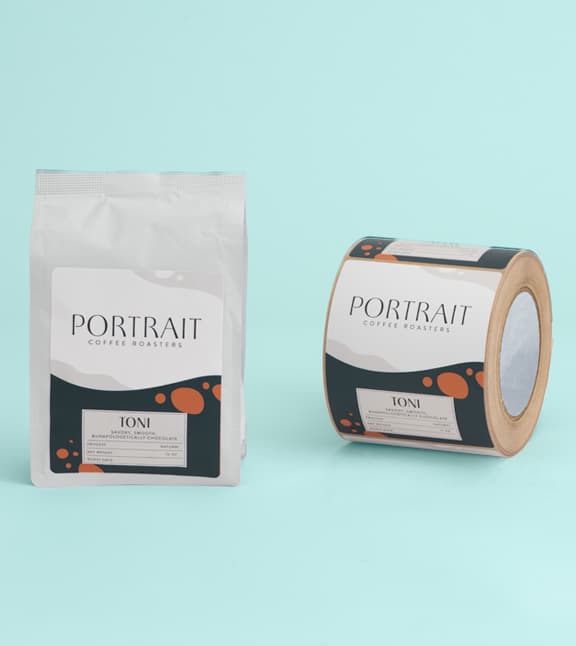
1. Shelf Stand-Out – The most immediate advantage is visibility. A well-designed label captures attention in three to five seconds, increasing the likelihood of an impulse purchase. In a crowded retail environment, whether a grocery store, farmers market, or online product photo, your label is your first and sometimes only chance to make an impression.
2. Customer Loyalty and Repeat Purchases – A customer who enjoys your coffee needs to remember your brand to buy it again. Consistent, appealing label design builds brand recognition. Over time, that recognition turns into trust, and trust turns into loyalty. A loyal customer not only buys repeatedly but also recommends your coffee to others.
3. Premium Positioning and Higher Margins – High-quality design signals high-quality coffee. A professional label with thoughtful typography, appealing colors, and durable materials justifies a higher price point. Customers are willing to pay more for coffee that looks premium because they assume the product inside matches the packaging's quality. This allows you to increase your profit margins without changing your coffee.
4. Emotional Connection and Storytelling – The best coffee labels do not just inform; they tell a story. Origin information connects the customer to a specific farm and community. A mission statement aligns the customer's values with your brand. Even a simple packaging phrase like "Start each day with intention" creates an emotional bond that goes beyond caffeine. Customers who feel connected to your brand are far less price-sensitive.
5. Legal Compliance and Reduced Risk – A complete coffee label includes legally required information such as net weight, caffeine content (if decaf or enhanced), and company contact details. In many jurisdictions, failure to include these elements can result in fines, forced recalls, or being banned from retail stores. A well-designed label that complies with regulations protects your business from legal and financial risk.
6. Reusable Packaging and Extended Brand Visibility – If you choose removable adhesive labels or high-quality materials, customers may repurpose your coffee bag after the coffee is gone. A sturdy tin or glass jar with your label becomes a kitchen storage container, a pen holder, or a travel accessory. Every time the customer uses that container, they see your brand. This extends the lifetime value of your packaging and turns customers into walking billboards.
In summary, a well-designed coffee label is not an expense—it is an investment. It pays for itself through higher sales, better margins, and lasting customer relationships.
How to Print Your Coffee Labels
Printing is the final step where your design becomes a physical product. Choosing the right printing method and material is as important as the design itself.
Material Selection (Revisited for Production) – As discussed in Section 3, weatherproof labels (polyester or vinyl) resist moisture and are ideal for coffee bags that may be stored near heat or in humid environments. Paper labels (uncoated, kraft, or textured) offer an organic feel but are less durable. For most coffee roasters, a weatherproof material with a matte finish offers the best balance of durability and aesthetics. You must also choose between permanent and removable adhesive. Permanent adhesive is the standard for coffee bags; it bonds securely and resists peeling during shipping and handling. Removable adhesive is useful for temporary promotions or reusable packaging but is less common for primary coffee labels.
Printing Methods – There are three primary ways to print coffee labels: In-house printing using a high-quality inkjet or laser printer and printable label sheets. This method offers maximum control and fastest turnaround for small batches (under 500 labels). However, most standard printers cannot print weatherproof labels, and inkjet ink may smudge on glossy materials. Print-on-demand services where you upload your design and receive printed labels by mail. This is cost-effective for small to medium quantities (500 to 5,000 labels) and offers access to professional materials like weatherproof vinyl. However, turnaround times are typically 5–10 business days. Custom label printing companies (like Custom Panda) that specialize in large runs (5,000+ labels) and offer the widest material options, including foil stamping, embossing, and custom die-cut shapes. This method has the highest upfront cost per order but the lowest cost per label for large quantities.
Printing Best Practices – Regardless of which method you choose, follow these best practices: Use high-resolution files at 300 DPI (dots per inch) minimum. Lower resolution results in blurry text and pixelated logos. Convert all text to outlines or embed fonts to prevent substitution errors. Request a physical proof before approving a full print run. Apply the proof to an actual coffee bag and inspect it under different lighting conditions. Order 10–20% more labels than you think you need to account for waste, misprints, and future packaging changes.
Cost Considerations – Label printing costs vary widely based on quantity, material, size, and finishing options (e.g., matte vs. glossy, square vs. die-cut). As a rough guideline: Small batch (100–500 labels): $0.50–$2.00 per label; Medium batch (1,000–5,000 labels): $0.15–$0.50 per label; Large batch (10,000+ labels): $0.05–$0.15 per label. Factory direct pricing (see Section 8) typically saves 20–30% compared to resellers.
Pro tip: Always test your label on an actual coffee bag under realistic kitchen conditions — humidity, heat, and friction matter.
Why Choose Custom Panda?
At Custom Panda, we specialize in designing and producing high-end customized products — specifically Custom Pins, Custom Patches, and Custom Labels. For coffee roasters in 2026, our Custom Labels service is a core part of what we do, not an afterthought. We understand that your coffee label is one of the most important marketing investments you will make, and we bring the same level of craftsmanship to labels that we bring to every product we make.
Premium Quality for Coffee Environments – Coffee packaging faces unique challenges: moisture from brewing areas, friction during shipping, and temperature changes from warehouse to freezer. Our weatherproof custom labels are engineered to withstand these conditions without smudging, peeling, or fading. We also offer eco-friendly paper labels for brands that prioritize sustainability. Whether you need a glossy finish, a matte look, or a textured kraft paper feel, we deliver premium quality that matches your brand.
No Minimum Order – Perfect for Roasters of Any Size – Whether you are a home roaster testing your first 50 bags or an established brand ordering 50,000 labels, we accommodate you. No minimum order means you can start small, test your design, and scale up when you are ready. And because custom labels are one of our core offerings, we treat every order—small or large—with the same attention to detail.
Factory Direct Pricing – Save Up to 30% – By ordering directly from our manufacturing facility, you eliminate reseller markups. Most customers save 20–30% compared to traditional label printing services. These savings can be reinvested into better coffee beans, improved packaging, or expanded marketing. We keep our prices competitive because we believe great design should not break your budget.
Free Digital Proof Within 12 Hours – We provide a free digital proof of your coffee label within 12 hours of receiving your artwork. This proof shows exact colors, typography, and layout. You can request unlimited revisions until you are completely satisfied. No hidden fees, no surprises. This is the same free proofing process we use for our custom pins and patches—applied now to your coffee labels.
Fast Turnaround and Reliable Worldwide Shipping – Production takes just 2–3 days after proof approval. We then ship worldwide with delivery in 5–7 business days. Whether you are in New York, London, Tokyo, or Sydney, your custom labels arrive quickly and reliably. Fast turnaround means you can launch your new coffee blend without waiting weeks for packaging.
Your Trusted Partner for Premium Custom Creations – Our promise: Quality Guaranteed. If your labels do not meet your expectations, we will make it right. We combine fast turnaround, free design support, and worldwide shipping into one seamless experience. And because custom labels stand alongside custom pins and custom patches as our core expertise, you get a partner who understands both design and durability.
Let Us Help You Create 2026 Coffee Labels That Sell – Your coffee deserves a label as exceptional as the beans inside. Whether you need weatherproof vinyl, eco-friendly kraft paper, removable adhesive, or custom die-cut shapes, Custom Panda delivers professional results at factory-direct prices. We are not just a label printer—we are a custom manufacturer dedicated to helping your brand stand out.
Ready to stand out among 43,165 coffee manufacturers? Visit Custom Panda today, upload your design, and request your free digital proof. In less than 12 hours, you will see how great your coffee label can look. From custom labels to custom pins and patches — we are your partner for premium custom creations.

