
th
An Ultimate Guide To Choosing Between Pins And Badges
Walk into any office, attend a music festival, or simply look at a friend's backpack. Chances are, you will spot a small, shiny accessory attached to a lapel, a lanyard, or a bag strap. At first glance, these items—often called pins and badges—may look similar. But anyone who has tried to use one for branding, events, or personal expression knows they serve very different purposes.
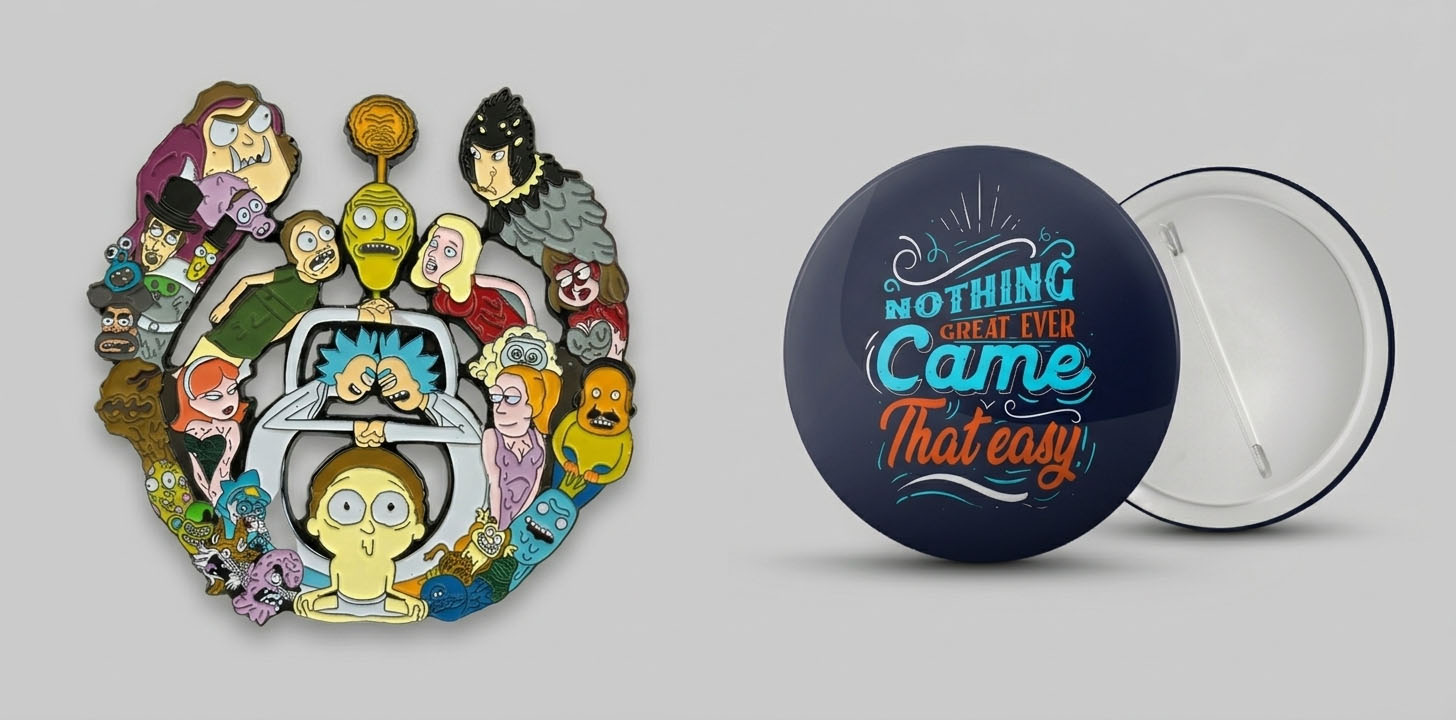
Choosing the right one is not just about looks. It affects cost, durability, how people perceive your message, and even how long the item will last. Some are designed to be collectible keepsakes. Others are made to be disposable, attention-grabbing tools for a single event.
So, how do you decide? This guide breaks down everything you need to know: what custom pins and badges really are, their key features, types, differences, and—most importantly—how to choose, design, and order the right one for your needs.
What Are Custom Pins?
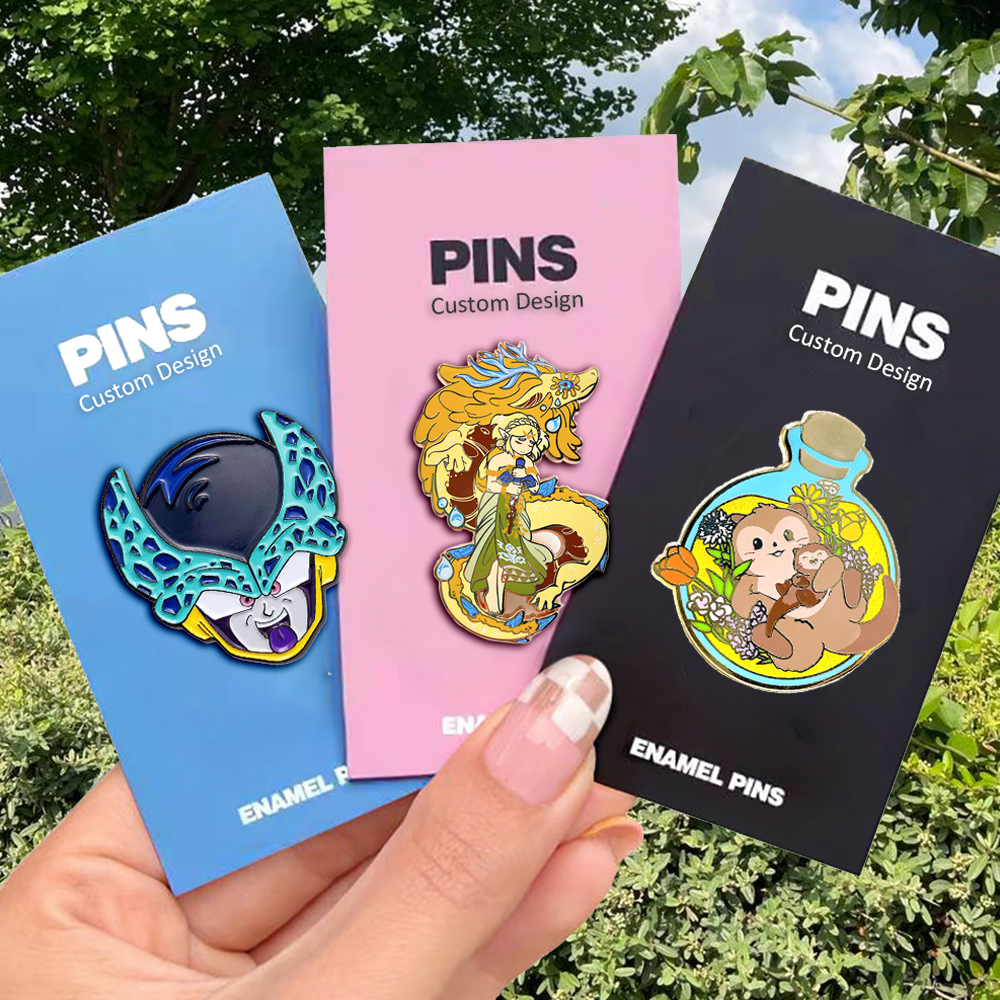
A custom pin is a small accessory typically made from metal, such as iron, brass, or zinc alloy. The design is created by shaping the metal and then adding color through enamel, paint, or printing. Pins are attached to clothing or bags using a metal post with a clutch backing (often called a butterfly clutch or rubber clutch).
Unlike mass-produced plastic buttons, custom pins are valued for their craftsmanship. They feel substantial in hand, and the level of detail can range from simple logos to intricate illustrations with fine lines and multiple colors. Because they are durable and visually appealing, many people collect pins like art objects or trade them at conventions.
Features of Custom Pins
Durable metal construction: Most pins are made from copper, iron, or zinc alloy, making them strong and resistant to bending.
Premium finishes: Options include shiny gold, silver, black nickel, or antique effects (like antique brass or copper), which give a vintage look.
Color options: Enamel (soft or hard) allows vibrant, permanent colors that won't fade easily.
Long lifespan: A well-made pin can last for decades without rusting or losing its shine.
Reusable backing: The clutch can be removed and reattached, so the same pin can be worn on different items.
Small but detailed: Because of metal casting and plating techniques, pins can hold very fine details—even text as small as 2mm.
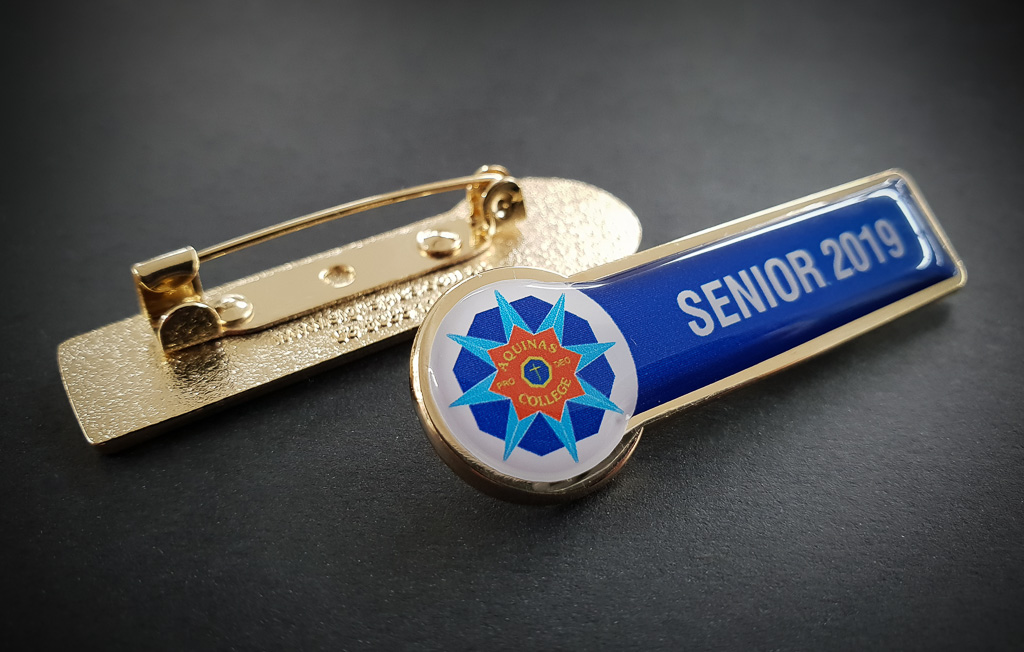
These features make pins ideal for products that people will keep, display, or trade.
Types of Custom Pins
There is no single "standard pin." Depending on your budget and design needs, you can choose from several types:
| Type | Description | Best For |
|---|---|---|
| Soft Enamel Pins | Recessed areas with raised metal lines; slightly textured feel | Colorful designs, budget-friendly, casual wear |
| Hard Enamel Pins | Polished flat surface; metal and enamel are level | Premium look, professional branding, collectibles |
| Die-Struck Pins | No enamel; raised metal design on a recessed background | Elegant, understated logos (e.g., corporate awards) |
| Printed Pins | Full-color digital image sealed onto a metal surface | Photographs, gradients, or complex artwork |
| 3D Molded Pins | Sculpted three-dimensional shape (not flat) | Mascots, animals, or any design needing depth |
| Photo-Etched Pins | Ultra-thin metal with fine etched lines | Delicate, intricate designs (e.g., filigree or lace patterns) |
Each type has its own production process and price point. For example, hard enamel requires more polishing steps, so it costs more than soft enamel. But the result is a smooth, jewelry-like finish that many customers prefer for high-end products.
Applications of Custom Pins
Custom pins are incredibly versatile and appear in nearly every industry and social setting. Here are some of the most common applications:
Because pins are durable and visually appealing, they function as both immediate identifiers and long-term keepsakes. Their small size makes them easy to produce, ship, and display, which is why so many different groups have adopted them.
What Are Custom Badges?
A custom badge is broadly defined as any emblem or identifier that is attached to clothing, typically using a pin, safety pin, magnet, or adhesive. However, in the custom merchandise industry, "badge" most often refers to button badges (also called pin-back buttons). These are round metal discs with a printed paper or plastic surface, covered by a clear mylar film, and crimped around the edges.
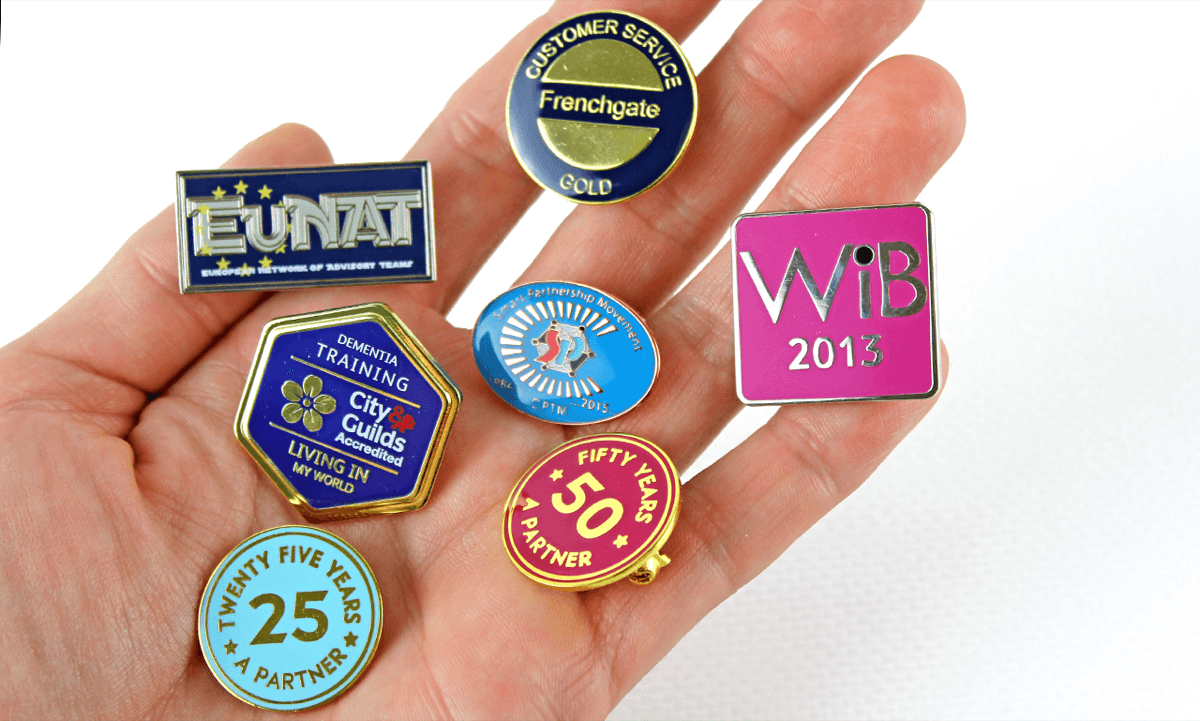
Badges can also include fabric patches (embroidered badges), plastic name tags, or even digital badges with QR codes. The common thread is that badges prioritize visibility and message delivery over long-term durability or artistic detail.
Unlike custom pins, badges are usually made in large quantities quickly and cheaply. They are meant to be worn for a short period—a conference, a political rally, or a fundraising campaign—and then discarded or recycled.
Features of Custom Badges
Lightweight construction: Metal shell, paper insert, and plastic film make them very light.
Low unit cost: Because they are machine-pressed in bulk, individual badges can cost a fraction of a custom pin.
Fast production: Simple badges can be ready in 5–7 days, even for quantities over 10,000.
Full-color printing: No color limitations; photographs and complex gradients are easy to reproduce.
Large surface area: Standard sizes range from 1 inch (25mm) to 3 inches (75mm) or more, offering plenty of space for text or slogans.
Less durable: The paper can fade in sunlight, the mylar can peel, and the metal can rust if exposed to moisture.
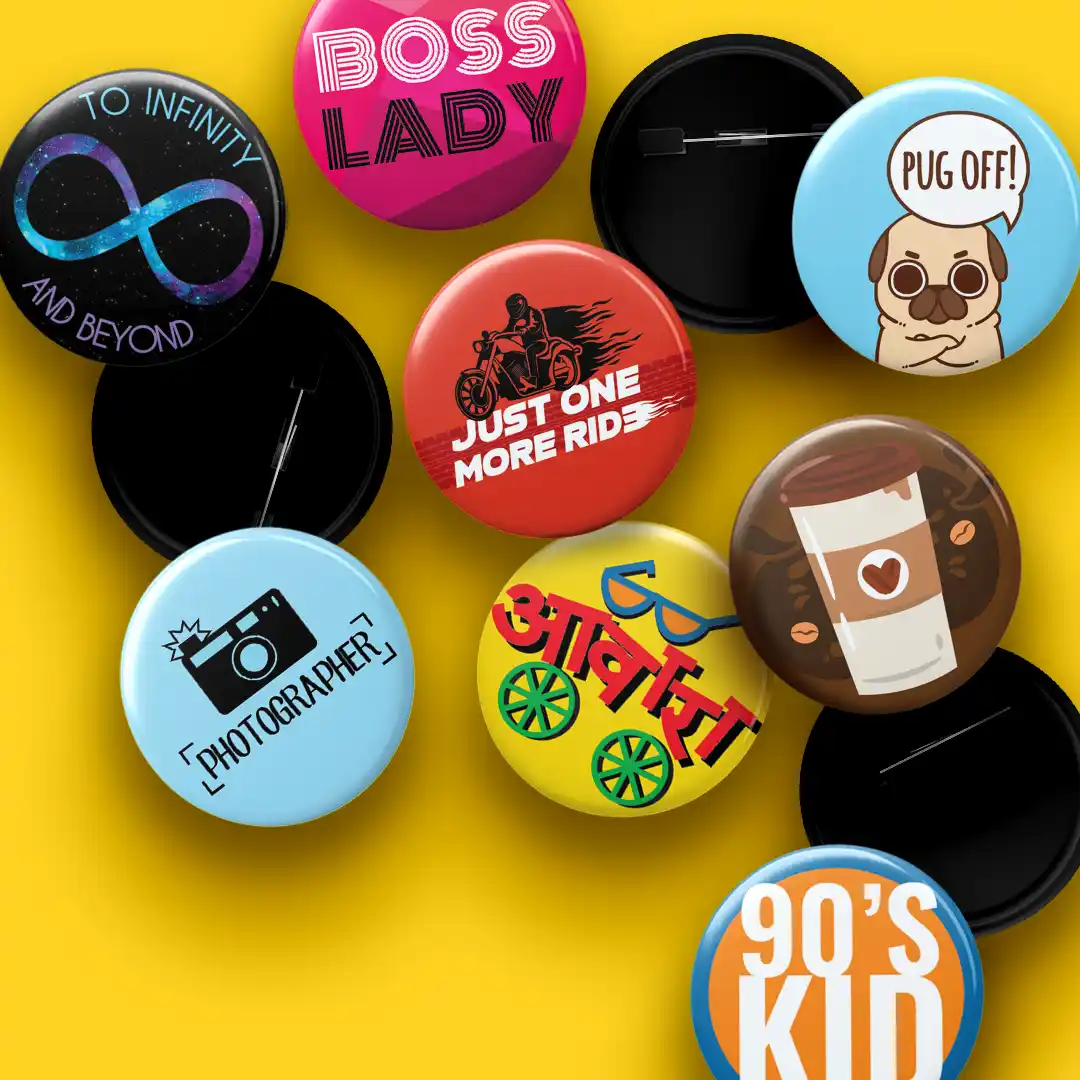
Because badges are inexpensive and easy to produce, they are often given away for free at events or used for one-time campaigns where cost per unit is the main concern.
Types of Custom Badges
The term "badge" covers a wider range of products than pins. Here are the most common types:
| Type | Description | Best For |
|---|---|---|
| Button Badges | Round metal backing with printed paper under a plastic cover | Events, promotions, awareness campaigns |
| Name Badges | Rectangular plastic or metal tags with a name and title, often with magnet or clip back | Offices, conferences, service industry |
| Magnetic Badges | Same as button badges but with a magnet instead of a pin back | Delicate fabrics (silk, wool) or safety-conscious environments |
| Embroidered Badges | Woven or stitched fabric patch with a heat-seal or iron-on backing | Uniforms, outdoor gear, vintage-style branding |
| PVC Badges | Soft, flexible rubber-like material with raised 3D design | Kids' items, bags, or any use requiring waterproof durability |
| Digital Badges | Plastic badge embedded with NFC chip or QR code | Contactless check-in, smart events, or tech-forward branding |
Among these, button badges are by far the most common when people compare "pins vs. badges." They are the classic round buttons seen on campaign posters, music festival lanyards, and student club giveaways.
Applications of Custom Badges
Custom badges are designed for situations where visibility, low cost, or fast distribution matters more than long-term durability. Common applications include:
The Key Differences Between Custom Pins and Badges
To make an informed choice, you need a clear side-by-side comparison. The table below highlights the most important distinctions.
| Feature | Custom Pins | Custom Badges |
|---|---|---|
| Primary material | Metal (iron, brass, zinc alloy) | Metal shell + paper + plastic film |
| Design detail | Fine lines, textured or smooth enamel | Full-color print, but lower resolution (around 150–200 DPI) |
| Durability | Very high (can last decades) | Low (weeks to months, depending on wear) |
| Perceived value | Premium, collectible, artistic | Functional, disposable, promotional |
| Common use cases | Branding, employee recognition, fashion accessories, trading | Campaigns, giveaways, event entry, awareness ribbons |
| Production time | 10–15 days (typical for enamel) | 5–7 days (for button badges) |
| Minimum order quantity | 50–100 pieces often accepted | 100–500 pieces typically required for good pricing |
| Unit cost (at 500 pcs) | $2.00–$5.00+ depending on colors and finish | $0.30–$1.00 depending on size |
| Attachment method | Metal post with clutch (pokes hole) | Safety pin or magnet (pin back is standard) |
| Custom shape | Almost any shape (laser-cut or die-cast) | Usually round, sometimes oval or square |
| Weather resistance | Highly resistant (metal + enamel) | Poor (paper fades, rusts if wet) |
As the table shows, pins and badges sit at opposite ends of the quality-versus-quantity spectrum. Pins are premium, lasting, and detailed. Badges are affordable, fast, and high-volume.
Which One Should You Choose?
The answer depends entirely on your goal. Here is a simple decision guide.
Choose custom pins if:
- You want people to keep the item for years (as a collectible or memento).
- Your design has fine lines, multiple colors, or requires a metal texture.
- You are building a brand or reward system that needs a premium feel.
- Your budget allows a higher per-unit cost (but lower quantities).
- Poking a small hole in the fabric is not an issue (e.g., denim jackets, bags, lanyards).
Examples: Corporate anniversary gifts, artist merchandise, fan club trading pins, employee service awards.
Choose custom badges if:
- You need thousands of units on a tight budget.
- Your design is message-heavy (text, slogans, QR codes) rather than artistic.
- The item will be used for a single day or weekend (conference, rally, festival).
- You need production done in under a week.
- You want to avoid damaging clothes (use magnetic badges for delicate fabrics).
Examples: Political campaign buttons, fundraiser giveaways, school event passes, conference name badges.
Some organizations use both: a custom pin for VIPs or long-term supporters, and button badges for general attendees or volunteers. This balances prestige with budget.
How to Design and Order Your Custom Pins or Badges
Once you have chosen which type to produce, follow these steps to ensure a smooth process from design to delivery.
Step 1 – Prepare your artwork
- For pins: Vector files are best (AI, CDR, EPS). Convert all text to outlines. Use Pantone color codes for enamel fills.
- For badges: High-resolution raster images (300 DPI at final size) work fine. Buttons use CMYK printing, so convert your design accordingly.
Step 2 – Choose your specifications
- Pins: Select type (soft/hard enamel, die-struck, etc.), size (typically 0.75–2 inches), plating (gold, silver, black nickel), and backing (butterfly clutch, rubber clutch, or deluxe clutch).
- Badges: Choose diameter (1 inch, 1.5 inch, 2.25 inch, 3 inch), paper finish (gloss or matte), and backing (safety pin or magnet).
Step 3 – Request a quote from a manufacturer
Send your artwork, quantity, and specifications. Good manufacturers will provide a free virtual proof (digital mockup) before production.
Step 4 – Review the proof carefully
Check colors, text, and alignment. For pins, confirm that raised metal lines are not too thin (min 0.3mm width). For badges, ensure no text is cut off near the crimped edge.
Step 5 – Approve production and wait
- Badges: 5–10 days typically.
- Pins: 10–18 days (shipping adds extra time).
Step 6 – Inspect upon delivery
Check a random sample. For pins, verify enamel is smooth (hard enamel) or correctly recessed (soft enamel). For badges, ensure mylar is fully sealed and no paper edges are exposed.
Why Choose Custom Panda?
Custom Panda is a dedicated manufacturer of premium, fully customizable accessories. We produce exactly that: high-end custom pins and custom badges. From delicate enamel pins for brand storytelling to durable button badges for large-scale events, every piece is crafted with precision and care.
We know the difference between a pin that whispers personality and a badge that shouts a message—because that is what we do every day. Soft enamel, die-struck, printed pins, button badges, magnetic name tags, you name it. No minimum order required, and every design is made to your exact specifications.
With Custom Panda, you benefit from factory-direct pricing that can save you up to 30%, along with a free digital proof delivered within just 12 hours. Our streamlined process means your order is ready for dispatch in only 2–3 days, with reliable worldwide shipping arriving in 5–7 days. We are more than just a supplier—we are a partner who cares about the final result. Our goal is to help you create custom pins and badges that people will genuinely want to keep, wear, and remember.

