
th
Best Backing Options for Embroidered Patches
Custom embroidered patches are more than decorative accessories. They are a practical, stylish, and highly versatile way to display brand logos, team identities, club emblems, personal artwork, and promotional designs. Whether used on jackets, uniforms, hats, backpacks, tactical gear, or fashion apparel, embroidered patches offer a classic textured look that stands out.
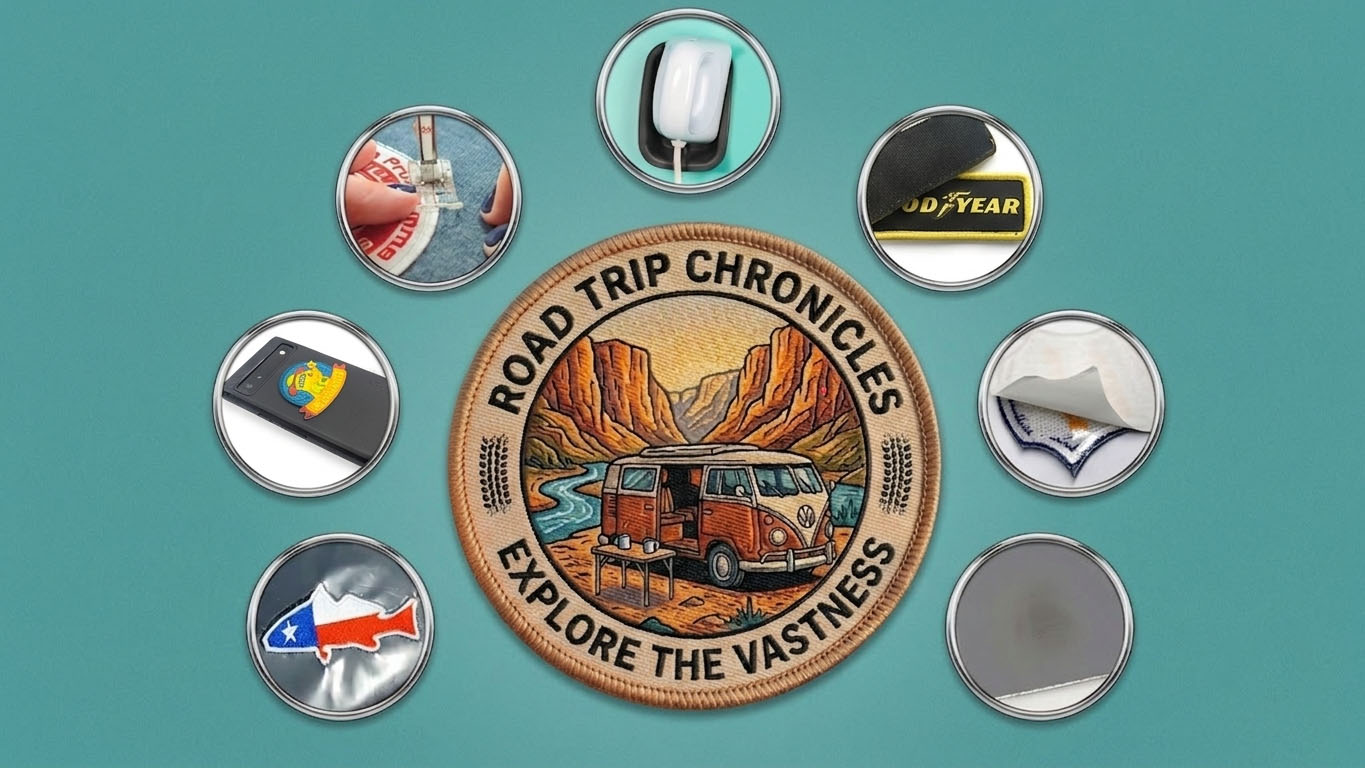
However, while the front design of a patch often gets the most attention, the backing is just as important. The backing determines how the patch is attached, how long it lasts, whether it can be removed, and what type of fabric or product it works best with.
In this guide, we will explain the most popular backing options for embroidered patches, compare their advantages and disadvantages, and help you choose the right backing for your custom patch project.
What Are Embroidered Patches?
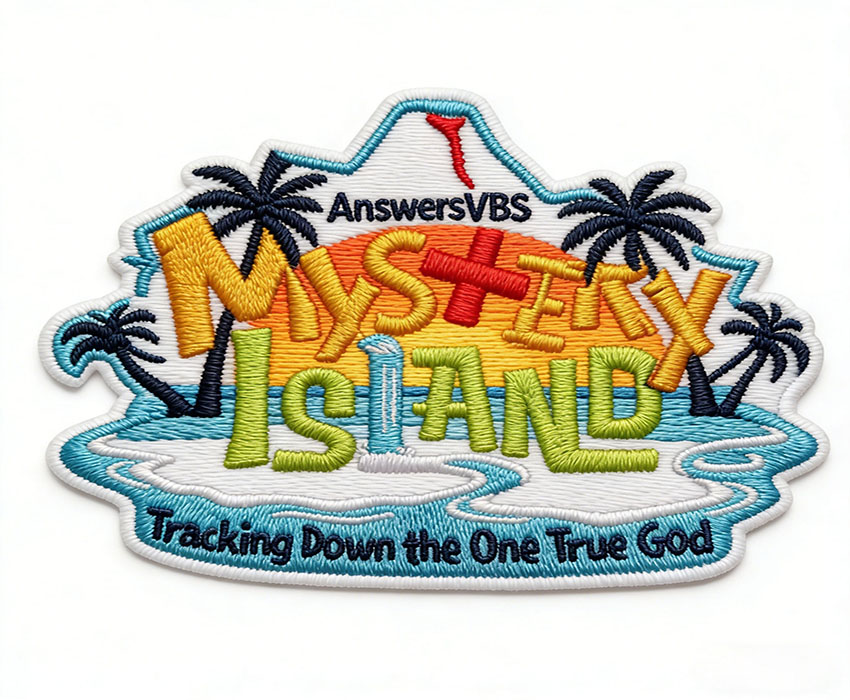
Embroidered patches are fabric patches decorated with stitched thread designs. They are usually made with a twill base and colorful embroidery threads that create logos, text, icons, badges, artwork, or custom patterns.
These patches are commonly used for:
Company uniforms
Sports teams
Military and tactical gear
Motorcycle clubs
Fashion brands
School organizations
Outdoor and adventure groups
Promotional merchandise
Personal collections
Compared with printed patches, embroidered patches have a raised, textured, and premium appearance. The stitching gives the design depth and durability, making embroidered patches a popular choice for both professional and creative use.
A custom embroidered patch can be made in different shapes, sizes, colors, borders, and backing styles. This flexibility allows customers to create patches that match their exact branding or design needs.
What Is Patch Backing?
Patch backing refers to the material or attachment method applied to the back of an embroidered patch. It determines how the patch will be attached to clothing, accessories, or other surfaces.
Some backing options are permanent, such as sew-on backing. Others are removable, such as Velcro backing or magnetic backing. Some are designed for quick application, like iron-on backing or adhesive backing.
The backing is not always visible when the patch is being worn, but it plays a major role in the patch’s performance. A beautiful embroidered patch with the wrong backing may not stay attached properly, may damage the fabric, or may not meet the customer’s practical needs.
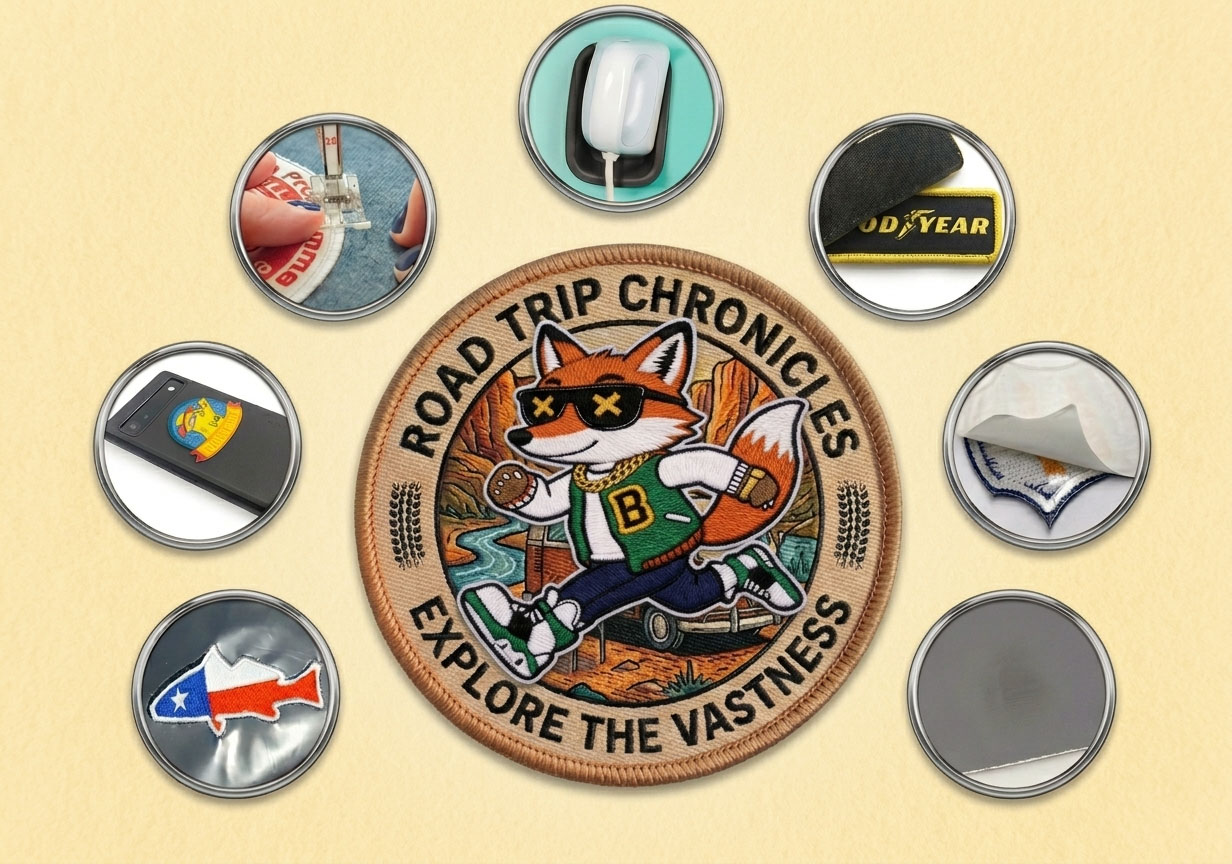
That is why choosing the right backing is an essential step when ordering custom embroidered patches.
Why Is Patch Backing Important?
Patch backing is important because it affects durability, convenience, appearance, and usability. Different applications require different attachment methods.
For example, a patch for a denim jacket may work perfectly with iron-on backing, while a tactical morale patch usually needs Velcro backing so it can be removed and replaced easily. A motorcycle club patch may need sew-on backing because it must stay firmly attached for years. A temporary promotional patch may only need adhesive backing.
The right backing can help your patch:
Stay attached securely
Match the intended fabric or product
Withstand washing and daily use
Look clean and professional
Be removable or reusable when needed
Meet the needs of your customers or team members
Choosing backing should never be an afterthought. It should be part of the patch design process from the beginning.
Main Types of Patch Backing for Embroidered Patches
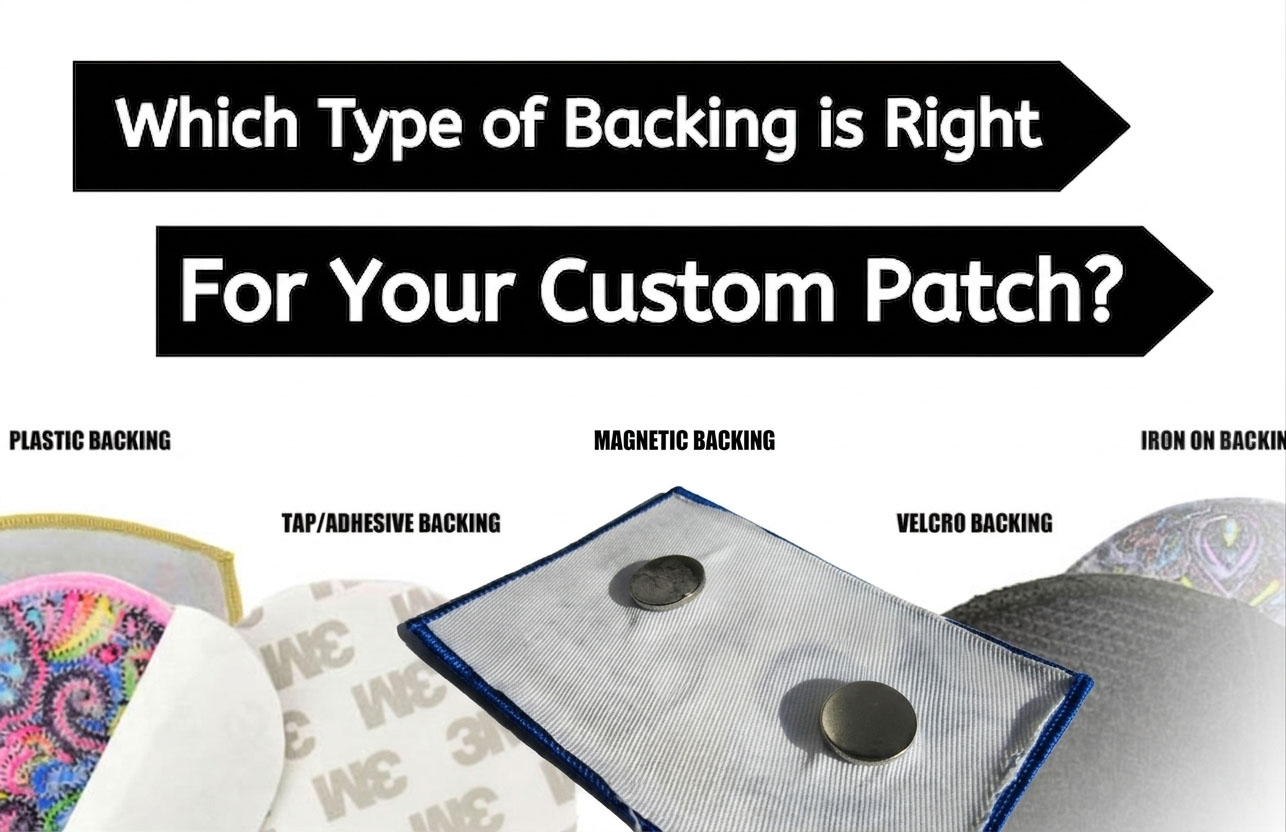
There are several common backing options for embroidered patches. Each one has its own best use cases, benefits, and limitations.
1. Iron-On Backing
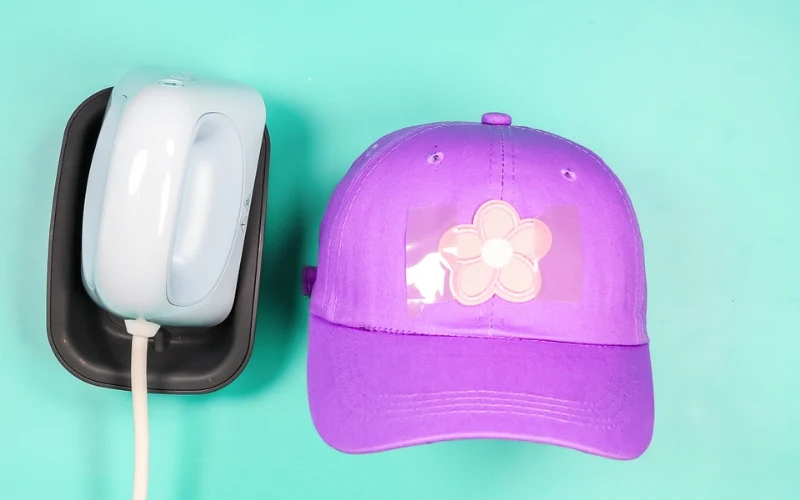
Iron-on backing is one of the most popular choices for custom embroidered patches. It has a heat-activated adhesive layer on the back. When heat is applied with an iron or heat press, the adhesive melts and bonds the patch to the fabric.
Iron-on patches are ideal for casual clothing, jackets, jeans, backpacks, tote bags, and DIY projects. They are easy to apply and do not require sewing skills.
However, iron-on backing may not be suitable for all fabrics. Heat-sensitive materials, waterproof fabrics, leather, nylon, and some synthetic fabrics may not bond well or may be damaged by heat. For better durability, many customers choose to iron the patch first and then add stitching around the edge.
2. Sew-On Backing
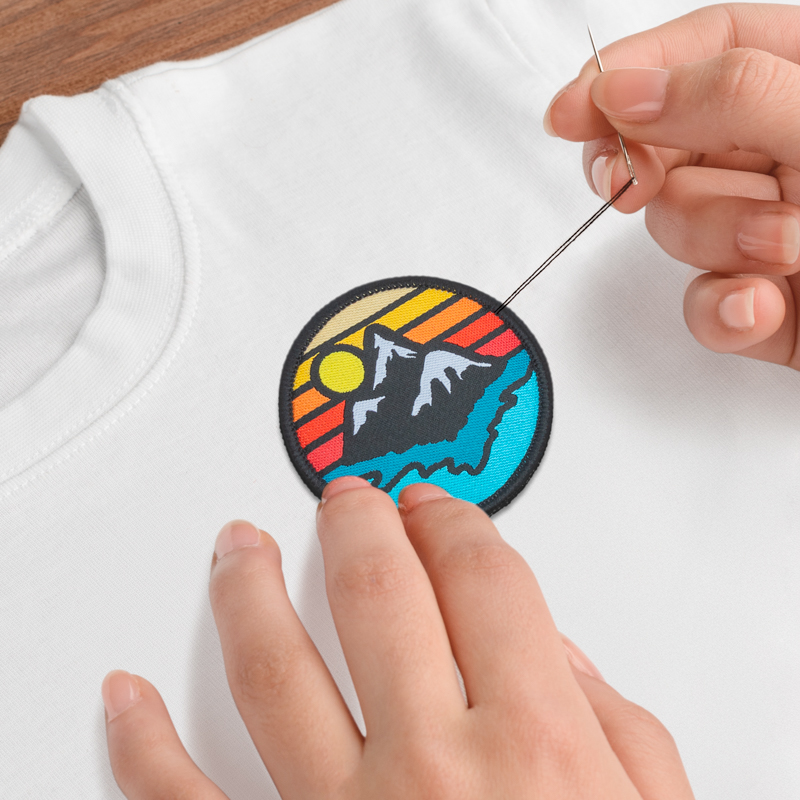
Sew-on backing is the traditional and most durable patch backing option. A sew-on patch has no adhesive layer and is attached by stitching it directly onto the fabric.
This backing is best for uniforms, workwear, motorcycle jackets, sports apparel, military patches, and long-term use. Sew-on patches can withstand washing, outdoor wear, and heavy movement better than many other backing types.
The main drawback is that sewing takes more time and may require a sewing machine or professional application. However, if durability is your top priority, sew-on backing is often the best choice.
3. Velcro Backing
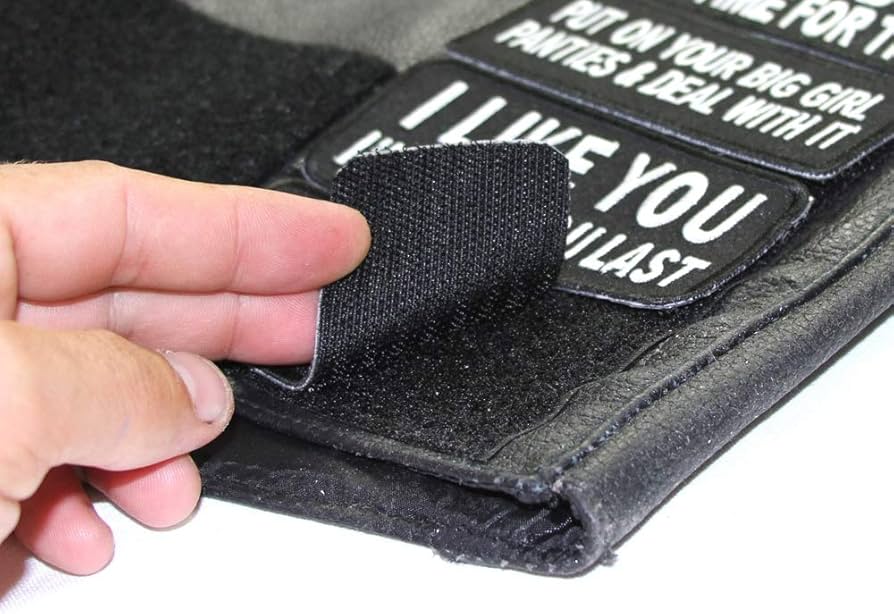
Velcro backing, also known as hook-and-loop backing, allows patches to be attached and removed easily. One side is sewn or attached to the patch, while the matching side is placed on the garment, bag, or gear.
Velcro patches are especially popular for tactical patches, military patches, police uniforms, airsoft gear, morale patches, backpacks, and outdoor equipment.
The biggest advantage is flexibility. Users can switch patches whenever they want. This makes Velcro backing ideal for people who need different patches for different roles, events, or styles.
Velcro backing is usually thicker and slightly more expensive than basic backing options, but it is highly practical and reusable.
4. Adhesive Backing
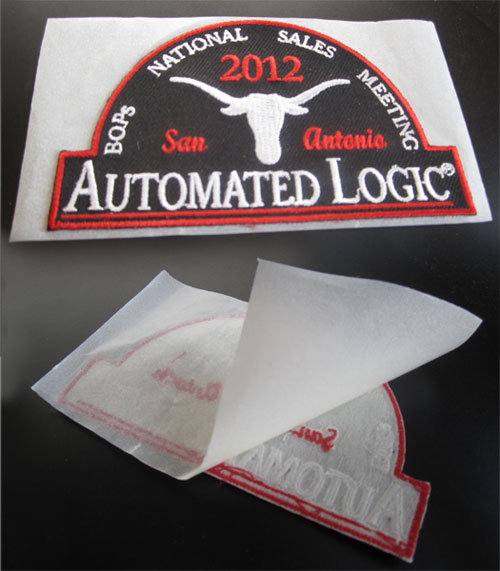
Adhesive backing works like a sticker. The back of the patch has a peel-and-stick adhesive layer that allows the patch to be applied quickly without heat or sewing.
This option is best for temporary use, events, giveaways, packaging, trade shows, and short-term promotions. It is convenient, fast, and easy to apply.
However, adhesive backing is not designed for long-term wear. It may peel off after movement, washing, or exposure to moisture. If you need a permanent patch, adhesive backing is usually not the best option.
5. Plastic Backing
Plastic backing is a thin plastic layer added to the back of an embroidered patch. It helps the patch keep its shape and gives it extra structure.
Unlike iron-on or Velcro backing, plastic backing is not an attachment method by itself. It is usually used with sew-on patches. The plastic layer makes the patch firmer, cleaner, and more stable.
Plastic backing is a good option for logo patches, uniform badges, and patches that need to maintain a crisp shape. It is not ideal if you want a very soft or flexible patch.
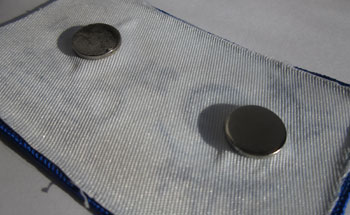
6. Magnetic Backing
Magnetic backing allows patches to attach without sewing, heat, adhesive, or holes in the fabric. A magnet holds the patch in place from behind the garment or surface.
This option is useful for name badges, office uniforms, delicate fabrics, and temporary display use. It is easy to reposition and does not damage clothing.
However, magnetic backing is not recommended for heavy movement, thick fabrics, or outdoor activities. It is less secure than sew-on, iron-on, or Velcro backing.
Pros and Cons of Different Patch Backings
| Patch Backing Type | Pros | Cons | Best For |
|---|---|---|---|
| Iron-On Backing | Easy to apply, no sewing required, clean appearance, affordable | Not suitable for all fabrics, may loosen after repeated washing, heat can damage sensitive materials | Jackets, jeans, backpacks, casual apparel, DIY projects |
| Sew-On Backing | Very durable, washable, works on most fabrics, professional finish | Requires sewing, takes more time, not easy to remove | Uniforms, workwear, motorcycle jackets, sports teams, long-term use |
| Velcro Backing | Removable, reusable, easy to switch, strong for tactical use | Thicker than other options, higher cost, requires loop surface | Tactical gear, military patches, morale patches, backpacks |
| Adhesive Backing | Quick application, no tools needed, great for temporary use | Not permanent, weak against moisture and washing, may peel off | Events, giveaways, packaging, temporary promotions |
| Plastic Backing | Adds structure, helps patch keep shape, creates a firm finish | Not an attachment method, less flexible | Logo patches, uniform badges, structured designs |
| Magnetic Backing | No fabric damage, removable, reusable, easy to reposition | Less secure, not suitable for heavy movement or thick fabric | Name badges, office uniforms, delicate clothing |
Which Patch Backing Is Best for Different Applications?
The best patch backing depends on where and how the patch will be used.
For fashion apparel, iron-on backing is often the best choice because it is easy for customers to apply at home. It works well on denim jackets, jeans, tote bags, and casual clothing.
For uniforms and workwear, sew-on backing is usually the most reliable option. It provides long-lasting durability and can handle regular washing and daily use.
For tactical gear, military uniforms, and morale patches, Velcro backing is the top choice. It allows users to remove, replace, and rearrange patches quickly.
For promotional events, adhesive backing is convenient because people can apply patches immediately without tools.
For structured logo patches, plastic backing can help the patch maintain a firm and professional shape.
For delicate fabrics or temporary badges, magnetic backing may be the best choice because it does not require sewing or heat.
Most Popular Patch Backing Choices in 2026
In 2026, the most popular backing choices for embroidered patches continue to be iron-on backing, sew-on backing, and Velcro backing.
Iron-on backing remains popular because it is convenient and beginner-friendly. Many fashion brands, small businesses, Etsy sellers, and creative designers choose iron-on patches because customers can easily apply them at home.
Sew-on backing is still preferred for professional and heavy-duty use. Businesses, clubs, sports teams, and uniform suppliers often choose sew-on patches because they are secure and long-lasting.
Velcro backing is growing in popularity because of the demand for tactical, outdoor, and morale patches. Customers like being able to change patches based on activity, identity, mood, or purpose.
Adhesive, plastic, and magnetic backings are also useful, but they are more specific to certain applications.
How to Choose the Right Backing for Your Custom Embroidered Patches
To choose the right backing, start by thinking about how the patch will be used.
Ask yourself these questions:
Will the patch be permanent or removable?
Will it be washed often?
Will it be used outdoors?
Will it be placed on clothing, bags, hats, or gear?
Does the fabric tolerate heat?
Does the patch need to be switched frequently?
Is the patch for fashion, branding, uniforms, or promotions?
If your customers want an easy DIY option, iron-on backing is a strong choice. If the patch needs to last for years, sew-on backing is better. If the patch needs to be removable, Velcro backing is the most practical. If it is only for short-term use, adhesive backing may be enough.
You should also consider the fabric. Cotton, denim, and canvas usually work well with iron-on backing. Nylon, leather, waterproof materials, and delicate fabrics may require other options.
When in doubt, ask your patch manufacturer for advice before production. A professional supplier can recommend the best backing based on your design, fabric, and use case.
Common Mistakes to Avoid When Choosing Patch Backing
One common mistake is choosing iron-on backing for fabrics that cannot handle heat. Some materials may melt, warp, or fail to bond properly.
Another mistake is using adhesive backing for long-term wear. Adhesive patches are convenient, but they are not designed to survive washing or heavy movement.
Some customers also forget to consider whether the patch needs to be removable. If users need to change patches regularly, sew-on or iron-on backing may not be ideal. Velcro backing would be a better option.
Another issue is choosing backing based only on price. The cheapest backing may not always be the best solution. A slightly higher-cost backing can improve customer satisfaction and product durability.
Finally, many people overlook the end user. A patch for a fashion customer, a soldier, a biker, and a corporate employee may all require different backing choices.
Why Choose Custom Panda?
Custom Panda is a professional company specializing in premium custom products, including custom pins, custom patches, and custom labels. We help brands, organizations, artists, clubs, and businesses turn their ideas into high-quality customized products.
For custom embroidered patches, we focus on detailed stitching, vibrant thread colors, clean borders, durable materials, and professional backing options. Whether you need iron-on patches for fashion apparel, Velcro patches for tactical gear, sew-on patches for uniforms, or custom logo patches for your brand, our team can help you create patches that look polished and last.
Why customers choose Custom Panda:
Premium Quality
No Minimum Order
Factory Direct Pricing
Free Digital Proof
Worldwide Shipping
Fast Turnaround
We understand that every patch project is different. That is why we provide custom design support and a free digital proof before production, so you can confirm your design, colors, size, shape, and backing details with confidence.
Whether you need a single custom patch or a large wholesale order, Custom Panda makes the process simple, flexible, and reliable. Start your custom embroidered patch project today and create patches that represent your brand, team, or personal style with professional quality.
FAQ About Patch Backing for Embroidered Patches
1. What is the best backing for embroidered patches?
The best backing depends on the application. Iron-on backing is best for easy DIY use, sew-on backing is best for long-term durability, and Velcro backing is best for removable or tactical patches.
2. Are iron-on patches permanent?
Iron-on patches can be long-lasting, but they are not always as permanent as sew-on patches. For maximum durability, it is recommended to sew around the edges after ironing.
3. Can embroidered patches be washed?
Yes, embroidered patches can usually be washed, especially sew-on patches. Iron-on patches can also be washed, but repeated washing may weaken the adhesive over time. Always follow proper care instructions.
4. What backing is best for tactical patches?
Velcro backing is the best choice for tactical patches because it allows patches to be removed, replaced, and attached to tactical gear, uniforms, backpacks, and morale patch panels.
5. Can I choose different backings for the same patch design?
Yes. Many custom patch manufacturers, including Custom Panda, can produce the same embroidered patch design with different backing options, such as iron-on, sew-on, Velcro, adhesive, plastic, or magnetic backing.

