
th
What Are Custom Velcro Patches?
Custom Velcro patches are decorative or functional emblems that feature a hook-and-loop backing—commonly known by the brand name Velcro—allowing them to be securely attached to and easily removed from compatible surfaces. Unlike traditional patches that require sewing, ironing, or adhesive gluing, custom Velcro patches offer a reusable and interchangeable solution for personal expression, brand identification, and tactical functionality.
Over the past decade, these patches have exploded in popularity across multiple industries. You may have seen colorful embroidered patches on a backpack, a morale patch on a military vest, or a company logo on a uniform. The ability to fully customize the design—shape, size, color, material, and artwork—has made custom Velcro patches a go-to choice for individuals, small businesses, and large enterprises alike.
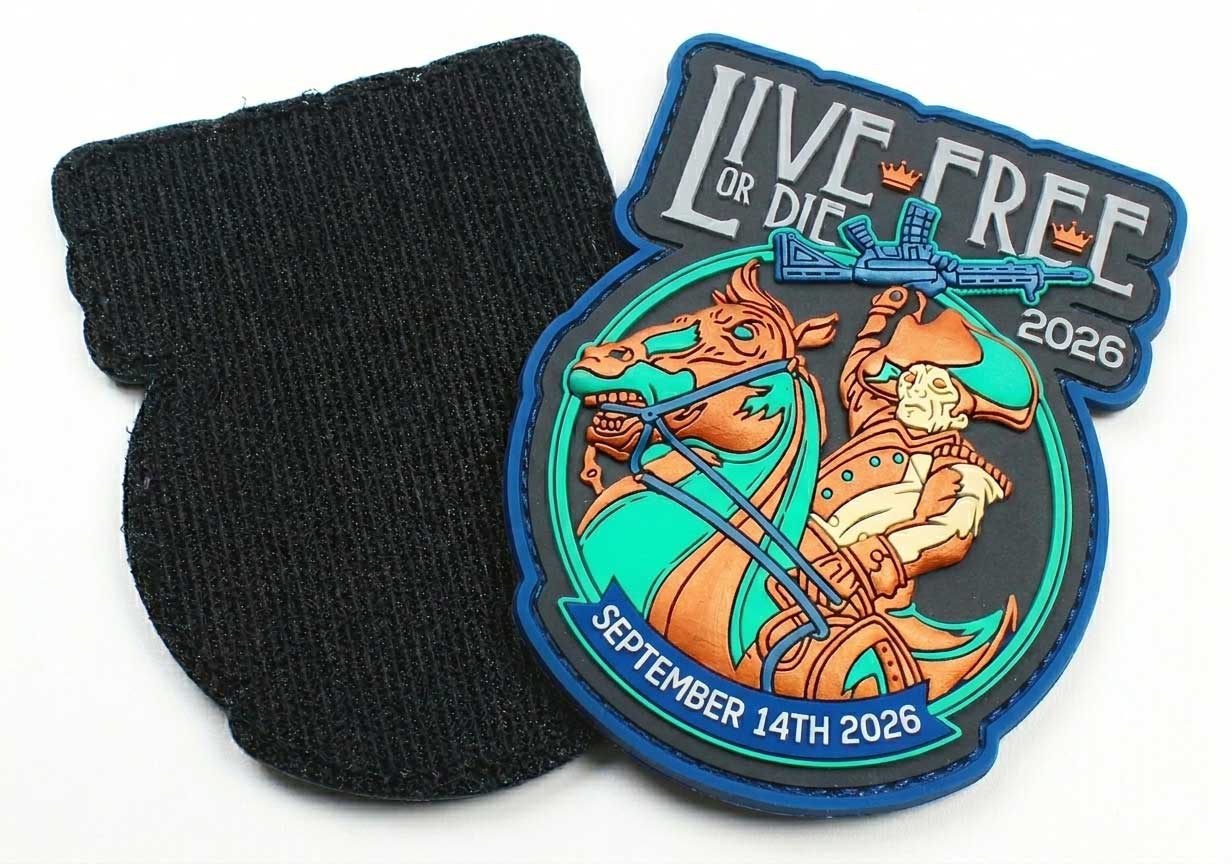
This article will walk you through everything you need to know about custom Velcro patches: their structure, common types, manufacturing process, benefits, practical applications, and how to order the right ones for your needs. By the end, you will understand why so many people are switching to custom Velcro patches and how you can use them effectively.
To fully understand what custom Velcro patches are, it helps to break them down into two basic layers: the top face and the bottom backing.
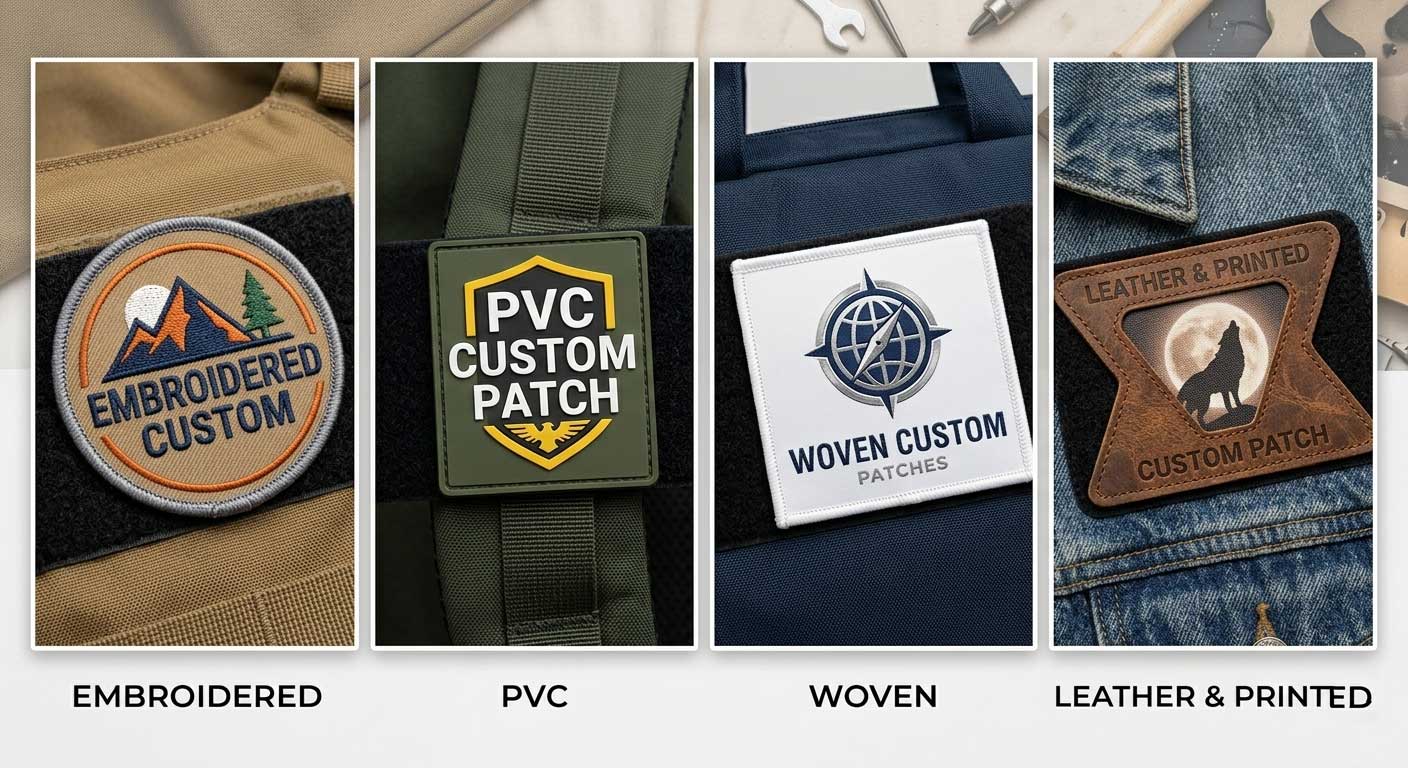
The top layer is the decorative face of the patch. This is where your design, logo, artwork, or text appears. Depending on the manufacturing method, this top layer can be made from various materials—embroidered thread, PVC rubber, woven polyester, leather, or even printed fabric. Each material gives the patch a different look, texture, and level of durability.
The bottom layer is the hook-and-loop backing, which is almost universally the hook side of the Velcro system. The hook side is the rough, scratchy side that attaches firmly to the soft loop side, which is typically sewn onto backpacks, vests, uniforms, or hats. When you press a custom Velcro patch onto a loop-covered surface, thousands of tiny hooks grip the loops, creating a strong yet temporary bond.
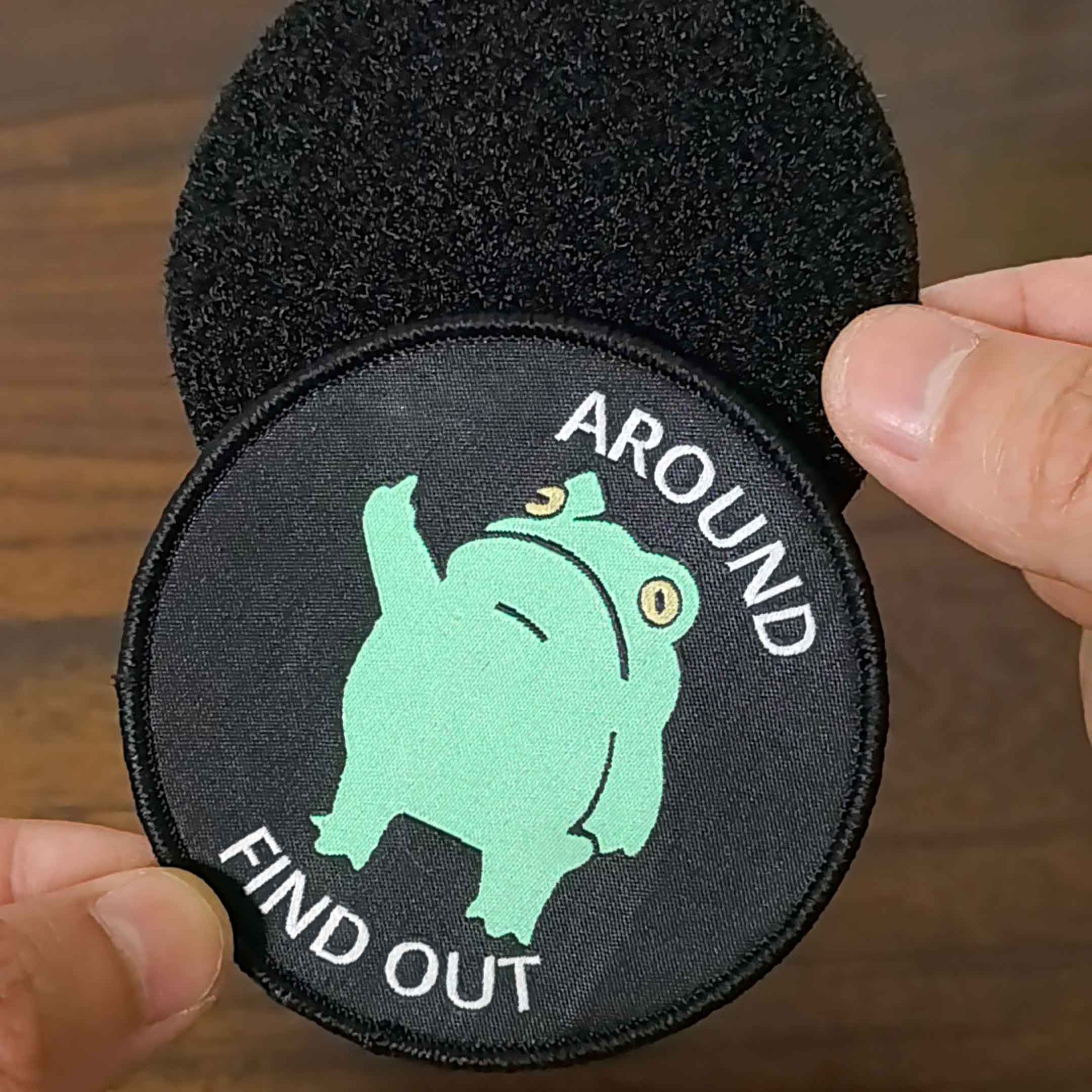
What makes this system so effective is the simplicity of the two layers working together. The patch stays in place during normal activity—including walking, running, and even light outdoor use—yet it can be peeled off by hand when you want to swap it for another patch. This modularity is the main reason why custom Velcro patches have replaced traditional sewn-on patches in many applications.
Not all custom Velcro patches are the same. Depending on your budget, design complexity, and intended use, you can choose from several distinct types. Each type has its own strengths and trade-offs.
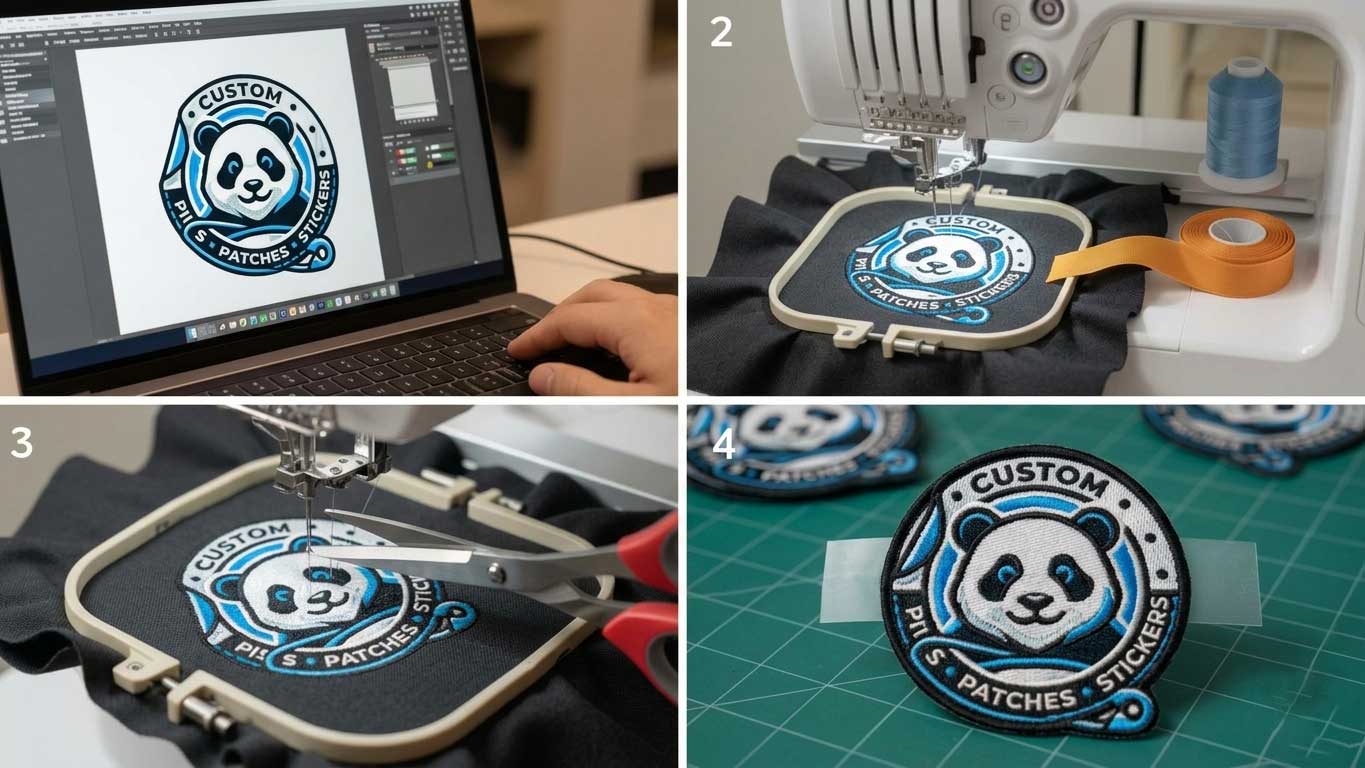
Creating custom Velcro patches involves a multi-step manufacturing process. Whether you are ordering 50 patches or 50,000, the core steps remain largely the same.
Step 1: Design approval. Every patch starts with an artwork file. Customers submit their design in a digital format—preferably vector files like AI, CDR, or EPS. These files allow the manufacturer to scale the design without losing quality. The manufacturer reviews the design for producibility, checking factors like minimum line thickness, color separation, and any elements that may not translate well into the chosen material (e.g., fine details in embroidery).
Step 2: Material selection. Based on the design and the customer's requirements, the manufacturer selects the appropriate material. Embroidery requires thread colors and a twill backing. PVC requires a metal mold (tooling) to shape the rubber. Woven patches require color-matching polyester threads. This step also determines the patch's thickness, flexibility, and overall durability.
Step 3: Production process. For embroidered patches, computerized embroidery machines stitch the design onto a large continuous sheet of twill. Dozens or even hundreds of patches are stitched in a single run. For PVC patches, liquid PVC is injected into a heated mold, then cooled and cured into a solid rubber shape. For woven patches, specialized looms weave the design at high speed. Each method has its own cycle time and quality characteristics.
Step 4: Adding the Velcro backing. Once the top face of the patches is completed, the sheet or individual patches move to the backing station. A sheet of hook-side Velcro material is cut to match the patch size, then attached using heat-activated adhesive or industrial-grade glue. The combination is pressed under heat and pressure to ensure a permanent bond. After the backing is applied, patches are cut out (if not already separated) and inspected for defects.
The entire process, from design approval to finished product, typically takes 7 to 15 business days depending on order size and production method.
Why have custom Velcro patches become so widely adopted? The answer lies in several practical benefits that traditional patches simply cannot match.
Reusable and interchangeable. This is the single most important advantage. A custom Velcro patch can be attached, removed, and reattached hundreds of times without losing its holding power. One jacket or backpack can serve as a rotating display for dozens of patches. For collectors, enthusiasts, or businesses that update branding seasonally, this flexibility is invaluable.
Easy to attach and remove without damaging fabrics. Unlike pins, which leave holes, or iron-on patches, which leave residue, Velcro patches require no permanent modification to the underlying garment. You sew or adhere the soft loop side to the item once, then simply press patches onto it. Your expensive jacket, tactical vest, or company uniform remains in original condition.
Ideal for modular use on bags, vests, helmets, and uniforms. The Velcro system enables modular customization. A military operator can swap mission patches between plate carriers. A backpacker can change country flags on their rucksack. A retail employee can display a "Manager" patch only during certain shifts. This modularity also allows for easy cleaning—patches can be removed before machine washing the base garment.
Cost-effective for short-run or large-batch orders. Custom Velcro patches can be produced in surprisingly small quantities. Many suppliers offer low minimum order quantities (as low as 1–20 pieces for certain types). At the same time, bulk orders drive the per-unit price down significantly, making them viable for promotional giveaways, team events, and large corporate programs.
The versatility of custom Velcro patches means they appear in an incredibly wide range of settings. Here are some of the most common applications.
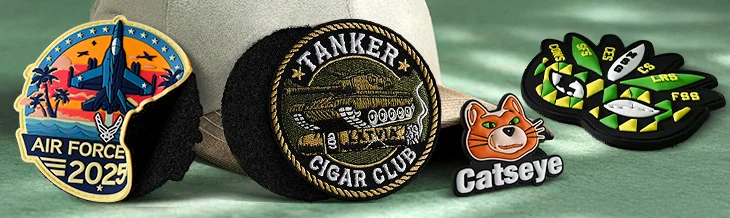
If you are ready to order custom Velcro patches, a few key considerations will help you get the best results.
Size, shape, and backing type. Patches can be any shape—not just squares or circles. Die-cutting allows custom outlines that follow your logo or artwork. For the backing, decide between sew-on Velcro (you attach the loop side yourself) or adhesive Velcro (peel-and-stick loop backing for smooth surfaces). Also consider whether you need the hook side pre-attached to the patch or if you will supply your own attachment surface.
Indoor vs. outdoor durability requirements. If the patches will see rain, sun, or heavy abrasion, choose PVC or high-quality embroidered patches with UV-resistant thread. Printed patches are generally for indoor or light-duty use only. Ask your supplier about fade resistance, waterproofing, and thread strength.
Minimum order quantity and production lead time. Small-batch suppliers may produce as few as one custom patch, but per-unit cost will be high. Larger orders bring the price down significantly. Lead times vary: simple embroidered patches might take 7 days; PVC patches requiring new molds could take 15 days. Plan ahead if you need patches for a specific event or product launch.
Choosing the right supplier for high-quality custom Velcro patches. Look for suppliers with clear sample policies, positive customer reviews, and transparent pricing. A reputable supplier will send a digital proof before production and will offer a sample stitching or a physical pre-production sample for complex orders. Do not simply choose the lowest price—quality control, material consistency, and on-time delivery matter more.
Custom Velcro patches are much more than simple fabric emblems. They represent a modular, reusable, and highly customizable system for personal expression, tactical identification, corporate branding, and everyday fashion. By understanding their basic structure, material types, manufacturing process, and practical benefits, you can make informed decisions whether you are ordering a single patch for your backpack or thousands for your company.
The Velcro backing makes these patches unique: they are secure enough for rugged outdoor use yet removable enough to swap on a whim. They protect your valuable gear from pin holes, adhesive residue, and permanent modifications. And because they can be produced in any shape, color, or material, custom Velcro patches adapt to virtually any design you can imagine.
Now that you know what custom Velcro patches are, how they are made, and where they are used, the next step is to bring your own designs to life. Whether for fun, for business, or for duty, a well-made custom Velcro patch says something about who you are and what you stand for.
Custom Panda is a professional manufacturer specializing in the design and production of high-end customized products, including custom pins, custom patches, and custom labels. When you order custom Velcro patches from Custom Panda, you benefit from the following service features:
Premium Quality – High quality custom patches, badges, and stickers tailored perfectly to your brand needs. Every product is crafted with precision and care.
Factory Direct Pricing – Save up to 30 percent on your custom orders with our competitive direct pricing. No middlemen, no markups.
Worldwide Shipping – Reliable global delivery ensuring your custom products arrive in just 5 to 7 days, no matter where you are located.
Fast Delivery – Enjoy efficient logistics that get your custom patches to your doorstep quickly and safely.
No Minimum Order – Complete customization available for any scale of business, from small batches to large bulk. One piece or ten thousand, we welcome all orders.
Highly Flexible – Need a unique shape, a specific material, or a complex design? We adapt to your requirements with ease.
Free Digital Proof – Review and approve your custom design with a free digital proof provided within 12 hours. See exactly what you will get before production starts.
Fast Turnaround – Experience extreme efficiency with our quick 2 to 3 days production and rapid dispatch. Most orders are ready to ship in record time.
At Custom Panda, we are committed to delivering high-quality custom Velcro patches along with other premium customized accessories. If you have a design in mind or need guidance on the best material for your project, please contact us today. Let us bring your ideas to life.
Q1: How long do custom Velcro patches last?
With normal use, a high-quality custom Velcro patch can last five years or more. Embroidered patches may show thread fading after two to three years of direct sunlight. PVC patches typically last longer outdoors because the material is UV-resistant. The Velcro backing itself usually outlasts the patch face, though heavy daily removal may reduce grip after several thousand cycles.
Q2: Can I wash items with custom Velcro patches attached?
It is strongly recommended to remove patches before machine washing. The agitation and heat can damage both the patch and the hook-and-loop grip. Additionally, patches may snag on other clothing. Remove the patch, wash the garment as usual, then reattach it once everything is dry. If you must wash with patches attached, use a mesh laundry bag and select a cold, gentle cycle.
Q3: What is the difference between sew-on and adhesive Velcro backing?
Sew-on Velcro backing means the soft loop side is sewn directly onto your garment, bag, or gear using a regular sewing machine or by hand. This method is permanent and very strong. Adhesive Velcro backing has a peel-and-stick adhesive layer on the back of the loop material. You simply clean the surface, peel the liner, and stick it down. Adhesive is convenient for hard surfaces (plastic, metal, smooth nylon) but may weaken over time or in extreme heat.
Q4: Can I order just one custom Velcro patch?
Yes, many suppliers including Custom Panda offer single-patch production. However, the per-unit cost for a single patch is significantly higher than bulk pricing because setup costs (digitizing, mold making, machine programming) are spread across only one unit. For best value, consider ordering a small batch of 10–20 patches, which dramatically lowers the cost per patch while still being manageable for personal use.
Q5: What file format should I prepare for my design?
Vector formats are preferred: AI, CDR, EPS, or PDF. These formats allow unlimited scaling without pixelation. If you only have a raster image (JPG, PNG, BMP), a minimum resolution of 300 DPI at the actual patch size is required. Most suppliers can convert raster files to vector for a small fee, but the result is best when you start with clean vector artwork. Avoid complex gradients and ultra-fine details under 1mm for embroidery patches.
Custom Velcro patches combine practicality with creativity — whether for tactical missions, corporate branding, or daily fashion. Design without limits, swap anytime.

