
th
Custom Patch Tips: Iron On vs Sew On
Custom patches are a fantastic way to personalize jackets, bags, uniforms, and hats. When ordering custom patches, one of the most important decisions you will face is choosing between iron on patches and sew on patches. This guide will walk you through everything you need to know about both options, including what they are, their key features, common types, how they work, their advantages, factors to consider, and finally, which one is right for your project.
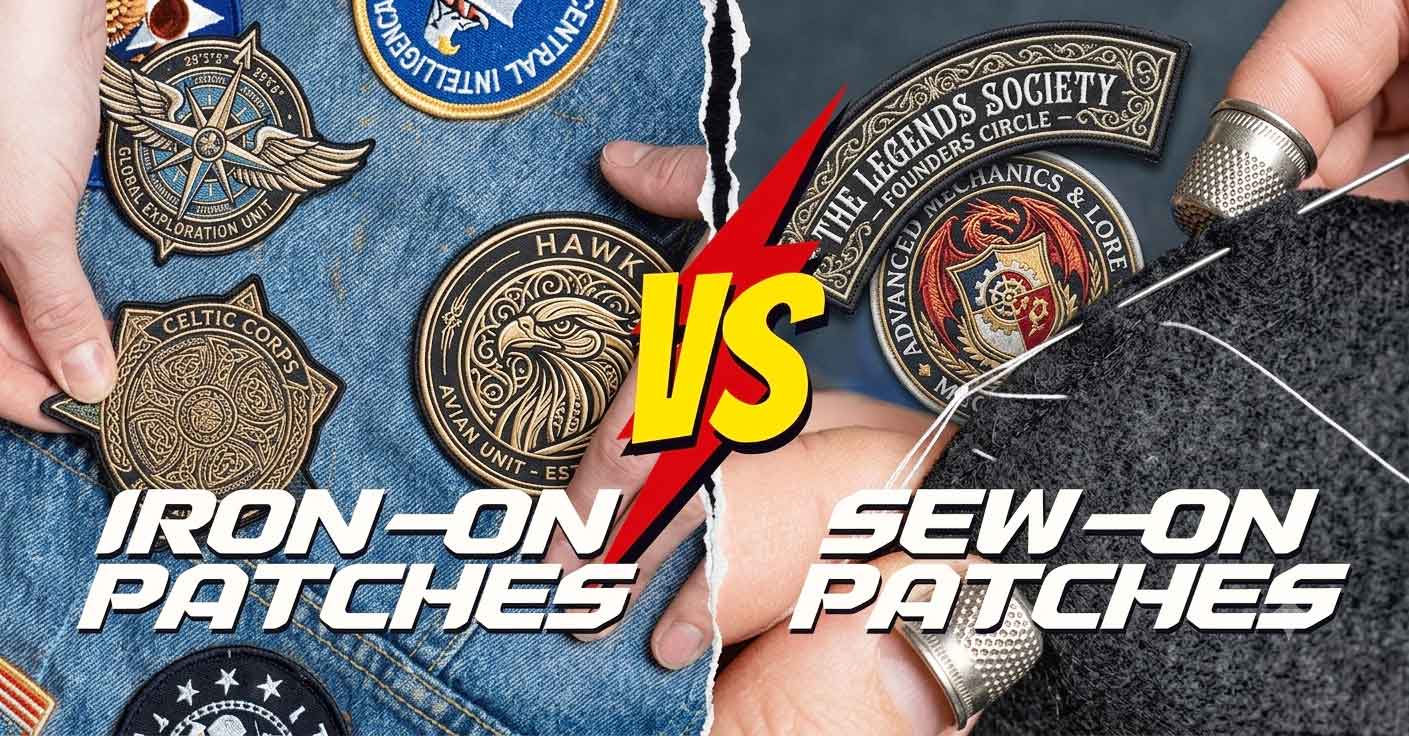
What Are Iron On Patches and Sew On Patches?
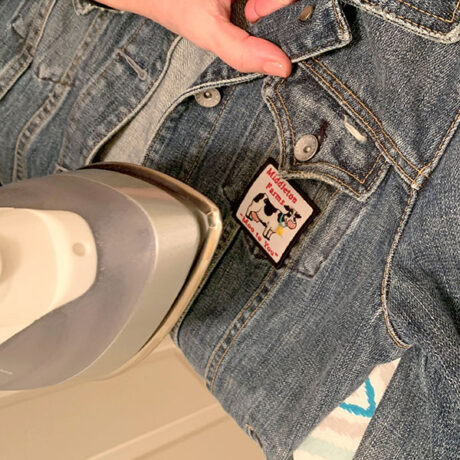
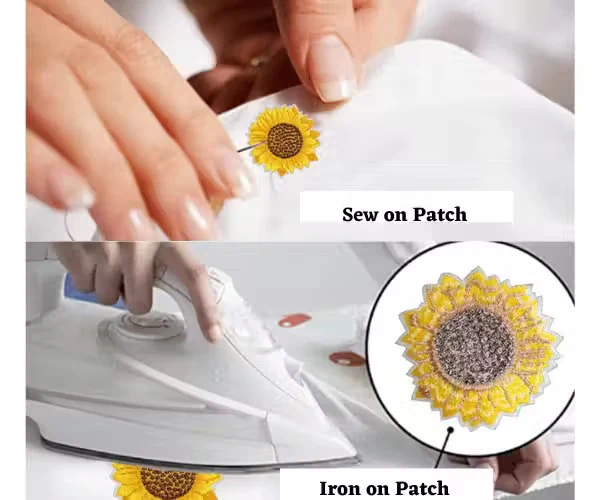
Iron on patches come with a heat-activated adhesive layer pre-applied to the back of the patch. They are attached using a standard household iron set to medium-high heat. The adhesive melts when heated and bonds with fabric fibers as it cools, creating a permanent attachment without any sewing required. The entire application process takes approximately two to three minutes per patch, making iron on patches a fast and beginner-friendly option.
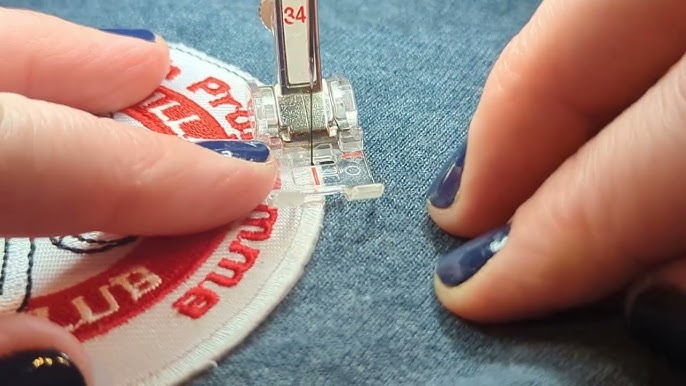
Sew on patches, on the other hand, have no adhesive backing whatsoever. They are attached using a needle and thread, either by hand or with a sewing machine. The thread passes through the patch border and into the fabric, creating a mechanical bond that is extremely durable. Application takes approximately ten to twenty minutes depending on patch size and requires basic sewing knowledge. Both iron on patches and sew on patches can be fully customized in shape, size, color, design, and border style. When you order from a professional manufacturer like Custom Panda, you simply specify which backing you prefer, and the patches will be produced accordingly.
Key Features of Iron On Patches and Sew On Patches
Iron On Patches
Speed
Iron on patches can be applied in under five minutes from start to finish. This makes them ideal for last-minute projects, large batch applications, and situations where time is limited.
No Sewing Required
Anyone who can use a household iron can apply an iron on patch. No needle threading, no stitch learning, and no sewing machine are needed. This accessibility makes them popular for schools, teams, and craft projects.
Clean Backside
Because there is no thread passing through the fabric, the inside of a jacket or bag remains smooth and free of visible stitching. This is important for items where the interior lining may be visible.
Flat Application
Iron on patches lie completely flat against the fabric surface. There is no risk of puckering or uneven stitching lines that can occur with hand sewing.
Limitations
Iron on patches require flat, heat-resistant fabrics like cotton, denim, or canvas. They cannot be applied to nylon, leather, puffy jackets, or curved surfaces. They are also difficult to remove once applied.
Sew On Patches
Permanent Durability
A properly sewn patch can last the entire lifetime of the garment. Iron on patches may survive twenty to fifty washes, but sew on patches can last for decades. If a stitch breaks, you can simply add another one.
Universal Fabric Compatibility
Sew on patches work on literally any fabric that can accept a needle. This includes delicate silk, stretchy knits, puffy winter jackets, leather, nylon backpacks, mesh, and curved hat fronts. Heat sensitivity is never a concern.
Removable and Reusable
Unlike iron on patches, sew on patches can be removed cleanly by cutting the threads. The patch itself remains undamaged and can be sewn onto a different jacket, bag, or hat. This is valuable for collectors and anyone who likes to rearrange their patches.
Curved Surface Application
Sew on patches can be attached to curved surfaces like baseball caps, rounded backpack shoulders, or the curved knee area of pants. The thread follows the curve, while iron on patches require perfectly flat surfaces.
Repairable
If a corner of a sew on patch starts to come loose, you can add a few more stitches to secure it. If an iron on patch starts to peel, your only options are to glue it back down or sew it anyway.
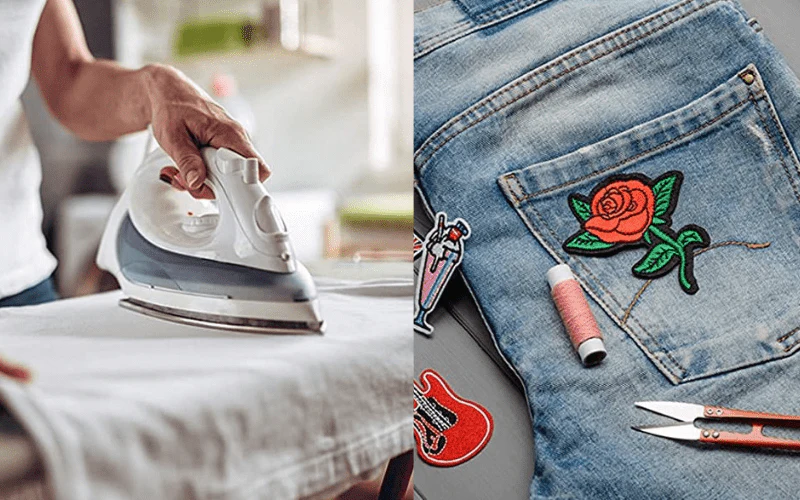
Feature Comparison Table
| Feature | Iron On Patches | Sew On Patches |
|---|---|---|
| Application Time | 2-3 minutes | 10-20 minutes |
| Skill Required | None (just an iron) | Basic sewing knowledge |
| Visible Threads Inside Garment | No | Yes |
| Flatness on Fabric | Completely flat | May have slight puckering if not sewn evenly |
| Durability | 20-50 washes | Lifetime of garment |
| Fabric Compatibility | Flat, heat-resistant fabrics only | Any fabric that accepts a needle |
| Curved Surface Application | Not possible | Possible |
| Removable and Reusable | No (permanent bond) | Yes (cut threads) |
| Repairable | No (must sew if fails) | Yes (add more stitches) |
Common Types of Iron On Patches and Sew On Patches
Almost any patch style can be made with either backing type. The table below outlines the most common types available from Custom Panda.
| Patch Type | Description | Best Backing Recommendation |
|---|---|---|
| Embroidered Patches | Made by stitching colored threads onto a fabric base, creating a textured, three-dimensional design. Most traditional and widely recognized patch style. | Both iron on and sew on work well |
| Woven Patches | Uses thinner threads and tighter stitching than embroidery. Allows for much finer detail, smaller text, and more intricate logos. | Both work well; smooth surface helps iron on adhesion |
| PVC Patches | Made from soft, flexible polyvinyl chloride material. Rubber-like texture, completely waterproof, and extremely durable. | Both work; iron on requires careful temperature control |
| Chenille Patches | Features a fuzzy, tufted surface made from thick yarn. Commonly used for varsity letters and sports logos. | Sew on preferred, especially for curved surfaces |
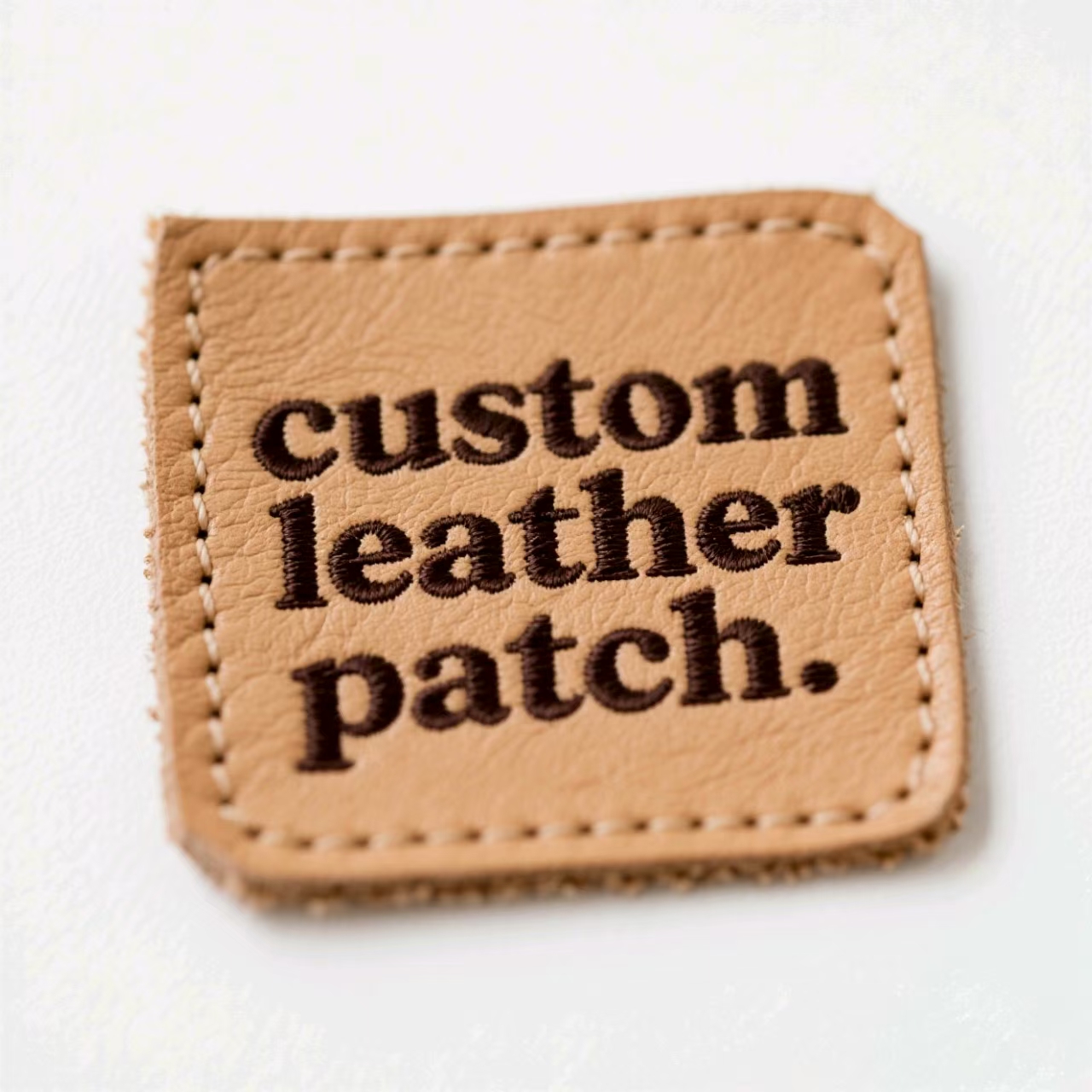
| Leather Patches | Offers a premium, rustic look for jeans, hats, bags, and workwear. | Sew on for curved items; iron on for flat surfaces |
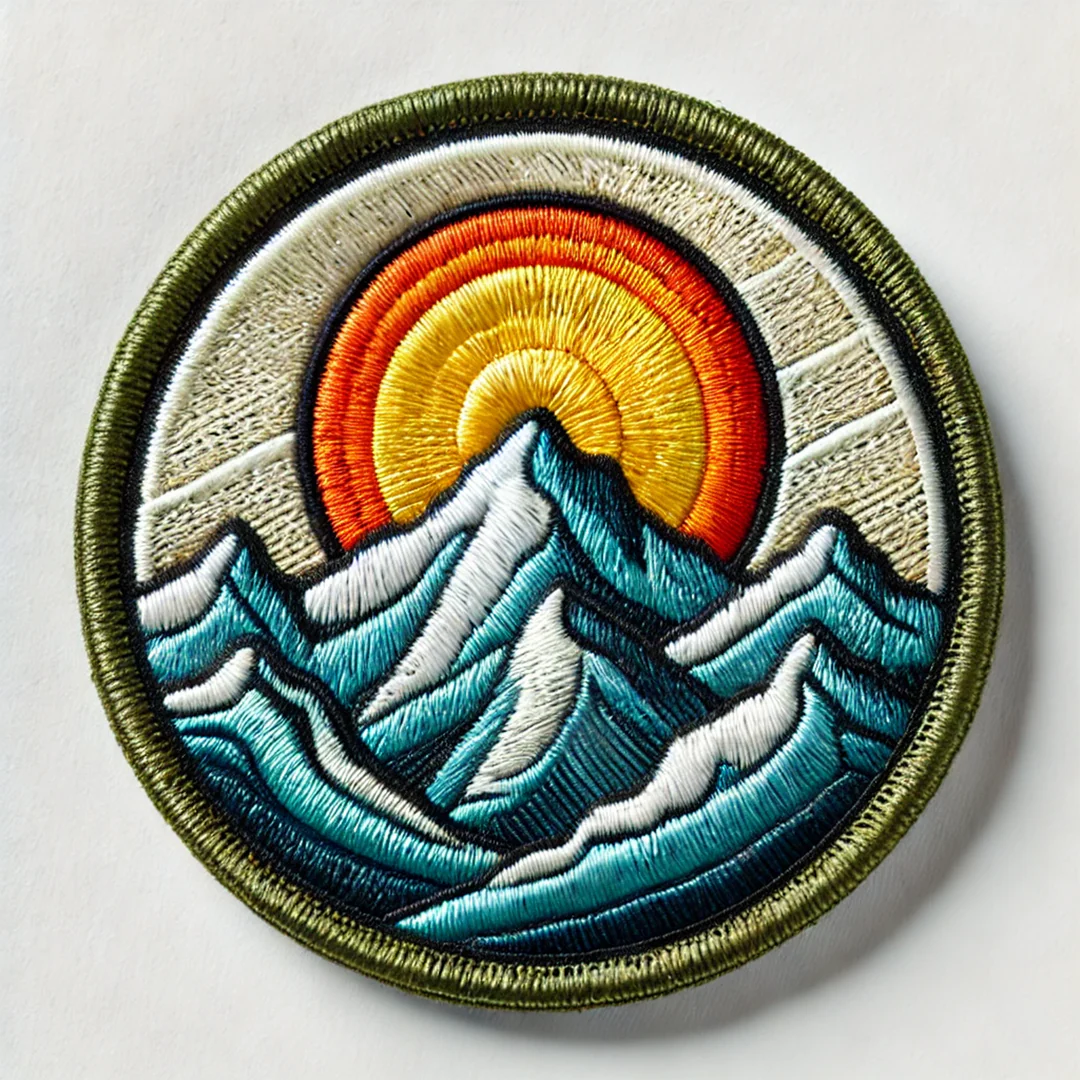
Embroidered Patches
Made by stitching colored threads onto a fabric base, creating a textured, three-dimensional design. Most traditional and widely recognized patch style.
Both iron on & sew on
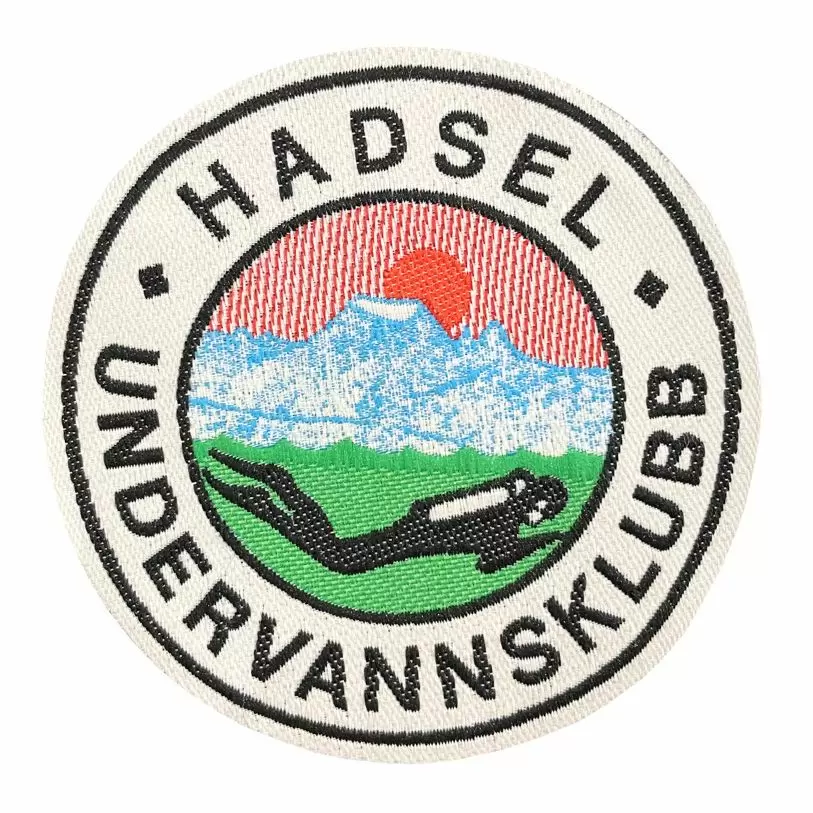
Woven Patches
Uses thinner threads and tighter stitching than embroidery. Allows for much finer detail, smaller text, and more intricate logos.
Both work well; smooth surface helps iron on
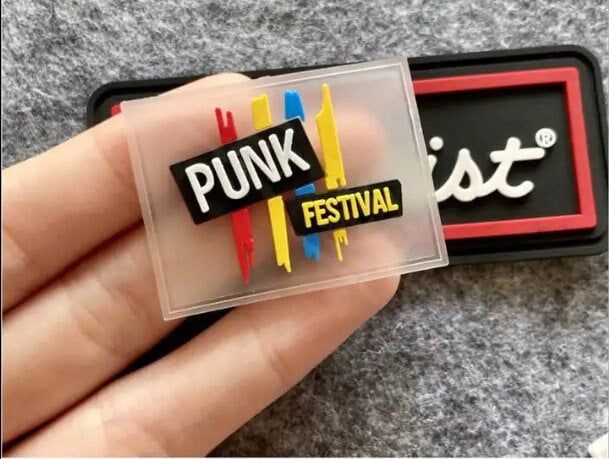
PVC Patches
Made from soft, flexible polyvinyl chloride material. Rubber-like texture, completely waterproof, and extremely durable.
Iron on requires temp control
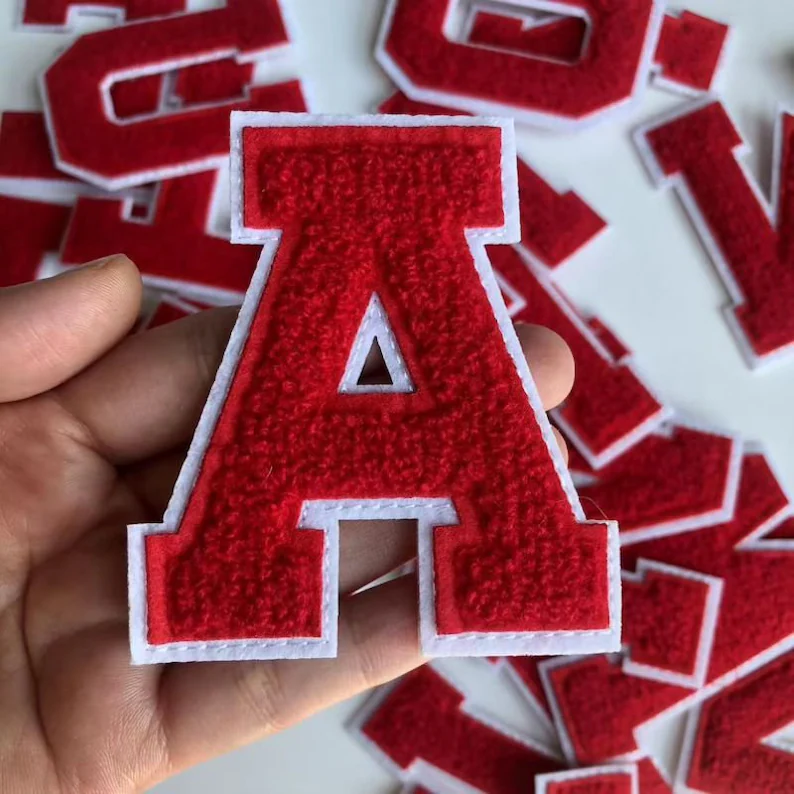
Chenille Patches
Features a fuzzy, tufted surface made from thick yarn. Commonly used for varsity letters and sports logos.
Sew on preferred for curves
Leather Patches
Offers a premium, rustic look for jeans, hats, bags, and workwear.
Sew on for curved items; iron on for flat
How Iron On Patches and Sew On Patches Work: Heat vs Thread
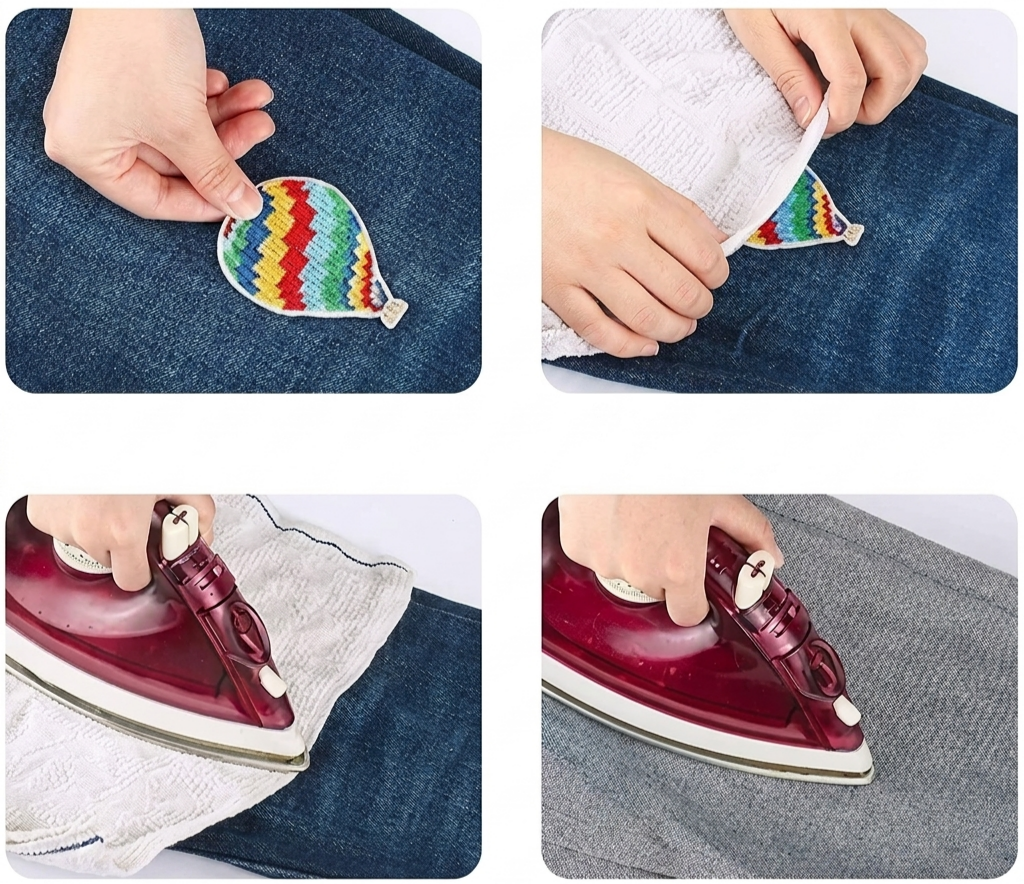
How Iron On Patches Work?
Step 1: Heat Preparation
Set a household iron to medium-high heat, approximately 150 to 180 degrees Celsius or 300 to 350 degrees Fahrenheit. Do not use steam. The iron must be completely dry.
Step 2: Positioning
Place the patch on the fabric in the desired position. Cover the patch with a thin cloth such as a cotton pillowcase or pressing cloth to protect the surface from direct heat.
Step 3: Adhesive Activation
Press the iron firmly onto the covered patch for 30 to 40 seconds. Do not move the iron around. The heat melts the thermoplastic adhesive on the back of the patch.
Step 4: Bonding
The melted adhesive flows into the gaps between the fabric fibers. Remove the iron and allow the patch to cool completely for one to two minutes. As the temperature drops, the adhesive solidifies with the fabric fibers embedded inside, creating a permanent mechanical lock.
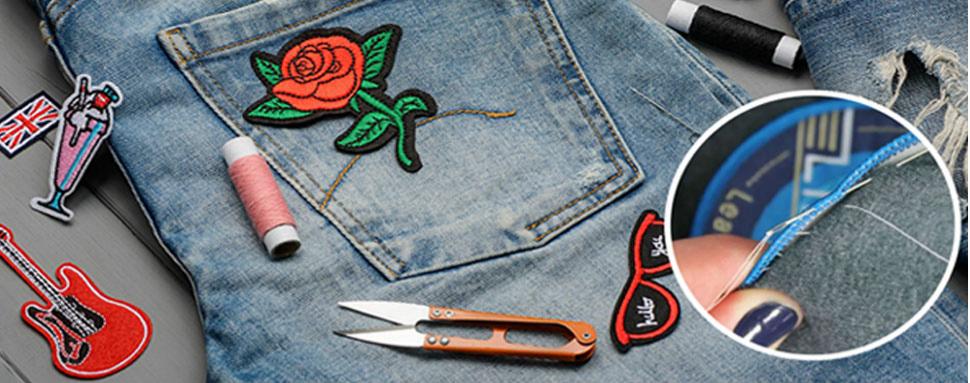
How Sew On Patches Work?
Step 1: Positioning
Place the patch on the fabric and temporarily hold it in place using pins, fabric tape, or a temporary adhesive spray. This prevents the patch from shifting while you sew.
Step 2: Threading
Thread a needle with a single or double strand of thread. The thread color should either match the patch border or be deliberately contrasting for decorative effect.
Step 3: Stitching
Pass the needle through the patch border and the fabric underneath, then back up through both layers. Repeat this process around the entire perimeter of the patch. Common stitches include whip stitch, running stitch, and blanket stitch.
Step 4: Securing
Once you have stitched all the way around, tie a knot at the back of the fabric to secure the thread. If using a sewing machine, backstitch at the beginning and end to lock the thread in place. The thread creates a physical barrier that prevents the patch from moving or separating from the fabric.
Advantages of Iron On Patches and Sew On Patches
Advantages of Iron On Patches
Speed
Applied in under five minutes per patch. Perfect for large batches or last-minute projects.
No Skill Required
Anyone who can use an iron can apply iron on patches. No sewing experience needed.
Clean Interior
No visible threads on the inside of the garment. Smooth and professional appearance.
Low Cost
No need to purchase needles, thread, or sewing machines. Only a household iron is required.
Consistent Results
Every patch sits at exactly the same flatness and position without uneven stitching.
Advantages of Sew On Patches
Extreme Durability
Can last the entire lifetime of the garment. Survives hundreds of machine washes.
Universal Fabric Compatibility
Works on leather, nylon, puffy jackets, stretchy knits, delicate silks, and curved surfaces.
Removable and Reusable
Can be removed cleanly by cutting threads. The patch can be sewn onto a different item later.
Repairable
Loose corners or edges can be fixed with a few additional stitches.
No Heat Damage
Safe for heat-sensitive fabrics that would melt or shrink under an iron.
Key Factors to Consider When Choosing Iron On Patches or Sew On Patches
| Factor | Iron On Patches | Sew On Patches |
|---|---|---|
| Fabric Type | Requires flat, heat-resistant fabrics like cotton, denim, canvas, and polyester blends | Works on any fabric that can accept a needle, including nylon, leather, fleece, and stretchy knits |
| Washing Frequency | Survives 20 to 50 machine washes before peeling | Lasts for years of regular washing; hundreds of washes |
| Surface Shape | Requires completely flat surfaces | Works on flat or curved surfaces like baseball caps and rounded bags |
| Permanence | Essentially permanent; difficult to remove without damage | Can be removed cleanly and reused elsewhere |
| Skill Level | Only requires a household iron | Requires needle, thread, and hand sewing patience or sewing machine |
| Application Quantity | Ideal for applying dozens or hundreds of patches quickly | Better for smaller quantities or individual items |
| Heat Sensitivity | Cannot be used on heat-sensitive fabrics | Safe for all fabrics; no heat required |
Iron On Patches vs Sew On Patches: Which One Is Right for You?
| Scenario | Iron On Patches | Sew On Patches |
|---|---|---|
| You need a quick application with no sewing | Best choice | Not recommended |
| The fabric is flat and heat-resistant (cotton, denim, canvas) | Best choice | Works but takes longer |
| The fabric is heat-sensitive, stretchy, puffy, or textured | Not recommended | Best choice |
| The surface is curved (baseball cap, rounded backpack) | Not recommended | Best choice |
| The item will be machine washed frequently | Not recommended | Best choice |
| You want a clean interior with no visible threads | Best choice | Shows threads inside |
| You want the ability to remove and reuse the patch later | Not possible | Best choice |
| You are applying patches in large quantities for a team or event | Best choice | Time-consuming |
| You do not mind spending time sewing or have a sewing machine | Works but sewing not required | Best choice |
Hybrid Approach
Many people use a combination method. Apply the iron on patch first to hold it perfectly in place, then add a few stitches around the edge for extra security. This gives you the easy positioning of iron on backing with the long-term durability of sewing.
Why Choose Custom Panda?
Custom Panda specializes in high-end, customized products including custom pins, custom patches, and custom labels. The company is designed to bring your ideas to life with quality and precision.
Premium Quality
High-quality custom patches tailored perfectly to your brand needs. Every patch is made with careful attention to detail and high-grade materials.
Factory Direct Pricing
Save up to 30 percent on your custom orders with competitive direct pricing. No middlemen or retail markups.
Worldwide Shipping
Reliable global delivery ensuring your custom products arrive in just 5 to 7 days.
No Minimum Order
Complete customization available for any scale of business, from small batches of 10 patches to large bulk orders of thousands.
Free Digital Proof
Review and approve your custom design with a free digital proof provided within 12 hours of submitting your artwork.
Fast Turnaround
Extreme efficiency with quick 2 to 3 days production and rapid dispatch.
Whether you need iron on patches for quick application or sew on patches for permanent durability, Custom Panda delivers both options with exceptional craftsmanship. From fabric type to border style to backing choice, Custom Panda makes your custom patch project seamless, affordable, and hassle-free.
Get your custom patches made right. Start your order with Custom Panda today.
FAQ About Iron On Patches and Sew On Patches
Q1: Can I sew an iron on patch if the adhesive fails?
Yes, absolutely. If an iron on patch starts to peel, you can simply stitch it down just like a sew on patch. The needle will pass through the adhesive layer without any problem. Many people sew around the edges of their iron on patches from the beginning to prevent future peeling.
Q2: Can I remove and reuse iron on patches?
No, not easily. Once an iron on patch has been heat-set, the adhesive forms a permanent bond. Attempting to peel it off usually damages the fabric or leaves sticky residue. If you want removable patches, order sew on patches from the start.
Q3: Which lasts longer: iron on or sew on patches?
Sew on patches last significantly longer. A well-sewn patch can last the entire lifetime of the garment, which might be 10 to 20 years. Iron on patches typically survive 20 to 50 washes before the adhesive begins to fail. However, sewing down an iron on patch gives you the best of both worlds.
Q4: Can I apply iron on patches to backpacks or hats?
Backpacks made of nylon or polyester can sometimes work with low heat and a pressing cloth, but many backpack materials are heat-sensitive. Hats are not recommended for iron on patches because the curved front prevents even pressure. For hats, sew on patches are the only reliable method.

