
th
How To Choose The Right Custom Patch for Your Hat?
What Are Custom Patches for Hats?
Custom patches for hats are detachable or attachable emblems made from materials such as fabric, PVC, leather, or chenille. They are designed to be affixed to headwear for purposes of personalization, branding, identification, or decoration. Unlike direct embroidery which is sewn permanently into the hat fabric, custom patches are produced separately and then attached using methods such as sewing, iron-on adhesive, Velcro, or sticker backing. This separation allows for greater flexibility in design, material choice, and interchangeability. Custom patches have become increasingly popular across diverse fields including streetwear fashion, corporate branding, military uniforms, sports teams, and personal hobbyist communities.
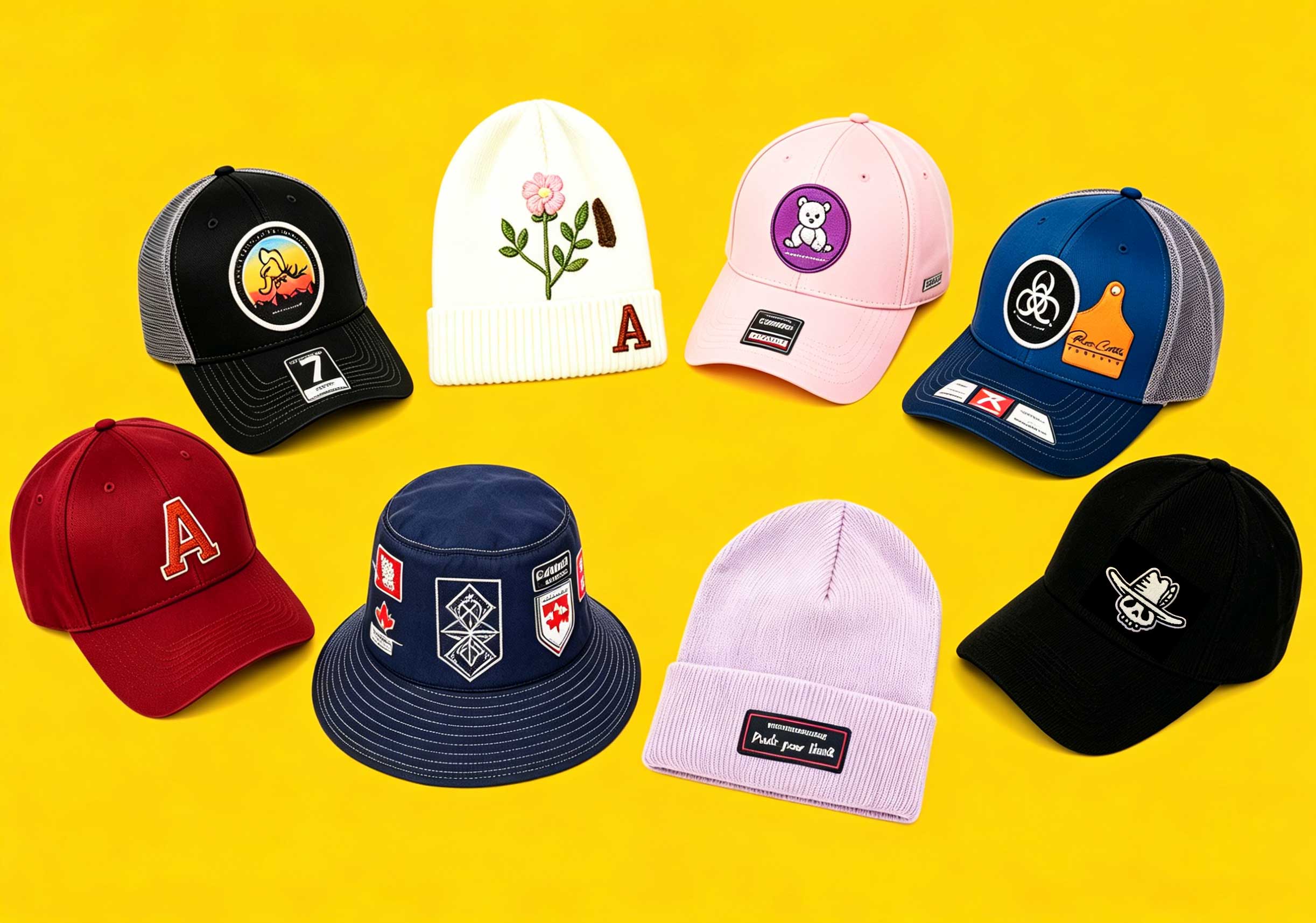
The Function of Custom Patches on Hats
Understanding the function of custom patches helps explain why they have become such a widely adopted accessory. Their roles extend far beyond simple decoration.
Branding and Identity is one of the most common functions. Businesses, organizations, and teams use custom patches to display company logos, team emblems, or club names on hats. A hat with a branded patch turns every wearer into a walking advertisement or a visible member of a group. This function is particularly valuable for trade shows, promotional events, and employee uniforms.
Personal Expression represents another major function. Individuals use custom patches to showcase their hobbies, beliefs, artistic preferences, or humorous messages. A patch featuring a favorite band, a political slogan, or an original art design allows the hat owner to communicate identity without saying a word. In the streetwear and skateboarding communities, custom patches have become a staple for creating unique, one-of-a-kind headwear.
Uniform and Role Identification is a practical function in professional and organizational settings. Security personnel, military units, emergency responders, and sports teams often wear hats with patches that indicate rank, department, or specific job function. A patch can instantly communicate whether someone is a coach, a captain, a supervisor, or a specialist. This visual shorthand improves communication and authority recognition in fast-moving environments.
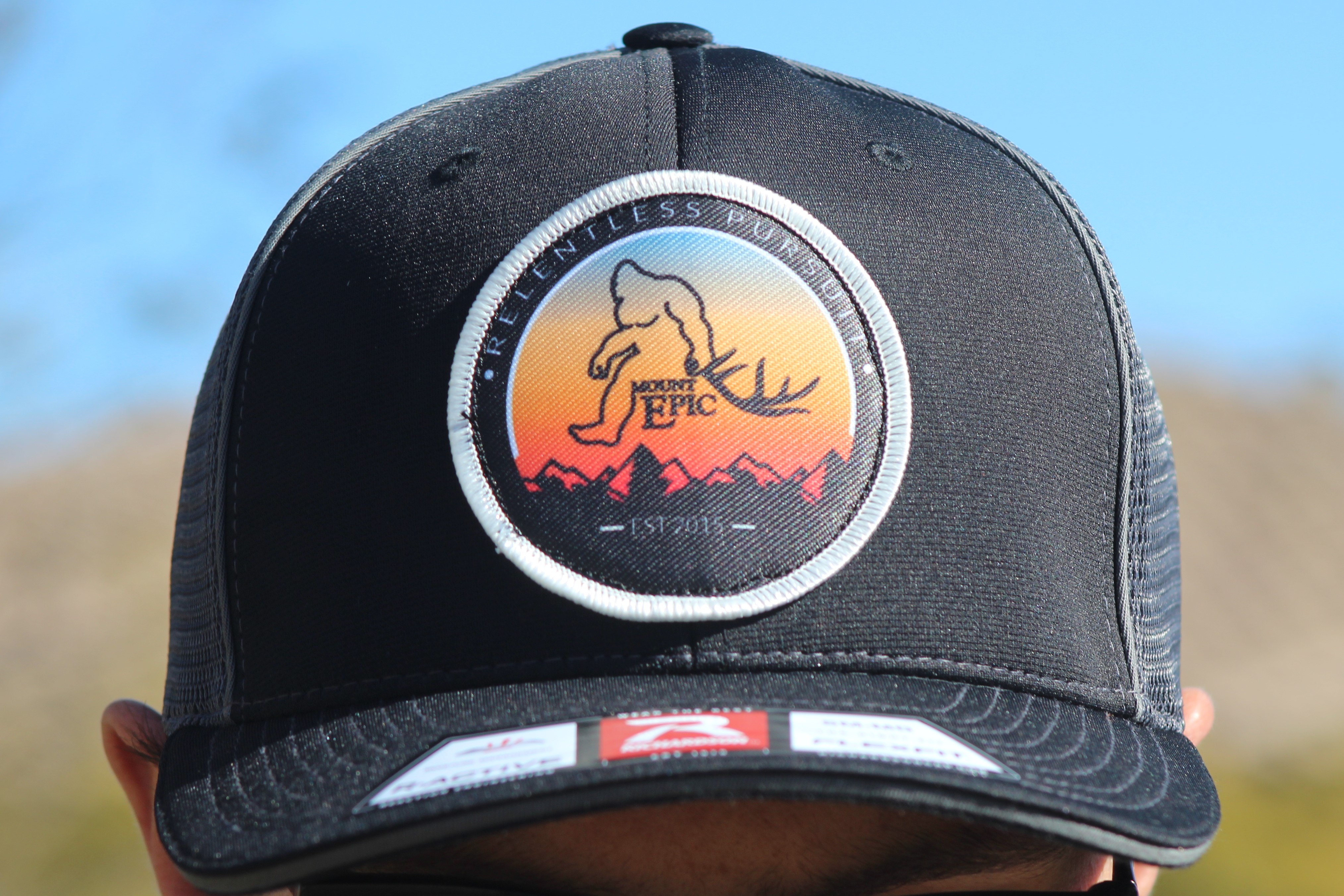
Covering Imperfections is a less discussed but highly practical function. Hats that have stains, small holes, or unwanted previous embroidery can be refreshed with a well-placed custom patch. Instead of discarding a worn but beloved hat, owners can extend its life and improve its appearance by covering flaws with a creative patch design.
Commemoration and Events represent a function tied to specific moments in time. Organizations and groups produce custom patches to mark reunions, charity walks, product launches, anniversaries, or conferences. Attendees wear these patches on hats as lasting souvenirs that trigger memories years later. A patch from a special event carries emotional value that goes beyond its physical form.
Interchangeable Messaging is a modern function made possible by Velcro-backed patches. A single hat can host different patches for different occasions. A worker might wear a professional logo patch during business hours and swap it for a casual or humorous patch after work. Military and tactical users frequently use interchangeable patches to indicate different operational roles or unit assignments without owning multiple hats.
Key Features of Custom Hat Patches
Material Variety is perhaps the most significant feature. Custom patches can be made from embroidered thread, PVC rubber, genuine or synthetic leather, woven fabric, chenille yarn, and even metal or printed materials. Each material offers a different look, feel, and durability profile. Embroidered patches provide a classic textured appearance, while PVC patches deliver a modern, waterproof, and slightly three-dimensional look. Leather patches appeal to vintage and premium aesthetics, and woven patches excel at reproducing fine details and gradients.
Attachment Options determine how a patch is secured to a hat. Sew-on patches offer the most permanent and secure attachment, making them ideal for hats that will undergo heavy use or frequent washing. Iron-on patches use heat-activated adhesive for quick attachment, though curved hat surfaces can reduce bond reliability. Velcro-backed patches use hook-and-loop fasteners, allowing easy removal and interchangeability. Adhesive or sticker-backed patches provide a temporary solution suitable for sampling or short-term wear.
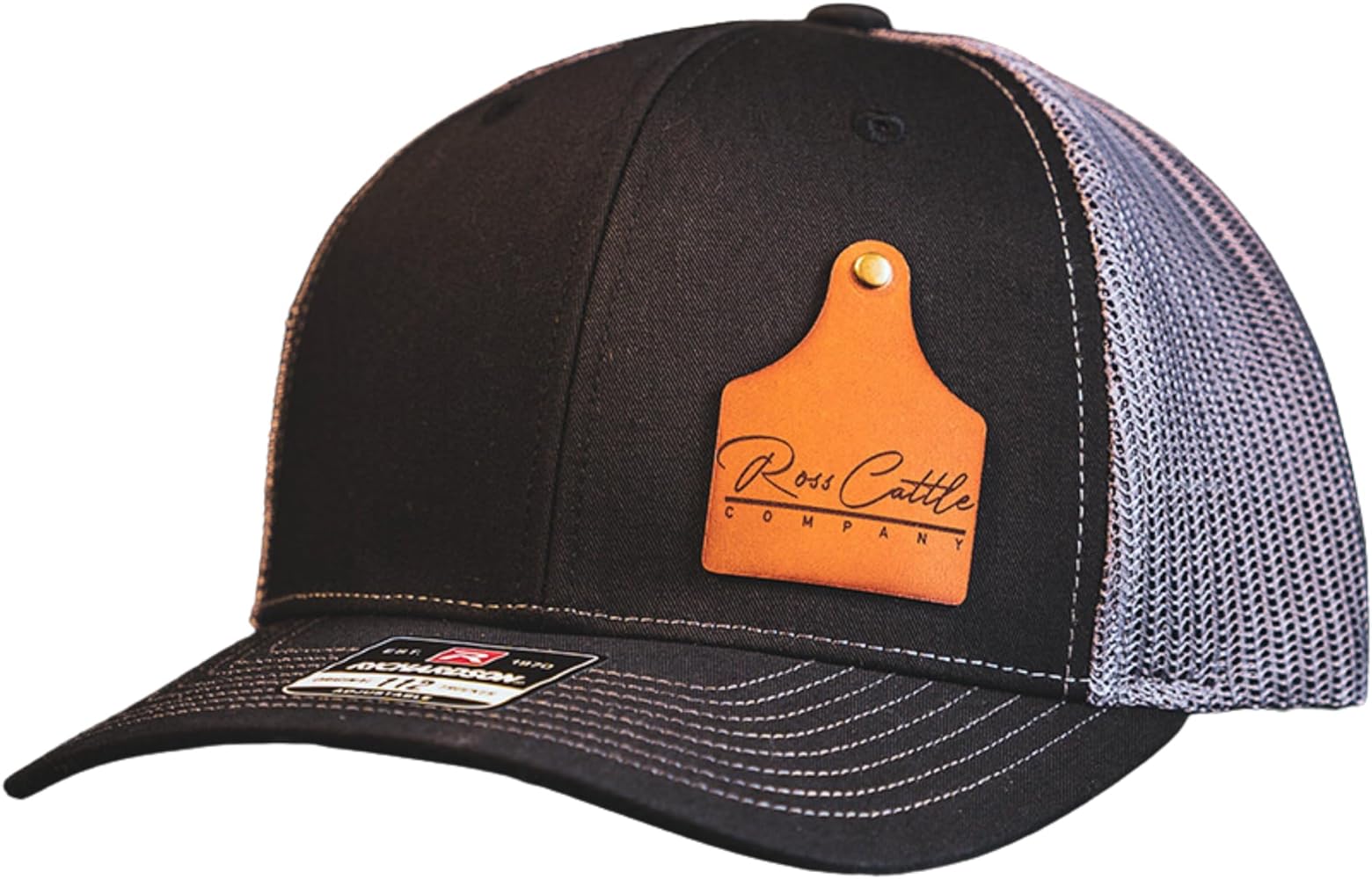
Shape and Border options add another layer of customization. Standard shapes such as circles, squares, and shields are common, but custom die-cut shapes that follow the exact outline of a design are increasingly popular. Borders can be finished with a merrow edge, a tight overlock stitch that creates a raised border, or a laser-cut edge that lies flat and clean.
Size Flexibility allows patches to range from tiny logos of one to two inches to large front-center designs of four to five inches. Smaller patches work well on the side or back of a hat, while larger patches naturally draw attention to the front crown.
Durability Level varies significantly by material and construction. High-quality embroidered patches with dense stitching and UV-resistant thread can withstand years of sun exposure and occasional washing. PVC patches are waterproof and scratch-resistant, making them excellent for outdoor work hats. Properly cared patches commonly last three to five years or longer on regularly worn hats.
Backing Types refer to the material layer behind the visible design. Plastic backings provide stiffness and shape retention. Paper backings are lighter but less durable. Heat-seal backings enable iron-on attachment. Hook-and-loop backings allow for Velcro mounting. The choice of backing affects both attachment method and the patch's feel against the hat's surface.
Main Types of Custom Patches for Hats
Most traditional and widely recognized. Created by stitching colored threads onto a fabric base, producing a raised, textured surface. Excellent durability and classic aesthetic.
Modern alternative made from soft, flexible polyvinyl chloride. Waterproof, scratch-resistant, and capable of complex shapes. Great for outdoor & tactical gear.
Premium, rugged, vintage vibe. Typically embossed or debossed. Pairs well with wool hats, denim caps, and premium cotton twill.
Fine threads woven tightly together. Allows fine details, small text, gradients. Lies flat and smooth — ideal for beanies and fitted caps.
Fuzzy, velvety texture from thick yarn. Sporty, bold letters, mascots. Popular on varsity-style hats and casual beanies.
Each type brings a unique character to headwear, from classic embroidery to modern PVC designs.
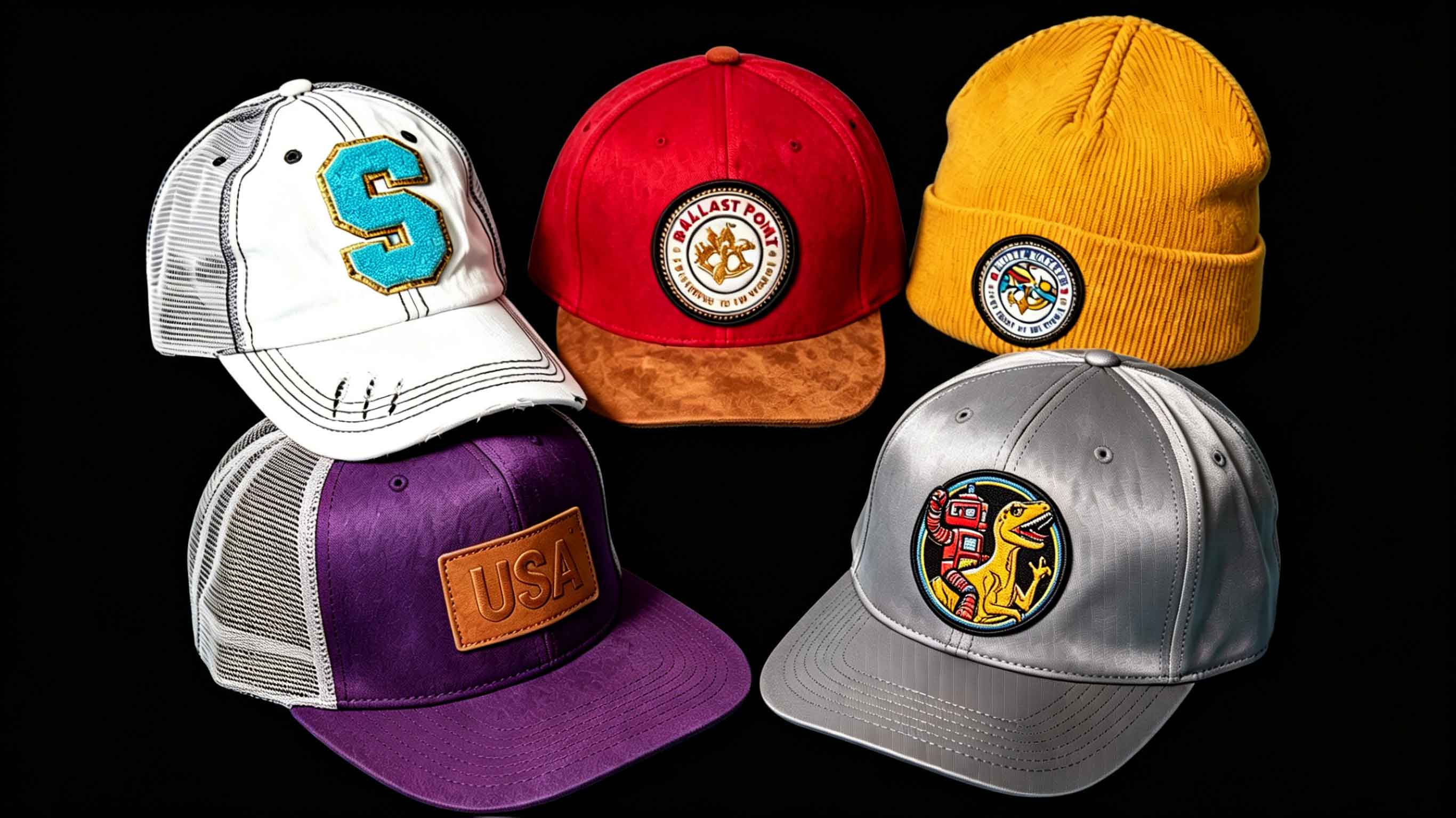
How to Choose the Right Patches for Your Hat?
Match patch type to hat material and style. Baseball caps and trucker hats, with their structured front panels, work best with embroidered or PVC patches that hold shape well. Beanies and other knit hats require lighter, more flexible options such as woven or chenille patches. Leather patches pair naturally with wool or denim hats, where the vintage material match enhances overall aesthetics.
Choose attachment based on usage frequency and permanence. For hats that will see daily wear, harsh conditions, or frequent washing, sew-on patches provide the most reliable long-term attachment. For users who want to swap designs regularly, Velcro backing offers convenience without permanent commitment. Iron-on patches work in a pinch but rarely achieve full adhesion on curved hat surfaces. Adhesive backings are suitable only for temporary or sample use.
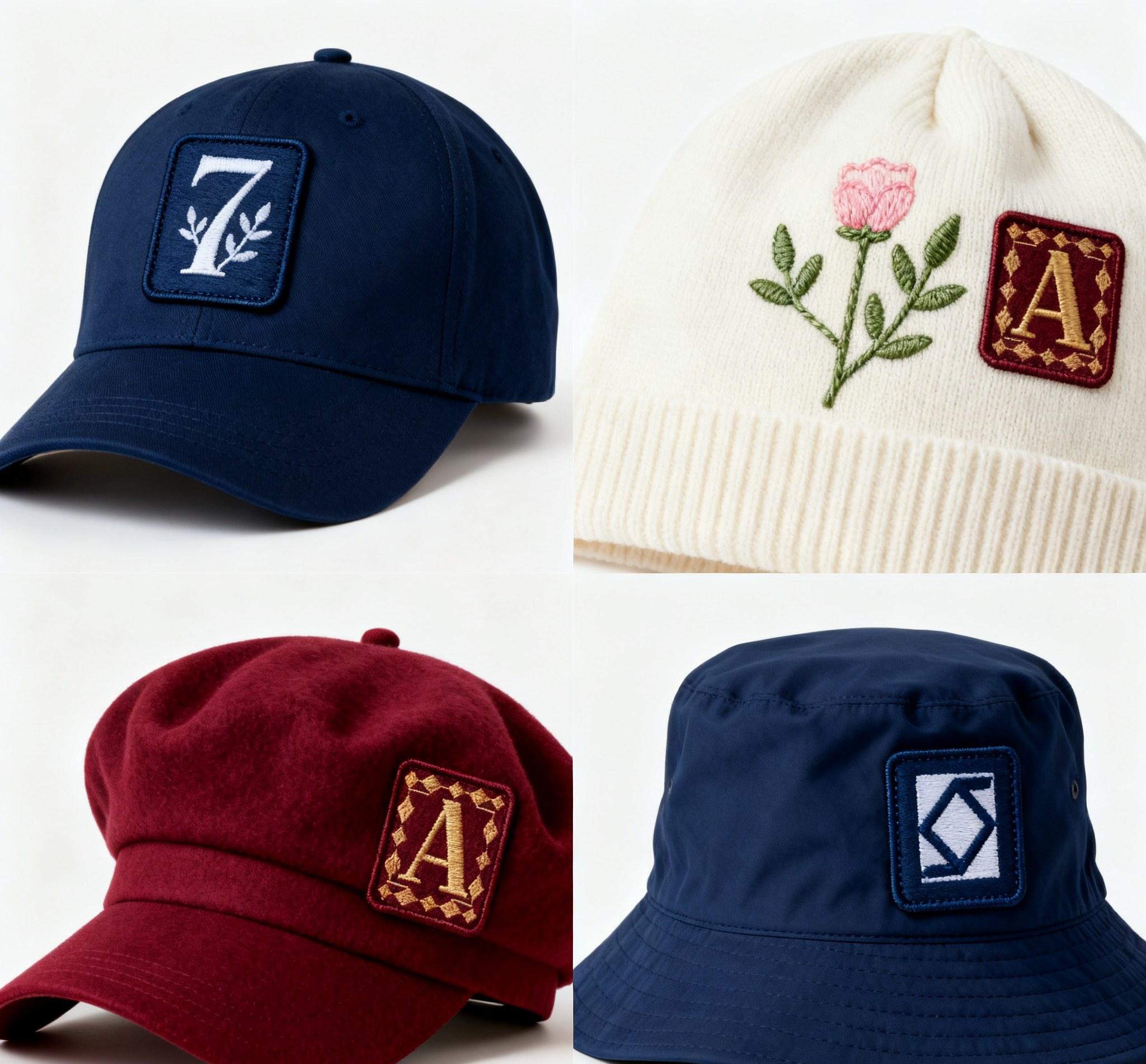
Consider size and placement carefully. The front center panel of a hat typically accommodates patches of two to four inches in diameter. Side placements, such as above the temple or on the side panels, work best with smaller patches of one to two inches. The back closure area can host patches of two to three inches, often used for websites, slogans, or small logos. A patch that is too large will curl at the edges. A patch that is too small may lack visual impact.
Evaluate durability needs based on environment. Outdoor workers, hikers, and tactical users should prioritize PVC patches or heavy embroidery with UV-resistant thread. Casual fashion users have more freedom to choose woven patches or leather options that prioritize aesthetics over extreme durability. Hats worn indoors or only occasionally can accommodate almost any patch type.
Balance design complexity with manufacturing cost and feasibility. Simple logos with solid colors and bold shapes translate perfectly to embroidery at reasonable cost. Designs with fine text, small details, or gradient color transitions require woven construction to maintain legibility. Very complex designs may exceed the practical limits of patch production and should be simplified.
Conclusion
Custom patches offer an affordable, versatile, and creative way to personalize hats for branding, identification, self-expression, or commemoration. Understanding the definition, function, key features, main types, and selection criteria enables buyers to make informed decisions that balance aesthetics, durability, and cost. The right patch matches hat style, usage frequency, and design goals while fitting within budget and production timelines. Before committing to a large order, always request a sample to verify quality, sizing, and attachment compatibility on your specific hat model.
Why Choose Custom Panda
Custom Panda specializes in designing and manufacturing high-end customized products including custom pins, custom patches, and custom labels. When it comes to custom patches for hats and other fashion accessories, Custom Panda delivers exceptional value through six core service features.
Premium Quality stands at the foundation of everything Custom Panda produces. High-quality custom patches, badges, and stickers are tailored perfectly to each customer's brand needs. Every patch that leaves the facility undergoes quality inspection to ensure thread tension, color accuracy, and backing integrity meet professional standards.
No Minimum Order removes a common barrier that prevents individuals and small businesses from accessing custom manufacturing. Whether a customer needs ten patches for a personal project or ten thousand patches for a corporate uniform program, Custom Panda accommodates every scale. This flexibility allows sampling before bulk commitment and supports businesses at any growth stage.
Factory Direct Pricing saves customers up to thirty percent compared to dealing with middlemen or retail resellers. By manufacturing in-house and selling directly, Custom Panda eliminates unnecessary markups while maintaining strict quality control. Transparent pricing means no hidden setup fees or surprise charges.
Free Digital Proof is provided within twelve hours of receiving artwork. Customers review and approve their custom design before any material is cut or thread is sewn. This proofing process catches potential issues related to sizing, color matching, and detail reproduction, ensuring the final product matches expectations exactly.
Worldwide Shipping ensures reliable global delivery with typical transit times of five to seven days. Custom Panda partners with established carriers to track shipments and resolve delivery exceptions promptly. No matter where a customer is located, their custom patches arrive safely.
Fast Turnaround means production completes in just two to three days followed by rapid dispatch. For time-sensitive projects such as event merchandise or seasonal promotions, this speed makes Custom Panda a reliable partner. Efficiency never comes at the expense of quality.
Custom Panda specializes specifically in custom patches for hats, plus all kinds of fashionable patches for backpacks, jackets, vests, and other apparel. Every patch type described in this guide - embroidered, PVC, leather, woven, and chenille - is available with any backing option and any size requirement.
Choose Custom Panda today for quality, speed, and affordability united on every hat.
FAQ about Custom Hat Patches
Iron-on patches can be applied to curved hat surfaces, but this method is not recommended for long-term wear. Curved surfaces prevent the iron from applying even pressure and heat across the entire patch, leading to poor adhesion at the edges. For curved hats such as baseball caps, sewing or using Velcro backing provides much more reliable and lasting attachment.
Embroidered patches with sew-on or Velcro backing are the most popular and effective choice for baseball caps. Embroidery offers durability, a classic aesthetic, and sufficient flexibility to conform to the curved front panel. PVC patches also work well for a modern, waterproof alternative. Avoid rigid or thick patches that resist bending, as they will lift away from the hat surface.
With proper attachment and routine care, high-quality embroidered or PVC patches typically last three to five years or longer on regularly worn hats. Factors that reduce lifespan include direct sunlight exposure, frequent machine washing, abrasive contact with other surfaces, and poor initial attachment. Patches on hats worn daily in outdoor environments may show wear sooner, while hats used occasionally can preserve patches for a decade or more.
Spot cleaning is strongly recommended for hats with attached patches. If machine washing becomes necessary, use a cold water gentle cycle and place the hat inside a mesh laundry bag to reduce physical abrasion. For hats with Velcro-backed patches, always remove the patches before washing to prevent damage to both the patch and the fastener. Air dry hats flat away from direct heat, as machine drying can melt adhesives, warp PVC, or shrink embroidered patches.

