
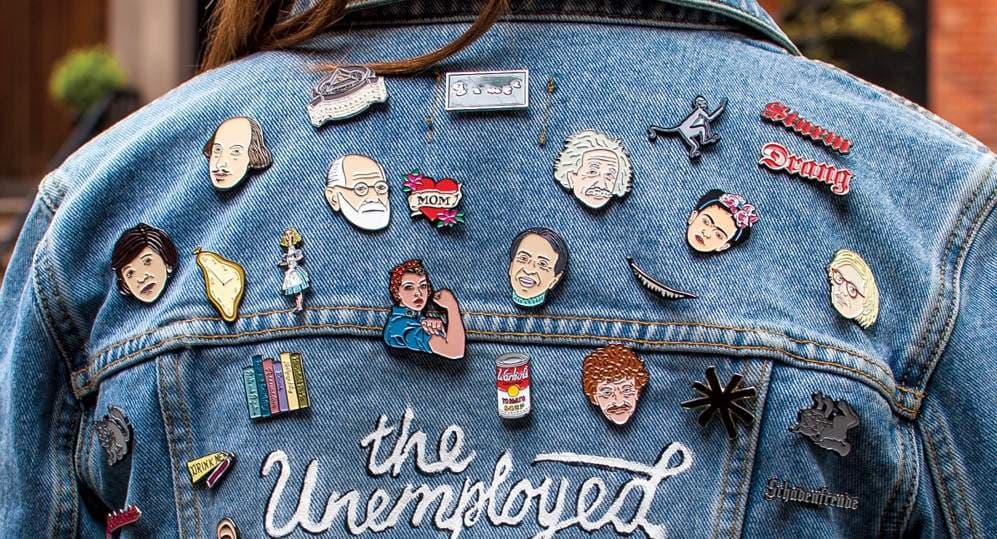
Lapel pins have quietly evolved from a mark of nobility into one of modern fashion’s most versatile accessories. Whether you’re heading to a wedding, a business meeting, or a casual dinner, the right lapel pin can instantly elevate your outfit. But wearing one correctly? That takes a little know-how.
Custom Panda will guide you through everything from the basics of what a lapel pin actually is, to the different types, proper placement, suitable attire, and how to choose the perfect pin for your personality and event. Let us help you master this timeless accessory with confidence and style.
What Are Lapel Pins?
A lapel pin is a small decorative accessory worn on the lapel of a jacket, coat, or blazer. While often associated with formalwear, lapel pins today come in countless styles, materials, and designs—ranging from elegant floral motifs to bold enamel badges, custom logos, and even miniature works of art. Beyond mere decoration, lapel pins can convey affiliation, achievement, humour, or personal values. Think of them as the finishing touch that silently speaks volumes about your attention to detail. Historically, lapel pins have roots in military traditions where they denoted rank and regiment, as well as in political movements where they signalled allegiance. Today, they serve as an accessible tool for personal expression, allowing anyone to add a layer of sophistication or individuality to their outfit without overwhelming the overall look. Whether you choose a simple metal stick pin or a colourful custom enamel design, the lapel pin remains one of the most understated yet powerful accessories in modern menswear and womenswear alike.
Key Features of Lapel Pins
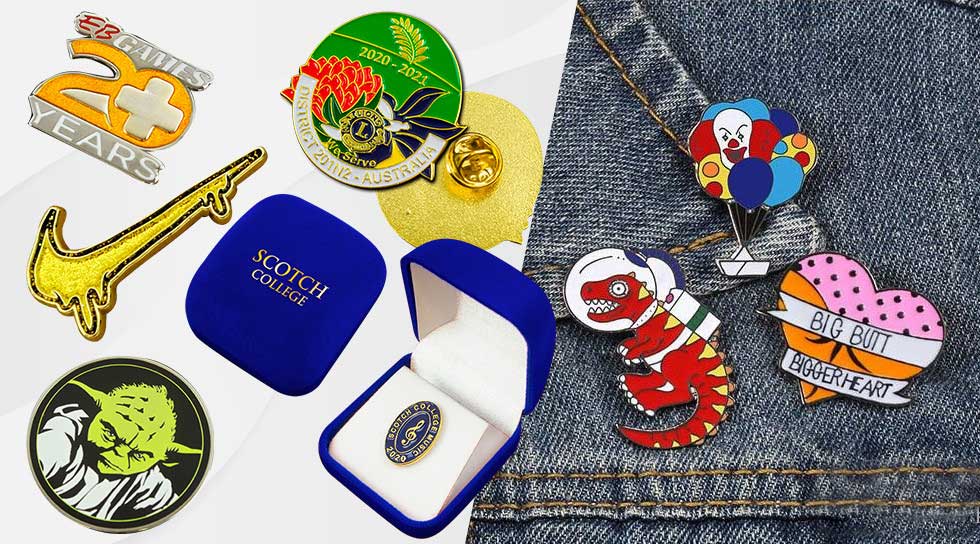
Not all lapel pins are created equal. Understanding the key features that define a quality lapel pin will help you make better choices, whether you are buying for yourself or designing custom pins for an event or brand.
Size is the first feature to consider. Lapel pins typically range from one to three centimetres in width or height. Larger pins, those approaching three centimetres or more, naturally draw attention and can serve as a conversation starter. They work best on heavier fabrics like tweed or wool where the weight of a larger pin will not distort the lapel. Smaller pins, usually around one to one and a half centimetres, add a subtle touch of elegance and are better suited for lightweight suits, fine worsted wools, or silk blends. They also tend to look more appropriate in conservative business settings or formal black-tie events where restraint is valued.
Material is equally important. Common base metals include brass, copper, iron, and zinc alloy. Brass and copper offer a warm, classic feel but may tarnish over time unless sealed. Iron and zinc alloy are often used for enamel pins because they provide a sturdy, lightweight foundation that holds plating well. The finish on the metal can vary from shiny gold or silver to matte black, antique bronze, or rose gold. Each finish creates a different impression: shiny metals feel formal and polished, while matte or antique finishes lend a vintage or casual vibe.
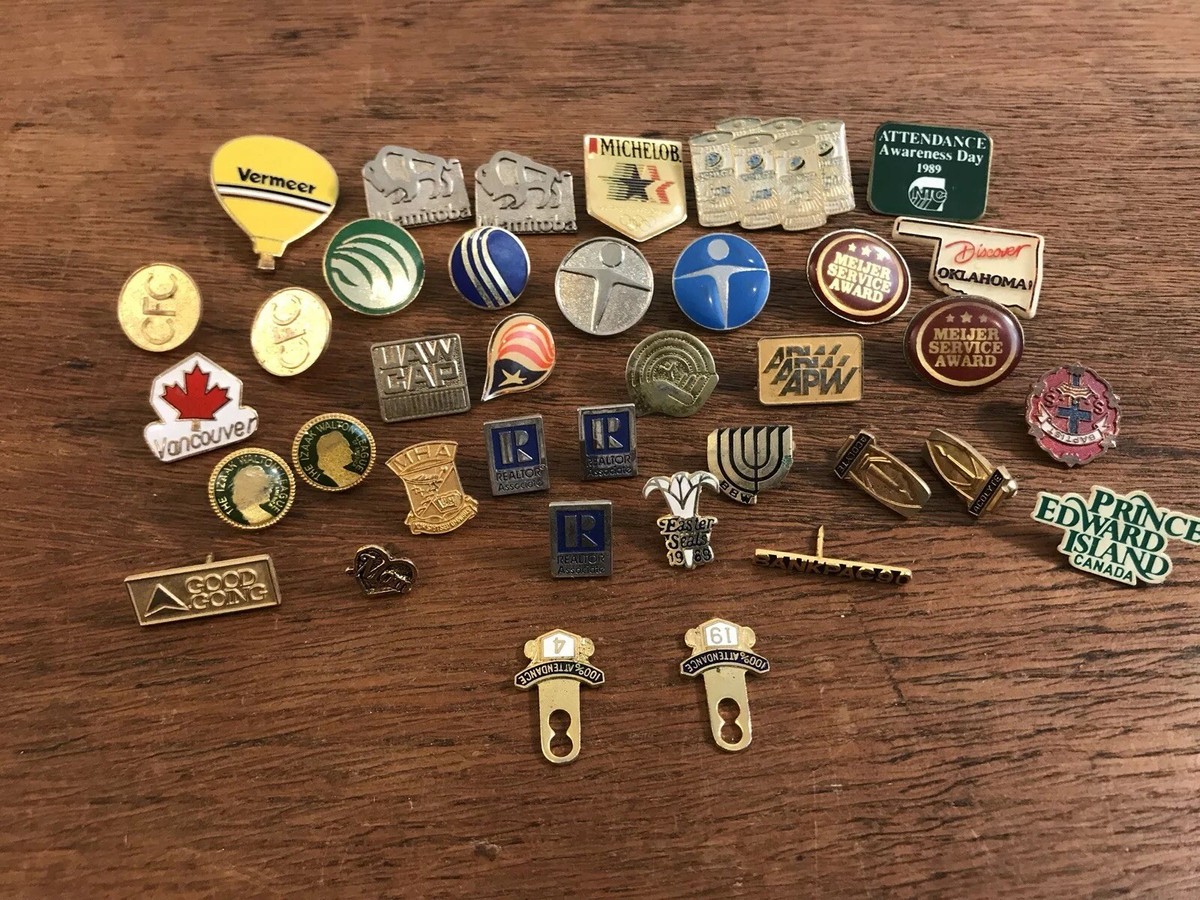
Design Complexity affects both visual appeal and practicality. A simple single-colour logo or geometric shape is clean and versatile. Multi-layered designs with several colours, text, or intricate details require more advanced manufacturing techniques such as screen printing or offset printing. These designs can be visually striking but may be harder to read from a distance. Three-dimensional moulded pins add depth by creating a raised, sculptural effect, making them excellent for mascots, animals, or objects like cars or musical instruments.
Durability is closely tied to the type of enamel used. Hard enamel pins are polished flat so that the surface is completely smooth and level with the metal borders. This process makes them highly resistant to scratches and wear, which is why hard enamel is often the preferred choice for corporate pins or annual awards that need to maintain their appearance over years of use. Soft enamel pins leave the recessed areas slightly lower than the metal lines, creating a textured feel. While they are less scratch-resistant than hard enamel, soft enamel pins offer richer colour depth and a more tactile, handcrafted appearance, making them popular for artistic designs and limited-edition collectibles.
Finally, the Fastening Type, or backing, determines how securely the pin attaches to your clothing. Different backings suit different fabrics and occasions, a topic we will explore in greater detail later in this guide. By understanding these key features, you will be equipped to select a lapel pin that not only looks exceptional but also stays secure and lasts for years.
Main Types of Lapel Pins
To wear lapel pins well, you first need to know what types exist. Each type carries its own history, appropriate use cases, and stylistic implications. Here are the most common ones you will encounter, explained in detail.
Enamel Pins (Soft & Hard)
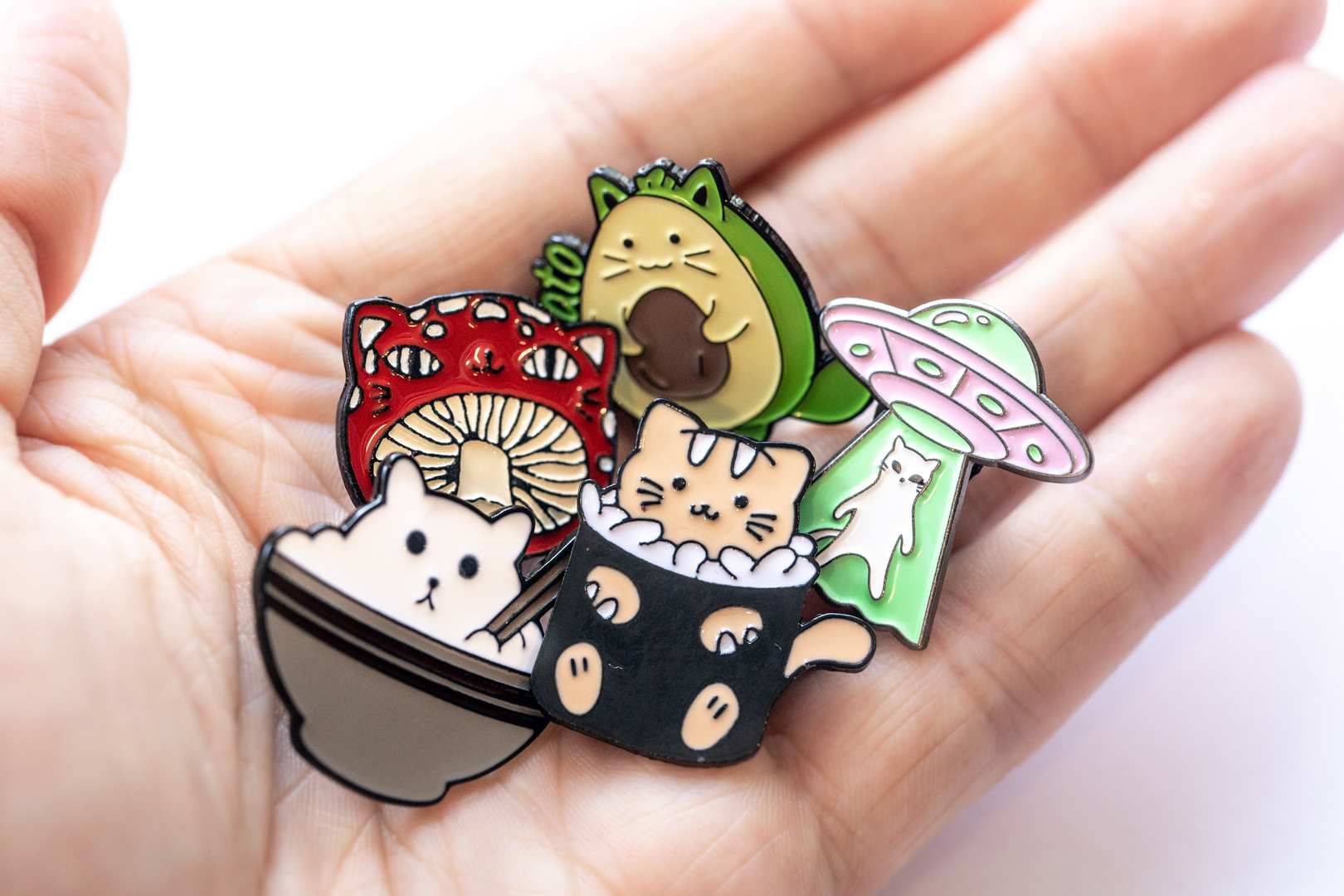
The most popular category today. Soft enamel pins have recessed areas with raised metal lines, giving a textured feel. Hard enamel pins are polished flat, creating a smooth, glass-like surface. Both are ideal for custom designs, logos, and bold colours. Soft enamel is often chosen for artistic or collectible pins where texture adds character, while hard enamel is preferred for corporate gifts and awards due to its premium, durable finish.
Boutonnieres
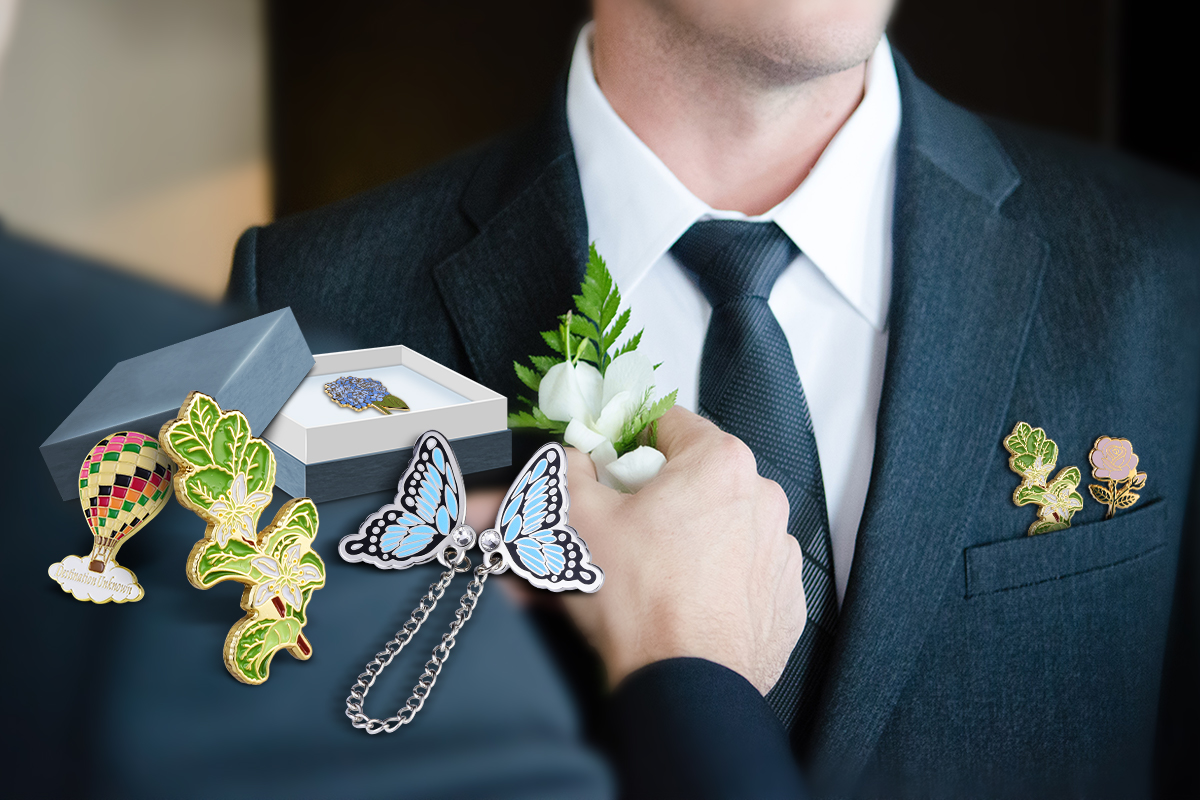
A genuine or silk flower pinned to the lapel. Reserved for weddings, galas, proms, and formal ceremonies. Traditionally worn on the left side, just above the heart. The word itself comes from French and means "buttonhole flower." Back in the 16th century, boutonnieres were also believed to keep evil spirits away from a person. Today, they remain one of the most elegant expressions of formal dressing.

Floral Lapel Pins
Fabric-made flowers (cotton, linen, silk, satin) without stems or leaves. Smaller and more reusable than boutonnieres. Perfect for adding a romantic or vintage touch to a blazer. Unlike fresh boutonnieres, floral lapel pins can be stored and worn again and again, making them a practical yet beautiful choice for garden parties, daytime weddings, or spring events.
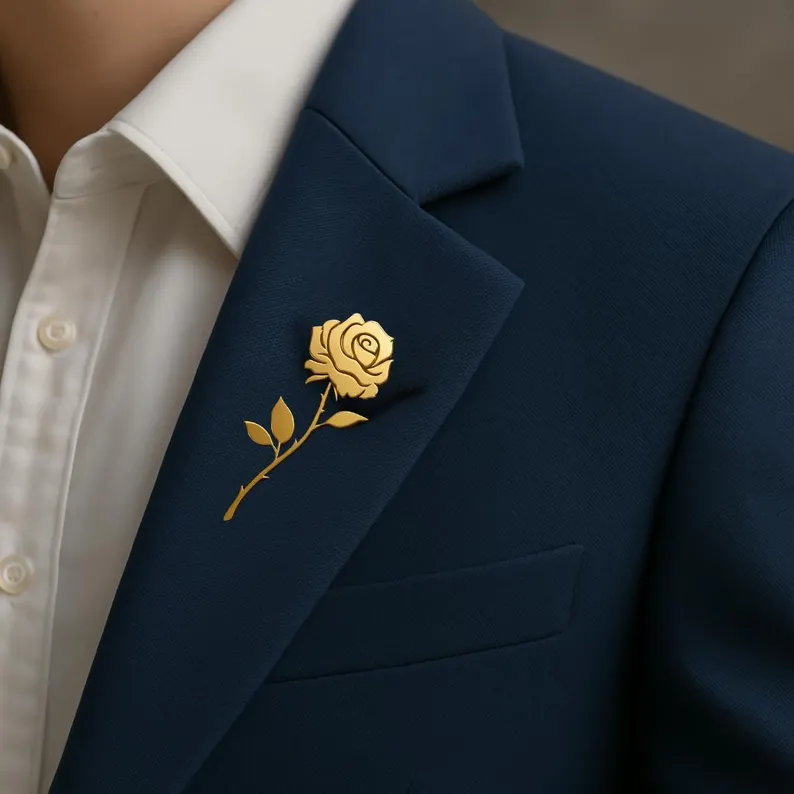
Stick Pins
A long, thin metal needle with an ornamental head. Often made from gold, silver, or other metals. Stick pins are sleek, minimal, and work well with both business suits and casual tweed jackets. They offer a vintage charm that pairs beautifully with pocket watches and classic tailoring. The decorative head can feature anything from a simple pearl to an intricate family crest.
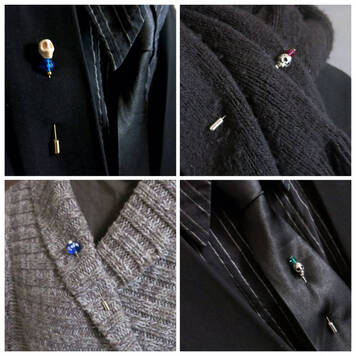
Badges & Mini Pins
Small, often circular or shield-shaped pins with a message, logo, or symbol. Common in corporate, political, or membership contexts. Fastened with butterfly, rubber, or magnetic clasps. Badges are the most accessible type of lapel pin, allowing individuals and organisations to share a message or show affiliation without saying a word.
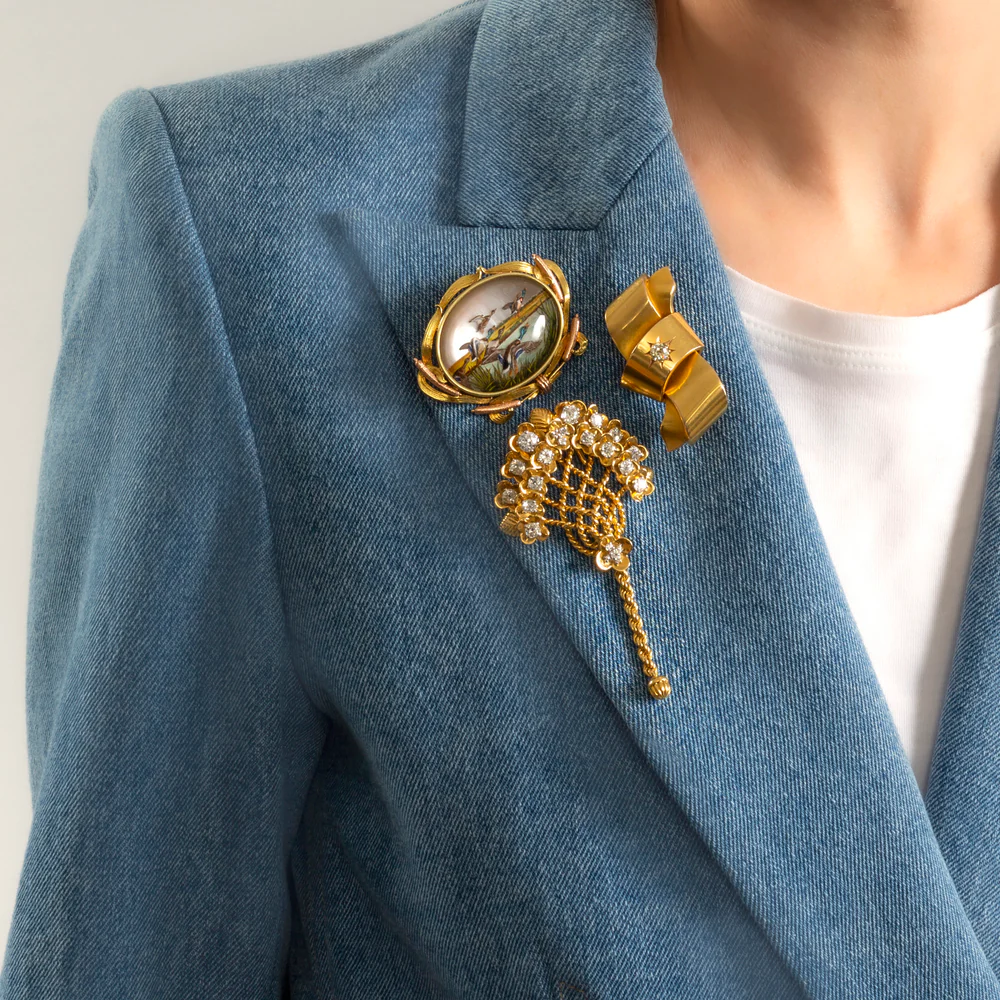
Brooches
Larger, more ornate pins that may include fabric, netting, gemstones, or intricate metalwork. While historically worn by women, modern brooches are increasingly popular among men for black-tie events. A well-chosen brooch can serve as a stunning alternative to a boutonniere, adding a touch of artistic flair to a tuxedo or formal overcoat.
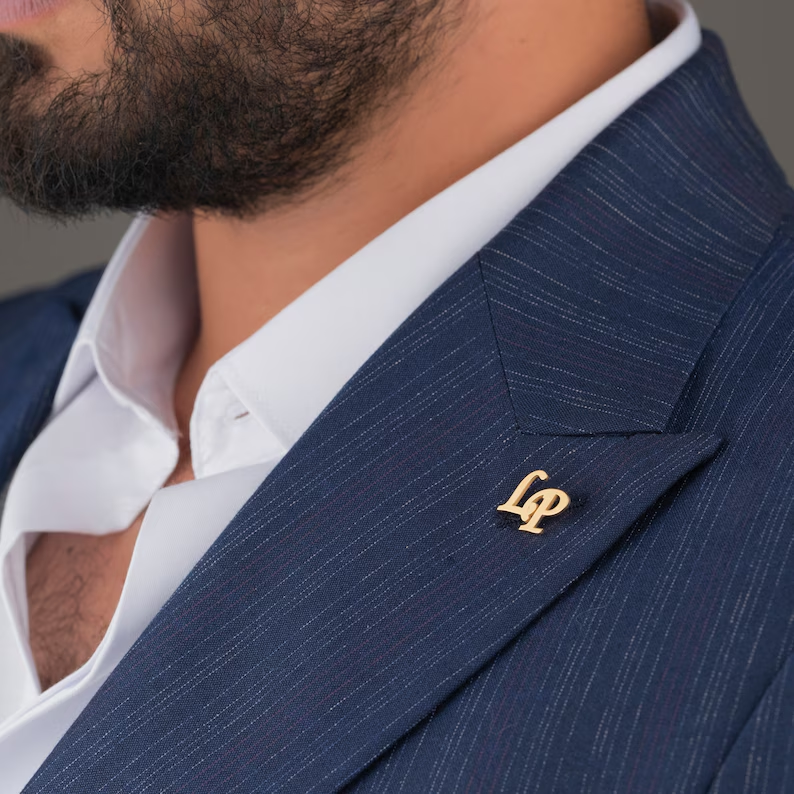
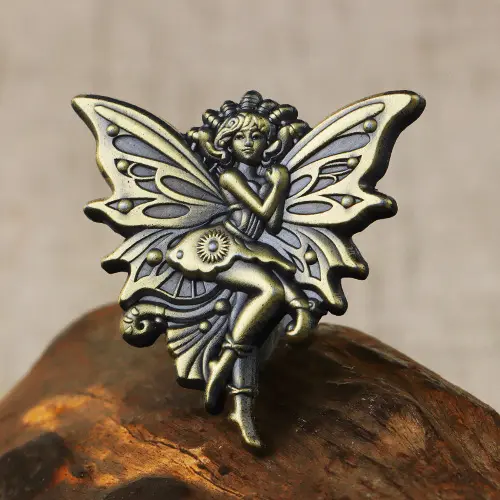
Custom & 3D Moulded Pins
Fully personalised pins created from your own design. 3D moulded pins add depth and realism, making them excellent for mascots, animals, or branded characters. Whether you need a pin for your business, a wedding favour, or a fan community, custom pins offer unlimited creative possibilities.
How to Wear Lapel Pins Correctly
Wearing a lapel pin correctly requires attention to a few simple but important rules. Following these guidelines will ensure that your pin looks intentional and polished rather than accidental or sloppy.
Step 1: Locate the Buttonhole
The traditional and correct place for a lapel pin is the buttonhole on the left lapel of your jacket. This tradition dates back centuries. Historically, the left side was chosen because it sits above the heart, symbolically close to one's emotions and loyalties. In military uniforms, medals and insignia are worn on the left chest for similar reasons. Most suit jackets, blazers, and sport coats have a functional or decorative buttonhole on the left lapel. Some jackets have buttonholes on both lapels, but you should always wear your lapel pin on the left side only.
Step 2: Insert the Pin
If your jacket has a genuine open buttonhole, simply thread the pin through it from the front of the lapel to the back. Once the pin is through, attach the appropriate backing on the reverse side of the lapel. If your jacket has a decorative buttonhole that is sewn shut, you have several options. You can carefully open the buttonhole using a seam ripper or small scissors. Alternatively, you can gently push the pin directly through the lapel fabric. This method should only be used on sturdy fabrics such as wool, tweed, or heavy cotton. For those who prefer not to damage their jackets at all, a tailor can sew a small thread loop behind the lapel, creating an invisible anchor for your pin without piercing the outer fabric.
Step 3: Align It Properly
The pin should sit parallel to the outer edge of the lapel. This ensures the design faces the world correctly and does not tilt or droop to one side. If your pin has a visible fastener, such as a stick pin with a decorative cap, keep the fastener oriented vertically or in line with the lapel's edge. An askew fastener will make the entire pin look careless, as if it shifted during wear and you did not notice.
Step 4: Hide or Expose the Backing?
You have two legitimate choices. Inverting the pin so that the fastener hides completely behind the lapel creates a cleaner, more polished appearance. This is the preferred method for formal events, business settings, and any situation where you want a seamless look. Alternatively, you can leave the fastener visible. This is acceptable for casual events, vintage-inspired outfits, or when wearing a stick pin where the decorative cap is meant to be seen.
Attires to Wear Lapel Pins With
One of the greatest strengths of lapel pins is their versatility. They can be worn with a wide range of garments, from the most formal tuxedo to a casual denim jacket. Simply put, you can wear a lapel pin with anything and everything, considering that the pin doesn't get overshadowed by the colors of your outfit. Here is how to match them with different outfits.
Suits & Blazers
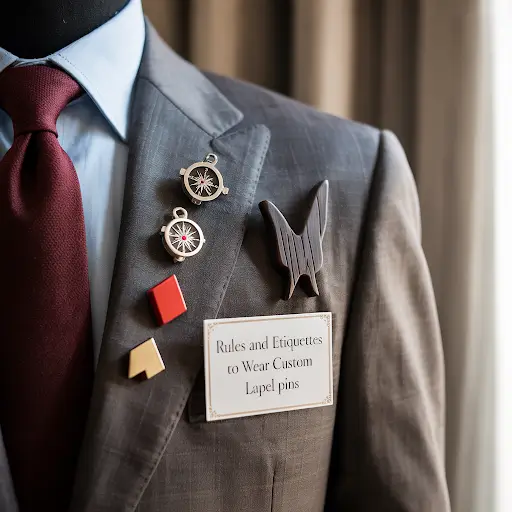
The classic choice. A single lapel pin on the left side adds character without overwhelming the look. For conservative industries like finance, law, or consulting, choose a small, understated pin in silver or gold. For creative fields or social occasions, you have more freedom to choose colourful enamel pins or vintage badges. Match metal pins to your cufflinks or watch strap for a coordinated appearance.
Tuxedos
Stick to elegant boutonnieres or minimalist metallic pins. Avoid bright colours or novelty designs at black-tie events. A white carnation or a small silver stick pin will add class without drawing inappropriate attention. Remember that a tuxedo is about refined simplicity, so your lapel pin should complement rather than compete.
Sport Coats & Casual Jackets
This is where you can have fun. Bold enamel pins, humorous badges, or vintage stick pins all work well. Try pairing a colourful pin with a tweed or cotton jacket. The relaxed nature of casual jackets also allows for larger pins and brighter colours than would be appropriate on a business suit.
Sweaters & Cardigans
Yes, you can wear lapel pins on knitwear, provided the knit is tight enough to hold the pin securely. Place the pin near the neckline or on the chest area. Use a magnetic backing to avoid damaging the yarn. A small, lightweight enamel badge works best; heavy pins will pull the knit out of shape.
Shirts (Dress or Denim)
For a modern, layered look, pin a small enamel badge or stick pin to the collar or placket of a crisp dress shirt or denim jacket. This works especially well for creative offices or casual Fridays. The fabric of a dress shirt is usually too thin and delicate to support a heavy pin, so stick to lightweight options.
Overcoats & Topcoats
During colder months, a lapel pin on your overcoat adds a touch of sophistication. Keep it simple: a small, shiny metal pin or a neutral-toned enamel design. The coat's lapel is usually larger and heavier than a suit lapel, so you can wear a slightly larger pin without it looking disproportionate.
Pairing with Pocket Squares & Tie Clips
Lapel pins, pocket squares, and tie clips are the holy trinity of suiting accessories. They don't have to match exactly, but they should harmonise. For example, a blue tie with a silver tie clip and a silver lapel pin with a white pocket square creates a cohesive look. A small colour echo, such as a burgundy lapel pin paired with a burgundy pocket square, adds another layer of sophistication.
How to Choose the Right Lapel Pin?
Since you already know that lapel pins go well with any attire, you can style different pins with various outfits. For instance, it wouldn't look good if you wear a skull and bones lapel pin to a formal black tie event or to a wedding. It would definitely make heads turn and people murmur, but not in a good way. Here are some styles that you can accentuate with lapel pins.
Floral Lapel Pins
Floral lapel pins or boutonnieres are perfect for black tie and formal events, and if you are wearing a tuxedo, a boutonniere will only add to its class. You can also choose between different colors of the flower on your lapel pin, and can even match or contrast them with your tie or shirt. If you are a part of the wedding party, then you have lots of colors to experiment with. For a summer wedding, a small yellow or pink flower brings a cheerful touch, while a white carnation remains timeless for any formal occasion.
Bold Lapel Pins
If you have a large and bright lapel pin with lots of colors, you can always wear it with your jacket on semi-formal or casual events. The important thing is to know which colors will go well with the outfit. If you have a jacket with a unique or flashy color, then the bold lapel pin would certainly complement it. Moreover, if you are also wearing a multicolored tie, make sure to keep your shirt as plain as possible, otherwise it would make for a loud ensemble. Bold pins are excellent for music festivals, art gallery openings, or casual Friday at a creative office.
Toned Lapel Pins
If you are more comfortable with wearing tonal colors and don't like flashy attires, then you can make do with a lapel pin that matches the color of your jacket, so that it adds a beautiful texture to your attire. Moreover, you can also choose a tonal color that contrasts your jacket's appearance, or stick with a neutral color that always adds a splash of elegance to any ensemble. A navy pin on a navy suit, for example, creates a subtle, sophisticated look that rewards close attention without shouting for it.
Metallic Lapel Pins
Metallic lapel pins are quite attractive and stylish in themselves, which makes them suitable for all your work suits or even dinnertime attires. The ideal thing to do is to match the color of your lapel pin with the other metallic components in your suit, such as your cufflinks, belt buckle, ring, or even your watch. If you manage to match all of them, it would make for a stunning display. A silver stick pin paired with a silver watch and silver cufflinks shows an eye for detail that does not go unnoticed.
Layered Lapel Pins
Last but not least, if your look involves a couple of layers, such as a coat, jacket, scarf, or tie, then you can add more depth to your look by adding a lapel pin to the mix. The key is to get a neutral dinner jacket and put a nice little lapel pin on it, which will accentuate its simplicity and class. You can also match the pin with the color of your scarf to make it even better. During autumn, a burgundy lapel pin paired with a matching scarf creates a warm, intentional colour story.
Different Types of Pin Backing
The backing of a lapel pin, the mechanism that attaches the pin to your clothing, is often overlooked but critically important. Different backings suit different fabrics, pin weights, and situations. Understanding the trade-offs will help you choose the right backing for each pin and each garment.
Butterfly Clasp (Deluxe)
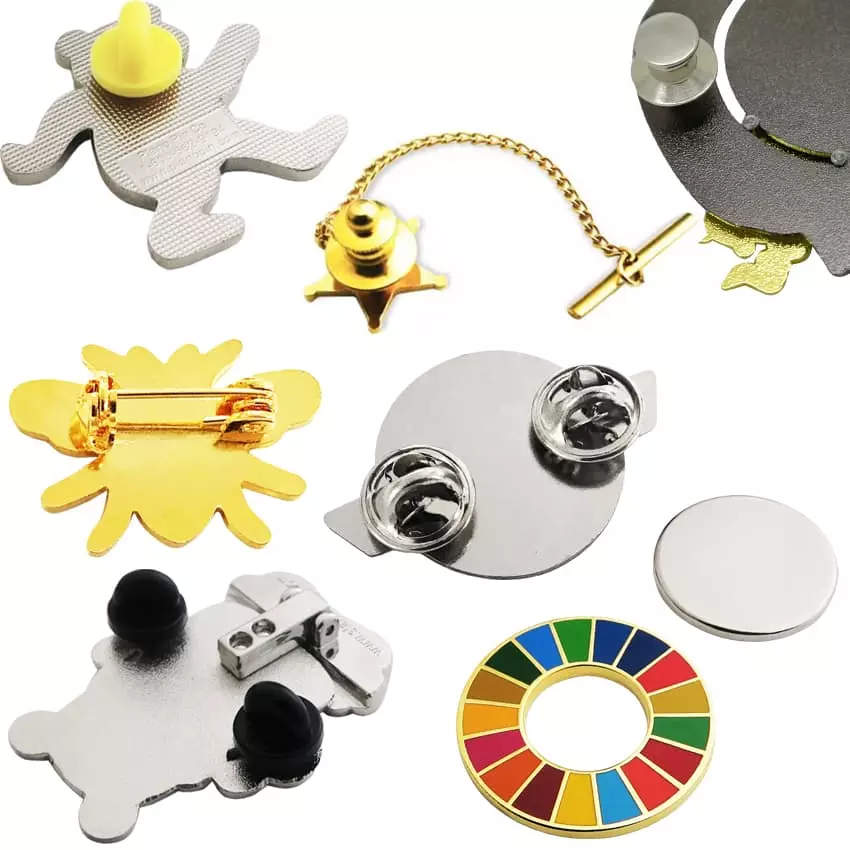
The most common backing for enamel pins. It consists of a metal needle attached to the front of the pin and a separate cupped metal spring that snaps onto the needle from the back. Butterfly clasps are secure, widely available, and relatively easy to use. Their main drawback is their small size, which can make them fiddly for people with large fingers. For most everyday pins on sturdy fabrics like wool or cotton, butterfly clasps are perfectly adequate.
Rubber Clutch
A simpler and more user-friendly alternative. Instead of a metal spring, the rubber clutch is a small block of soft, slightly sticky rubber with a hole in the centre. You push the needle through the fabric and then press the rubber clutch onto the protruding needle. Rubber clutches are easy to handle, even for children or people with arthritis. However, they are less secure than butterfly clasps, especially on thick or slippery fabrics. Over time, rubber clutches can also dry out, crack, or lose their grip.
Magnetic Backing
A revolutionary approach for those who refuse to put holes in their clothing. A magnetic backing consists of two parts: a small, strong magnet embedded in the back of the decorative pin front, and a separate metal disc or second magnet that goes behind the fabric. Magnetic backings are ideal for delicate fabrics such as silk, linen, fine wool, or knitwear. They are also extremely quick to put on and remove. The main disadvantage is that magnets powerful enough to hold a pin securely can be heavy, and they may not work on very thick fabrics like heavy tweed.
Stick Pin (with Cap)
The oldest and most traditional backing type. In this design, the pin consists of a long, thin metal needle attached to a decorative head. You pass the needle through the lapel from front to back, then slide a removable metal cap over the sharp tip to secure it. Stick pins have an elegant, old-world charm that works beautifully with vintage suits, tweed jackets, and formal wear. Because the needle is long, stick pins can be used on thick lapels where a standard short needle would not reach through.
Screw & Nut
The most secure option available, which is why it is often used for heavy pins, military insignia, and law enforcement badges. The front of the pin has a threaded post instead of a smooth needle. A small metal nut screws onto the post from the back of the fabric. Once tightened, the nut will not come off accidentally. Screw backings are ideal for expensive or sentimental pins that would be devastating to lose. The disadvantages are that screwing and unscrewing the nut takes time and requires a certain amount of finger strength.
Safety Pin Style
The simplest of all. The pin is essentially a small safety pin that has been flattened and decorated. You open the safety pin, position it on the fabric, and close it. This design is easy to use, very secure when closed properly, and does not require any separate parts that can be lost. Safety pin style backings are common on DIY, homemade, or vintage pins. However, they tend to look less refined than other options. For casual, craft, or retro looks, safety pin backings are perfectly acceptable.
Which one should you choose? For everyday wear on sturdy fabrics, choose a butterfly clasp or rubber clutch. For expensive or thin fabrics where you want to avoid holes, choose a magnetic backing. For heavy, thick, or three-dimensional pins, choose a screw and nut backing. For a classic, gentlemanly look with a vintage feel, choose a stick pin with a cap.
Get Attractive Enamel Pins From Custom Panda
Now that you know exactly how to wear lapel pins, where should you get them? At Custom Panda, we specialise in creating high-quality, custom enamel pins that help you stand out, whether for your brand, event, or personal collection. We have the best and most attractive collection of lapel pins in different shapes, sizes, textures, and colors.
We offer free design assistance to turn your rough sketch, logo file, or even a written description into a ready-to-produce digital proof. Our experienced designers will help you refine colours, adjust proportions, and choose the right manufacturing techniques to bring your vision to life.
We also offer no mould fee on most orders, saving you money whether you need a small batch of fifty pins for a wedding or a large run of ten thousand for a corporate giveaway. Traditional pin manufacturing often requires an upfront mould fee that can be prohibitively expensive for small quantities.
Our backing options include everything discussed in this guide: butterfly clasps, rubber clutches, magnetic backings, stick pin caps, screw and nut systems, and safety pin styles. You can choose different backings for different pins in the same order, allowing you to match each pin to its intended use.
We manufacture soft enamel pins, hard enamel pins, three-dimensional moulded pins, offset epoxy pins, and printed pins. Soft enamel offers rich texture and vivid colours. Hard enamel provides a glass-smooth, scratch-resistant surface. Three-dimensional moulded pins capture every contour of your design. Offset epoxy pins allow for full-colour gradients. Printed pins reproduce artwork with the precision of a printer.
Finally, we offer eco-friendly packaging options because we believe that style should not cost the earth. Our standard packaging uses recyclable materials, and we offer premium packaging made from post-consumer waste upon request.
From corporate giveaways to wedding favours, from fan art to fashion accessories, Custom Panda delivers stunning lapel pins that you will be proud to wear and share.
Ready to create your own lapel pin? Visit our website or contact us at sales@custompanda.com to get started.

