
th
5 Key Factors That Affect the Price of Enamel Pins
What Are Enamel Pins?
Enamel pins are decorative metal accessories filled with colored enamel—a glass-like or resin material—that hardens into a durable, vibrant finish. They are typically attached to clothing, bags, lanyards, or hats using a metal clutch or safety pin backing.
Unlike printed plastic pins or cheap button badges, enamel pins are premium, textured, and built to last. They resist fading, scratching, and everyday wear. For businesses, enamel pins serve three core functions:
Brand Identity – Display company logos, slogans, or mascots professionally.
Recognition & Morale – Reward employees for years of service, celebrate project milestones, or acknowledge outstanding performance.
Community & Belonging – Identify team members, club affiliates, conference attendees, or nonprofit volunteers.
In essence, an enamel pin is a small but powerful tool for communication, motivation, and marketing—one that people actually enjoy wearing and collecting.
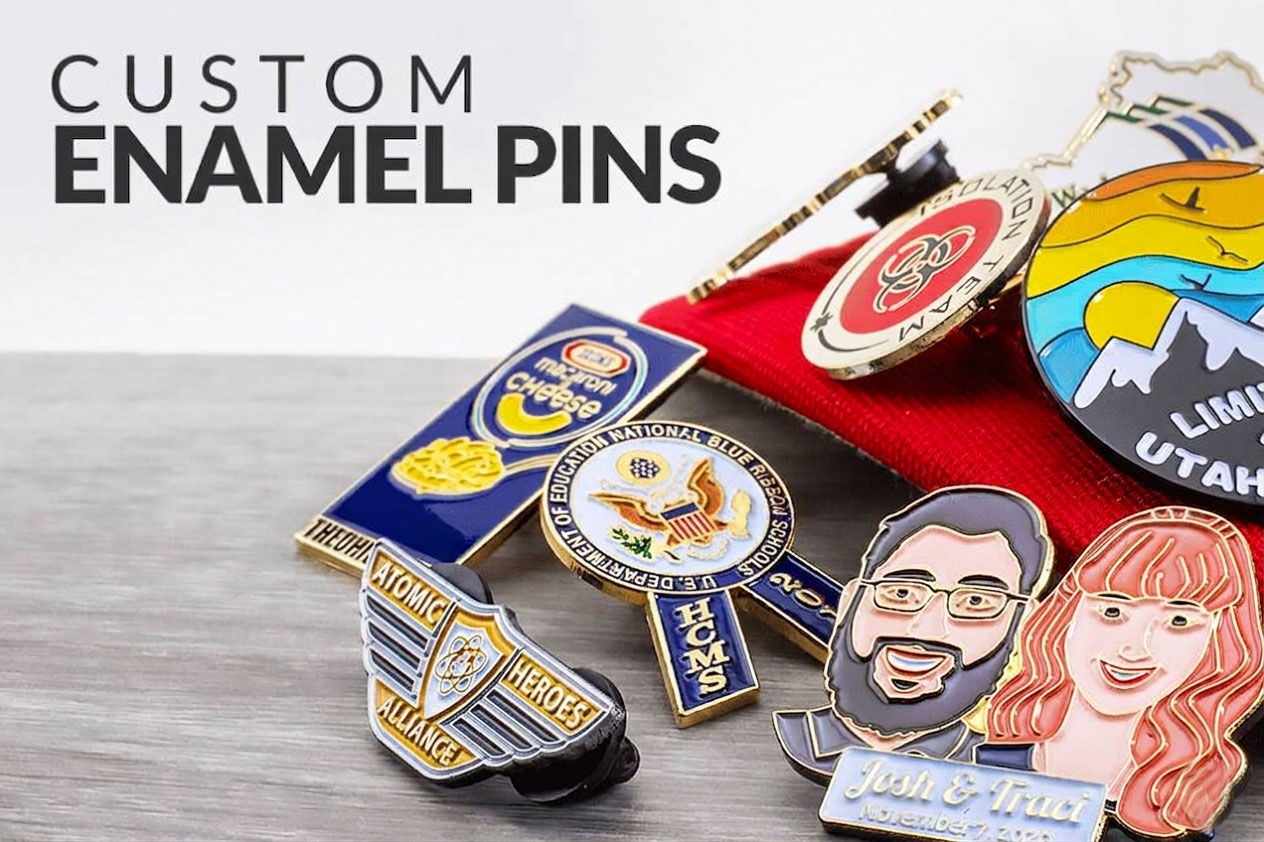
Main Types of Enamel Pins
When ordering custom enamel pins for your business, you will encounter several distinct types. Each has its own manufacturing process, visual characteristics, durability level, and cost structure. Understanding these differences is essential for making the right choice.
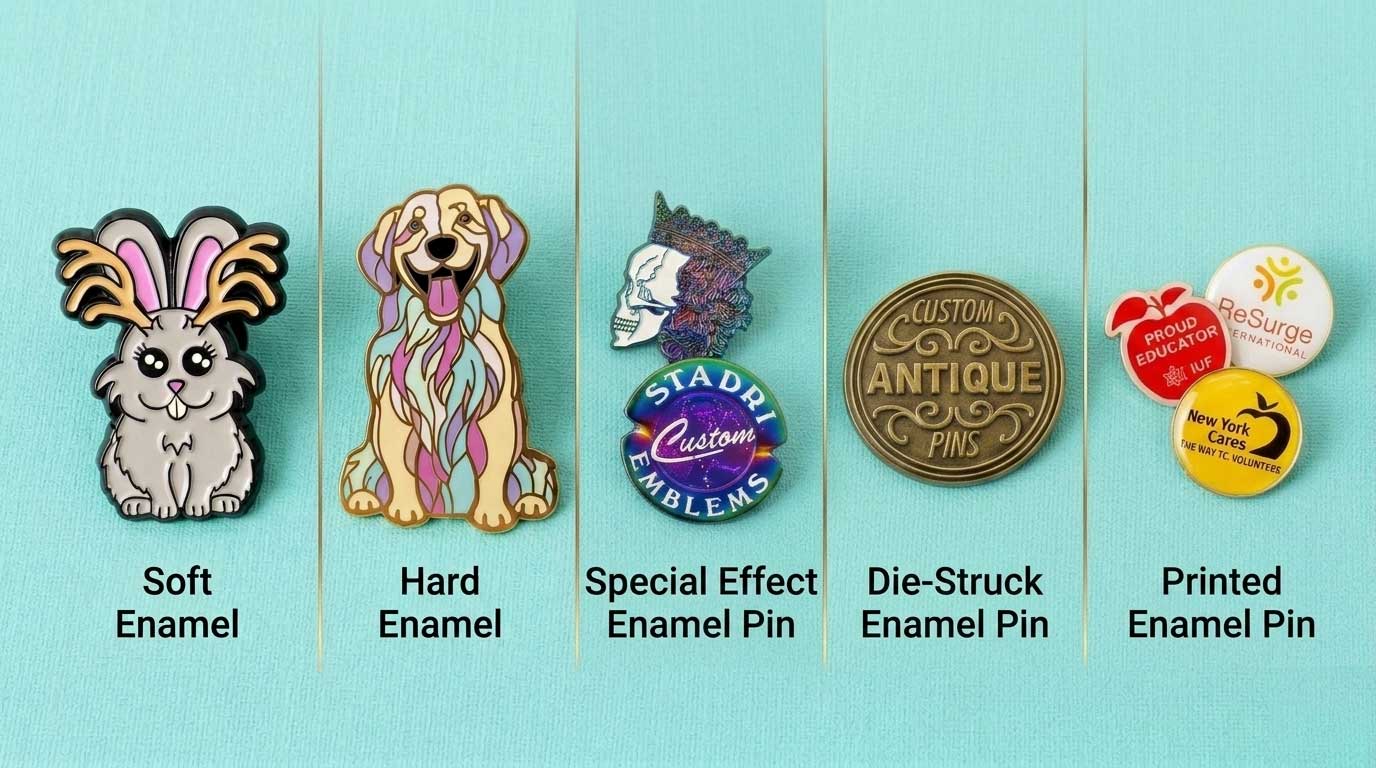
Soft Enamel Pins
Most popular for corporate orders, promotional events and staff badges. The metal dividers stand slightly higher than the enamel, creating a visible textured surface.
Advantages: Affordable, hides minor scratches, allows fine metal details. Best for: Employee badges, giveaways, fan merchandise.
Hard Enamel Pins (Cloisonné)
Premium tier: ground and polished completely flat, jewelry-like finish. Extremely scratch-resistant and glossy.
Advantages: Durable, high-end look. Best for: Annual service awards, executive gifts, luxury brand merchandise. Costs 20–30% more than soft enamel.
Die-Struck Enamel Pins
Hammered into metal with high pressure; industrial, vintage or military appearance. Can be left as bare metal for classic engraved look.
Best for: Military-style badges, corporate seals, heritage-brand items.
Printed Enamel Pins (Offset Printed)
Design printed directly onto metal with epoxy dome. Photographic details, gradients, no color limits.
Best for: Complex artwork, event pins with fine text, photo-realistic designs.
Special Effect Enamel Pins
Glow-in-the-dark, glitter, screen-printed details, epoxy doming. Adds uniqueness and perceived value.
Cost addition: $0.20–$0.80 per pin. Moving parts add $1–3 per pin.
Our recommendation for corporate buyers: Start with soft enamel for most internal and promotional uses. Reserve hard enamel for top-tier recognition awards. Use printed enamel only when your design requires photographic detail.
Common Applications of Using Enamel Pins (For Business)
Corporate buyers use custom enamel pins in a variety of practical scenarios. Below is an overview of the most common applications.
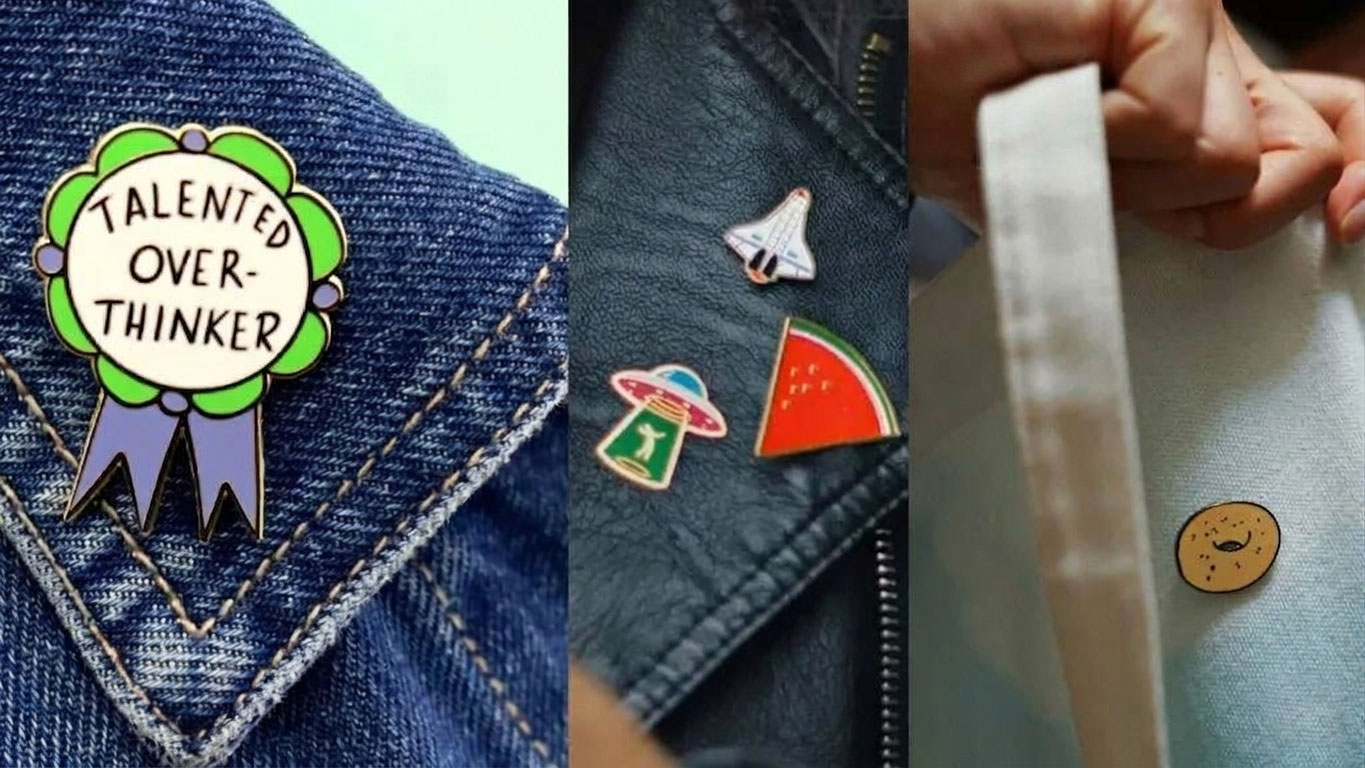
Employee Recognition & Service Awards
Companies use enamel pins to celebrate tenure, performance, and special achievements. Years of service pins are typically awarded at 5, 10, 15, 20, and 25-year milestones, often with different metal finishes for each level. Employee of the Month/Quarter programs use smaller, simpler pins that staff wear on their uniforms. Project milestone pins recognize completion of training programs, successful product launches, or safety records like "1 Million Miles Safe Driving."
Brand Promotion & Marketing Giveaways
Enamel pins are highly effective promotional items because people keep them—unlike flyers or cheap pens that get thrown away. At trade shows, a well-designed pin becomes a walking billboard as attendees wear it on their lanyards. Retail brands include pins as a free gift with purchase or sell them directly as merchandise, often at 5–10x the production cost. Product launch kits for internal sales teams or influencers often include a commemorative pin to build excitement.
Events, Conferences & Corporate Gatherings
Large events are a natural fit for custom enamel pins. For attendee identification, colored pins can indicate access level (e.g., blue for general attendees, silver for speakers, gold for sponsors). Session tracking uses pins to reward attendees for completing specific workshops or tracks, increasing engagement. Speaker and VIP gifts are often high-quality hard enamel pins in custom packaging. Volunteer recognition pins thank the hundreds of people who make events possible.
B2B Client Gifts & Corporate Holiday Gifts
Year-end appreciation pins can be tied to the lunar zodiac or a company milestone. When sent with a handwritten note, a small box containing a premium hard enamel pin feels personal and high-end. Partnership commemorative pins mark the signing of major contracts or joint ventures, with both companies' logos appearing on the same pin—given to executives during the signing ceremony as a tangible memento.
Nonprofits, Associations & Membership Organizations
Donor recognition programs use pins to show giving levels (Bronze, Silver, Gold Circles), which donors wear at annual galas. Membership credentials replace paper cards or plastic badges, signaling belonging instantly. Awareness campaigns (breast cancer pink ribbons, environmental green leaves) use enamel pins as symbols of support, which nonprofits sell to generate both revenue and visibility.
How Are Enamel Pins Made? (Detailed Process)
Understanding the complete manufacturing process helps business buyers appreciate why certain design choices affect price and lead time. Below is a detailed, step-by-step explanation of how a custom enamel pin goes from concept to finished product.
Step 1: Artwork Preparation & Die Creation
The process begins with your design file. A skilled production artist converts your artwork into a manufacturable mold file. This involves:
Converting all colors into solid, separated areas (no gradients or blends)
Ensuring minimum line thickness (usually 0.3mm or wider)
Defining which areas will be metal and which will be enamel
Mirroring the design (because the mold will be inverted)
The actual mold is a block of industrial-grade steel, approximately 2–4 inches square and 0.5 inches thick. Using CNC (computer numerical control) machinery, a precision cutting tool etches your design into the steel surface, but in reverse—the recessed areas on the mold will become raised areas on the pin, and vice versa. This process requires specialized equipment costing tens of thousands of dollars.
Step 2: Metal Stamping or Casting
Once the mold is ready, it is installed into a stamping press or die-casting machine.
For iron pins (most common): A thin sheet of iron (0.8mm to 1.5mm thick) is fed into the press. The mold slams down with tremendous force (typically 10–50 tons), stamping the design into the metal sheet. The stamped sheet then goes to a trimming die, which cuts around the outer shape of the pin, removing excess metal. A separate stripping operation removes the thin metal web left behind.
For zinc alloy pins (3D or thicker designs): Liquid zinc alloy is injected under high pressure into the mold cavity. This allows for much thicker pins (up to 4mm or more) and designs with curved surfaces or irregular edges. Zinc pins are heavier and feel more substantial.
Step 3: Trimming, Filing & Polishing the Metal Base
The raw stamped or cast pins have rough edges and possibly burrs (small metal protrusions). Workers manually trim excess material using small bench presses or hand files, deburr edges using rotating tumblers filled with abrasive stones (for large batches), and sand the front surface to create a clean, even surface for plating and enamel. This step is more labor-intensive for complex shapes or very small pins.
Step 4: Electroplating (Applying the Metal Finish)
Before enamel is added, the metal base receives its plating finish. The pins are attached to metal racks and submerged in a series of chemical baths. A cleaning bath removes oils and oxidation, a base bath applies a thin layer of copper or nickel for adhesion, and the final plating bath deposits the chosen finish: gold, silver, black nickel, rose gold, antique brass, antique copper, etc.
The electroplating process uses electrical current to bond metal ions to the pin surface. Thicker plating (more time in the bath) is more durable but increases cost. Antique finishes require an extra step: after plating, the pins are tumbled in a solution that darkens recessed areas while raised areas are polished to reveal the bright metal underneath.
Step 5: Enamel Filling
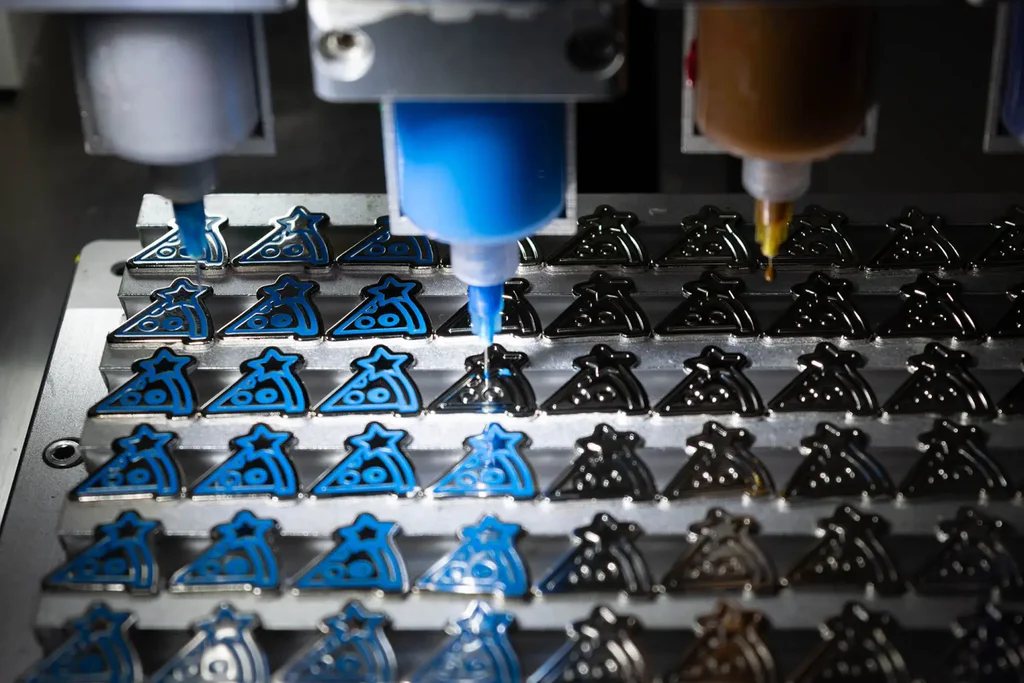
Now the pins are ready for color. A technician uses a syringe-like tool or an automatic dispenser to fill each recessed area with liquid enamel. The enamel is a mixture of colored pigments and a liquid resin base.
Soft enamel is filled slightly below the metal divider height.
Hard enamel is filled slightly above the metal height (excess will be ground down later).
For multi-color designs, each color is filled separately. Small or intricate areas require a steady hand and magnification. After each color is filled, the pin goes into an oven (approximately 150–200°C) to bake the enamel solid. Each color requires a separate bake cycle—one reason more colors increase cost.
Step 6: Baking, Cooling & Repeating
After each bake, the pin cools. The technician inspects for bubbles, shrinkage, or missing enamel. If any area is under-filled, they add more enamel and bake again. For complex designs with 5–8 colors, this fill-bake-inspect cycle may repeat over two days.
Step 7: Grinding & Polishing (Hard Enamel Only)
For hard enamel pins, the baked pins are now ground down using a wet grinding wheel or belt sander. This removes the excess enamel and flattens the surface so that metal and enamel are perfectly level. The grinding is followed by fine sanding (400 to 800 grit) to remove scratches, then buffing with a soft wheel and polishing compound to achieve a mirror finish.
Soft enamel pins skip this entire step, which is why they are less expensive.
Step 8: Final Quality Inspection
Every pin passes through a human quality check before packaging. Inspectors look for scratches or tool marks on plating, missing enamel or bubbles, misaligned colors (enamel bleeding over metal dividers), rough edges or bent pin posts, and incorrect clutch attachment. Typical rejection rates for high-volume orders are 2–5%. Rejected pins are either recycled or, if possible, reworked.
Step 9: Backing Attachment & Packaging
The final step is attaching the pin backing. The most common types are the butterfly clutch (metal spring) – standard, low cost, secure; the rubber clutch – easier to grip, less likely to damage fabric; and the magnetic back – no holes in clothing, but easier to lose. Pins are then placed into packaging: polybags for bulk shipments, individual card-backed sleeves for retail displays, or velvet boxes for premium gifts.
5 Key Factors That Affect the Price of Enamel Pins
Now we answer the question every business buyer asks: Why do enamel pin prices vary so much?
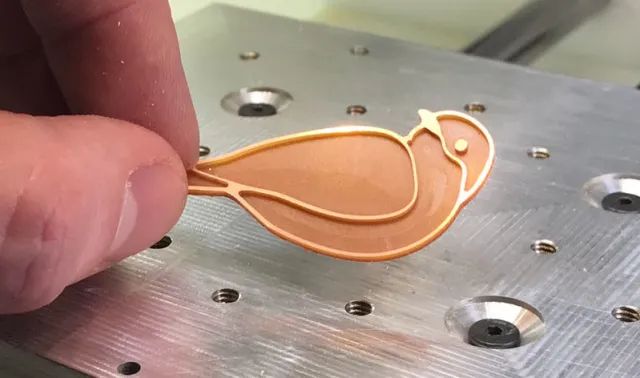
Factor 1 – Mold & Tooling (One-Time Setup)
Every unique design requires its own steel mold. The mold is created using CNC machinery on industrial-grade steel. It is a precision tool that can stamp thousands of pins.
What it costs – Typically $50 to $150 per mold, depending on size and complexity. Larger pins (over 2 inches) or designs with deep 3D relief cost more.
Why it matters – The mold is a fixed cost. Whether you order 100 pins or 10,000 pins, the mold fee is the same.
Impact on unit price – The larger your order, the lower the mold cost per pin. For 100 pins, mold may add $0.50–$1.50 each. For 1000 pins, it adds only $0.05–$0.15 each.
Tip for buyers: If you have multiple designs, ask if they can share a mold (rarely possible), or combine them into one order to spread the cost.
Factor 2 – Material Selection (Metal, Plating & Enamel Type)
The materials used directly affect both quality and price.
Metal options:
Iron – Most common. Strong, easy to stamp, good for most pins. Lowest cost.
Zinc alloy – Allows complex 3D shapes, heavier feel. Medium cost.
Copper – Excellent for fine details, antique look. High cost (special order only).
Stainless steel – Very durable, but harder to stamp, leading to higher tooling wear. Medium-high cost.
Plating finishes also add cost. Standard silver or black nickel are baseline. Gold and rose gold are pricier because the raw materials cost more. Antique finishes (antique silver, antique brass, antique copper) require extra tumbling and chemical steps, adding $0.10–$0.30 per pin.
Enamel type: Hard enamel costs about 20–30% more per pin than soft enamel because it requires additional grinding, sanding, and polishing steps. The process also has a slightly higher reject rate.
Factor 3 – Production Process (Labor & Time Intensity)
Enamel pins are not mass-produced by fully automated machines. Many steps require human hands. For example, filling small color areas (especially detailed logos) takes steady hands and time. A pin with 8 small color areas takes twice as long to fill as a pin with 4 larger areas. Hard enamel requires sanding and polishing each pin individually; a worker can typically polish only 200–300 hard enamel pins per hour. Complex plating (e.g., two-tone plating on one pin) doubles processing time because areas must be masked, plated, then unmasked.
Additionally, each color requires a separate baking cycle. A pin with 5 colors will spend more hours in the oven (and require more technician attention) than a 2-color pin. Baking also consumes electricity and occupies oven space.
Labor costs in different countries vary. Most pins are manufactured in Asia, where labor is affordable, but skilled enamel workers still command fair wages. Factories in higher-cost regions (USA, Europe) charge significantly more per pin.
Factor 4 – Order Quantity (Economies of Scale)
This is the biggest single factor for most business buyers. Enamel pin factories have minimum order quantities (MOQs) – typically 100 to 500 pieces per design. Why?
Mold cost recovery – Factories need to cover the setup cost and make the production run profitable.
Material waste – Small batches produce more waste relative to output. Changing colors or cleaning equipment between runs also wastes time and material.
Production line efficiency – Changing molds and colors takes time. A factory might lose 30 minutes of production for every changeover. Longer runs mean fewer changeovers per pin.
Typical price differences based on quantity (for a standard 1-inch soft enamel pin):
| Quantity | Approx. unit price (USD) |
|---|---|
| 100 | $2.50 – $4.00 |
| 500 | $1.20 – $2.00 |
| 1000 | $0.80 – $1.40 |
| 5000 | $0.50 – $0.90 |
As the table shows, doubling your order can cut the per-unit price by 30–50%. Moving from 100 to 1000 pieces reduces unit cost by approximately 65%.
Factor 5 – Design Complexity (Colors, Size & Special Details)
The more intricate your design, the higher the production cost. Complexity includes several dimensions:
Number of colors – Each color requires a separate enamel fill and bake cycle. A 2-color pin might take 30 minutes of labor per 100 pins; an 8-color pin takes over two hours for the same quantity.
Size – Pins larger than 1.5 inches use more metal and enamel. But very small pins (under 0.75 inches) are actually harder to handle and detail, so they may cost the same or slightly more than a 1-inch pin.
Fine lines or small dots – Extremely small details (under 0.3mm) are difficult to fill without bleeding between colors. This increases the reject rate. If the reject rate is 10% instead of 2%, the factory must produce extra pins to fulfill your order, and someone pays for those losses.
Cutouts (negative space) – Holes inside the pin (like the center of the letter "O") require extra mold steps and careful plating. The metal surrounding the cutout is fragile and can bend during stamping.
Double-sided design – Two-sided pins cost nearly double because both sides must be processed through every step: both sides are plated, both sides receive enamel, both sides are polished (if hard enamel). The pin post also requires special placement.
Special effects – Glow enamel, glitter, screen-printed details, or epoxy doming add $0.20–$0.80 per pin. Moving parts (spinners, sliders) add $1–3 per pin.
Practical advice for corporate buyers: To keep costs reasonable, simplify your design. Use 3–5 colors maximum. Avoid very small text (under 4pt or 1mm tall). Consider soft enamel instead of hard enamel for large-quantity orders. And if your logo has fine details, discuss with your manufacturer whether those details can be etched as metal lines rather than colored enamel.
Conclusion
Enamel pins are an affordable, durable, and highly customizable tool for business branding, employee recognition, and event marketing. Their price is determined by a combination of mold costs, materials, production labor, order quantity, and design complexity.
For corporate buyers, the key to getting good value is balancing quality with quantity. Ordering more pins at once lowers the unit price. Simplifying the design reduces manufacturing time and reject rates. And working with an experienced manufacturer like Custom Panda avoids costly mistakes.
Whether you need 100 pins for a small team event or 10,000 pins for a global brand campaign, understanding the factors above will help you budget accurately and communicate effectively with your production partner.
Why Choose Custom Panda?
At Custom Panda, we specialize in helping businesses create high-quality custom enamel pins without the usual headaches. Here is what we offer:
No MOQ stress – We accept small trial orders (as low as 50 pieces) for first-time clients.
Free design review – Our team checks your artwork for manufacturability and suggests cost savings before you approve the mold.
Dedicated account manager – No language barriers or time-zone delays. You talk to one person from quote to delivery. We handle all factory communication.
Full sample approval – You approve a physical sample (not just a digital rendering) before we start mass production.
Competitive pricing – Because we work directly with our own factory partners, we cut middleman costs.
On-time delivery guarantee – We track every order proactively and update you weekly.
Ready to bring your pin idea to life? Contact our sales team for a free quote within 24 hours. Provide your artwork (even a rough sketch), desired quantity, and preferred delivery date, and we will handle the rest.
FAQs About Price of Enamel Pins
Q1: Why is the mold fee separate from the pin price?
The mold is a one-time tool made specifically for your design. It is precision-machined from solid steel and cannot be reused for other designs. Once you pay the mold fee, the mold belongs to you (though we store it for free). When you reorder the same pin, you pay only the per-piece production cost—no mold fee again.
Q2: Does a larger pin always cost more?
Generally yes, because more metal and enamel are used. However, a very detailed 1-inch pin with 8 colors can cost more than a simple 2-inch pin with 2 colors. Detail density often matters more than pure size. The most cost-effective size for most designs is 1 to 1.5 inches.
Q3: Can I reduce costs by choosing soft enamel instead of hard enamel?
Yes. Soft enamel is typically 20–30% cheaper per pin for the same design. It still looks professional and lasts for years, especially for internal employee badges, event giveaways, or promotional merchandise. Reserve hard enamel for executive gifts, collector's items, or pins meant to last a lifetime.
Q4: Are there hidden costs I should know about?
Reputable manufacturers provide all-inclusive quotes. Watch out for extra charges like "artwork fees," "separate setup fees" beyond the mold, "color matching fees," or unusually high shipping costs. At Custom Panda, our quote includes: mold, sample production, all colors and plating, standard packaging, and quality inspection. Shipping is quoted separately based on your preferred speed and location.
Q5: How many colors is too many?
More than 8 colors usually drives up cost significantly without adding proportional value for most corporate applications. Each color adds labor time and increases the chance of production errors. For typical corporate logos (2–4 colors), the cost impact is small—usually $0.05–0.15 per additional color per pin. For complex illustrations or photographic designs, consider reducing to 6 colors or switching to printed enamel pins (which handle many colors better).

