
th
How to Choose the Right Adhesive for Matte Labels?
Matte labels have become the preferred choice for brands aiming to convey sophistication, minimalism, and premium quality. Their non-reflective surface reduces glare and offers a tactile softness that glossy finishes cannot replicate. However, the very characteristics that make matte labels visually appealing—such as textured surfaces and specialized coatings—also present unique challenges for adhesive bonding.
Selecting the correct adhesive for matte labels is not a one-size-fits-all decision. An adhesive that performs flawlessly on a glossy polyester label may fail catastrophically on a matte paper or matte polypropylene (PP) label. Custom Panda provides a systematic, technical deep dive into the science and strategy of choosing the perfect adhesive for your matte labels, ensuring they remain in place and legible throughout their intended lifecycle.
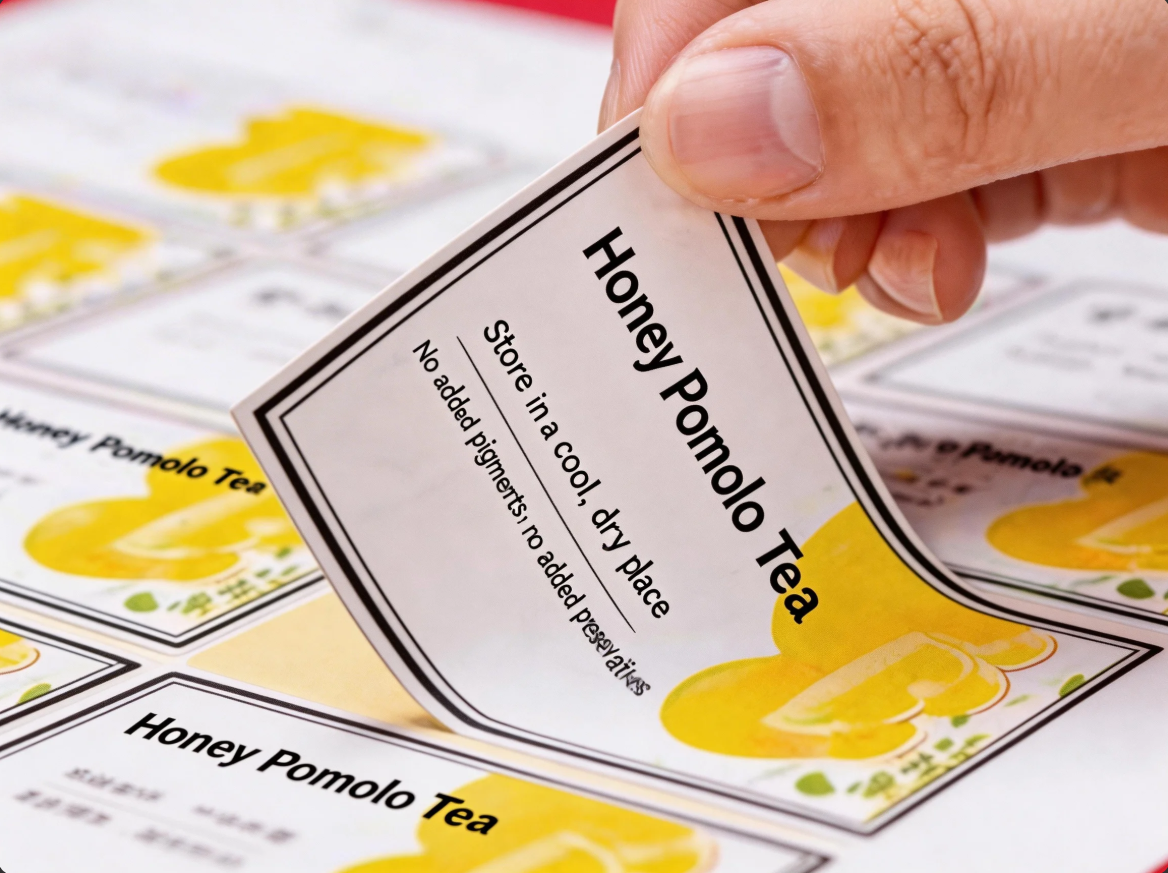
Before evaluating specific adhesives, it is crucial to understand the fundamental interaction between the label stock (facestock) and the glue.
Every self-adhesive label consists of three components: the facestock (the material you print on), the adhesive, and the liner. The "matte" finish refers to the surface treatment of the facestock. This finish significantly impacts adhesion in the following ways:
Surface Energy and Texture: Matte finishes are created by adding microscopic texture or coatings to the facestock to scatter light. This texture reduces the surface area available for the adhesive to make contact compared to a smooth, glossy surface. If the adhesive cannot "wet-out" (flow into) these micro-valleys, the bond will be weak.
Coating Interference: Many matte labels, especially those using materials like Matte Silver PET or coated papers, have print-receptive topcoats. While these are excellent for ink adhesion, they can sometimes act as a barrier or release layer for the pressure-sensitive adhesive if not properly formulated.
Material Flexibility: Matte labels can be made from paper, polypropylene (PP), or polyester (PET). Paper is less flexible, while films like PP are more conformable. The adhesive must compensate for the facestock's stiffness, especially on curved surfaces.
To speak the language of adhesive suppliers, you must understand three core performance metrics:
Tack: This refers to the "initial stickiness" or the adhesive's ability to form an instant bond upon contact with minimal pressure. High tack is essential for high-speed application lines.
Peel Adhesion: This measures the force required to remove a label once it has been applied. It indicates the ultimate strength of the bond. In technical data sheets, you will see ratings like "very high" for permanent adhesives.
Shear Resistance (Cohesion): This is the internal strength of the adhesive. It prevents the label from sliding or creeping over time, especially under stress or heat. High cohesion is vital for tamper-evident or industrial labels.
Selecting an adhesive requires balancing several variables. Use these four dimensions as your decision-making framework.
The surface you are sticking to (the substrate) is the single most important factor.
High Surface Energy (HSE): Glass, steel, and untreated metals are easy to bond to. Standard acrylic adhesives usually work well.
Low Surface Energy (LSE): Plastics like polypropylene (PP) and polyethylene (PE), often used for bottles and packaging, are difficult to bond to. They require specialized adhesives with modified acrylics or synthetic rubbers designed to flow onto the low-energy surface.
Porous vs. Non-Porous: Cardboard is porous and allows air to escape, while glass is non-porous. On non-porous surfaces, adhesives need higher tack to prevent edge lifting.
The facestock and adhesive must work as a system.
Matte Paper: Usually combined with general-purpose acrylic adhesives for indoor use.
Matte Polypropylene (PP): Often requires a permanent, tackified acrylic adhesive to ensure bonding to challenging polyolefin surfaces.
Matte Polyester (PET): Used in harsh environments. It pairs best with high-performance acrylic adhesives that offer chemical and temperature resistance.
Your industry dictates the chemical and safety compliance of the adhesive.
Food Contact: If the label touches food (directly or indirectly), the adhesive must comply with regulations like EU No. 1935/2004 or FDA 21 CFR 175.105.
Medical/Blood Contact: Specific certifications, such as autoclave sterilization resistance, are required.
CE Marking: For products sold in the EEA, the label (including adhesive durability) must meet the essential requirements of directives like the Low Voltage Directive (LVD) or Machinery Directive.
While a high-performance rubber-based adhesive might offer aggressive tack, it may yellow or degrade faster than an acrylic adhesive. Conversely, a specialty adhesive for LSE plastics costs more than a general-purpose variant but prevents costly label failures in the field.
To make an informed choice, you must understand the "personality" of different adhesive chemistries.
We will compare adhesives based on Tack (initial stickiness), Peel (ultimate strength), Shear (internal strength/creep resistance), and Environmental Resistance (heat, UV, chemicals).
| Adhesive Type | Tack | Peel | Shear | Best Application | Limitations |
|---|---|---|---|---|---|
| Acrylic-Based (Permanent) | Medium | High | Very High | Cosmetic tubes, durable goods, outdoor equipment. Excellent aging and UV resistance. | Lower initial tack; requires more pressure. |
| Rubber-Based (Permanent) | Very High | Very High | Medium | Industrial drums, logistics, instant grip on rough surfaces. | Degrades with UV/heat; may yellow. |
| Tackified Acrylic | High | Very High | High | Matte PP on LSE plastics (shampoo bottles, auto parts). | More expensive than standard acrylics. |
| Removable (Low-Tack) | Low | Low | Low | Promotional stickers, price tags, temporary protection. | Can become permanent over time. |
| Freezer-Grade | Medium | High | Medium | Frozen food packaging with matte film labels. Flexible at low temps. | Not for high-heat environments. |
For most premium packaging applications using matte film labels (PP or PET), a permanent, tackified acrylic adhesive offers the best balance of instant grab on challenging surfaces and long-term durability. For matte paper labels used in dry, indoor retail, a standard acrylic is sufficient and cost-effective.
Here are specific recommendations based on real-world industry use cases.
Label Stock: Matte PP or Matte PET
Substrate: Squeezable PE/PP bottles, glass jars
Environment: Humidity, oils, lotions
Adhesive: High-performance permanent acrylic (tackified)
Label Stock: Matte White PET
Substrate: Powder-coated metal, HDPE drums
Environment: Oil, grease, solvents, outdoor UV
Adhesive: High-performance acrylic permanent
Label Stock: Matte White BOPP or Matte Paper
Substrate: Glass, PET bottles
Environment: Refrigeration, condensation
Adhesive: Freezer-grade acrylic or FDA-compliant permanent acrylic
Label Stock: Matte Paper (Thermal Transfer)
Substrate: Cardboard, poly mailers (LSE)
Environment: Dusty, variable temps
Adhesive: Hot-melt or Rubber-based permanent
The Problem: Glossy labels use smooth facestocks; matte textures need better adhesive flow.
Solution: Re-test adhesion on your specific matte facestock and substrate.
The Problem: Ultra-aggressive adhesives can tear thin matte films upon removal.
Solution: Match adhesive strength to facestock and removability needs.
The Problem: Cold application prevents adhesive flow, causing failure.
Solution: Check Minimum Application Temperature and Service Temperature Range.
The Problem: Large orders fail due to untested environmental factors.
Solution: Conduct small-batch testing under real conditions.
Define the Substrate: Exact material (e.g., HDPE, cardboard)
Define the Environment: Temperature, chemical exposure
Select the Facestock: Paper, PP, or PET based on needs
Shortlist Chemistries: Acrylic, Rubber, or Specialty
Request Samples: Get data sheets and physical samples
Peel Adhesion Test: Measures bond strength
Initial Tack Test: Measures instant grab
Shear/Holding Power Test: Tests internal strength
Environmental Chamber Testing: Simulates aging and transport
Navigating adhesive complexities is easier with a reliable partner. At Custom Panda, we engineer solutions for perfect matte label performance.
Need premium matte labels or expert guidance? Contact us directly — our team is ready to help.

