
th
Custom Sequin Patches: Design Options, Types, Pricing and How to Order
What Are Sequin Patches?
Sequin patches are a distinctive category of embroidered emblems made by stitching small, flat, reflective discs—known as sequins—onto a fabric backing. These sequins are typically 3 to 6mm in diameter and are arranged in overlapping rows, similar to fish scales or roof shingles. Each sequin is anchored through a small center hole, allowing it to catch light from multiple angles. The result is a patch that shimmers, sparkles, and dramatically changes appearance with even the slightest movement of the wearer.
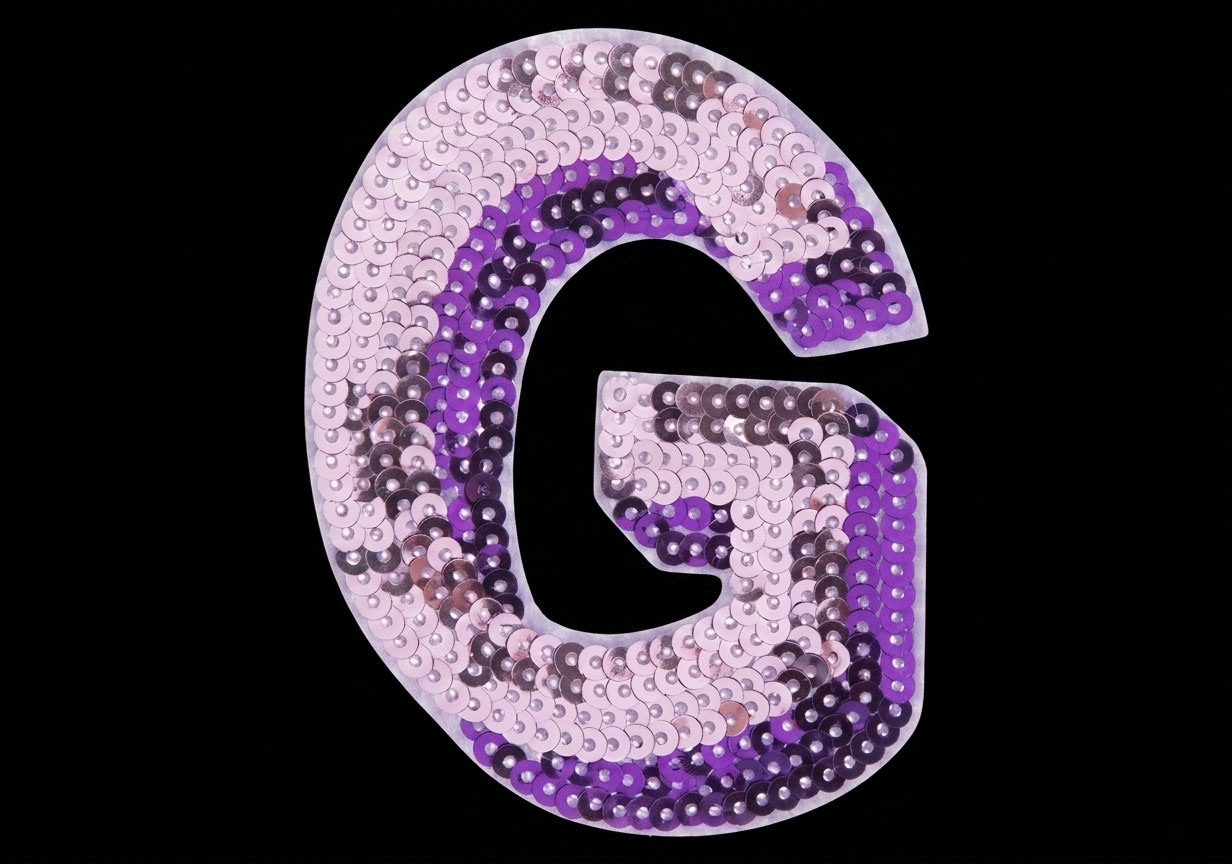
The word "sequin" has an unexpected origin: it comes from the Arabic word sikka, meaning a coin or die used to stamp metal. Historically, sequins were actually small gold coins worn as decoration in ancient civilizations. Today's sequins are typically made from lightweight metallic-coated plastic or polyester film, making them practical for everyday wear while retaining their eye-catching reflectivity. Unlike standard embroidered patches that rely entirely on colored thread, sequin patches create their visual impact through reflected light, which gives them a dynamism that flat patches simply cannot match.
Sequin patches have grown enormously in popularity over the past decade, driven by the rise of streetwear culture, festival fashion, and social media platforms like Instagram and TikTok where highly visual, sparkly apparel performs exceptionally well. Whether used on a denim jacket, a dance team uniform, or a child's backpack, sequin patches instantly draw attention and communicate a sense of fun, celebration, or premium quality.
Types of Sequin Patches
Custom sequin patches are available in four primary varieties, each with distinct characteristics, manufacturing processes, and ideal use cases. Understanding these differences is essential for choosing the right patch for your specific project.
Flat Sequin Patches
Flat sequin patches represent the most basic and widely used type. In this construction, each sequin is a single-colored disc that is permanently fixed in one orientation. The sequins are stitched down through their center holes in dense, overlapping rows, creating a continuous reflective surface. Because the sequins cannot move or flip, they consistently reflect light from the same direction, producing a steady, uniform sparkle effect.
Manufacturing details: Flat sequin patches use single-sided sequins where the color is applied to the top surface only. The underside is typically silver or white. The sequins are machine-fed and stitched row by row onto a felt or twill base. Multiple colors can be combined in one design by using different colored sequins in different areas, though this increases production complexity and cost.
Best applications: Flat sequin patches excel in situations where you want consistent, reliable sparkle without any interactive elements. They are ideal for fashion branding on jackets and hoodies, dance team uniforms that need to shine under stage lighting, stage costumes for performers, evening wear accents, and any logo or text-based design where the sequin effect should enhance rather than distract from the message.
Color options: Gold, silver, black, red, blue, green, pink, rose gold, holographic finishes, and matte finishes are all available. Holographic flat sequins are particularly popular for festival and rave wear, as they reflect multiple colors depending on the angle of light.
Flip (Reversible) Sequin Patches
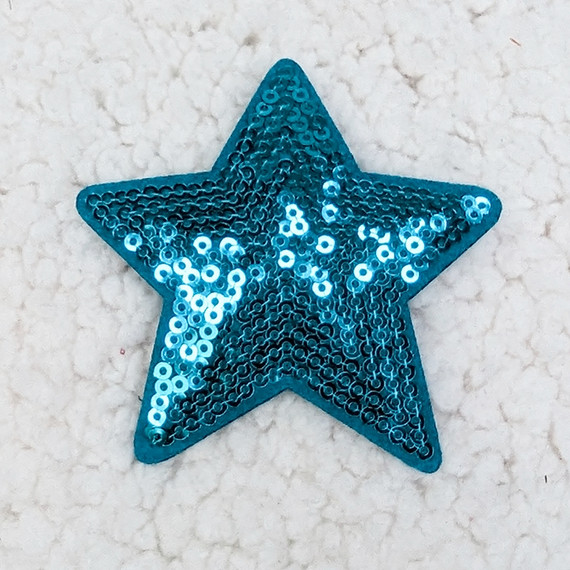
Flip sequins, also commonly called reversible sequins or color-flip sequins, are the interactive option that has captured the imagination of designers and consumers alike. Each individual sequin in a flip patch is double-sided, with a different color on each face. The sequin is anchored loosely at its center, allowing it to rotate or "flip" when brushed by a hand, finger, or any light pressure. When you brush the patch in one direction, the sequins flip to reveal the alternate color. Brushing in the opposite direction flips them back.
How the interactive effect works: The flipping action is mechanical rather than electronic. Each sequin is shaped like a shallow cup, with one color on the concave side and another on the convex side. When brushed from the correct direction, the sequin pivots on its center stitch and flips inside out, exposing the opposite color. This creates a satisfying tactile and visual experience that feels almost magical to first-time users.
Design considerations for flip sequins: Flip sequin patches work best when the two colors contrast strongly. A high-contrast pairing like black and red, silver and gold, or royal blue and hot pink creates a dramatic before-and-after effect that immediately communicates the interactive nature of the patch. Low-contrast pairings such as light blue and white or pale pink and cream tend to underwhelm because the color change is difficult to notice. Flip sequins also require slightly larger patch sizes to be effective; patches under 3 inches may not have enough sequins to create a satisfying brushing experience.
Best applications: Flip sequin patches are extremely popular in children's clothing, where the interactive "brush to reveal" feature engages kids and adds a play element to everyday garments like hoodies, backpacks, and hats. They are also used in novelty merchandise, interactive branding campaigns, fashion accessories, and products that benefit from a surprise or transformation element. Some brands use flip sequins to create patches that change between two different logos or between a logo and a hidden message.
Mermaid Sequin Patches
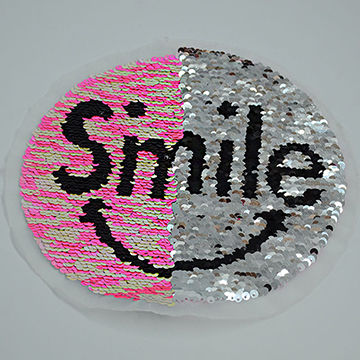
Mermaid sequins are a specialized subset of flip sequins, distinguished by slightly larger disc diameters and a different anchoring method. Standard flip sequins are typically 3 to 4mm in diameter, while mermaid sequins are often 5 to 6mm. More importantly, mermaid sequins are anchored in a way that allows them to lay flatter and transition more smoothly between colors. When brushed, they create a wave-like ripple effect that travels across the patch, resembling the shimmering scales of a mermaid's tail.
The visual difference: The larger size and flatter profile of mermaid sequins mean that the color transition is less abrupt and more organic than with standard flip sequins. Brushing a mermaid sequin patch creates a moving "wave" of color change that follows your hand, rather than all sequins flipping simultaneously. This effect is highly prized for decorative applications where the journey of the color change is as important as the final result.
Best applications: Mermaid sequin patches are especially popular for festival fashion, statement pieces on tote bags and backpacks, decorative pillows, and any application where the patch is meant to be touched and played with repeatedly. They are also a favorite for mermaid-themed parties, ocean conservation merchandise, and children's bedroom decor.
Sublimated Sequin Patches
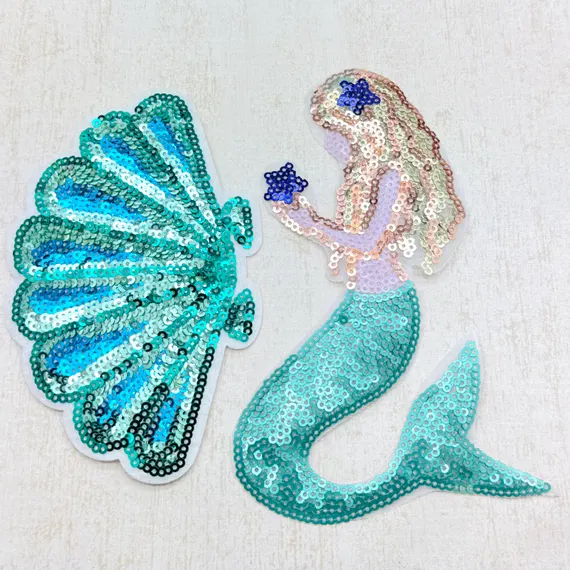
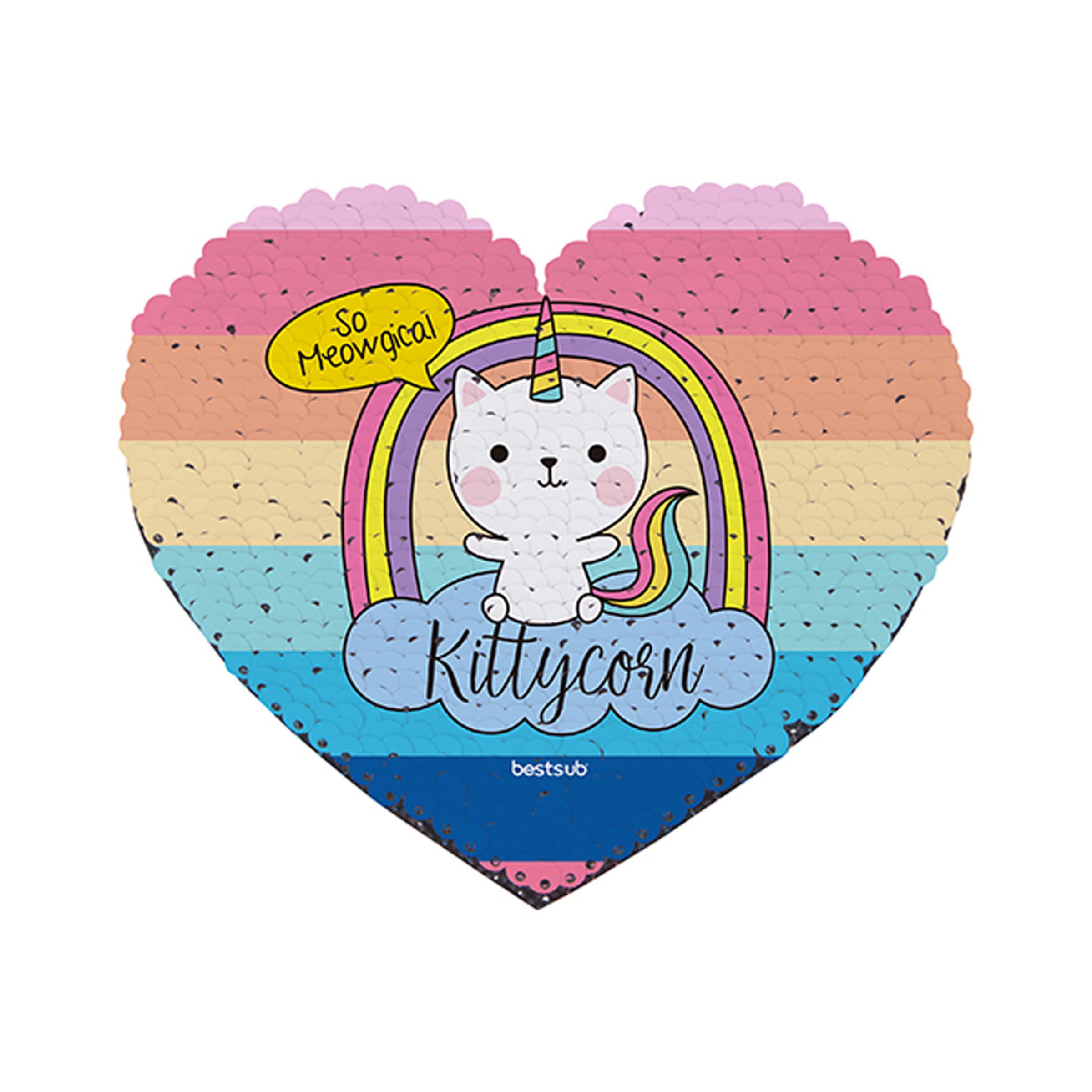
Sublimated sequin patches represent the newest and most technologically advanced option. Unlike traditional sequin patches that rely on colored sequins arranged in specific patterns, sublimated patches start with white or clear sequins. A full-color design is then printed directly onto the sequin surface using a dye-sublimation process, in which heat turns solid dye into a gas that bonds permanently with the sequin material.
Capabilities and limitations: Sublimation allows photo‑realistic imagery, gradients, fine details, and unlimited colors on a sequin patch. You can print a photograph, a complex illustration, or a brand logo with small text and subtle shading. However, the sequin texture remains underneath the printed design, so the image will still have a slightly fragmented, sparkly appearance. Sublimated sequin patches are best when you want the sparkle of sequins combined with the detail of a printed patch.
Best applications: Photo-based designs, complex artwork with many colors, brand imagery that requires more than 2–3 colors, and any design where fine detail is essential. They are also useful for small text or intricate logos that would be illegible if created with colored sequins alone.
Popular Uses for Custom Sequin Patches
Custom sequin patches have found enthusiastic adoption across a remarkably wide range of industries and applications. Below is an expanded look at each major use case, including specific examples and the reasons why sequin patches excel in each context.
Fashion and Streetwear
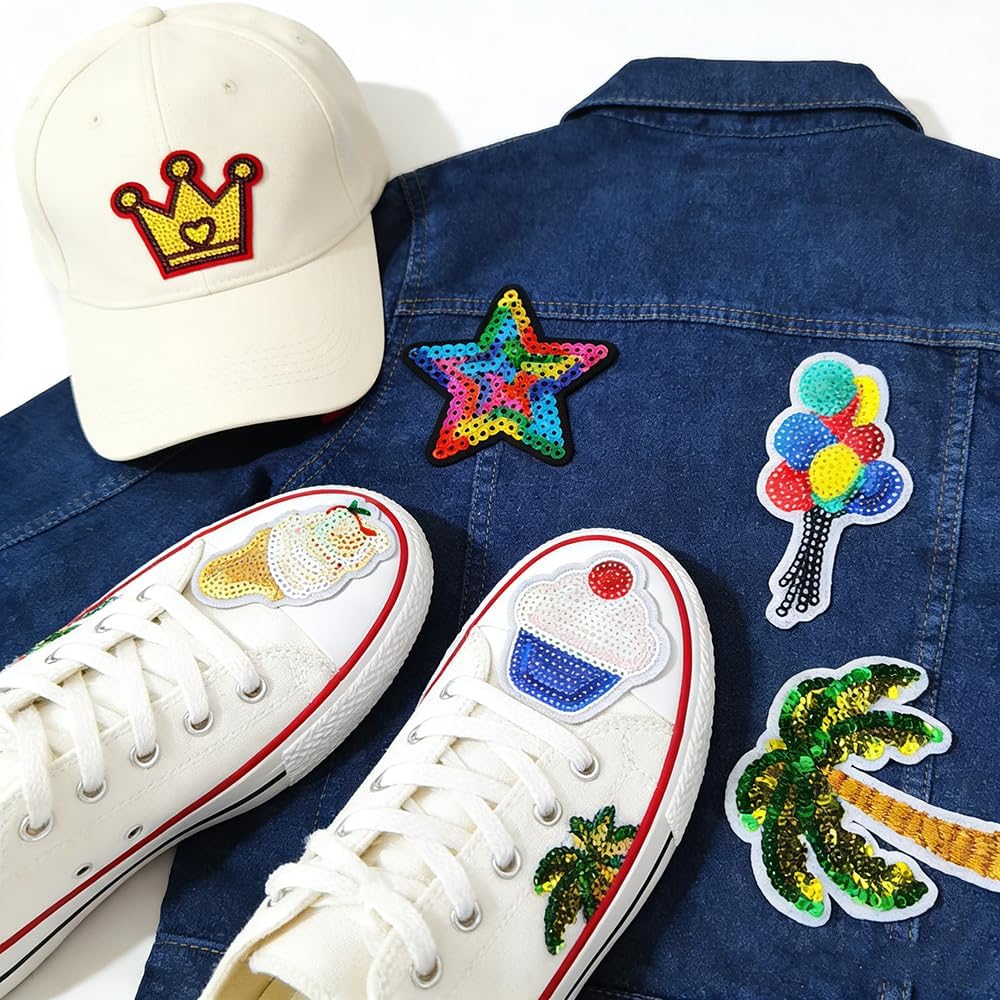
Sequin patches add a premium, attention-grabbing element to nearly any garment or accessory. Fashion brands use them as statement design pieces that photograph well on social media, stand out in retail displays, and command higher price points than plain garments. The reflective surface creates visual interest that flat patches cannot match, and the interactive flip sequin variety adds a tactile, playful dimension that encourages customers to engage with the product physically.
Specific applications: Denim jackets with a single large sequin patch on the back; hoodies with sequin logos on the chest; baseball caps with small sequin patches above the brim; tote bags with flip sequin designs that change when brushed; and limited‑edition collaboration pieces where the sequin patch is the primary design feature.
Why sequin works for fashion: The fashion industry is constantly searching for new textures and visual effects. Sequin patches offer a way to incorporate sparkle without committing to a fully sequined garment, which can be heavy, expensive, and difficult to care for. A single sequin patch provides maximum visual impact for minimal material cost and weight.
Dance Teams and Cheerleading
Dance teams, cheerleading squads, and competitive performance groups use sequin patches extensively on performance uniforms, warm‑up jackets, and competition gear. Under stage lighting, sequin patches catch and reflect light with every movement, amplifying the visual impact of performances. Judges and audiences notice the extra sparkle, and many teams feel that sequin patches give them a competitive edge in appearance-based scoring categories.
Specific applications: Competition uniforms with sequin team names or mascots; warm‑up jackets with sequin logos on the chest or sleeves; practice wear with smaller sequin accents; and award jackets for team members who achieve specific milestones.
Practical considerations for dance and cheer: Because performance garments are often washed frequently and subjected to intense physical activity, sequin patches for dance and cheer applications should be sewn on rather than ironed on. Sew‑on backing provides the most secure attachment and the longest lifespan under demanding conditions.
Kids' Apparel
Flip sequin patches are extremely popular in children's clothing, and for good reason. The interactive "brush to reveal" feature engages children on a sensory level, adding a play element to everyday clothing that keeps kids entertained and eager to wear the garment. Major retailers have driven this trend, offering pajamas, hoodies, and backpacks with flip sequin designs, and custom versions are now in high demand from smaller children's brands and school merchandise programs.
Specific applications: Hoodies with flip sequin designs on the front or sleeves; backpacks with sequin patches that change between two colors or two images; pajama sets with small sequin accents; and hats with sequin animal faces that change expressions when brushed.
Why kids love flip sequins: The cause‑and‑effect relationship—brushing the patch makes it change color—is simple enough for toddlers to understand but satisfying enough for older children to enjoy. Many children find the tactile sensation of brushing sequins calming and will do it repeatedly, which means flip sequin garments often become favorites that are worn constantly.
Corporate Events and Promotional Merchandise
Companies increasingly use sequin patches on event giveaway items, VIP merchandise, and limited‑edition promotional products. The sparkle factor makes sequin‑patched items feel premium and collectible, which increases their perceived value and the likelihood that recipients will keep and wear them rather than discarding them after an event.
Specific applications: Conference swag bags containing custom sequin patches; VIP lanyards with small sequin logos; employee recognition gifts featuring company logos on flip sequin patches; and product launch merchandise where the patch is a collectible keepsake rather than a functional item.
Why sequin works for corporate applications: Standard promotional products like pens and stress balls are easily forgotten. A well‑designed sequin patch, especially a flip sequin version with the company colors, creates a memorable physical object that recipients associate positively with the brand.
Music and Festival Culture
Festival‑goers and musicians have embraced sequin patches as a form of wearable art. The festival environment—outdoor settings, bright sunlight, evening lights, and a celebration‑focused atmosphere—is perfectly suited to the reflective, attention‑grabbing nature of sequin patches. Custom sequin patches for band merchandise, festival lineups, and tour memorabilia represent a growing market segment.
Specific applications: Denim jackets and vests covered in a mix of sequin and other patches; festival wristbands with small sequin accents; band merchandise featuring album art reproduced on sublimated sequin patches; and limited‑edition tour patches sold only at specific shows.
The social media factor: Festival fashion is heavily documented on social media, where sequin patches photograph beautifully. A single well‑placed sequin patch can make an outfit stand out in crowded event photos and generate organic social media exposure for the brand or artist.
School and Team Spirit
Schools, booster clubs, and parent organizations use sequin patches on spirit wear, fundraiser merchandise, and award items. Flip sequin patches with school colors create engaging products that students actually want to wear, which improves participation in spirit days and fundraising campaigns.
Specific applications: School hoodies with flip sequin mascots that change between the home and away colors; fundraiser patches sold to support specific teams or clubs; award patches for academic or athletic achievements; and parent‑teacher association merchandise for volunteer recognition.
Why sequin works for schools: Students, especially in elementary and middle school, respond positively to interactive and visually distinctive items. A standard embroidered spirit wear patch might be ignored, but a flip sequin patch that changes colors when brushed becomes a conversation starter and a point of pride.
Custom Sequin Patches vs. Other Patch Types
Choosing the right patch type for your project requires understanding how sequin patches compare to the alternatives. Below is a detailed, feature‑by‑feature comparison of sequin patches against embroidered, chenille, and PVC patches.
| Feature | Sequin Patches | Embroidered Patches | Chenille Patches | PVC Patches |
|---|---|---|---|---|
| Visual Impact | Very high (reflective) | Medium (classic) | High (3D texture) | Medium (bold colors) |
| Interactive | Yes (flip type) | No | No | No |
| Detail Level | Low to medium | High | Low | Medium |
| Weather Resistance | Low | Medium | Medium | High (waterproof) |
| Best For | Fashion, dance, kids | Corporate, uniforms | Varsity, letterman | Outdoor, tactical |
Winner for visual impact: Sequin patches, by a significant margin. Nothing else creates the same light‑catching, attention‑grabbing effect.
Winner for interactivity: Sequin patches are the unique winner in this category.
Winner for detail: Embroidered patches, with PVC as a secondary option.
Winner for weather resistance: PVC patches.
Winner for lightweight comfort: Embroidered patches.
Winner for affordability: Embroidered patches.
Summary Decision Guide: Choose sequin patches when you need maximum visual impact, interactive color‑change effects, or sparkle for fashion, dance, or kids' apparel. Choose embroidered patches when your design has fine detail, small text, or needs a professional, classic appearance. Choose chenille patches when you want a bold, thick, plush texture for varsity letterman jackets or retro designs. Choose PVC patches when you need waterproof, chemical‑resistant patches for outdoor gear, tactical equipment, or items that will be heavily abused.
How Much Do Custom Sequin Patches Cost?
Custom sequin patch pricing is determined by several interacting factors. Understanding each factor allows you to make informed decisions that balance cost against visual impact and quality.
| Quantity | Per Piece Price | Total Cost | Cost Reduction vs. 10 pieces |
|---|---|---|---|
| 10 | $13.07 | $130.70 | (baseline) |
| 25 | $6.53 | $163.25 | 50% lower per piece |
| 50 | $4.58 | $229.00 | 65% lower per piece |
| 100 | $3.92 | $392.00 | 70% lower per piece |
| 500 | $1.97 | $985.00 | 85% lower per piece |
| 1000 | $1.63 | $1,630.00 | 87.5% lower per piece |
As the table shows, moving from 10 pieces to 1,000 pieces reduces the per‑piece cost by nearly 88%. For large projects, ordering in bulk is vastly more economical.
Factor 2: Patch Size — Larger patches require more sequins and more stitching time. A 6‑inch sequin patch might cost three to four times as much as a 3‑inch patch of the same design, because the surface area increases by a factor of four. Size pricing guidelines: 2‑inch patches are the smallest recommended size; 3‑inch patches are most common; 4‑inch and 5‑inch popular for back‑of‑jacket; 6‑inch+ are statement pieces.
Factor 3: Sequin Type (Flat vs. Flip) — Flip sequins cost 20–40% more due to double‑sided discs and complex anchoring.
Factor 4: Shape Complexity — Simple shapes (circle, square) cost less; intricate die‑cut adds significant cost.
Factor 5: Backing Type — Sew‑on and iron‑on included; Velcro adds fixed fee (~$30); adhesive may add per‑piece fee.
Factor 6: Color Count and Design Complexity — More colors increase complexity and cost. Simple 1–2 color designs most economical.
Hidden Costs to Watch For: Some manufacturers add fees for setup, digitizing, artwork, or shipping. Always ask for fully inclusive quote.
Design Tips for Custom Sequin Patches
Designing effective sequin patches requires a different approach than designing for print, embroidery, or other media. The unique properties of sequins—their size, reflectivity, and mechanical behavior—impose specific constraints and create specific opportunities.
Tip 1: Keep Designs Bold and Simple. This is the most important design rule. Sequins are physical objects 3–6mm. Any element smaller than 8mm disappears. Bold letters, simple shapes, thick outlines work. Serif text, fine details, intricate mandalas do not work.
Tip 2: Use High‑Contrast Color Combinations for Flip Sequins. Excellent pairs: Black/red, black/white, silver/gold, royal blue/hot pink, purple/yellow, green/orange, holographic/matte. Avoid low contrast: light blue/white, pale pink/cream, navy/black.
Tip 3: Account for the Sparkle Factor in Your Design. Sequin patches look different in photographs. Request physical sample for critical photography. Designs with large single color can appear flat; adding pattern (checkerboard, stripes) creates interest.
Tip 4: Size Matters—Don't Go Too Small. 2 inches absolute minimum; 3 inches recommended minimum; 4+ inches ideal for primary feature. Very small patches can work as accents on hats/collar tips only if extremely simple.
Tip 5: Plan for the Application Surface. Good surfaces: denim jackets, cotton tote bags, baseball caps, backpacks, performance uniforms. Poor surfaces: T‑shirts (too soft), silk/satin, stretchy knits, curved shoe toes.
Tip 6: Consider the Border Finish. Merrowed border (overlocked thread edge) gives clean professional look. Hot‑cut border for custom shapes. Stitched border helps hold dense sequin rows. For most, merrowed or stitched border recommended.
Backing Options for Sequin Patches
Choosing the correct backing for your sequin patches is essential for both application ease and long‑term durability. Each backing type has distinct characteristics, installation requirements, and ideal use cases. Below is a detailed explanation of each option to help you make the right choice for your project.
Sew-On Backing
Sew‑on backing is the most traditional and secure attachment method for sequin patches. The patch comes with a fabric base that is designed to be stitched directly onto the garment or accessory using a standard sewing machine or by hand. The stitching typically goes around the outer border of the patch, passing through both the patch base and the garment fabric. Why sew‑on is recommended for sequin patches: Sequin patches are heavier and stiffer than embroidered patches. The sequins themselves create additional weight that can stress an adhesive bond over time. Sewing distributes this weight across dozens of individual thread points, creating a much stronger and longer‑lasting attachment than any adhesive method. Installation process: position patch, pin, stitch around perimeter using sewing machine (needle 90/14 or 100/16) or hand‑sew with backstitch. Best applications: dance team uniforms, cheerleading apparel, heavily worn jackets, bags, items machine‑washed regularly. Drawbacks: requires sewing access or skill.
Iron-On Backing
Iron‑on backing uses a heat‑activated adhesive. Heat and pressure (household iron or heat press) melt the adhesive to bond with fabric. Applying to sequin patches requires pressing cloth between iron and sequins. Iron medium‑high (300–350°F) with steam off. Step‑by‑step: preheat fabric, position patch, cover with pressing cloth, apply firm pressure 30–45 seconds, cool, then iron reverse side for extra bond. Best for: cotton, cotton‑polyester, denim, canvas. Drawbacks: less durable than sew‑on, can peel, heat may damage delicate fabrics (silk, nylon, rayon). Never apply to waterproof or coated fabrics.
Velcro Backing
Velcro (hook‑and‑loop) allows repeated attachment and removal. Patch gets hook side; loop side attaches to garment. Best for military/tactical gear, law enforcement, scouts, conference badges where patches change frequently. Drawbacks: adds thickness, scratchy against skin, collects lint, adds fixed fee (~$30).
Adhesive Backing
Peel‑and‑stick layer, temporary use only. Not washable, not durable. Best for temporary name badges, promotional giveaways, attaching to smooth non‑fabric surfaces (laptop cases, hard hats). Drawbacks: adhesive degrades, leaves residue, not for any long‑term application.
Choosing the Right Backing for Your Project: For maximum durability → sew‑on. Convenience with moderate durability → iron‑on. Removable patches → Velcro. Temporary/promo only → adhesive.
How to Order Custom Sequin Patches from Custom Panda
Ordering custom sequin patches is a straightforward process when you work with an experienced manufacturer. Below is a detailed, step‑by‑step explanation of the ordering process from design submission to final delivery.
Step 1: Prepare and Submit Your Design. Acceptable file formats: vector (AI, EPS, PDF, SVG) or high‑res raster (PNG, JPG, TIFF). Specify flat or flip sequins, size, backing, quantity. No artwork? In‑house design team creates it.
Step 2: Receive Your Free Digital Proof. Within 12–24 hours, digital mockup showing sequin colors, border, dimensions. Unlimited free revisions. Production begins only after written approval.
Step 3: Approve the Proof and Begin Production. Design digitized, sequin spools loaded, machine stitches row by row, patches cut, inspected, backings applied. Production timeline: standard 7–14 business days; Custom Panda offers 2–3 days production and rapid dispatch.
Step 4: Quality Control and Packaging. Each patch inspected. Packaging: bulk bag or individual polybags. Custom packaging available.
Step 5: Shipping and Delivery. Worldwide shipping. Standard 5–7 business days domestic, 10–14 international. Tracking provided. Upon receipt, inspect against digital proof; manufacturer guarantees quality.
How to Care for Sequin Patches
Sequin patches require more careful handling than embroidered or PVC patches:
Washing: Turn garments inside out before washing. Use cold water on a gentle cycle. Avoid bleach. Hot water and harsh detergents can damage sequin coatings and loosen stitching.
Drying: Air dry only. Never put sequin-patched garments in a tumble dryer. The heat can warp sequins and melt adhesive backings.
Ironing: Never iron directly on sequins. If the garment needs pressing, turn inside out and iron the reverse side, or use a pressing cloth between the iron and the sequined area.
Storage: Store flat or hang. Do not fold garments with sequin patches, as the pressure can bend or crack sequins over time.
Flip sequins: Flip sequin patches may develop a "favorite" direction after repeated brushing. This is normal and does not affect the patch's function or appearance.
FAQs About Sequin Patches
1. Can you wash sequin patches?
Yes, but with care. Turn the garment inside out, use cold water on a gentle cycle, and air dry only. Never tumble dry or iron directly on the sequins.
2. What is the minimum order for custom sequin patches?
There is no minimum order. You can order as few as one piece or thousands—perfect for both small businesses and large brands.
3. Are sequin patches good for outdoor use?
No. Sequin patches are not waterproof and are not recommended for outdoor gear, rain jackets, or items exposed to heavy moisture.
4. How long does it take to receive custom sequin patches?
Production typically takes 2 to 3 days, and worldwide shipping arrives in 5 to 7 days. A free digital proof is provided within 12 hours of design submission.
Ready to create your own custom sequin patches? Contact Custom Panda today to get started with a free digital proof and no minimum order requirement.

