
th
Stickers vs. Labels Printing: Which Is Best for Your Project?
If you’ve ever held a sheet of adhesive-backed paper and wondered whether it qualifies as a sticker or a label, you’re not alone. In the printing world, the two terms are often used interchangeably—but in practice, they serve fundamentally different purposes. Choosing the wrong one can mean the difference between a product that communicates clearly and a brand moment that falls flat.
This guide breaks down not only the basic differences between stickers and labels, but also the material science, adhesive engineering, format options like die-cut vs. kiss-cut, and the specific scenarios where one outperforms the other. By the end, you’ll understand not just which to choose, but why—and how to bring your vision to life with expert craftsmanship.
What Is a Label?
A label is, first and foremost, a communication tool. Its primary job is to inform. Whether it’s a nutrition facts panel, a barcode, or a shipping address, labels exist to deliver critical information clearly, accurately, and efficiently—often within strict regulatory or logistical constraints.
Unlike stickers, which are designed to be kept and displayed, labels are frequently intended to accompany a product through its lifecycle and then be discarded. This functional orientation influences every aspect of their construction, from material selection to adhesive chemistry.
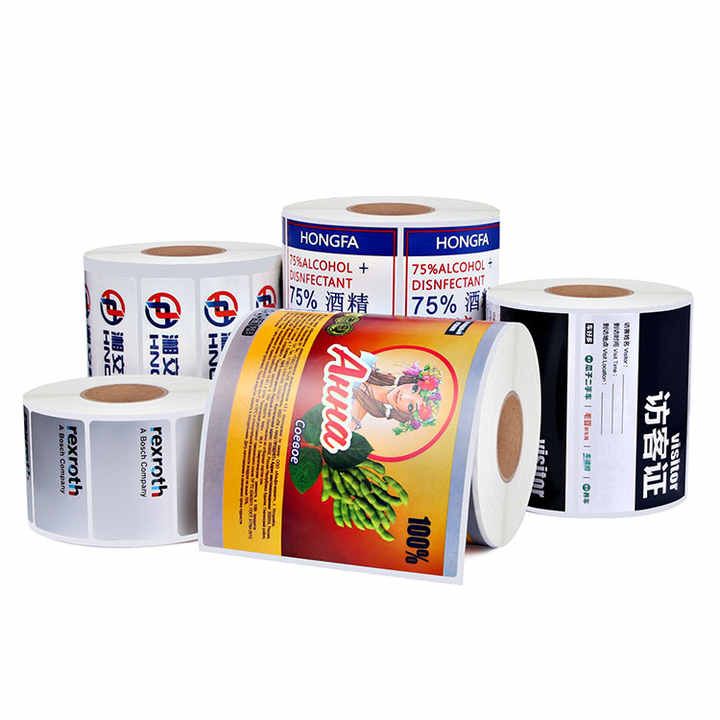
Label Materials and Formats
Labels are typically constructed from materials that prioritize print fidelity, conformability, and cost-effectiveness over extreme durability. The choice of material directly impacts how the label performs in its intended environment.
Paper Labels
Paper remains the most widely used label material for applications where exposure to moisture, chemicals, or prolonged handling is minimal. It offers excellent print quality for text-heavy designs and is highly cost-effective at scale. However, paper labels are porous and susceptible to tearing, making them unsuitable for refrigerated products, outdoor applications, or anything that will be handled repeatedly. For dry goods packaging, shipping cartons, and office organization, paper labels deliver reliable performance at the lowest cost point.
Film Labels (Polypropylene, Polyethylene, and Polyester)
Film-based labels represent a significant step up in durability. Polypropylene (PP) labels offer good moisture resistance and dimensional stability, making them a popular choice for personal care products, beverages, and household cleaners. Polyethylene (PE) labels are highly flexible and conform exceptionally well to curved or squeezable containers—think shampoo bottles or lotion tubes. Polyester (PET) labels provide the highest level of durability, with excellent resistance to heat, chemicals, and abrasion, making them suitable for industrial applications, automotive products, and electronics.
Format: Sheets vs. Rolls
Labels are typically supplied in one of two formats, each optimized for different application workflows.
Sheet labels are ideal for small-scale projects or hand application. They’re compatible with standard desktop printers, making them accessible for startups, craft businesses, and office environments. Sheet labels work well for short production runs where investing in roll-label application equipment isn’t justified.
Roll labels, by contrast, are engineered for efficiency at scale. Produced on continuous rolls, they can be applied by hand using label dispensers or fully automated with high-speed labeling machines. For businesses packaging thousands of units, roll labels reduce application time from seconds per unit to fractions of a second, delivering substantial labor cost savings over time.
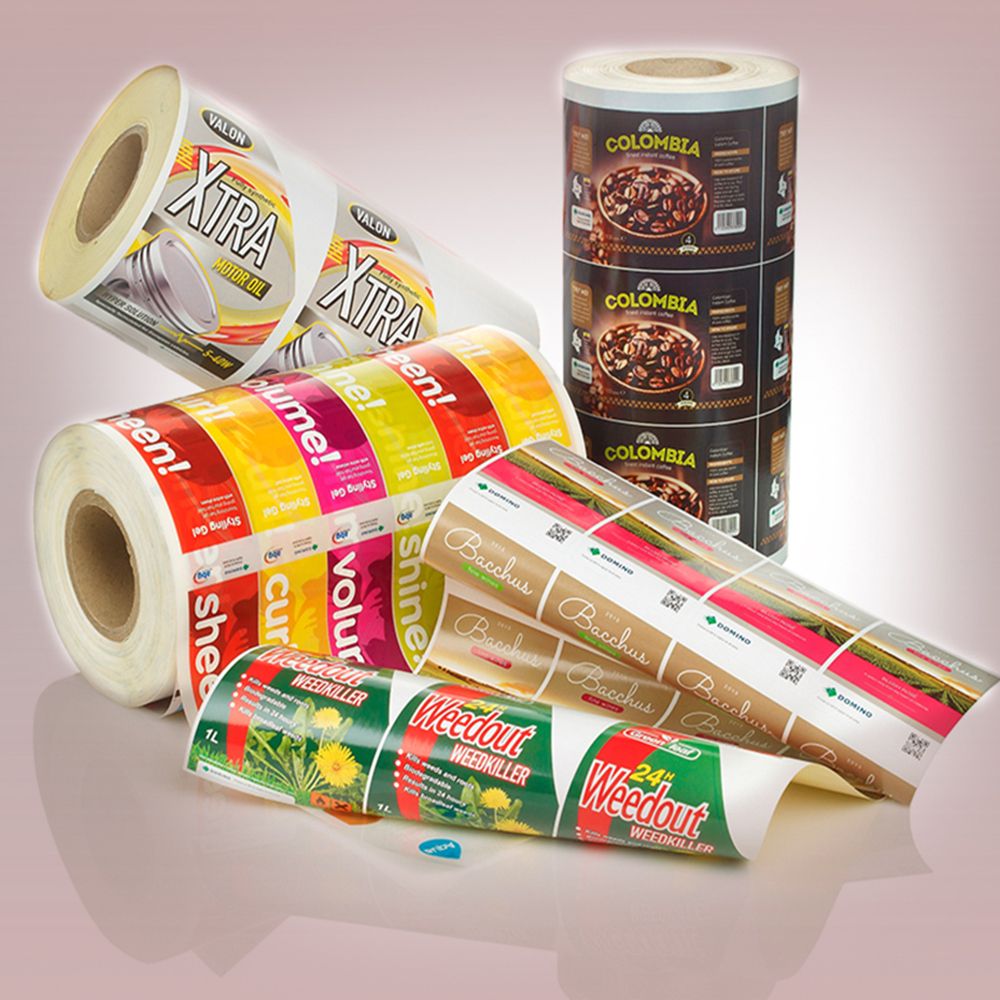
Key Features of Labels
Information-centric design: Labels accommodate variable data such as barcodes, lot numbers, and expiration dates—elements that may change between print runs.
Adhesive versatility: Labels offer a spectrum of adhesive formulations, including permanent (designed to bond aggressively and resist removal), removable (engineered to peel away cleanly without residue), and repositionable (allowing multiple placement attempts before final bonding).
Conformability: Film labels are engineered to stretch and conform to curved, textured, or compressible surfaces without wrinkling or lifting.
Temperature resistance: Specialty label adhesives can withstand freezing temperatures, hot-fill processes, or high-heat environments like dishwasher cycles.
What Is a Sticker?
Where labels inform, stickers engage. Stickers are designed to be seen, shared, and displayed—often far beyond their original context. A well-designed sticker can turn a customer into a brand advocate the moment they place it on their laptop, water bottle, or car window.
The fundamental difference lies in intent. A label asks to be read; a sticker asks to be kept. This shift in purpose drives everything from material selection to cutting methods and finishing treatments.
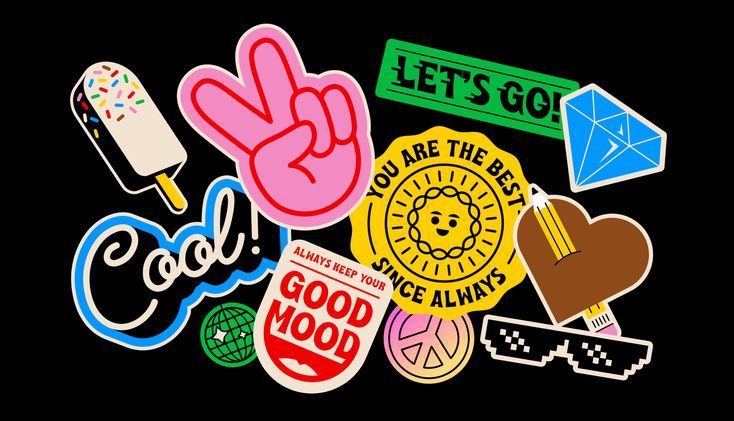
Sticker Materials
Vinyl
Vinyl is the gold standard for premium stickers. It offers exceptional durability, flexibility, and weather resistance. Calendered vinyl is the most common option for general-purpose stickers, offering good conformability and a service life of three to five years outdoors. Cast vinyl, a premium alternative, is formulated for extreme conformability around complex curves and irregular surfaces—ideal for vehicle graphics or products with compound curves. Vinyl stickers resist UV fading, moisture, and moderate abrasion, making them suitable for outdoor applications ranging from car windows to outdoor equipment.
BOPP (Biaxially-Oriented Polypropylene)
BOPP offers a balance of durability and cost that sits between paper and vinyl. It provides excellent water resistance and a high-gloss finish that makes colors appear vibrant and saturated. While not as flexible or long-lasting as cast vinyl, BOPP is an excellent choice for indoor stickers, product branding, and applications where a premium appearance is desired without the higher cost of vinyl.
Polyester (PET)
For applications requiring exceptional heat resistance, chemical resistance, or dimensional stability, polyester stickers are the material of choice. They maintain their integrity in extreme temperatures and resist solvents, oils, and harsh cleaning agents, making them suitable for industrial labeling, electronics, and outdoor equipment that faces demanding conditions.
Sticker Formats: Die-Cut vs. Kiss-Cut
One of the most important distinctions in sticker production is the cutting method. The choice between die-cut and kiss-cut affects not only the appearance of the finished product but also how it’s used, distributed, and applied.
Die-Cut Stickers
Die-cut stickers are cut completely through both the sticker material and the liner (backing paper), following the exact contour of the design. The result is a sticker with no excess material around the edges—the sticker itself is the shape. This format creates a premium, finished appearance where the focus remains entirely on the design.
The complete separation from the liner means each die-cut sticker is an individual piece. This makes them ideal for applications where the sticker will be applied immediately after peeling, such as branded merchandise, promotional giveaways, or point-of-purchase displays. Because there’s no surrounding liner to protect the edges, die-cut stickers require careful handling during shipping to prevent edge curling or adhesive contamination.

Die-cut stickers excel when:
The shape itself is a critical part of the design
Stickers will be handed out individually
A premium, finished appearance is desired
Complex contours need to follow intricate artwork
Kiss-Cut Stickers
Kiss-cut stickers are cut through the sticker layer only, leaving the liner (backing paper) intact. The cutting blade applies just enough pressure to penetrate the sticker material without cutting the liner beneath. This allows multiple stickers to be arranged on a single sheet with a common backing, creating a cohesive presentation that can include multiple designs, sizes, or variations.
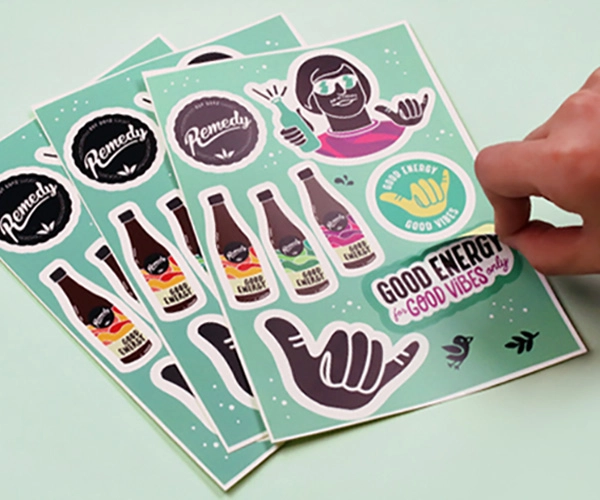
The intact liner provides significant practical advantages. It protects the adhesive edges from dust and contamination during shipping and storage. It also allows for easy handling—the sheet can be passed to customers or event attendees without the risk of individual stickers separating or adhering to unintended surfaces. When application is needed, the sticker is simply peeled from the intact liner.
Kiss-cut stickers are particularly valuable for:
Sticker sheets containing multiple designs
Retail packaging where presentation matters
Event giveaways where ease of distribution is key
Protecting intricate or delicate designs during shipping
Key Features of Stickers
Aesthetic-driven construction: Stickers prioritize visual impact, with options for metallic foils, holographic effects, textured laminates, and custom spot gloss treatments.
Enhanced durability: Premium stickers incorporate UV-resistant inks and laminate layers that protect against fading, scratching, and moisture penetration.
Extended lifespan: Unlike labels intended for a product’s shelf life, quality stickers are engineered to remain vibrant and adhered for years, even under outdoor conditions.
Emotional resonance: Stickers serve as tangible brand touchpoints that customers actively choose to keep and display, extending brand visibility beyond the point of sale.
Labels vs. Stickers: A Technical Comparison
While both products share an adhesive backing and printable surface, their differences span material science, adhesive chemistry, and manufacturing processes.
| Aspect | Labels | Stickers |
|---|---|---|
| Primary Purpose | Information delivery and compliance | Brand expression and customer engagement |
| Typical Format | Rolls optimized for automated application | Sheets, kiss-cut sheets, or individual die-cut pieces |
| Material Thickness | Typically 2–4 mils (thin, conformable) | 3–8 mils (thicker, more durable) |
| Common Materials | Paper, polypropylene, polyethylene, polyester | Vinyl (calendered and cast), BOPP, polyester |
| Durability Expectation | Matches product lifecycle (months to years) | Extended use (years, often outdoors) |
| Adhesive Chemistry | Wide range: permanent, removable, repositionable, freezer-grade, high-temp | Typically high-tack permanent for lasting application |
| Application Method | Machine application (rolls) or hand (sheets) | Primarily hand application |
| Finishing Options | Lamination, varnish, basic spot coatings | Lamination (gloss, matte, textured), foil stamping, embossing, spot UV, screen-printed overlays |
| Regulatory Considerations | Often required to include barcodes, nutrition panels, safety information | Typically no regulatory requirements |
When to Choose Stickers
Stickers are the right choice when your goal extends beyond the package and into your customer’s everyday life. Consider stickers if:
You want organic, ongoing brand visibility – A sticker on a customer’s laptop, water bottle, or car window functions as continuous, unpaid advertising. Each placement represents a brand endorsement that reaches new audiences daily, with no ongoing media spend.
Your application demands durability – For outdoor equipment, vehicles, reusable water bottles, or products that will face UV exposure, moisture, or abrasion, vinyl stickers with UV-resistant laminate are essential. Standard paper or film labels will degrade rapidly under these conditions.
Your design is artistically complex – Intricate die-cut shapes, metallic foils, holographic effects, and custom contours are best realized in sticker format. The thicker material and specialized finishing options available for stickers support design ambitions that label production typically cannot accommodate.
You’re creating merchandise or swag – Stickers are consistently ranked among the most popular and cost-effective items for fan merchandise, influencer marketing kits, trade show giveaways, and customer loyalty programs. Their low per-unit cost combined with high perceived value makes them exceptionally efficient marketing tools.
You want to build community – Stickers serve as a tangible symbol of affiliation. From brand loyalists to fan communities, stickers create a sense of belonging that digital interactions alone cannot replicate.
When to Choose Labels
Labels excel in environments where clarity, consistency, efficiency, and regulatory compliance are paramount. Choose labels when:
Regulatory information must be clearly displayed – Food products, cosmetics, household chemicals, and many other consumer goods require specific information formats, font sizes, and placement. Labels are designed to accommodate these requirements while maintaining print clarity and adhesive reliability.
Volume is high and application speed matters – If you’re labeling thousands or millions of units, roll labels applied by automated machinery will save significant labor time compared to hand-applying individual stickers. The efficiency gains often justify the initial setup investment within the first production run.
The adhesive must perform under specific conditions – Specialized label adhesives are available for applications ranging from freezer storage (withstanding sub-zero temperatures without embrittlement) to hot-fill processing (adhering to containers immediately after filling at elevated temperatures). These performance characteristics are generally not available in standard sticker adhesives.
Removability is a requirement – For retail shelf tags, reusable containers, or temporary promotions, labels with removable adhesive offer clean removal without residue. Removable label adhesives are engineered to release cleanly after days, months, or even years of application.
Conformability around complex shapes is needed – Thin film labels conform readily to curved, tapered, or compressible surfaces without the thickness and rigidity that would cause standard stickers to lift at the edges.
Cost and Efficiency Considerations
Understanding the true cost of stickers versus labels requires looking beyond per-unit price to consider the full production and application lifecycle.
Material costs — Paper labels on rolls typically offer the lowest per-unit cost at high volumes, often reaching fractions of a cent per label. Vinyl stickers, especially in custom die-cut shapes, carry a higher per-unit cost due to material thickness, specialized cutting requirements, and the premium finishes that are standard in sticker production.
Setup and tooling — Both formats require tooling for custom shapes. Die-cutting tooling costs are generally comparable regardless of whether the final product is classified as a sticker or label. However, kiss-cut sticker sheets can sometimes reduce setup complexity for small-batch runs by accommodating multiple designs within a single tooling configuration.
Application efficiency — Roll labels are engineered for speed. Automated label applicators can apply hundreds of labels per minute with precision placement. By contrast, hand-applied stickers typically require several seconds per unit. For high-volume production, the labor cost difference can be substantial—often outweighing the higher per-unit material cost of roll labels.
Inventory and storage — Rolls of labels store compactly and feed efficiently into production lines. Sticker sheets and die-cut stickers require more storage space per unit and generally involve more handling during application, factors that contribute to operational costs in larger-scale operations.
Finishing effects — Lamination, foil stamping, spot UV, and embossing add cost to both labels and stickers. However, these effects are more commonly applied to stickers where the visual impact directly supports brand positioning and customer engagement objectives.
Why Choose Custom Panda
At Custom Panda, we approach stickers and labels not as commodities but as critical brand touchpoints. Every adhesive product we manufacture carries the weight of your brand identity, and we treat it with the attention to detail it deserves.
As specialists in custom pins, custom patches, and custom labels, we’ve built our reputation on understanding how tactile details—material feel, edge finishing, durability characteristics—shape customer perception. We bring this same expertise to every sticker and label project.
If you’re looking for a manufacturing partner who understands that the details matter—whether it’s a label that stays legible after months on a shelf or a sticker that becomes a collector’s item—contact Custom Panda today. Let’s build something that sticks.
Frequently Asked Questions
Can I use a sticker as a product label?
Yes, but consider the trade-offs. Stickers are generally thicker, more expensive, and less conformable than roll labels designed for automated application. For low-volume, hand-applied products where durability and appearance justify the cost, stickers can serve as excellent product labels. For high-volume production or complex container shapes, a thin film roll label is usually the more practical choice.
What’s the difference between permanent and removable adhesives?
Permanent adhesives are formulated to create a strong, long-term bond. Once applied, they resist removal and typically leave residue if forced. Removable adhesives are engineered to release cleanly from surfaces without residue, even after extended application. The choice depends entirely on whether the application is intended to be temporary or permanent.
Are vinyl stickers truly waterproof?
High-quality vinyl stickers with UV laminate are fully waterproof and weather-resistant. They withstand rain, humidity, and even dishwasher cycles when properly applied. However, the adhesive bond, not just the material, matters—proper surface preparation and application technique are essential for achieving maximum water resistance.
How do I choose between die-cut and kiss-cut stickers?
Choose die-cut if you want each sticker to stand alone with no surrounding backing material—ideal for merchandise, handouts, or applications where the shape itself is integral to the design. Choose kiss-cut if you’re distributing multiple stickers as a set, need protection for intricate designs during shipping, or want a presentation format that keeps stickers organized until application.
Do I need a laminate for outdoor stickers?
If your stickers will face direct sunlight, rain, or frequent handling, a UV-stable laminate is highly recommended. It protects against fading, scratching, and moisture penetration, extending the usable life of the sticker from months to years. For indoor applications or short-term outdoor use, laminate may be optional.
How should I prepare artwork for custom stickers or labels?
Artwork should be supplied at 300 DPI (dots per inch) or higher at final print size, with text converted to outlines or embedded fonts. For die-cut shapes, we recommend including a bleed area extending beyond the intended cut line to account for minor registration variations. Our production team can provide detailed artwork specifications based on your specific material and format requirements.
Ready to move forward with your sticker or label project? Whether you need functional roll labels for production or custom die-cut stickers for brand building, Custom Panda has the experience and capabilities to deliver. Reach out today to discuss your project with our team.
<!--!doctype-->

