
th
How to Custom Wine Bottle Labels: The Complete Guide
A bottle of wine tells a story even before the first sip is taken. The label is its face, its personality, and its memory. Whether you are a home winemaker bottling your first vintage, a couple planning wedding favors, or a business owner launching a private label, custom wine bottle labels elevate a simple bottle into something personal, professional, and unforgettable. This complete guide walks you through everything you need to know, from understanding what custom labels are to avoiding common mistakes, while showing you how brands like Custom Panda can turn your vision into reality.
What Are Custom Wine Bottle Labels?
Custom wine bottle labels are personalized designs printed on adhesive materials and applied to wine bottles. Unlike mass-produced commercial labels, custom labels are created for specific occasions, branding needs, or personal expressions. They can include names, dates, logos, artwork, or even handwritten-style messages.
Custom labels serve many purposes. A bride and groom might use them for wedding favors. A company might brand its corporate gifts. A home winemaker might label each batch with vintage notes. Even restaurants use custom labels to differentiate house wines. In essence, any time you move beyond the standard winery label, you are entering the world of custom wine labels. They are not just stickers; they are storytelling tools.
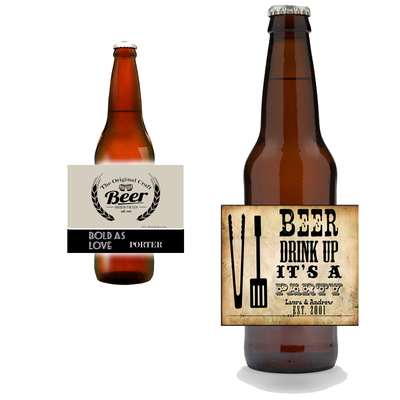
Key Features of Custom Wine Bottle Labels
High-quality custom wine labels share several defining characteristics. Understanding these features helps you make better design and purchasing decisions.
Material Options are the first feature. Common materials include paper, kraft paper for a rustic look, clear film for a no-label look, and metallic finishes for elegance. Each material interacts with wine bottles differently. For example, clear film works beautifully on dark glass, while kraft paper suits organic or farmhouse-style wines.
Adhesive Quality is critical because wine bottles are often chilled or stored in humid cellars. A good custom label uses moisture-resistant or waterproof adhesive. Some adhesives are removable for reuse, while others are permanent.
Shape and Die-Cutting separate basic labels from premium ones. Standard shapes like rectangles are cost-effective, but custom die-cut shapes—such as grapes, leaves, or crests—create a memorable unboxing experience.
Printing Technology affects final appearance. Digital printing is ideal for small runs and photo-realistic images. Offset printing offers lower unit costs for large volumes. Premium labels often use foil stamping, embossing, or screen printing for texture and shine.
Finish includes matte, gloss, or soft-touch lamination. A matte finish looks sophisticated and resists fingerprints. Gloss makes colors pop. Soft-touch feels luxurious like velvet.
Feature
Options
Best For
Material | Paper, Kraft, Clear, Metallic | Everyday, Rustic, No-label look, Premium |
Adhesive | Permanent, Removable, Freezer-grade | Long-term storage, Reusable bottles, Ice buckets |
Shape | Standard, Custom die-cut | Budget-friendly, Unique branding |
Finish | Matte, Gloss, Soft-touch | Elegance, Vibrancy, Luxury feel |
Key Considerations Before Customizing Wine Labels
Before you upload your artwork, pause and evaluate five important factors. These considerations save you time, money, and frustration.
Bottle Size and Shape matters more than you think. A standard 750ml bottle has a main front label area roughly 4 inches wide by 5 inches tall. However, Burgundy bottles are wider, Bordeaux bottles are taller, and dessert wine bottles are smaller. Measure your bottle’s circumference and curvature. A label that is too wide will wrinkle; too narrow looks lost.
Usage Environment determines material choice. Will the wine be served at an outdoor summer wedding? That means ice buckets, condensation, and sunlight. You need waterproof, UV-resistant labels. Will it be stored in a dark cellar for five years? Then standard paper with permanent adhesive is fine. Will it be frozen? Choose freezer-grade adhesive.
Label Placement typically involves a front label and a back label. Some customers add a neck label or a capsule (the foil top). The front label catches attention. The back label tells the story, lists ingredients, or carries a personal message. Decide how many pieces you need per bottle.
Regulatory Requirements apply if you are selling or gifting wine commercially. In many countries, alcohol labels must display volume (e.g., 750ml), alcohol percentage, health warnings, and producer information. For personal use, these rules are relaxed, but it is still wise to include basic information if gifting.
Budget and Quantity drive every decision. Digital printing has a low setup cost, making it perfect for 50 to 500 labels. Offset printing requires higher setup but becomes cheaper beyond 2,000 labels. Custom die-cut shapes, foil, and embossing add cost. Always order 10–20% extra labels to account for application errors.
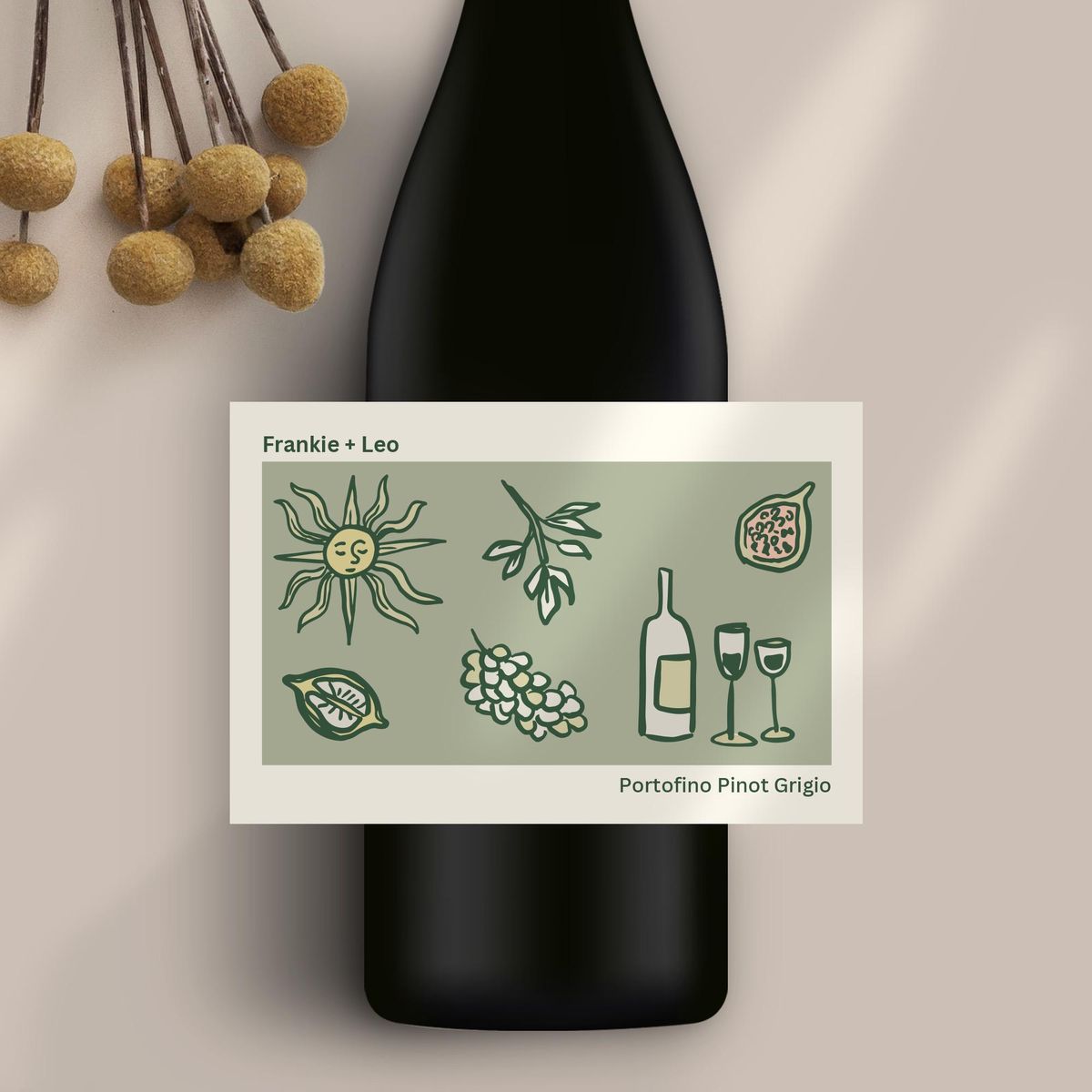
How to Customize Wine Bottle Labels Step by Step
Follow this six-step process to create professional-looking wine labels without expensive design software.
Step 1: Define Your Purpose and Message
Write down exactly what the label must communicate. For a wedding favor, that includes the couple’s names and wedding date. For a brand, it includes logo, wine name, vintage year, and alcohol content. Keep your text concise. A wine label is small; every word competes for space.Step 2: Choose Your Label Size and Shape
Select a standard size that fits your bottle, or plan a custom die-cut shape. If you are unsure, a common front label size is 4 x 3.25 inches. Back labels are often 3 x 2 inches. Order a sample pack of blank labels from a supplier to test fit before printing.Step 3: Design the Label
You have several design paths. Use Canva or Adobe Express for free templates. Use Adobe Illustrator for professional vector designs. Hire a freelance designer on Fiverr or Upwork for $20–$100. Or work with a company like Custom Panda, which offers design assistance alongside manufacturing. Your design should include high-resolution images (300 DPI minimum), readable fonts (avoid script for small text), and a clear hierarchy of information.Step 4: Select Material and Finish
Match material to your environment. For a rustic wedding, kraft paper with matte finish works beautifully. For a luxury gift, metallic paper with soft-touch lamination feels expensive. For an outdoor event, clear waterproof film is best.Step 5: Print a Prototype
Never print hundreds of labels without testing. Order a small proof or print a single sheet at home on adhesive paper. Apply it to a bottle. Check for readability, color accuracy, and adhesive strength under real conditions (refrigerate it, wet it, etc.). Make adjustments before final printing.Step 6: Order and Apply
Once your prototype is approved, place your final order. When applying labels, clean the bottle surface with isopropyl alcohol. Remove dust and oil. Apply the label from the center outward using a squeegee to avoid air bubbles. Let the label cure for 24 hours before chilling the bottle.

Popular Custom Label Styles – Grid Showcase
Classic Paper
Elegant matte or gloss finish, perfect for weddings, everyday gifts, and traditional wineries.
Kraft Rustic
Natural brown texture, ideal for organic wine, farmhouse themes, and vintage looks.
Metallic Premium
Gold/silver shimmer, soft-touch lamination for luxury brand and exclusive events.
Clear Waterproof
No-label look, resistant to ice and condensation, best for outdoor celebrations.
Common Mistakes to Avoid When Customizing Wine Labels
Even experienced designers make these errors. Learning them now prevents wasted labels and disappointed recipients.
Mistake 1: Ignoring the Curve
A flat label looks fine on a table but wrinkles on a curved bottle. Always use flexible materials and avoid covering more than 50% of the bottle’s circumference. Test your label on the actual bottle shape.
Mistake 2: Using Low-Resolution Images
A blurry logo or pixelated photo screams amateur. Your images must be 300 DPI at final print size. A 72 DPI web image will print poorly. When in doubt, vector graphics (AI, EPS, SVG) are always safe.
Mistake 3: Overlooking Text Size
A 6-point font might be readable on screen but impossible to read on a bottle held at arm’s length. Minimum recommended font size is 8 points for body text and 12 points for key information. Test your design by printing it actual size and standing three feet away.
Mistake 4: Wrong Adhesive for the Occasion
Standard paper labels turn into pulp in an ice bucket. Waterproof labels are necessary for chilled whites, rosés, and outdoor events. Also, some adhesives fail below 40°F (4°C). Always ask your printer about temperature performance.
Mistake 5: Forgetting the Back Label
The front label sells the wine; the back label keeps it memorable. Use the back for tasting notes, a personal story, or even a QR code linking to a wedding video or vineyard tour. It is wasted real estate if left blank.
Pro tip: Always order a prototype before bulk production. A small test run saves you from expensive reprints.
Conclusion
Custom wine bottle labels transform ordinary bottles into personal keepsakes, professional brand assets, and unforgettable gifts. By understanding the key features—materials, adhesives, shapes, and finishes—and carefully considering your bottle type, environment, and budget, you can create labels that look beautiful and perform reliably. Following a step-by-step process from purpose definition to prototype testing ensures professional results. Avoiding common mistakes like ignoring bottle curvature or using low-resolution images saves time and money.
Whether you are labeling wine for a wedding, a corporate event, or your own cellar, the right partner makes all the difference. A great label is an investment in how people remember your wine.
Why Choose Custom Panda?
Custom Panda specializes in high-end, custom-designed products including custom pins, custom patches, and custom labels. For wine bottle labels specifically, Custom Panda bridges the gap between design and production. Many customers have a vision but lack graphic design skills or printing knowledge. Custom Panda provides both.
When you work with Custom Panda for your wine labels, you receive personalized design consultations. Their team helps you choose the right shape, material, and finish for your specific bottle and event. They offer small-batch printing for personal projects and large-volume production for commercial brands. Every order undergoes quality checks for color accuracy, adhesive strength, and die-cut precision.
Unlike generic online printers, Custom Panda understands that a wine label is often part of a larger branding package. Many clients order custom pins or patches alongside their wine labels for weddings, reunions, or product launches. This one-stop capability saves shipping costs and ensures visual consistency across all your event materials.
Custom Panda also excels at challenging requests: waterproof labels for ice buckets, removable adhesive for reusable bottles, and intricate die-cut shapes like leaves or crests. Their customer service team reviews your artwork before production to catch common mistakes like tiny fonts or missing bleed areas. For customers who need only a design, they offer standalone design services. For those who need design and printing, they bundle both at competitive prices.
In short, Custom Panda turns your wine label idea into a physical product you will be proud to pour from. Whether you need 50 labels for a family reunion or 5,000 for a commercial release, they deliver quality without compromise.
FAQ About Wine Bottle Labels
Q1: Can I print wine labels at home?
Yes, for small quantities. Buy adhesive-backed paper for your inkjet or laser printer. However, home printers cannot produce waterproof labels, metallic finishes, or precise die-cuts. For professional results or quantities over 50, use a commercial printer.
Q2: How do I remove a wine label without damaging the bottle?
Soak the bottle in warm water with baking soda for 30 minutes. Most paper labels peel off. For stubborn adhesive, use a label remover spray or a mixture of oil and baking soda. Permanent adhesives may leave residue.
Q3: Are waterproof wine labels necessary?
Only if the bottle will touch ice, condensation, or a cooler. For red wines stored at room temperature, standard paper is fine. For whites, rosés, or outdoor events, waterproof labels are strongly recommended.
Q4: Can I use custom labels on sparkling wine or champagne bottles?
Yes, but note that champagne bottles have thicker glass and steeper curvature. Choose a highly flexible label material and a smaller label size. Also, sparkling wine labels must withstand pressure changes during disgorgement if applied before fermentation.
Q5: What is the minimum order quantity with Custom Panda?
Custom Panda offers very low minimums for custom labels, sometimes as few as 100 pieces, depending on material and finish. Contact their sales team for exact numbers. They also offer sample packs so you can feel materials before ordering.
Q6: How long does it take to produce custom wine labels?
Standard production takes 7–12 business days after artwork approval. Rush options are available for an additional fee. Design time varies depending on whether you provide finished art or need Custom Panda’s design team to create it from scratch.
Q7: Can I reuse a bottle with a custom label?
If you specify removable adhesive during ordering, yes. Removable labels peel off cleanly without leaving sticky residue. Standard permanent labels are not designed for removal and will tear or leave adhesive behind.
Q8: What file format should I send for printing?
Vector files (AI, PDF, EPS, SVG) are best. If you use raster images, send high-resolution (300 DPI) PNG or JPEG files. Include 0.125 inches of bleed on all sides. Custom Panda accepts all major formats and will check your file before printing.

