
th
The Complete Guide to Custom Battery Labels
From our production floor, we see battery manufacturers and electronics brands send us designs that look perfect on screen. But when we ask about operating temperatures, chemical exposure, or certification requirements, they realize battery labeling is a different challenge altogether. This guide covers everything you need to know about custom battery labels so your product stays safe, compliant, and professional.
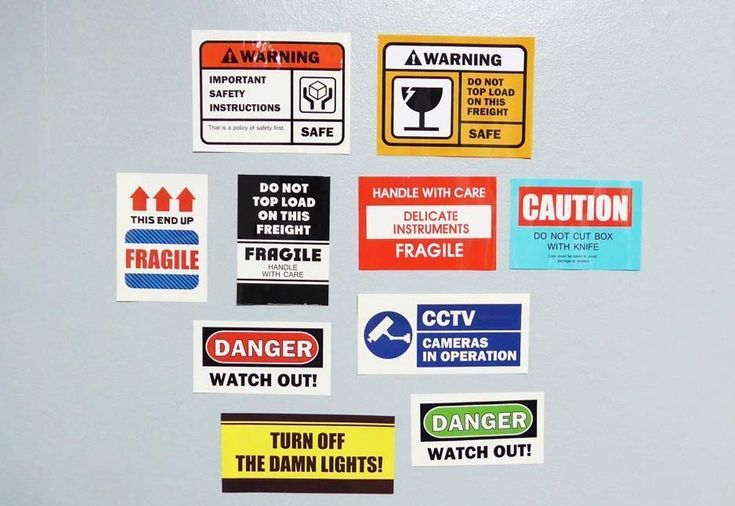
What Are Custom Battery Labels?
Custom battery labels are specialized self-adhesive stickers designed for batteries of all types—from small AAA cells to large lithium-ion battery packs. They are not ordinary product labels. They must adhere to metal surfaces, resist chemicals, endure temperature extremes, and display mandatory safety information.
Battery labels are used on consumer batteries (AA, AAA, C, D, 9V), rechargeable batteries (18650, lithium-ion, NiMH), button cells, power tool batteries, and industrial battery packs. Each application has unique requirements for size, adhesion, durability, and compliance.
We print these labels using industrial equipment with specialized inks and adhesives, then cut them into precise shapes. The result is a label that stays put, remains legible, and meets all regulatory standards for your target markets.
Key Features of Battery Labels
Battery labels are fundamentally different from ordinary product labels. They are engineered for extreme conditions and strict requirements.
Durability and Abrasion Resistance Batteries are handled, dropped, and slid into devices. Labels must resist scratching, scuffing, and edge wear. Our battery labels feature tough topcoats or laminates that protect the printed surface through years of use.
Key Functions of Battery Labels
A battery label does far more than identify a brand. It serves multiple critical functions that protect both the user and the manufacturer.
Safety Warnings: This is the most important function. Battery labels must display clear warnings about risks such as fire, explosion, leakage, and improper charging or disposal. The exact wording and symbols are often defined by regulations in each target market.
Product Identification: Labels show the battery type (AA, 18650, etc.), voltage (1.5V, 3.7V, etc.), capacity (mAh or Ah), chemistry (Li-ion, NiMH, Alkaline), and polarity markings (+ and -). This information helps consumers select the correct battery and install it properly.
Regulatory Compliance Marks: Different markets require specific certification marks on battery labels. Common examples include UL (United States), CE (Europe), RoHS (restriction of hazardous substances), WEEE (waste electrical and electronic equipment), and UN38.3 (transportation certification for lithium batteries). Without these marks, your product may be denied entry to major markets.
Recycling and Disposal Information: Many regions require batteries to display recycling symbols or disposal instructions. This includes the crossed-out wheelie bin symbol in Europe and the "Battery Recycling" seal in some US states. Proper labeling supports environmental compliance and demonstrates corporate responsibility.
Traceability and Batch Codes: For industrial and high-reliability applications, battery labels often include batch numbers, date codes, QR codes, or serial numbers. These enable traceability in case of recalls or quality issues.
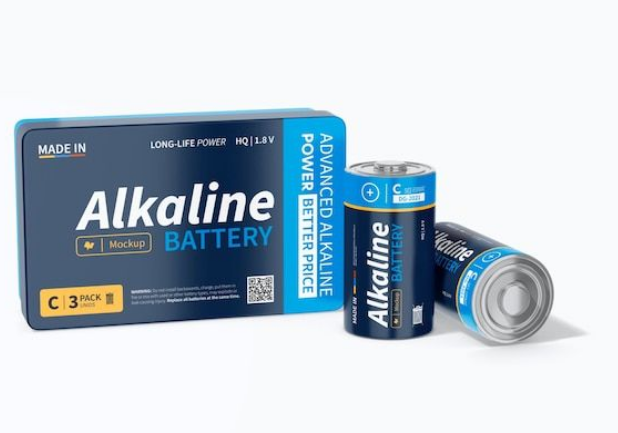
Popular Materials for Battery Labels
Not every label material can survive the battery environment. We offer specialized materials engineered for battery applications.
Common Sizes and Shapes: Battery labels come in standard sizes that correspond to common battery formats. For cylindrical batteries like AA, AAA, C, and D, labels are typically rectangular sheets that wrap around the cylinder. Common dimensions include 60mm x 30mm for AA batteries and 45mm x 15mm for AAA batteries. For prismatic (rectangular) batteries like 9V or mobile phone batteries, labels are cut to match the flat face dimensions. Custom shapes—including cutouts for contact points or polarity markings—are available through die-cutting. We recommend adding a 2-3mm overlap on wrap-around labels to ensure the adhesive bonds to itself for a secure seal.
Safety Standards and Compliance Requirements
This section is critical for any battery label project. Missing a required mark can stop your shipment at customs or trigger product liability lawsuits.
| Certification / Mark | Region / Scope | Key Requirement |
|---|---|---|
| UL Certification | United States / Canada | Safety mark for batteries; must follow UL size & spacing. |
| CE Marking | European Union | Mandatory for electronic products; at least 5mm tall. |
| RoHS Compliance | EU, China, others | Restriction of hazardous substances; mark required. |
| WEEE Symbol | European Union | Crossed-out wheelie bin; recycling instruction needed. |
| UN38.3 | Transport (air/sea/ground) | Required for lithium battery shipments. |
| Recycling Symbols | USA / international | Call2Recycle seal, Pb symbol, etc. |
Custom Compliance Marks: Some industries or retailers require additional marks. For example, MSHA (Mine Safety and Health Administration) marks for mining equipment batteries, or specific automotive OEM marks for car batteries. We can print any required symbol as long as you provide the artwork and specifications.
Key Factors to Consider When Ordering Battery Labels
Before placing an order, work through these seven factors to ensure your battery labels perform as expected.
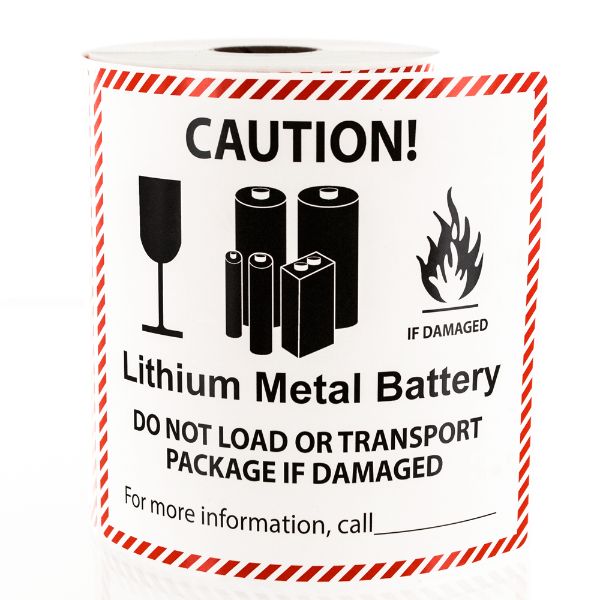
Factor One: Battery Chemistry and Operating Environment — Alkaline batteries are relatively benign. Lithium-ion batteries are more demanding. Lead-acid batteries involve acid exposure. Define your battery chemistry first, then choose materials that resist the specific chemicals involved.
Factor Two: Temperature Range — What temperatures will the battery see during use, storage, and transportation? Consumer batteries in indoor devices may only need -10°C to +50°C. Power tool batteries may see +80°C. Automotive or industrial batteries may need -40°C to +125°C. Specify your full temperature range.
Factor Three: Surface Material and Texture — Battery casings are typically smooth metal, but finishes vary. Nickel-plated steel, aluminum, and stainless steel each have different surface energies. Some batteries have textured or painted surfaces. We need to match the adhesive to your specific casing material.
Factor Four: Wrapping vs. Flat Application — Will the label wrap fully around a cylindrical battery, or will it be applied to a flat face? Wrap-around labels require thinner materials and adhesives that bond to themselves at the overlap. Flat labels can use standard permanent adhesives.
Factor Five: Regulatory Markets — List every country where the battery will be sold. Each market has unique labeling requirements. Missing a required mark can result in rejected shipments or fines. We can help you identify common requirements for your target regions.
Factor Six: Printing and Color Requirements — Battery labels often require high-contrast printing for warnings and polarity marks. Red for positive, black for negative, and bright warning colors are common. We print using durable inks that resist chemicals and abrasion. For long runs, we recommend spot colors for consistent branding.
Factor Seven: Quantity and Turnaround — Battery label orders range from prototype runs of 100 pieces to production runs of millions. We use digital printing for small quantities and flexographic printing for large volumes. Our standard lead time is 9 days global delivery, including free shipping on all orders.
Common Mistakes to Avoid When Ordering Battery Labels
After producing millions of battery labels, we see the same mistakes repeatedly. Avoid these to save time, money, and compliance headaches.
Mistake One: Using Standard Paper or Polyester Labels — Standard polyester labels are better than paper, but they may not have the specific adhesive or chemical resistance required for batteries. Always use materials engineered specifically for battery applications.
Mistake Two: Missing Mandatory Compliance Marks — We have seen customers ship thousands of batteries to Europe only to realize the CE mark is missing or the wrong size. Review your target market requirements before printing. When in doubt, include common marks like UL, CE, RoHS, and the crossed-out wheelie bin.
Mistake Three: Incorrect Polarity Marking — A missing or unclear plus (+) or minus (-) sign can cause users to install batteries backward, leading to device damage or battery leakage. Make polarity marks large, clear, and highly visible.
Mistake Four: Labels That Peel on Curved Surfaces — Flat labels applied to cylindrical batteries often lift at the edges. This happens when the material is too stiff or the adhesive is not aggressive enough. Use thin, conformable materials with high-tack adhesives for wrap-around applications.
Mistake Five: No Bleed or Cut Line Issues — As with any custom label, always add a 2-3mm bleed area around your design. Without bleed, even a 0.5mm shift during cutting can leave a white edge. For wrap-around labels, ensure your cut lines account for the overlap area.
Mistake Six: RGB Color Mode — Your screen displays RGB. Our presses use CMYK. Neon colors in RGB have no CMYK equivalent. Always convert your artwork to CMYK before sending it to us.
Mistake Seven: Assuming One Label Works for All Batteries — A label that works on a AA battery may fail on a lithium-ion power tool battery. Different chemistries, temperatures, and handling conditions require different materials. Evaluate each battery type separately.
StickerForgeco: Your Custom Battery Labels Supplier
We are StickerForgeco, a trusted manufacturer of custom stickers and custom label printing. We work with battery manufacturers, electronics brands, power tool companies, and industrial OEMs worldwide. Our factory has produced millions of battery labels for every major chemistry and form factor.
Why battery manufacturers choose StickerForgeco
What you get when you order from us
Every order includes a free file check (we verify bleed, color mode, resolution, and font outlines), a digital proof for your approval, precision die-cutting for any shape, and quality inspection before shipping.
Choose your material (polyester, polyimide, polypropylene, or vinyl), size, shape, and quantity. Request a quote online or email us for complex requirements.
Upload your artwork. Our team will confirm your file meets all specifications and compliance requirements.
Approve your digital proof. We print, cut, inspect, and ship your custom battery labels with free shipping and 9-day global delivery.
Not sure which material meets your safety and compliance needs? Send us your battery specifications—chemistry, temperature range, target markets, and application method. We will recommend a specific material and adhesive combination based on real factory experience.
Get a quote today at StickerForgeco.com or email our team. Let us produce battery labels that are safe, compliant, durable, and delivered fast—with no minimum order and free shipping.
FAQs About Custom Battery Labels
Polyester (PET) is the standard choice for most lithium-ion batteries. For extreme temperatures or applications involving welding, polyimide labels are required. Both offer excellent chemical resistance and durability.
Requirements vary by market. Most batteries need UL or CE marks, RoHS compliance, the crossed-out wheelie bin (WEEE symbol), and recycling information. Check regulations for each country where your batteries will be sold.
Yes. We use digital printing with no minimum order quantity. You can order 100 labels for prototyping or 100,000 for production—all with the same quality.
We offer 9-day global delivery from proof approval, including free shipping on all orders. Rush production is available upon request.
We recommend sending a vector PDF as the preferred format for battery label printing. A vector PDF preserves all layers, fonts, and cut paths in a single scalable file, ensuring sharp text, precise cut lines, and accurate color reproduction.
If your design contains complex photographs or gradients, a high-resolution PNG or JPEG at 300 DPI is acceptable. However, vector formats are always better for logos, text, and any artwork with sharp edges.
We support the following file formats for upload:
.ai, .eps, .jpeg, .jpg, .pdf, .png, .psd, .svg, .tif, .tiff
Before sending your file, please ensure:
- Color mode: CMYK (not RGB)
- Bleed area: 2-3mm added around your design
- Fonts: Converted to outlines (for vector files)
- Resolution: 300 DPI minimum (for raster files like PNG, JPEG, TIFF)
If you are unsure whether your file is print-ready, send it to us. Our production team will review it for free and tell you exactly what needs adjustment.

