

Custom Jar Labels Need the Right Specs Before You Request a Quote
Here's the risk most food brands don't see coming: a label that looks perfect on screen can peel off a jar the moment condensation hits it in cold storage, or bleed ink the second a heat-sealed lid pushes steam against the glass. By the time you catch it, you've already paid for 5,000 units and your retail partner is asking why half the batch looks damaged on the shelf. Sourcing custom jar labels for food products is less about picking a pretty design and more about matching material, adhesive, and application conditions before a single quote gets requested.
This matters even more for exporters shipping to varied climates — a label validated for a dry warehouse in Arizona can fail completely in a humid container headed to Southeast Asia. Getting the spec sheet right up front saves weeks of reprints later.
A Sourcing Workflow That Matches Jar Specs Before You Request Quotes
Most RFQs skip straight to artwork and pricing. That's backwards. The sequence below catches the four variables that actually determine whether a label survives its intended use — and each one carries a specific risk if ignored.
| Check Item | Why It Matters | Risk If Skipped |
|---|---|---|
| Jar diameter and curvature | Labels need extra bleed or segmented panels on curved glass; flat-stock dies don't wrap cleanly past a certain radius | Wrinkling, air bubbles, or visible seams on round jars |
| Label shape and panel layout | Wrap-around vs. front-panel-only changes die-cutting tooling and print orientation | Reprint costs if shape doesn't match jar geometry |
| Adhesive type | Permanent, removable, or freezer-grade adhesives behave differently under moisture and temperature swings | Peeling in cold storage, residue on wash-off jars, or labels that won't release when needed |
| Food-use conditions | Oil exposure, refrigeration, hot-fill, or hand-washing all degrade substrates differently | Ink smearing, substrate tearing, or adhesive bleed under heat |
Run through these four before you send an RFQ, not after. A supplier quoting blind on diameter alone will give you a number that's meaningless once adhesive and condition data gets added later — and that second round of quoting costs you time you don't get back.
Common Mistakes That Lead to Reprints and Shelf Complaints
We see the same issues repeat across food and beverage orders, regardless of jar size or industry. Most trace back to a spec gap, not a printing error.
- Choosing glossy BOPP for cold-storage jars. Standard BOPP film handles moisture fine at room temperature, but condensation on a chilled jar surface can lift adhesive that wasn't rated for cold-resistant bonding.
- Using white ink on clear jars without opacity testing. Thin white ink layers look fine in a digital proof, but under jar lighting they let product color bleed through, washing out logos.
- Skipping a physical sample before bulk production. Screen colors and foil stamping always shift slightly on press. A photo or digital sample confirmation catches mismatches before 1,000+ units are printed.
- Ignoring hand-written date codes on the label surface. Some coated stocks reject ink from markers entirely, which is a problem for small-batch or farmers-market products needing manual fill dates.
- Matching adhesive to the jar material but not the use case. A permanent adhesive that bonds well to glass may be wrong for a wash-off jar meant for reuse — the opposite problem of weak adhesion.
Matching Material and Adhesive to Food Jar Conditions
Material choice should follow the product inside the jar, not the other way around. Here's how the common substrates stack up for food-use scenarios:
| Substrate | Best For | Limits |
|---|---|---|
| BOPP with lamination | Retail shelf jars, dry goods, candles | Not rated for freezer or hot-fill without added waterproof coating |
| Kraft paper | Honey, jams, artisanal branding needing a natural look | Lower moisture resistance unless laminated; avoid for refrigerated items |
| PET (polyester) film | Oil-based products, high-temperature processing | Higher cost per unit than paper stock |
| PVC film | Wrap-around jars needing flexibility and clarity | Less eco-friendly; check recyclability requirements for export markets |
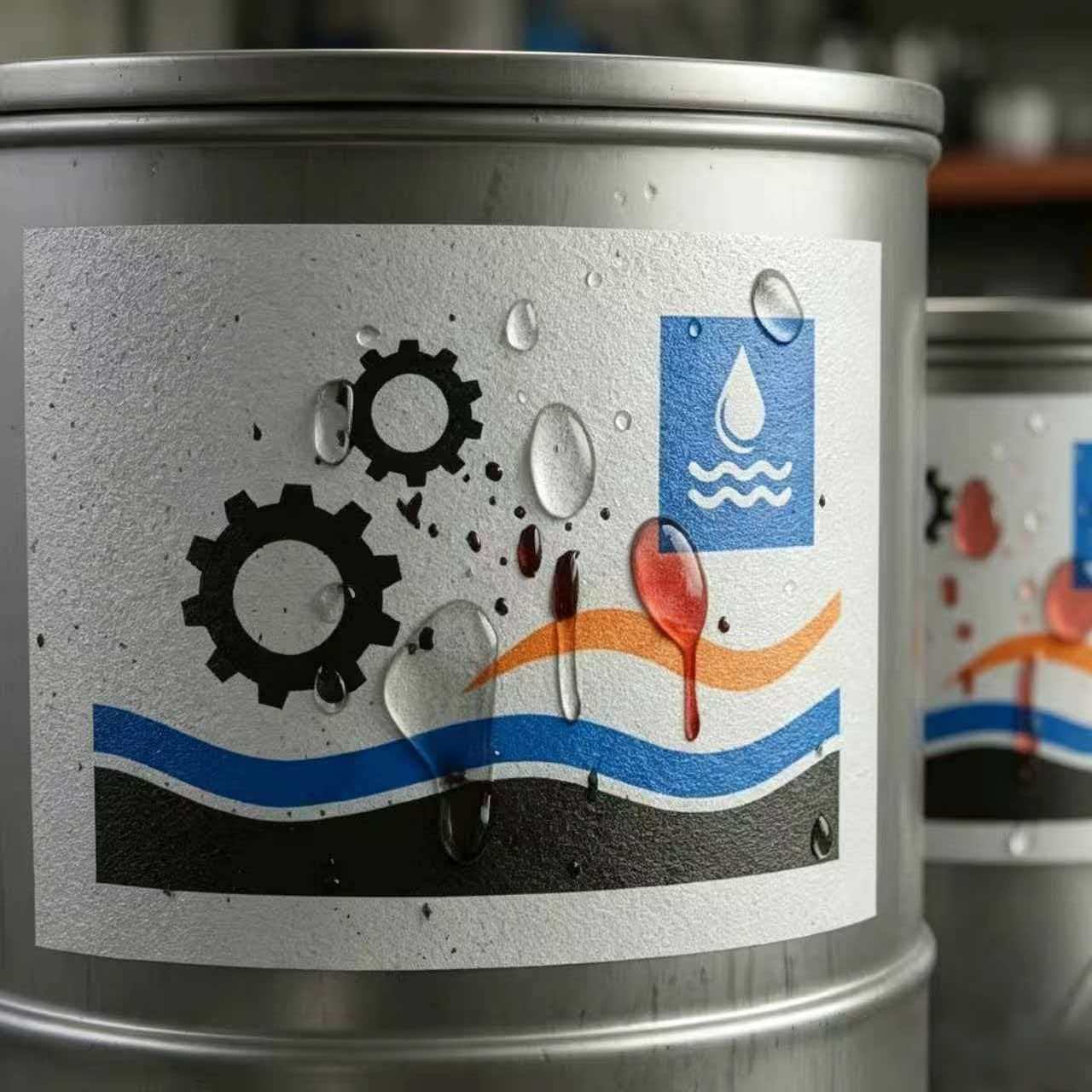
For jars that go through condensation cycles — think refrigerated sauces or cold-brew concentrates — a waterproof, UV-resistant substrate with a cold-resistant adhesive bead is non-negotiable. We've built jar-label lines specifically for this, including wash off jar labels for reusable packaging and oil resistant jar labels for products with surface oil migration. If your jars are for canned or preserved goods, canned food jar labels need a different pressure-sensitive formula than a dry spice jar would.
Step-by-Step Process From Artwork to Bulk Production
- Submit jar dimensions and intended use. Include diameter, curvature, and whether the jar goes through refrigeration, freezing, or hot-fill.
- Request a material and adhesive recommendation. A supplier should match substrate to your use case rather than defaulting to the cheapest stock.
- Approve a digital or photo sample. This step catches color mismatches against your brand guidelines before production tooling is cut.
- Confirm print method. Digital printing works for small runs with no minimum order; offset is more cost-efficient once you're ordering 1,000+ units.
- Move to bulk production. Standard bulk runs typically take 8-9 days to produce once artwork is locked, with separate transit time for shipping.
- Inspect the first shipment batch. Check for opacity, adhesive bond strength, and color consistency against your approved sample before distributing to retail.
Sample lead time for labels typically runs around 3 days, which gives you room to test adhesion on an actual jar — not just a flat swatch — before committing to volume.
Cost Factors and Order Quantity Breakdown
Pricing on jar labels isn't flat across order size, and buyers who don't plan for this get surprised at quote time.
- Digital printing, no minimum order: Better for startups testing a new product line or running limited-batch flavors, though per-unit cost is higher.
- Offset printing, 1,000 unit minimum: Lower per-unit pricing once you commit to standard bulk quantities — the right call once a SKU is proven.
- Foil stamping or special finishes: Adds tooling cost but can be justified for premium product lines competing on shelf presence.
- Reprint risk cost: Factor this in before ordering. A supplier offering free reprints for color mismatch and proportional replacement for defects reduces the financial exposure of a bad first batch.
A practical example: a mid-size condiment brand ordering 5,000 wrap-around jar labels in PET film with a cold-resistant adhesive will pay more per unit than a kraft paper equivalent, but will avoid the adhesive failure that kraft risks in refrigerated distribution. That's the trade-off worth running the numbers on before locking a PO.
Where Jar Labels Fit Alongside Other Packaging Decisions
Jar labels rarely exist in isolation — most food brands are also sourcing waterproof custom food labels for packaging on pouches or boxes in the same product line, and consistency across formats matters for brand recognition. If your jars are part of a broader line that includes bottles or tins, it's worth reviewing custom kraft labels options to keep a unified material look across SKUs, especially for natural or artisanal branding.
For brands expanding into candle jars alongside food jars, the adhesive and heat-resistance requirements diverge quite a bit — a candle jar label needs to handle radiant heat from the wick, which is a different stress test than refrigeration. Reviewing both specs separately avoids a one-size-fits-all label that underperforms on either product.
Buyer's Decision Checklist
- Have you confirmed jar diameter and whether the label needs a wrap-around or single-panel layout?
- Does the product face refrigeration, freezing, or hot-fill conditions after labeling?
- Is the adhesive rated for the moisture or oil exposure your jar will see?
- Have you requested a physical or photo sample before bulk production?
- Does your order quantity make more sense for digital (no MOQ) or offset (1,000+ units) printing?
- What's the supplier's policy on reprints or defect replacement if the first batch doesn't match your sample?
Our facility runs ISO 9001:2015 certified production with 6 HP digital label presses, which lets us handle both small digital test runs and bulk offset orders from the same spec sheet — useful when you're scaling a SKU from pilot to national distribution without switching suppliers mid-stream.
If you're ready to move forward, send us your jar dimensions, intended storage conditions, and artwork files — we'll recommend a material and adhesive combination and get a digital sample confirmed before any bulk production starts.