

How to Cut Waste on Custom Box Labels with Smart Roll Specs
Ordering custom box labels seems straightforward until a pallet of 10,000 labels arrives with the wrong core size, bringing your entire packaging line to a halt. A seemingly minor specification error—like an incorrect unwind direction or a poorly optimized die-cut layout—creates expensive material waste, operational downtime, and shipping delays. Before you submit your next RFQ, understanding how technical roll specifications directly impact your total landed cost is essential for efficient, high-volume labeling.
As a manufacturer producing over one million labels daily in our ISO 9001:2015 certified facility, we've seen firsthand how small adjustments to roll specs can save clients thousands of dollars. It’s not just about the per-label price; it's about optimizing for the total cost of application. This guide breaks down the critical technical details that procurement managers often miss, ensuring your next order of Custom Box Labels enhances your workflow instead of disrupting it.
Cost Analysis: How Roll and Die-Cut Specs Impact Your Bottom Line
The unit price of a label is only part of the story. True cost-effectiveness comes from minimizing waste and maximizing application speed. The specifications of your label rolls are directly tied to both. For any business using automatic or semi-automatic label applicators, getting these details right is non-negotiable.
Here’s a breakdown of how four key specifications influence your operational costs and material consumption.
| Specification | Impact on Waste & Efficiency | Cost Implications | Best-Fit Scenario |
|---|---|---|---|
| Outer Roll Diameter (OD) | Larger OD means more labels per roll. This significantly reduces the frequency of roll changes, minimizing machine downtime and operator labor. Fewer changeovers also mean less leader and trailer waste per batch. | While the initial order cost might be the same, operational savings are substantial. Reduced labor for changeovers and less downtime directly lower the cost per applied label. | High-speed, automated packaging lines where minimizing downtime is a top priority. Ensure your applicator can handle the specified maximum diameter and weight. |
| Inner Core Size | The core must match your label applicator's spindle. A mismatch makes the entire roll unusable without costly and time-consuming re-rolling. Standard cores are typically 1" or 3" (76mm). | A mismatch results in 100% waste of the roll or additional labor costs for re-spooling. This is a simple but costly mistake. Confirming this spec costs nothing. | Mandatory for all machine-applied labels. Always verify your equipment's required core size before ordering. For manual application, core size is less critical. |
| Label Pitch (Gap) | This is the space between labels on the liner. Tighter gaps (e.g., 3mm) maximize the number of labels per roll, reducing liner material waste. However, some applicators require a wider gap to properly sense the label edge. | A smaller pitch reduces material cost over a large run. A few millimeters saved per label translates to significant savings across hundreds of thousands of units. | Automated applicators with reliable optical sensors that can detect small gaps. Test your equipment's tolerance to find the optimal, tightest pitch it can handle. |
| Die-Cut Layout | How labels are arranged on the master sheet before being slit into rolls. An efficient "nested" layout for irregular shapes minimizes the empty space (matrix waste) on the liner, reducing the total material needed. | Lower material consumption directly translates to a lower per-label price. Your supplier should optimize this during the design phase. | Especially important for non-rectangular or custom-shaped labels. An experienced manufacturer will provide a layout proof showing how waste is minimized. |
Choosing the Right Material and Adhesive for Box Integrity
A shipping box endures rough handling, temperature swings, and moisture. The label's face stock and adhesive are its first line of defense, ensuring that barcodes remain scannable and branding stays intact from your warehouse to the customer's door.
Selecting the wrong combination is a common failure point. We've solved issues for clients whose previous labels were peeling off in cold storage due to condensation or whose adhesive was bleeding in high-heat transport trucks. The material must match the application and environment.

Common Face Stock Options
- Uncoated Paper: The most economical choice for basic shipping logistics labels where branding is secondary to information. Best for dry, standard shipping conditions as it's not resistant to moisture or abrasion.
- Coated Paper (Semi-Gloss/High-Gloss): Offers a better print surface for logos and graphics. The coating provides minor resistance to moisture and scuffing, making it a good mid-range option for retail product boxes.
- BOPP (Biaxially Oriented Polypropylene): A durable film that is inherently waterproof and resistant to oils and chemicals. For a premium look and maximum durability, this is the superior choice. A brand we worked with in Australia chose matte BOPP with a scratch-proof lamination for their health supplement boxes, ensuring a high-end feel that survived international shipping.
- Direct Thermal Paper: A heat-sensitive paper used for printing variable information like shipping addresses or barcodes. It requires no ink or ribbon but can fade over time, especially when exposed to heat or sunlight.
Selecting the Correct Adhesive
The adhesive is just as important as the face stock. An adhesive that works perfectly on a plastic tote may fail on a recycled corrugated box with a high-dust content.
- Permanent Adhesive: Designed for a single, strong bond. This is the standard for most shipping and product identification labels.
- Cold-Temperature Adhesive: Specially formulated to maintain adhesion in refrigerated or freezer environments, preventing labels from becoming brittle and falling off. Essential for freezer grade food labels.
- High-Tack Adhesive: Offers aggressive adhesion for difficult surfaces, including textured plastics, waxy corrugated boxes, or slightly oily containers.
Always specify the surface your label will be applied to (e.g., "recycled corrugated cardboard," "HDPE plastic") and the environmental conditions it will face. This allows your supplier to recommend the most reliable and cost-effective adhesive.
Critical Technical Details You Can't Afford to Overlook
Beyond materials and roll sizes, a few other technical details can make or break the success of your labeling process. Getting these right during the proofing stage prevents costly reprints and production stoppages.
Common Sourcing Mistakes for Box Labels
- Incorrect Unwind Direction: Automatic label applicators feed from a specific direction. Ordering "inside wound" when your machine needs "outside wound" makes the entire roll useless. There are 8 standard unwind positions—confirm yours by checking your machine's manual or sending a photo to your supplier.
- Forgetting Perforations: If you need part of the label to be torn off (like a packing slip or return label), you must specify a perforation line. This is a simple feature that is impossible to add after production.
- Poor Barcode Readability: Using a low-resolution design or a printing method that causes ink to bleed can make barcodes unscannable. Digital printing, like that from our HP presses, ensures crisp, clean edges for 100% scannability in logistics systems.
- Ignoring Lamination Benefits: For boxes that will be handled frequently, a clear BOPP lamination protects the print from scuffs, moisture, and dirt. It’s a small added cost that preserves brand quality and ensures critical information remains legible.
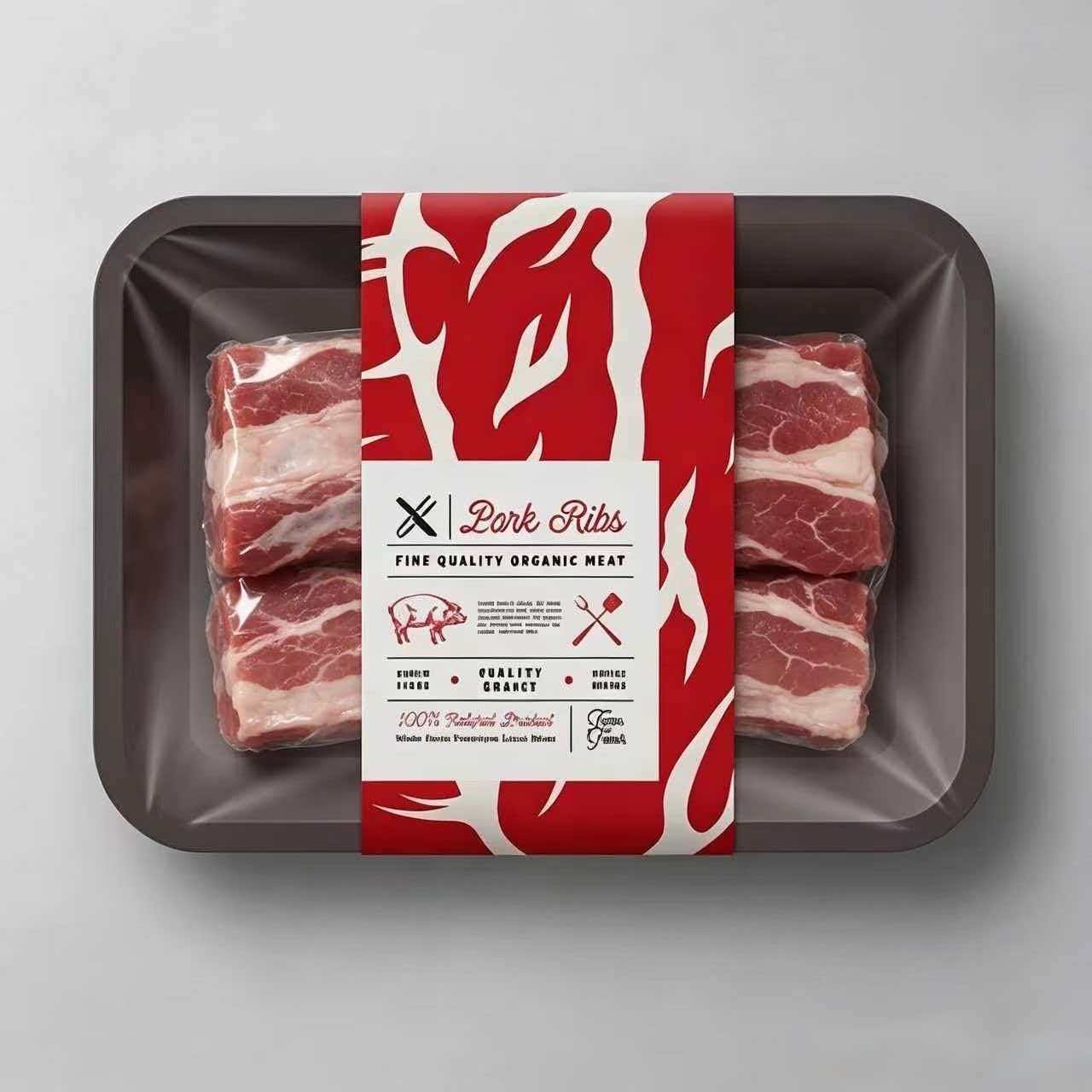
Ensuring Brand Consistency from Proof to Production
Your box label is often the first physical interaction a customer has with your brand. Inconsistent colors or fuzzy logos can project a low-quality image before the box is even opened. A reliable manufacturing partner provides safeguards to ensure what you approve is what you receive.
At Custom Panda, every order for custom packaging labels is preceded by a digital photo proof. This step allows you to confirm the die-cut lines, color placement, and text accuracy before we commit to the full production run of 1,000 units or more. This is a critical quality gate that prevents expensive mistakes.
Furthermore, we stand behind our quality with practical guarantees. If there's a color mismatch against your approved proof, we offer a free reprint. For any confirmed defects, we provide a proportional replacement. This commitment to quality, backed by our ISO 9001:2015 certification, ensures your brand presentation is protected. Our fast 8-9 day bulk production lead time and free shipping also mean you get reliable quality without sacrificing speed.
By focusing on these technical details—from roll diameter and core size to unwind direction and material choice—you can transform your label procurement from a simple purchase into a strategic cost-saving activity. Optimizing your specifications reduces waste, minimizes downtime, and ensures your packaging line runs smoothly.
Ready to configure the most cost-effective labels for your application? Contact our team with your specifications, and we’ll provide a detailed quote and expert guidance to optimize your next order.