

What Are Price Tag Labels?
Price tag labels are specialized self-adhesive identifiers designed specifically for displaying pricing information and promotional offers on retail merchandise. These labels feature high-brightness white or vibrant colored materials that make price numbers and promotional messages stand out clearly for quick consumer recognition. They are engineered for compatibility with handheld pricing guns, thermal printers, or manual handwriting, providing flexible application options for various retail environments. The adhesive systems are formulated to be removable, allowing for clean, residue-free removal when prices change, seasons shift, or promotions end. This removability is essential for retailers who need to update pricing frequently without damaging product packaging or leaving unsightly adhesive residue that could affect product presentation or future labeling. Price tag labels are fundamental retail tools used across supermarkets, apparel stores, bookshops, and promotional events, serving as the primary price communication vehicle between retailer and consumer.
Types of Price Tag Labels
Price tag labels can be categorized by material type, adhesive characteristics, printing method compatibility, and design features, each offering specific advantages for different retail applications and price update frequencies. By material type, high-brightness paper labels are the most common and economical option, offering excellent printability and brightness for barcode scanners and consumer visibility, with standard sizes compatible with most pricing guns. Colored paper labels, available in various bright colors, are used for promotional pricing, markdowns, and seasonal offers, helping retailers differentiate regular prices from sale prices at a glance. Film labels, made from PP or PET, provide extra durability and moisture resistance for products stored in refrigerated or freezer environments, maintaining legibility despite condensation and handling. By adhesive characteristics, removable adhesives are the standard for most retail price tags, providing secure attachment during the sales period with clean removal when prices change. Removable adhesives are specifically engineered to release cleanly without leaving residue, allowing for multiple price changes without surface damage. By printing method compatibility, thermal label materials are optimized for thermal printers used in modern retail environments, providing sharp, smudge-proof printing without the need for ribbons or cartridges. Standard paper labels are compatible with ink-based handheld pricing guns, offering a reliable, low-cost solution for smaller retailers. Hand-writable labels feature materials and coatings that accept pen, marker, or pencil writing clearly without bleeding, ideal for artisanal products or situations requiring manual price entry. By design features, pre-printed labels are also available with basic price fields and template formats that simplify customization, where retailers add price numbers and barcodes as required.
Features of Price Tag Labels
The core features of modern price tag labels address the specific needs of retail pricing and promotion management. The high-brightness white or colored materials are selected to maximize contrast between the label and printed text, ensuring that price numbers and promotional messages are immediately visible to consumers, reducing checkout errors and enabling quick price comparisons. The color options enable visual categorization, allowing retailers to use specific colors for sales, markdowns, clearance, or seasonal promotions, creating a clear visual pricing hierarchy that guides consumer purchasing decisions. The compatibility with multiple printing methods provides retailers with flexibility, whether using handheld pricing guns for in-store price updates, thermal printers for centralized label production, or manual handwriting for unique products. The removable adhesive systems are a critical feature, formulated to provide sufficient bond strength for secure attachment during display and handling while enabling clean, residue-free removal when prices need to be updated. This removability reduces product damage from adhesive residue and ensures that packaging remains pristine for gift-giving or resale. The durability features are appropriate for the retail environment, with materials and adhesives that resist typical handling, light exposure, and temperature variations during the retail lifecycle. In 2026, sustainability is becoming increasingly important, with the introduction of recyclable paper labels, reduced liner weights, bio-based materials, and adhesives optimized for paper recycling, helping retailers meet environmental commitments and consumer expectations for sustainable retail practices.
Functions of Price Tag Labels
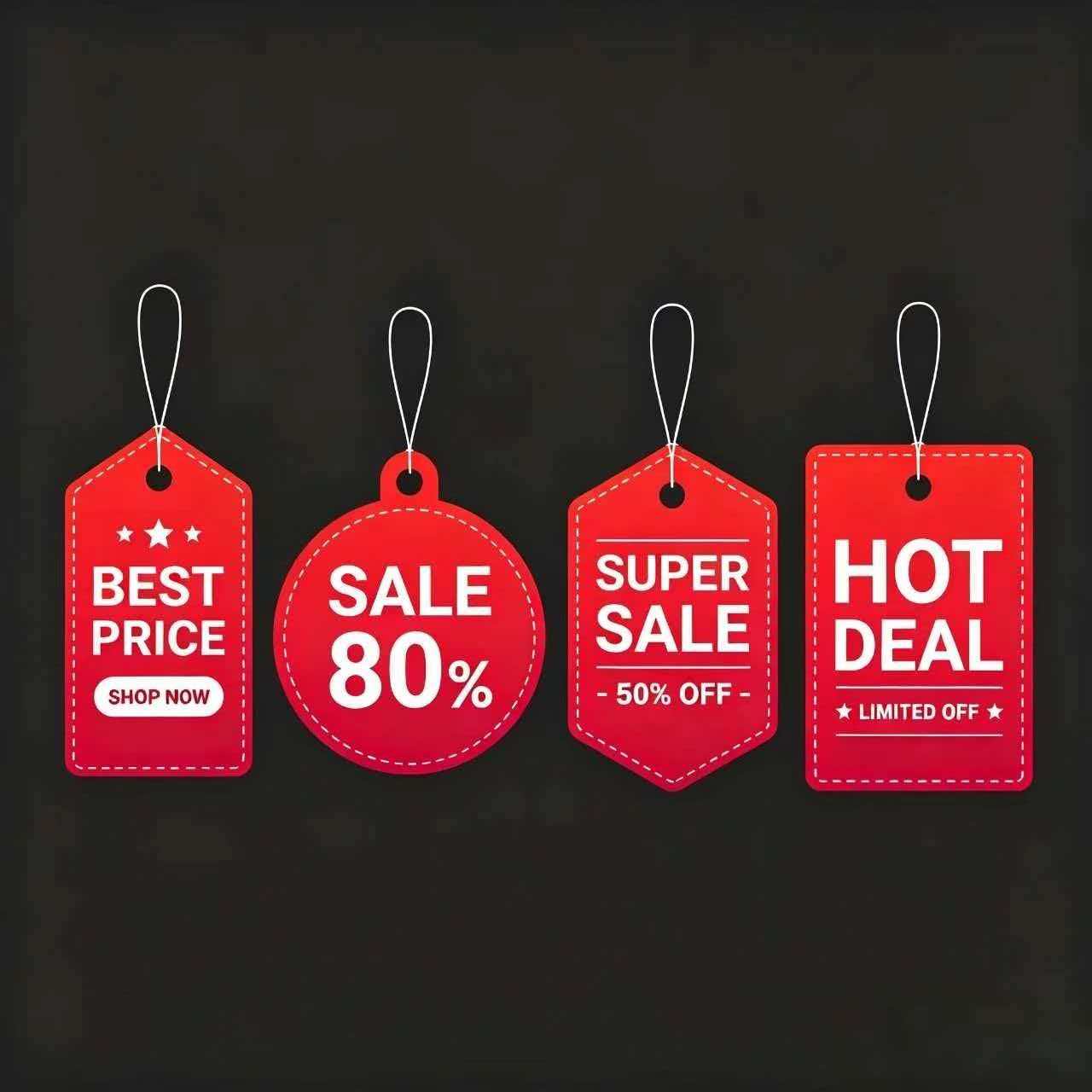
Price tag labels perform essential functions that are fundamental to retail operations, consumer trust, and store profitability. Their primary function is price communication, clearly displaying the price per unit and total price, enabling consumers to make informed purchase decisions based on cost, and facilitating accurate checkout operations. Their second function is promotion and discount communication, with colored labels and promotional text highlighting sales, clearance, special offers, and seasonal discounts, attracting consumer attention to value opportunities and driving incremental sales through visual merchandising. Their third function is inventory and stock management, with barcodes or other machine-readable elements enabling efficient checkout scanning and inventory tracking, reducing checkout times and providing accurate data for stock replenishment and sales analysis. Their fourth function is product identification and differentiation, with labels distinguishing between similar products, sizes, colors, or variants, ensuring consumers select the correct product and reducing confusion at the point of sale. Their fifth function is operational efficiency, enabling rapid price updates across store categories, supporting dynamic pricing strategies and promotional campaigns without requiring extensive packaging redesign or reprinting. Their sixth function is regulatory compliance, with labels displaying unit pricing for price comparison and age-restricted or regulated product information when required, helping retailers meet legal requirements in various markets.
Top Price Tag Labels in 2026
Several innovative price tag label solutions have achieved market leadership across different retail categories in 2026. Avery Dennison's high-brightness removable paper labels are the premier choice for supermarket and general retail applications, offering excellent print clarity, reliable adhesion, and clean removability, with thermal options for automated price labeling systems. UPM Raflatac's colored paper labels with removable adhesive provide the durability and visual impact required for promotional and seasonal pricing, with FSC-certified and bio-based options for sustainability-focused retailers. Esselte's thermal price tags are widely adopted for retail environments requiring high-speed, smudge-proof price labeling, with compatibility across leading thermal printer brands. SATO's comprehensive price labeling solutions, including printers, labels, and software, provide integrated retail price management systems for enterprise retailers. The growing category of sustainable price labels, including those using reduced liner thickness, recycled paper, and adhesive formulations optimized for paper recycling, represents the 2026 innovation direction toward circular retail operations. These leaders demonstrate continuous improvement in material performance, adhesive technology, and sustainable innovation that defines the price tag labeling market.
How to Select Price Tag Labels
Selecting the appropriate price tag labels requires consideration of the retail environment, application frequency, printing method, and sustainability requirements. The first dimension is application method: determine whether labels will be applied using handheld pricing guns, thermal printers, manual handwriting, or automated labeling systems. Ensure label materials are compatible with your chosen application method and equipment specifications. The second dimension is removal frequency: assess how often prices will be updated and whether labels will be removed and replaced during the product's retail display period. For frequent price changes, choose labels with clean-removal adhesives that release easily without residue. For longer-term display, consider labels with slightly stronger adhesion. The third dimension is environmental exposure: evaluate the storage and display conditions, including temperature, humidity, and light exposure. Refrigerated and freezer products require moisture-resistant materials, while products displayed in direct sunlight may need UV-resistant materials to prevent fading. The fourth dimension is printing requirements: determine whether thermal printing, ink-based printing, or handwriting is needed for your price labeling process, and select materials and coatings specifically designed for that method. Thermal labels require specific heat-sensitive coatings for optimal print quality. The fifth dimension is design and visual requirements: define the label size, shape, and color needs based on shelf placement and product type, including whether colored promotional labels are needed for sales and markdowns. The sixth dimension is sustainability objectives: evaluate your company's environmental targets and consider options such as recycled paper labels, bio-based materials, reduced liner weight, and adhesive systems designed for recycling compatibility.
Price Tag Labels Size Guide
Price tag labels are available in a range of standard sizes to accommodate different retail applications and pricing gun compatibility. For supermarket and grocery products, standard price tag sizes range from 25mm × 35mm to 30mm × 50mm, with the most common sizes being 25mm × 35mm and 27mm × 38mm, which are compatible with most standard pricing guns and display formats. For smaller items like individual packages of gum, candy, or small cosmetics, mini price tags of 20mm × 25mm to 20mm × 30mm are commonly used, allowing price display without overwhelming the small packaging. For apparel and garment tags, price labels are often integrated into larger hang tags, with price sections ranging from 30mm × 40mm to 50mm × 70mm, providing space for both price and basic product information. For large items such as electronics, home goods, and bulky items, larger price labels of 50mm × 70mm to 70mm × 100mm are used, providing sufficient space for price, barcode, and product identification. For promotional labels designed to be highly visible, larger sizes of 50mm × 80mm to 80mm × 120mm in bright colors are used to highlight sales and markdowns. Across all sizes, ensure that labels are large enough to include required price information, barcode, and any promotional text in readable font sizes, with a minimum of 2mm to 3mm safety margin from label edges for text and barcode elements to ensure scannability and legibility.
How to Customize Price Tag Labels
Customizing price tag labels follows a streamlined, efficient process designed to meet the operational needs of retailers. The initial step is requirement definition: determine the label size, shape, material type, color, and any pre-printed template requirements based on your product categories, pricing gun compatibility, and promotional strategies. The second step is artwork and template design: create or adapt your label design templates including price fields, barcode placements, and promotional text areas. Provide artwork in appropriate formats (AI, PDF, CDR) or work with your supplier to develop templates optimized for your printing method. The third step is material and adhesive selection: work with your supplier to choose the optimal face material (paper, colored paper, film) and adhesive system (standard removable, strong-hold removable, freezer-grade) based on your application requirements. The fourth step is prototype production: request sample labels for evaluation of print quality, adhesion, and removability on your actual products, and test compatibility with your pricing guns or printers. The fifth step is tooling and production: for die-cut shapes, fabricate the necessary tooling; for pre-printed labels with custom templates, prepare print plates or digital print files. The sixth step is quality assurance: establish inspection criteria covering dimensional accuracy, print quality, adhesive performance, and removability, with testing to confirm performance before shipping.
Supplier of Price Tag Labels
The global price tag label supply chain features specialized material manufacturers and converting specialists serving retail applications. Avery Dennison is the market leader in self-adhesive price tag materials, offering comprehensive portfolios including thermal papers, colored papers, and removable adhesive technologies for all retail price labeling applications. UPM Raflatac provides sustainable price tag label materials with FSC-certified, bio-based, and recycled content options, supporting retailers' environmental commitments. Esselte is a leading supplier of thermal price labels and retail labeling systems, with extensive compatibility with leading printer brands. SATO provides complete retail price management solutions including printers, software, and high-quality thermal labels. Custom Panda is your comprehensive partner for price tag labeling solutions, offering end-to-end services from template design and material selection through precision production and global delivery. Our expertise in removable adhesive technologies, thermal paper formulations, and retail application requirements ensures your price tags deliver reliable performance, clear pricing communication, and clean removal when prices change.
About Custom Panda
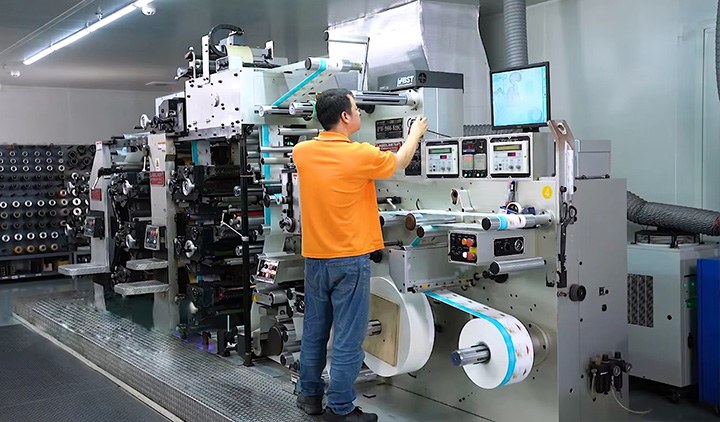
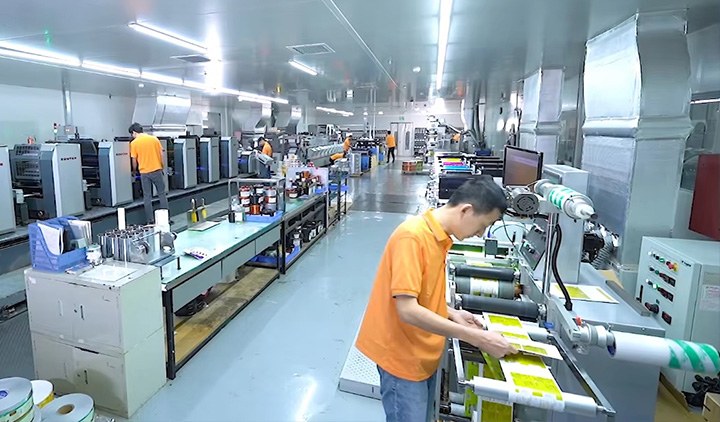
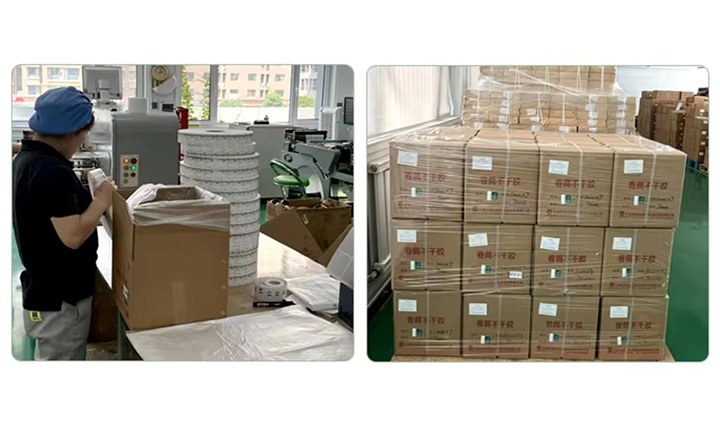
Custom Panda is a leading provider of retail price tag labeling solutions with specialized expertise in supermarket, apparel, bookstore, and promotional applications. Our advanced manufacturing capabilities include high-speed flexo, digital, and thermal printing, precision die-cutting, and automated quality inspection systems, enabling us to deliver consistent quality and reliable supply for retailers of all sizes, from independent boutiques to large retail chains. Our technical team offers comprehensive consultation on material selection, adhesive engineering, design optimization, printing method compatibility, and sustainability guidance, ensuring your price tags meet the demands of your retail environment and operational needs. We provide rapid prototyping with digital proofing available in as little as 12 hours, accelerated production with typical lead times of 2 to 3 days after approval, and reliable global shipping through trusted logistics partners. Our proprietary adhesive formulations address common price tag challenges including clean removability, moisture resistance, and compatibility across diverse product surfaces. We believe every price tag is an opportunity to communicate value and enhance the shopping experience, and we bring decades of industry experience, continuous innovation, and dedicated customer service to every project. Contact Custom Panda today to discuss your price tag labeling requirements and experience the difference of true end-to-end service and technical excellence.