




What Are Custom Enamel Pins?
Custom Enamel Pins are classic metal lapel pins made by filling recessed metal areas (stamped or die-cast into a metal mold) with colored enamel pastes, then baking and polishing them. Unlike offset printed pins, which rely on printing and epoxy coating, enamel pins get their color from actual pigmented enamel that hardens inside metal walls.
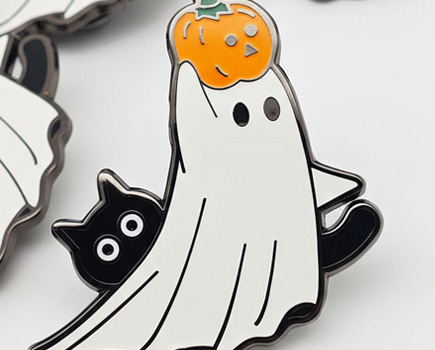
There are two main types: soft enamel and hard enamel (also known as cloisonné or imitation cloisonné). Soft enamel pins have raised metal lines and recessed color areas, giving them a textured feel. Hard enamel pins are polished flat after baking, resulting in a smooth, jewelry-like surface that sits flush with the metal ridges.
Because of their durable construction, premium feel, and timeless appearance, custom enamel pins remain the most popular choice for businesses, event organizers, collectors, and promotional campaigns worldwide.
Key Features of Custom Enamel Pins
Custom enamel pins offer a distinctive set of features that set them apart from other pin types:
Textured or Smooth Finish Options – Choose soft enamel for a tactile, raised-metal feel, or hard enamel for a sleek, glass-smooth, polished surface.
Vibrant, Durable Colors – The enamel paste is baked at high temperatures, creating colors that resist fading and last for years without cracking or peeling.
Metal Ridge Separation – Each color area is separated by thin metal walls, giving the design a clean, structured, almost "stained glass" look.
Premium Weight & Feel – Enamel pins are typically heavier than printed pins, feeling more substantial and jewelry-like in the hand.
Wide Metal Plating Options – The exposed metal (rim and back) can be plated in many finishes: gold, silver, nickel, black metal, rose gold, antique bronze, antique copper, and more.
Great for Simple, Bold Designs – Enamel pins excel at designs with solid color blocks and clear boundaries. They are less suited for gradients or photographic images.
Most Popular Lapel Pin Styles
Among custom enamel pins, the following styles are the most sought after:
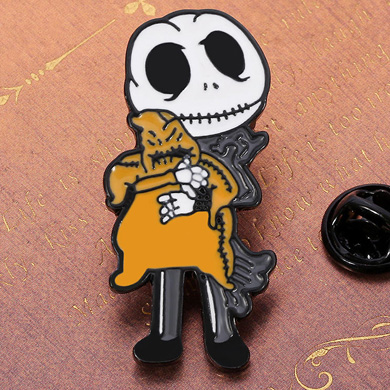
Soft Enamel Pins – The most common and cost-effective style. The metal lines are raised, and the enamel sits slightly lower, creating a pleasant textured feel. Ideal for most logos, badges, and mascots.
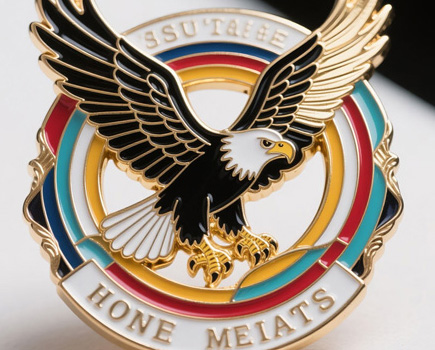
Hard Enamel Pins – After baking, the pin is polished completely flat, so the metal ridges and enamel are perfectly level. This creates a smooth, glass-like surface. Hard enamel pins are more expensive and take longer to produce but look more refined.
Die-Struck Enamel Pins – The metal base is formed by striking a metal blank with a die (rather than casting). This creates sharper, cleaner metal lines. Often used for coins or high-end commemorative pins.
3D Cast Enamel Pins – The metal mold includes raised or recessed 3D sculptural details in addition to the enamel color areas. This adds a third dimension to the design beyond simple flat metal lines.
Glow-in-the-Dark or Glitter Enamel Pins – Special effect enamels (glow powder or glitter) are mixed into the paste before baking. These add unique visual interest and are very popular in fan and collector communities.
Custom Enamel Pins: Pros and Cons
Understanding the trade-offs between enamel pins and other pin types (like offset printed or die-struck pins) will help you make the right choice.
| Pros (Advantages) | Cons (Disadvantages) |
|---|---|
| Timeless, Premium Look & Feel – The combination of metal ridges and colored enamel gives a classic, high-quality appearance that collectors love. | No Gradients or Photographic Details – Enamel pins require solid color areas separated by metal lines. You cannot print smooth gradients, shadows, or photo-realistic images. |
| Very Durable – Once baked, the enamel is hard and resistant to scratches, fading, and wear. Hard enamel pins are almost indestructible under normal use. | Higher Cost for Multi-Color Designs – Each separate color requires its own manual filling and baking step. Adding many colors significantly increases labor and price. |
| Textured (Soft Enamel) or Smooth (Hard Enamel) Options – You can choose the finish that best suits your design and budget. | Longer Production Time – Because of the multiple baking and polishing steps (especially for hard enamel), production takes longer than offset printed pins. |
| Wide Range of Metal Platings – Gold, silver, antique bronze, black nickel, rose gold – the metal finish greatly affects the final look. | Not Ideal for Very Small Text or Intricate Details – Metal ridges need a minimum width (around 0.3mm). Extremely fine details may become blurred or filled with enamel. |
| Highly Collectible – Enamel pins have a strong resale and trading market. Limited edition enamel pins can become valuable collectibles. | Higher Mold Cost for Complex Shapes – While simple shapes are fine, very intricate die-cut outlines require more expensive molds. |
| No Epoxy Yellowing – Unlike epoxy-coated printed pins, enamel does not yellow over time, even with sunlight exposure. | Color Matching Can Be Slightly Inconsistent – Because colors are mixed by hand, there can be very subtle batch-to-batch variation (though reputable manufacturers control this well). |
Summary: Choose custom enamel pins when your design uses solid colors with clean boundaries and you want a classic, durable, premium metal product. Choose offset printed pins when your design requires gradients, tiny text, or photographic images.
What Are Custom Enamel Pins Commonly Used For?
Custom enamel pins are incredibly versatile and appear in many settings:
Corporate Branding & Employee Recognition – Company logo pins, years-of-service awards, and sales achievement pins. The durable, professional look reflects well on any organization.
Event & Conference Merchandise – Music festivals, comic-cons, trade shows, and marathons all use enamel pins as commemorative items or attendee badges.
Non-Profits & Awareness Campaigns – Pins for causes like breast cancer awareness (pink ribbons), environmental causes, or political campaigns. The solid-color nature of enamel works well for simple, powerful symbols.
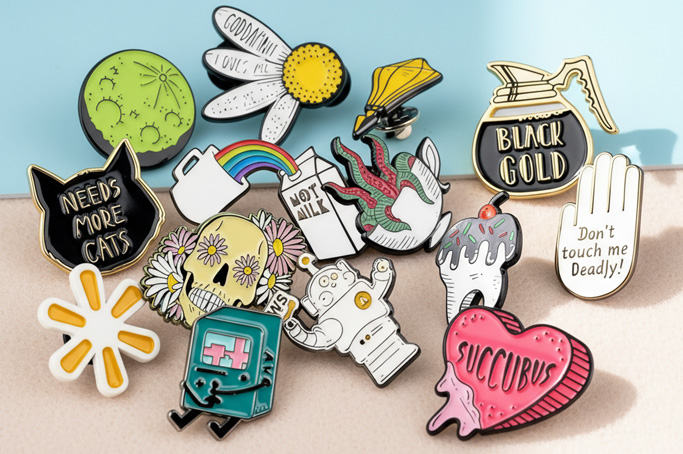
Fan Communities & Fandoms – From Disney and Marvel to anime and gaming, enamel pins are a primary medium for fan-created art and official merchandise. Collectors often display them on "itabags" or corkboards.
Sports Teams & Clubs – Team logos, championship rings (in pin form), and club membership pins. Enamel pins are tough enough to withstand being worn on backpacks and jackets.
Personal & Gift Use – Wedding favors, family crest pins, pet portrait pins (in simplified, solid-color style), and graduation keepsakes.
How to Design Trading Pins That Get Noticed
Designing effective custom enamel pins requires a different mindset than designing for print. Follow these principles:
Use Solid Colors Only – Enamel pins cannot do gradients, fades, or blends. Every color in your design must be a solid, flat color with a clear boundary.
Embrace Metal Lines – Every color change must be separated by a metal ridge (which will be plated in your chosen finish). Design with these lines as part of your aesthetic – think "stained glass."
Keep Colors Reasonable – More colors = more cost. For soft enamel, 3–6 colors is the sweet spot. Hard enamel can handle more, but each additional color adds production steps.
Avoid Extremely Thin Lines – Metal ridges need to be at least 0.3mm–0.4mm wide to hold enamel properly. Very thin design elements may break or fill incorrectly.
Make Text Large Enough – Text should be at least 2mm–3mm in height. Smaller letters may become unreadable after the enamel is added.
Leave a Metal Border – A continuous metal rim around the outside of the pin (at least 0.5mm thick) helps protect the enamel and gives a professional finished edge.
Consider the Plating Color Carefully – The metal finish (gold, silver, black nickel, etc.) is not just a rim – it becomes the "lines" of your design. Dark plating makes metal lines more visible; light plating gives a softer look.
Design for the Shape – Die-cut (custom shaped) pins are more interesting than standard circles. But ensure your shape is not so intricate that it becomes fragile or expensive to mold.
How Custom Enamel Pins Are Made
The manufacturing process for custom enamel pins is more artisanal than offset printing. Here are the typical steps:
Mold Making (Tooling) – A steel mold is created based on your design. The mold has recessed areas where the enamel will go, and raised areas that will become the metal ridges.
Stamping or Casting – Metal blanks (usually iron or zinc alloy) are stamped or cast using the mold. Zinc alloy is common for complex shapes; iron is used for simpler, stronger pins.
Polishing & Plating – The raw metal pins are polished to remove burrs, then electroplated with the requested metal finish (gold, silver, black nickel, antique bronze, etc.).
Enamel Filling (First Bake) – Colored enamel pastes are hand-filled or machine-injected into the recessed areas. The pin is then baked in an oven to harden the enamel.
Additional Colors & Bakes – For designs with multiple colors, each color is filled and baked separately. A 6-color pin may go through 6 baking cycles.
Polishing (Hard Enamel Only) – For hard enamel pins, the baked pin is ground down and polished so that the enamel sits perfectly flush with the metal ridges. Soft enamel pins skip this step.
Quality Inspection – Each pin is checked for underfilled areas, bubbles, or plating defects. Imperfect pins are rejected or reworked.
Attaching Backing Hardware – The specified backing (butterfly clutch, rubber clutch, safety pin, magnet, etc.) is soldered or glued to the back of the pin.
Final Packaging – Pins are cleaned, dried, and packaged according to the customer's requirements (OPP bags, backing cards, velvet pouches, etc.).
Price of Custom Enamel Pins
The price of custom enamel pins follows a different logic than offset printed pins. Here is what you need to know.
Comparison with Offset Printed Pins: For a simple design with 2–4 solid colors, enamel pins are generally more affordable than offset printed pins because the manufacturing process is straightforward. However, as the number of colors increases (e.g., 6+ colors), enamel pins become significantly more expensive because each color requires a separate manual filling and baking cycle. Offset printed pins, by contrast, add colors at almost no extra cost.
Price Factors:
Number of colors – The single biggest cost driver for enamel pins. More colors = more labor.
Size – Larger pins use more metal and more enamel, increasing material cost.
Plating type – Standard platings (gold, silver, nickel) are included. Antique or special finishes (rose gold, matte black) add a small premium.
Hard enamel vs. soft enamel – Hard enamel requires additional polishing steps and more labor, so it costs roughly 20–40% more than soft enamel for the same design.
Mold complexity – Standard shapes (circle, square) have low mold fees. Intricate die-cut shapes have higher mold fees.
How Price Changes with Quantity: Like all custom pins, the unit price drops as quantity increases. The biggest drop happens between 100–500 pieces. For very small batches (under 100 pieces), the mold fee dominates the unit price. For medium to large batches (500–5,000+ pieces), the unit price becomes very economical.
A General Price Indication: For a typical 1.5-inch soft enamel pin with 4 colors and a standard shape, at medium quantities (500–1,000 pieces), the price per pin is usually well under the cost of a movie ticket. Hard enamel pins for the same design might cost closer to a fast-casual lunch. Compared to offset printed pins with the same simple, solid-color design, enamel pins are often cheaper. But if your design has many colors or gradients, offset printed pins would be more economical.
How to Get an Accurate Quote: Send the following to any reputable pin manufacturer:
Your design file (vector format: AI, PDF, CDR – with colors clearly defined)
Desired size (e.g., 1.25 inches, 35mm, etc.)
Target quantity (e.g., 300 pieces, 1,000 pieces)
Soft enamel or hard enamel?
Preferred plating (gold, silver, black nickel, antique bronze, etc.)
Backing type (butterfly, rubber clutch, magnet, etc.)
How to Customize Custom Enamel Pins for Your Project
Ready to create your own custom enamel pins? Follow these steps from concept to finished product.
Prepare Your Artwork – Convert your design into solid colors with clear boundaries. Avoid gradients, shadows, and photographic elements. Vector files (AI, PDF, CDR, SVG) are strongly preferred. If using raster (PSD, PNG, JPG), ensure 300 DPI minimum.
Choose Soft or Hard Enamel – Soft enamel: textured feel, faster production, lower cost. Hard enamel: smooth flat finish, more premium feel, higher cost, longer production. Most first-time buyers start with soft enamel.
Select Your Plating Finish – Common choices: gold, silver, nickel, black metal, antique gold, antique silver, rose gold, copper. Black nickel is very popular for modern, edgy designs. Antique finishes give a vintage, weathered look.
Decide on Shape – Standard (circle, oval, square, rectangle) or custom die-cut (following your design outline)? Die-cut looks more unique but has a higher mold fee.
Pick Your Backing Attachment – Most common: butterfly clutch (cheap, replaceable). Rubber clutch (holds tighter, more secure). Safety pin (for attaching to thick fabric). Magnetic back (no fabric damage, but weaker hold). Deluxe clutch with metal post (premium feel).
Request a Quote from Multiple Suppliers – Send your artwork and specifications to at least 2–3 reputable manufacturers. China-based manufacturers often offer the lowest prices but longer shipping. US or European manufacturers are faster but more expensive.
Order a Physical Sample – Always, always order a sample before full production. A digital proof ("virtual sample") is not enough. The actual sample will show you true colors, plating quality, and any design issues.
Approve Sample & Place Bulk Order – Once the sample meets your expectations, approve it and place your bulk order. Typical production time: 10–20 business days for soft enamel, 15–25 business days for hard enamel (plus shipping).
Choose Your Packaging – Decide how you want the pins delivered (see packaging section below).
Packaging Options for Custom Enamel Pins
Packaging protects your pins and, in many cases, becomes part of the product experience.
Individual OPP Bags – The standard economical option. Each pin goes into a clear plastic bag. Suitable for promotional giveaways or bulk distribution.
Backing Cards (Eco or Premium) – A printed card (usually 350gsm or thicker) that the pin attaches to. Backing cards can display your logo, social media handles, or pin details. Often sealed inside a clear plastic sleeve. This is the most common retail packaging.
Velvet or Velour Pouches – A soft fabric pouch with a drawstring. Gives an immediate "premium gift" feeling. Popular for award pins, anniversary pins, or higher-end merchandise.
Clear Plastic Boxes – Hard plastic boxes with a foam or felt insert that holds the pin securely. Excellent for display and protection. Commonly used for collector's pins or pins sold in brick-and-mortar stores.
Custom Printed Boxes – A fully printed paper box in your brand colors. Usually includes a foam insert with a slot for the pin. The most premium option, suitable for limited editions or corporate gifts.
Bulk Packaging (Foam & Carton) – For large orders that will be repackaged by the buyer, pins are often shipped in sturdy cartons with foam sheets between layers to prevent scratches. This is the most cost-effective shipping method for hundreds or thousands of pins.

