

What Are Custom Chenille Patches?
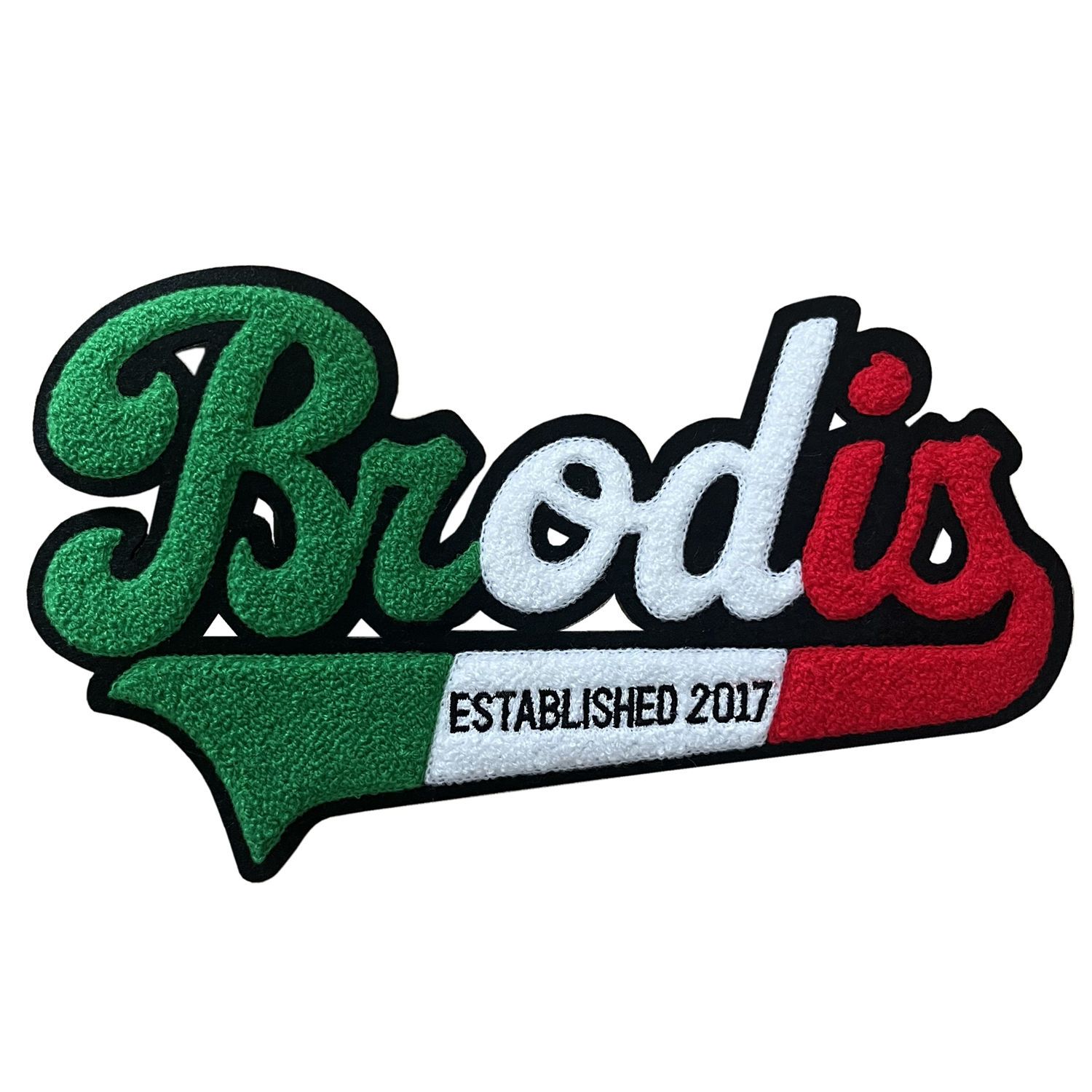
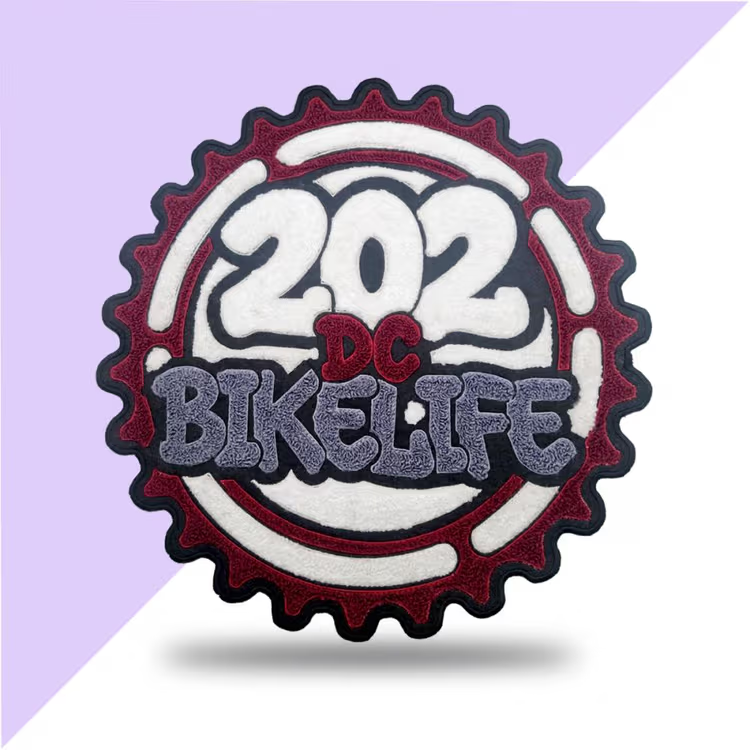
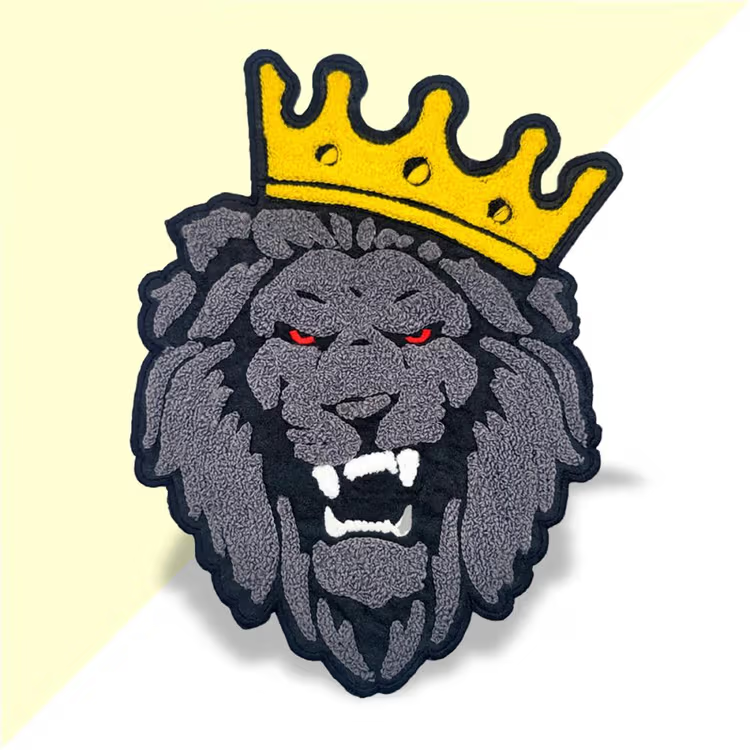
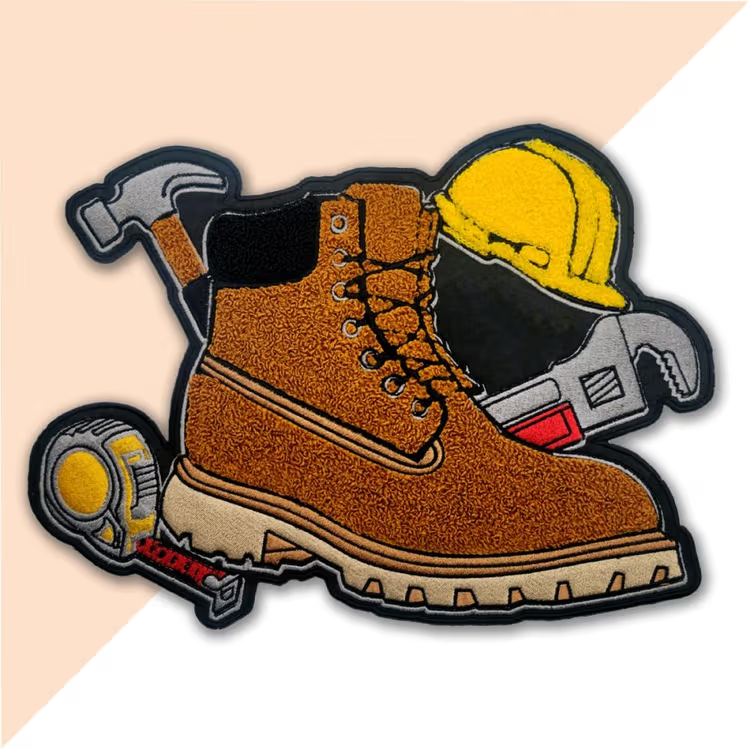
Custom chenille patches are soft, tufted patches made from plush yarn, typically featuring a raised, fuzzy texture and a classic "varsity" or "collegiate" look. Unlike traditional embroidered or woven patches, which are flat and dense, chenille patches are thick, fluffy, and highly tactile. The word "chenille" comes from the French word for "caterpillar," which perfectly describes the soft, fuzzy, caterpillar-like yarn loops that make up the patch's surface.
These patches are usually backed with felt or twill fabric for stability. Most chenille patches combine a chenille base with felt letters or embroidered details. They are instantly recognizable from classic American letterman jackets, where they appear as large school letters, mascots, award chevrons, and championship year patches.
Because of their bold, vintage aesthetic and soft texture, custom chenille patches remain a popular choice for sports teams, clubs, spirit wear, and retro-themed merchandise.
Key Features of Custom Chenille Patches
Custom chenille patches offer a unique set of features that set them apart from other patch types:
Soft, Fuzzy Texture – The raised chenille yarn creates a plush, tactile surface that is pleasant to touch and visually stands out from flat patches.
Bold, Retro Aesthetic – Instantly associated with varsity jackets and 1950s Americana, chenille patches convey a sense of tradition, achievement, and school spirit.
Felt Letter & Embroidered Detail Compatibility – While the base is chenille, letters and fine details are typically made from cut felt or standard embroidery, offering a mix of textures.
Thick & Durable – Chenille patches are substantially thicker than embroidered patches (often 2–4mm thick). When properly made, they are very durable and can last for decades on a jacket.
Wide Color Range – Chenille yarn is available in virtually any color, and felt letters can be cut in contrasting or matching shades.
Best for Larger Designs – Because of the yarn construction, chenille works best for bold, simple shapes and larger patches (typically 3 inches or larger). Very small details are difficult to achieve.
Most Popular Chenille Patch Styles
Among custom chenille patches, the following styles are the most popular:
Varsity Letters – Large block letters (often 4–6 inches tall) representing a school or team initial. The letter itself is made of chenille yarn in one color, sometimes with a felt outline or border.
Mascot Patches – Animal or character designs made from a combination of chenille (for the body/fur) and felt or embroidery (for eyes, claws, and fine details). Common mascots include eagles, tigers, bulldogs, and wolves.
Award Chevrons & Bars – Curved, chevron-shaped patches indicating years of service, letters earned, or achievement levels. Classic examples include "Captain," "MVP," or "1st Year" bars.
Number Patches – Single or double-digit numbers made entirely of chenille yarn. Often placed on the sleeves or chest of varsity jackets.
Sports & Activity Patches – Patch shapes representing specific sports (football helmet, basketball, soccer ball, swim cap) made from chenille with felt accents.
Custom Shape Patches – Any custom shape (star, shield, circle, etc.) combining chenille base with felt or embroidered elements.
Custom Chenille Patches: Pros and Cons
Understanding the trade-offs between chenille patches and other patch types (embroidered, woven, printed) will help you make the right choice.
| Pros (Advantages) | Cons (Disadvantages) |
|---|---|
| Unique, Plush Texture – No other patch type feels like chenille. The soft, fuzzy surface is instantly recognizable and adds a premium, nostalgic feel. | Not Suitable for Fine Details – Chenille yarn cannot produce sharp, tiny details. Small text or intricate logos will look blurry. Use felt or embroidery for fine elements. |
| Classic Varsity Look – Perfect for achieving an authentic "letterman jacket" aesthetic. Chenille patches are the standard for school and team spirit wear. | Thicker & Heavier – Chenille patches are much thicker (2–4mm) than embroidered or woven patches. This can make them less suitable for lightweight garments. |
| Very Durable – High-quality chenille patches withstand decades of use on jackets. The yarn is firmly tufted into a strong felt or twill backing. | More Expensive Than Embroidered Patches – The specialized tufting process and higher material costs make chenille patches more expensive than standard embroidered patches, especially for small quantities. |
| Bold, Readable from a Distance – The large, chunky shapes of chenille designs are highly visible, even from across a gymnasium or field. | Not Machine Washable – Chenille patches should not be machine washed or dried. Hand washing or spot cleaning is recommended to prevent fraying or loosening of yarn. |
| Combines Well with Felt & Embroidery – You are not limited to chenille alone. Felt letters and embroidered outlines add precision and detail where chenille cannot go. | Minimum Size Requirement – Most chenille patches need to be at least 2.5–3 inches in the smallest dimension. Anything smaller is difficult to manufacture reliably. |
| Great for Large, Statement Pieces – Chenille excels at big, bold designs (4–8 inches) that become the centerpiece of a jacket or bag. | Limited Color Blending – Unlike woven patches, chenille cannot create gradients. Each color is a separate block of yarn. |
Summary: Choose custom chenille patches when you want a bold, retro, varsity-style patch for a jacket, bag, or other heavy garment and your design is large with simple shapes. Choose embroidered or woven patches for small designs, fine details, lightweight garments, or lower cost.
What Are Custom Chenille Patches Commonly Used For?
Custom chenille patches have a strong association with specific applications, but their use has expanded in recent years:
Varsity & Letterman Jackets – The classic application. School letters, mascots, year patches, and award chevrons are all traditionally made as chenille patches.
Sports Teams (Youth to Professional) – Cheerleading squads, high school football teams, youth hockey leagues, and even professional sports merchandise use chenille patches for jackets and warm-ups.
Fraternities & Sororities – Greek letter patches are commonly made in chenille for crewnecks, letterman jackets, and hoodies.
Camps & Youth Organizations – Summer camps, scout troops, and outdoor programs use chenille patches for achievement awards, rank insignia, and event memorabilia.
Corporate Spirit Wear – Companies with strong team cultures sometimes use custom chenille patches for employee jackets, especially for sales awards or milestone anniversaries.
Fashion & Streetwear Brands – Vintage-inspired and retro fashion brands increasingly use chenille patches on hoodies, caps, denim jackets, and bags.
Music & Festival Merchandise – Band jackets, music festival crew wear, and tour merchandise sometimes feature chenille patches for a nostalgic, collectible look.
How to Design Chenille Patches That Get Noticed
Designing for chenille is different from designing for embroidery, weaving, or printing. Follow these principles for the best results:
Think Big and Bold – Chenille patches typically need to be at least 2.5–3 inches in their smallest dimension. Designs smaller than this will not look good. For maximum impact, aim for 4–6 inches or larger.
Use Simple, Chunky Shapes – Avoid thin, delicate lines or intricate filigree. Chenille yarn cannot replicate fine detail. Convert your design into solid, bold areas of color.
Limit the Number of Chenille Colors – Each chenille color requires a separate tufting process. For cost reasons, limit chenille yarn colors to 1–3 per patch. Additional colors can be added using felt or embroidery.
Reserve Fine Details for Felt or Embroidery – Small text, eyes, claws, outlines, or intricate patterns should be made from cut felt (appliqué) or standard embroidery, not chenille. Most professional chenille patches combine these materials.
Keep Text Large and Simple – If text is made of chenille, use sans-serif fonts with thick strokes. Text height should be at least 1 inch for chenille. For smaller text, use felt letters.
Consider the Background – Chenille patches typically have a felt or twill base. The base color can be matched to the garment or used as a contrasting border. A common style is a chenille letter with a felt outline or shadow.
Choose a Border – Many chenille patches have a merrowed (overlocked) border, a heat-cut edge, or a felt border. Merrowed borders (common on embroidered patches) are less common on chenille but can be added.
Design for the Garment – Chenille patches are thick and heavy. They work best on structured garments like wool varsity jackets, denim jackets, heavy hoodies, or canvas bags. Avoid lightweight T-shirts or delicate fabrics.
How Custom Chenille Patches Are Made
The manufacturing process for chenille patches is quite different from other patch types. Here is the typical workflow:
Design Preparation – Your artwork is separated into layers: chenille yarn areas, felt appliqué areas, and embroidered detail areas. A digital blueprint is created.
Felt or Twill Backing Cutting – The base fabric (felt or twill) is cut to the overall shape of the patch. This backing provides stability and a surface to attach the chenille.
Chenille Tufting – Using a specialized chenille tufting machine (similar to a specialized embroidery machine), yarn is tufted through the backing fabric in the designated areas. The machine creates loops or cut pile to achieve the fuzzy texture.
Felt Letter/Shape Cutting – Felt pieces for letters, numbers, or other design elements are precision-cut using a die-cutting machine or laser cutter.
Felt Appliqué Attachment – The cut felt pieces are heat-sealed or stitched onto the chenille base. Adhesive backing on the felt helps it stay in place before stitching.
Embroidery Detailing – Fine details (eyes, outlines, small text) are added using standard embroidery machines. This step adds precision where chenille cannot go.
Border Finishing – The patch edge is finished. Common options: heat-cut (sealed edge), laser-cut, or merrowed (overlock stitch) border.
Adhesive Backing (Optional) – For patches intended to be ironed on, a heat-seal adhesive is applied to the back. For sew-on patches, no adhesive is added.
Quality Inspection – Each patch is checked for loose yarns, misaligned felt pieces, missing embroidery, and backing defects.
Packaging – Finished patches are counted, inspected again, and packaged according to customer requirements.
Price of Custom Chenille Patches
The pricing of custom chenille patches follows a different logic than embroidered or woven patches. Here is what you need to know.
Comparison with Embroidered Patches: For a simple, large design (e.g., a 5-inch varsity letter), chenille patches are often comparable in price or slightly more expensive than embroidered patches of the same size. However, for designs with multiple colors or complex shapes, the price gap widens because each chenille color requires separate tufting. Embroidered patches can include many colors in a single run.
Comparison with Woven or Printed Patches: Woven and printed patches are generally much less expensive than chenille, especially for small sizes. But they lack the unique texture, thickness, and varsity aesthetic that chenille provides. You pay a premium for the look and feel.
Key Price Factors:
Size – The single biggest factor. A 3-inch patch costs significantly less than a 6-inch patch because of material usage and machine time.
Number of chenille colors – Each additional chenille yarn color adds setup time and machine complexity. 1–2 chenille colors is most economical.
Felt & embroidery complexity – Intricate felt cutouts or extensive embroidery details add labor cost.
Quantity – Like all custom products, the unit price drops as quantity increases. The biggest drop usually happens between 100–500 pieces.
Backing type – Sew-on patches are standard. Iron-on (heat-seal) backing adds a small per-piece cost.
Border finish – Heat-cut is standard. Merrowed border (overlock stitching) adds a small cost.
A General Price Indication: For a typical 4-inch custom chenille patch with 1 chenille color, 1 felt color, and sew-on backing, at medium quantities (250–500 pieces), the price per patch is roughly similar to a premium coffee drink. For larger patches (6+ inches), more colors, or iron-on backing, the price increases accordingly. Compared to a standard embroidered patch of the same size, expect to pay roughly 20–50% more for chenille, reflecting its unique texture and more complex manufacturing.
How to Get an Accurate Quote: Send the following to any reputable patch manufacturer:
Your design file (vector format: AI, PDF, CDR – with colors clearly separated)
Desired size (e.g., 4 inches wide, 5 inches tall)
Target quantity (e.g., 200 pieces, 1,000 pieces)
Specification of which parts are chenille, which are felt, and which are embroidery
Desired backing (sew-on, iron-on, or adhesive)
Border preference (heat-cut or merrowed)
How to Customize Custom Chenille Patches for Your Project
Ready to create your own chenille patches? Follow these steps from concept to finished product.
Prepare Your Artwork – Simplify your design. Convert it into bold, solid shapes. Identify which parts will be chenille (large, chunky areas), which will be felt (letters, simple shapes), and which will be embroidery (fine details, outlines). Vector files (AI, PDF, CDR, SVG) are essential.
Determine Size – Chenille patches need to be substantial. Minimum recommended size: 2.5–3 inches in the smallest dimension. Common sizes: 4 inches, 5 inches, 6 inches, or even 8–10 inches for back patches.
Choose Your Chenille Colors – Select 1–3 chenille yarn colors. Standard colors are readily available; custom-dyed yarn is possible for large orders but adds cost.
Select Felt & Embroidery Colors – Felt can match or contrast with the chenille. Embroidery thread can be any color. Keep the total number of colors reasonable to control cost.
Pick Your Backing – Sew-on: traditional, most durable. Iron-on (heat-seal): convenient for customers who do not sew, but less secure on high-friction items like jackets. Adhesive peel-and-stick: temporary.
Decide on Border – Heat-cut (sealed edge) is standard and clean. Laser-cut for very precise shapes. Merrowed border for a traditional embroidered-patch look (less common on chenille).
Request Quotes from Multiple Suppliers – Chenille patches are less common than embroidered patches. Look for manufacturers who specialize in varsity-style patches or letterman jacket supplies. China-based manufacturers offer competitive pricing; US/European manufacturers offer faster turnaround.
Order a Physical Sample – Always order a sample before bulk production. Chenille can look different in person than on a screen. The sample will show you actual texture, color accuracy, and the balance between chenille, felt, and embroidery.
Approve Sample & Place Bulk Order – Once the sample meets your expectations, approve it and place your bulk order. Typical production time: 12–20 business days (plus shipping).
Plan Your Packaging – Decide how you want the patches delivered (see packaging section below).
Packaging Options for Custom Chenille Patches
Chenille patches are thicker than standard patches, so packaging needs to accommodate that bulk.
Individual Poly Bags – The most economical option. Each patch is folded (if necessary) and placed in a clear plastic bag. Suitable for bulk distribution or low-cost retail.
Flat Pack in Boxes – For larger patches (6+ inches) that should not be folded, flat packing in a rigid cardboard box is recommended. This prevents creasing or bending of the felt backing.
Backing Cards – Patches can be attached to custom-printed cards (similar to pin backing cards). However, because chenille patches are thick, the card must be large enough and the attachment secure. Often sealed in a clear sleeve.
Bulk Carton with Tissue Paper – For large orders, patches are layered in a sturdy carton with tissue paper or foam sheets between each layer to prevent friction damage.
Retail Display Trays – For stores or trade shows, custom-cut foam trays with individual slots for each patch keep them organized and visible.
Branded Boxes – Premium packaging with a custom printed box, foam insert, and lid. Suitable for limited edition or high-value chenille patch sets.