


What Are Custom Embroidered Patches?
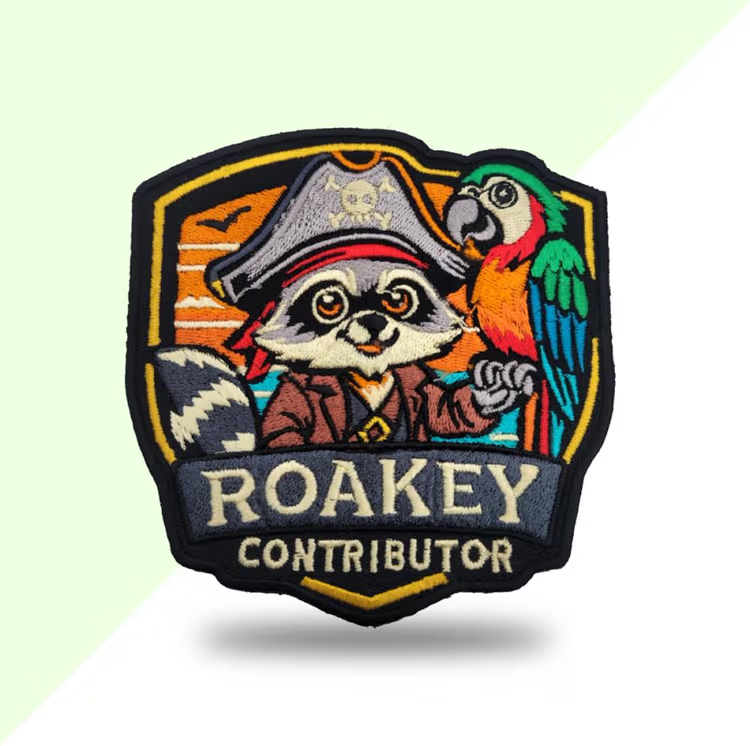
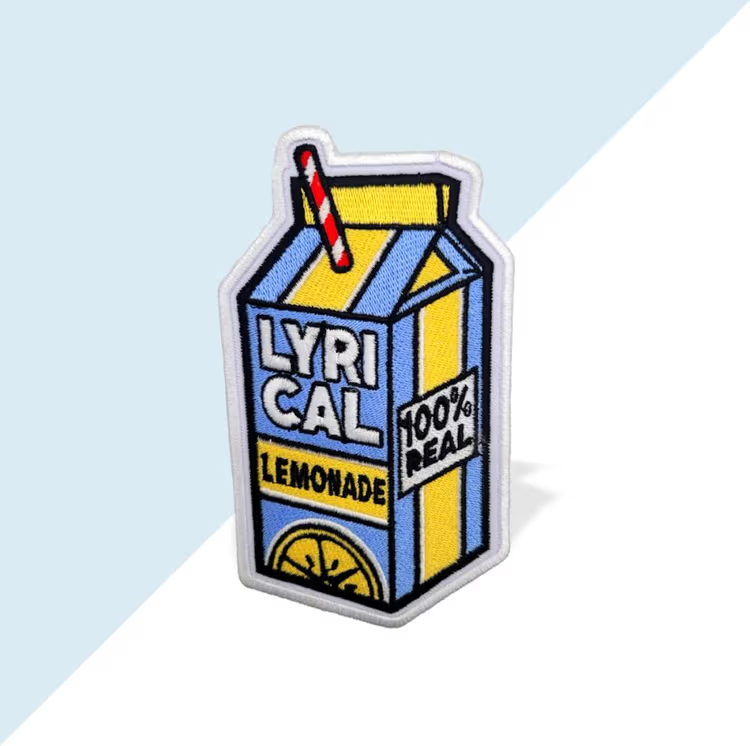
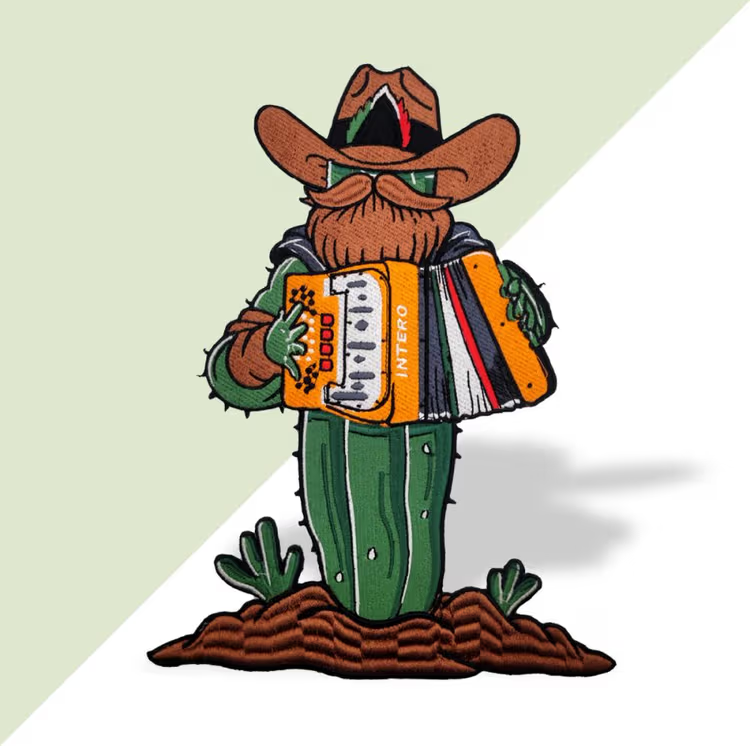
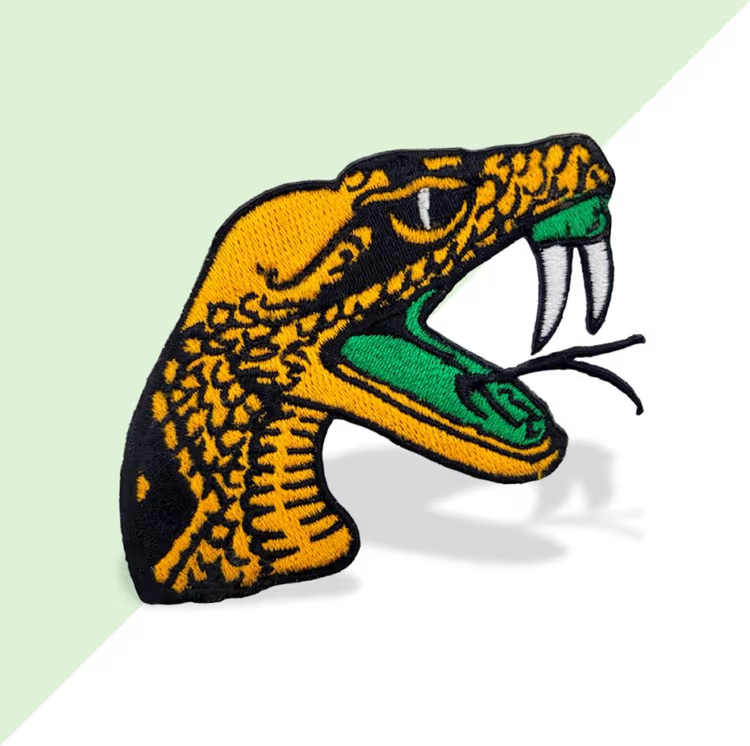
Custom embroidered patches are decorative or identification patches created by stitching colored threads onto a fabric backing. Unlike woven, printed, or PVC patches, embroidered patches use raised thread to form the design, giving them a classic, textured, three-dimensional appearance that has been trusted for decades.
The process involves digitizing a design into a format that embroidery machines can read. The machine then stitches the design onto a backing fabric (typically twill, felt, or polyester) using high-strength polyester or rayon threads. The result is a durable, professional-looking patch with a distinct raised feel.
Embroidered patches are the most traditional and widely recognized patch type. They are used for uniforms, corporate branding, sports teams, military insignia, clubs, and personal collections. Their durability, classic look, and cost-effectiveness make them the go-to choice for most patch applications.
Key Features of Custom Embroidered Patches
Custom embroidered patches offer a unique set of features that have made them the industry standard for decades.
Classic Textured Look – The raised thread creates a dimensional, handcrafted appearance that printed or woven patches cannot replicate.
Durable Construction – High-quality polyester thread resists fading, fraying, and wear. Embroidered patches can last for years, even with regular washing.
Professional Appearance – The traditional embroidered look conveys quality and attention to detail, making it popular for corporate and military applications.
Wide Color Range – Thread is available in hundreds of colors, including Pantone-matched shades. Metallic and neon threads are also available.
Multiple Border Options – Choose from merrowed (overlocked thread edge), laser-cut, stitched, or no border.
Various Backing Choices – Sew-on (traditional), iron-on (DIY friendly), Velcro (interchangeable), or adhesive (temporary).
Custom Shapes – Any shape – circle, oval, rectangle, shield, or custom die-cut – can be embroidered.
3D Puff Option – Foam can be placed under specific thread areas to create a raised, puffy 3D effect, popular for hats and sports logos.
Cost-Effective for Medium to Large Quantities – Once digitizing is complete, embroidered patches are very economical at quantities of 100+ pieces.
Most Popular Custom Embroidered Patch Styles
Custom embroidered patches come in many styles. Here are the most common variations.
By Border Type
Merrowed Border – The most traditional and popular border for embroidered patches. A tight overlocked thread edge wraps around the entire patch. Durable, clean, and professional. Best for standard shapes (circle, oval, shield, rectangle).
Laser-Cut Border – A sealed edge created by a laser. No thread border. Clean and modern. Ideal for custom die-cut shapes that follow the design outline.
Stitched Border – A simple satin stitch around the edge. Softer than merrowed. Good for patches that will be sewn onto fabric where a thick merrowed edge might be too bulky.
No Border – The design goes to the edge of the fabric. Best for patches sewn directly into a seam or hem.
By Shape
Standard Shapes – Circle, oval, rectangle, square, and shield. These are the most economical because they use standard cutting dies.
Custom Die-Cut Shapes – The patch is cut precisely along the outline of the design. For example, a patch shaped exactly like a state, animal, or logo. More expensive due to custom tooling but creates a unique, professional look.
By Backing Type
Sew-On Backing – The patch has no adhesive. It is sewn directly onto the garment. Most durable and professional. Standard for uniforms and workwear.
Iron-On Backing – A heat-activated adhesive is pre-applied to the back. The patch bonds to fabric using a household iron. Easy DIY application. Less durable than sew-on.
Velcro Backing – Hook (scratchy) Velcro is attached to the back. Attaches to loop panels on tactical gear, backpacks, or uniforms. Interchangeable and reusable.
Adhesive Backing – Peel-and-stick adhesive for temporary attachment. Least durable. Best for samples or low-wear situations.
By Finish
Flat Embroidery – Standard embroidery where the thread lies flat against the backing. Most common.
3D Puff Embroidery – A layer of foam is placed under specific thread areas (usually text or bold shapes). The foam raises the thread, creating a puffy, three-dimensional effect. Very popular for hat patches, sports logos, and bold lettering.
What Are Custom Embroidered Patches Commonly Used For?
Custom embroidered patches are used across nearly every industry and application.
Corporate Uniforms and Workwear
Company logo patches on employee uniforms, polo shirts, and jackets. Creates brand consistency and professional appearance. Sew-on backing is standard for durability.
Military and Law Enforcement
Unit insignia, rank patches, flag patches, and name tapes. Embroidered patches are traditional for dress uniforms; Velcro-backed embroidered patches are used on combat uniforms. Subdued colors (olive, coyote, black) are required for tactical use.
Sports Teams and Clubs
Team logos, mascot patches, championship patches, and player name patches on jerseys, jackets, and bags. 3D puff embroidery is very popular for sports logos, especially on hats.
Youth Organizations (Scouts, 4-H, etc.)
Achievement badges, rank patches, event patches, and uniform insignia. Embroidered patches are durable enough to withstand outdoor activities and frequent washing.
Fraternities and Sororities
Greek letter patches for jackets, sweatshirts, and bags. Often large, bold, and embroidered in the organization's colors.
Branding and Promotional Merchandise
Brand patches for bags, backpacks, hats, and apparel sold as merchandise. Embroidered patches add perceived value and a premium feel.
Personal and Hobby Use
Custom patches for denim jackets, battle jackets, backpacks, and craft projects. Iron-on backing is popular for DIY application.
Awards and Recognition
Employee of the month patches, service anniversary patches, and achievement recognition. Often combined with metallic gold or silver thread for a premium look.
How to Design Custom Embroidered Patches That Get Noticed
Designing for embroidery requires understanding the limitations and strengths of thread. Follow these guidelines for best results.
Design Guidelines
Keep it simple – Embroidery works best with bold, chunky shapes. Avoid very fine lines or intricate details that may blur in thread.
Minimum text height: 4–5mm (about 0.16–0.2 inches) – Smaller text may become illegible. Sans-serif fonts (Arial, Helvetica) work better than serif fonts (Times New Roman).
Minimum line thickness: 1.5mm – Thin lines may break or become uneven in embroidery.
Avoid small, isolated details – Tiny dots, stars, or fine accents may not stitch cleanly.
Use vector files – AI, PDF, CDR, or SVG formats are essential. Provide Pantone colors for accurate thread matching.
Limit the number of colors – Each thread color adds cost and production time. 3–6 colors is ideal. 8+ colors is possible but more expensive.
Leave a minimum 1.5–2mm margin between design elements to prevent colors from bleeding into each other.
Consider a border – A merrowed or stitched border frames the design, prevents fraying, and gives a professional finish.
3D Puff Design Tips
Best for bold text, thick lines, and simple shapes.
Foam height is typically 3–5mm.
Not suitable for fine details or small text.
Works best with sans-serif fonts and chunky logos.
Color Selection
Provide Pantone (PMS) colors for the most accurate thread matching.
Be aware that thread colors may appear slightly different from screen colors due to texture and lighting.
Request a thread color card from your manufacturer before ordering.
Common Design Mistakes to Avoid
Using gradients or photographs (impossible in embroidery)
Text that is too small (under 4mm)
Lines that are too thin (under 1.5mm)
Too many colors (drives up cost)
Isolated details that will float without connecting thread
How Custom Embroidered Patches Are Made
The manufacturing process for embroidered patches involves several steps, from digitizing to final cutting.
Step 1: Digitizing
The most critical step. A skilled digitizer converts your vector design into a digital embroidery file (DST, PES, EXP, etc.). This file tells the embroidery machine exactly where to place each stitch, which direction to stitch, and what thread colors to use. Poor digitizing results in puckered, misaligned, or ugly patches.
Step 2: Thread and Backing Selection
Thread colors are selected to match your design. Backing fabric (typically twill, felt, or polyester) is chosen. Twill is most common for its durability and clean appearance.
Step 3: Machine Setup
The embroidery machine (multi-head machine with 4–20 heads) is loaded with the thread colors. The backing fabric is hooped or loaded onto a continuous roll.
Step 4: Embroidery
The machine stitches the design onto the backing fabric. Multiple patches are embroidered in a large sheet or continuous strip. A 3-inch patch typically takes 5,000–15,000 stitches. Complex designs with high stitch counts take longer.
Step 5: Heat Pressing (Optional)
The embroidered sheet is heat-pressed to flatten the stitches, remove wrinkles, and shrink the backing fabric slightly. This gives the patches a flat, professional appearance.
Step 6: Border Application
For merrowed border: A specialized merrowing machine wraps thread tightly around the edge of each patch. The machine cuts the patch free from the sheet.
For laser-cut border: A laser cutter precisely cuts around each patch, sealing the edge.
For stitched border: The border was stitched during the embroidery step. Patches are cut by hand or with a die.
Step 7: Backing Attachment
Sew-on backing: No additional material needed.
Iron-on backing: A heat-seal adhesive film is applied to the back using a heat press.
Velcro backing: Hook-and-loop material is glued or heat-sealed to the back.
Adhesive backing: Peel-and-stick paper is applied.
Step 8: Quality Inspection
Each patch is checked for:
Missing or broken stitches
Color accuracy
Border defects (uneven merrowed edge)
Backing adhesion
Correct shape and size
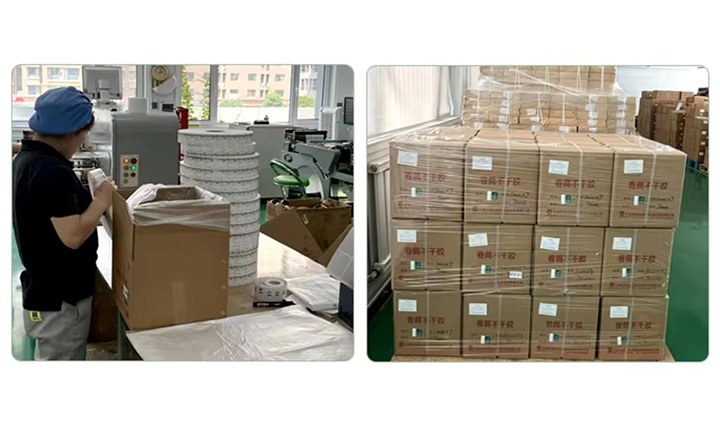
Step 9: Packaging
Approved patches are counted and packaged according to customer requirements.
Price of Custom Embroidered Patches
The price of custom embroidered patches depends on several factors. Understanding these will help you get the best value.
Key Price Factors
Size – Larger patches cost more because they require more thread, more stitches, and more machine time. A 4-inch patch costs significantly more than a 2-inch patch.
Stitch count – The number of stitches directly affects production time and cost. Simple designs (low stitch count) are cheaper. Dense, detailed designs (high stitch count) cost more.
Number of colors – Each thread color requires the machine to stop and change threads (or switch heads). More colors = more time = higher cost.
Quantity – The most important factor. Unit price drops dramatically as quantity increases. The biggest drop is between 50–500 pieces.
Border type – Merrowed border costs slightly more than laser-cut or stitched border due to the extra machine step.
Backing type – Sew-on is cheapest. Iron-on adds a small per-piece cost. Velcro adds a moderate per-piece cost.
3D puff – Adds a premium due to the foam material and additional setup.
Digitizing fee – A one-time fee (typically moderate) to convert your design into an embroidery file. You pay this once, even if you reorder.
A General Price Indication
For a typical 3-inch round custom embroidered patch with 4 colors, merrowed border, and sew-on backing:
Digitizing fee: One-time moderate fee
Small quantity (50–100 pieces): Higher per-piece cost (mold/digitizing spread over few pieces)
Medium quantity (250–500 pieces): Very affordable per patch – roughly equivalent to a coffee drink
Large quantity (1,000+ pieces): Very low per-piece cost – pennies per patch
Adding iron-on backing adds a small per-piece premium. Adding Velcro backing adds a moderate per-piece premium. 3D puff adds a premium per piece.
Price Comparison with Other Patch Types
| Patch Type | Cost for Simple Design (3 colors) | Cost for Complex Design (8+ colors) |
|---|---|---|
| Embroidered | Low-Moderate | Moderate-High (each color adds cost) |
| Woven | Moderate | Moderate (colors have minimal impact) |
| Printed | Low-Moderate | Low (colors have no impact) |
| PVC | Moderate-High | Moderate-High (mold fee, colors minimal impact) |
How to Get an Accurate Quote
Send the following to a reputable patch manufacturer:
Your design file (vector: AI, PDF, CDR, SVG)
Desired dimensions (e.g., 3 inches round, 4 inches wide)
Target quantity (e.g., 250 pieces, 1,000 pieces)
Number of colors and Pantone codes
Border preference (merrowed, laser-cut, or stitched)
Backing type (sew-on, iron-on, or Velcro)
3D puff? (yes/no)
How to Choose Your Custom Patches?
With so many patch types available – embroidered, woven, printed, PVC, leather, chenille – how do you choose? Here is a decision guide.
Choose Embroidered Patches If:
You want a classic, traditional, textured look.
Your design is simple to moderately complex (bold shapes, solid colors, limited text).
You need durability for uniforms, workwear, or items that will be washed frequently.
You are ordering medium to large quantities (100+ pieces).
You want a merrowed (thread) border – only embroidered patches can have this traditional edge.
You want 3D puff (raised foam) effects.
Choose Woven Patches If:
Your design has very small text or fine details.
You need a very thin, flat patch (e.g., for dress shirts or lightweight fabric).
You want unlimited colors with no per-color cost increase.
Choose Printed Patches If:
Your design has gradients, photographs, or unlimited colors.
You need a low-cost option for small quantities.
You want a lightweight, flexible patch.
Choose PVC Patches If:
You need a waterproof, weather-resistant patch.
You want a modern, rubbery 3D look.
The patch will be used on tactical gear, outdoor equipment, or in wet environments.
Choose Leather Patches If:
You want a rugged, premium, vintage look.
The patch is for denim, bags, hats, or outdoor apparel.
You want debossed (stamped) or laser-engraved details.
Choose Chenille Patches If:
You want a soft, fuzzy, varsity-style patch.
The patch is for a letterman jacket, sports apparel, or retro fashion.
Backing Decision Guide:
Sew-on – Most durable, professional, permanent. Best for uniforms, workwear, military.
Iron-on – Easy DIY application. Best for personal projects, casual wear, small batches.
Velcro – Interchangeable, removable. Best for tactical gear, collectors, multiple patch sets.
Adhesive – Temporary. Best for samples or low-wear situations.
Quantity Decision Guide:
Under 50 pieces – Printed patches or iron-on transfers may be more economical than embroidery due to digitizing fees.
50–250 pieces – Embroidered patches become cost-effective. The digitizing fee is spread over enough pieces.
250–1,000 pieces – Embroidered patches offer excellent value.
1,000+ pieces – Very low per-piece cost. Great for bulk uniform programs or merchandise.
Packaging Options for Custom Embroidered Patches
Proper packaging protects patches during shipping, storage, and distribution.
Individual Poly Bags
Each patch is placed in a separate clear poly bag. Prevents scratching, dust, and (for Velcro-backed patches) sticking to other patches. Standard for most orders. Easy to distribute to employees or customers.
Backing Cards
Patches are attached to custom-printed cards (usually with a clear plastic sleeve). The card can display your logo, care instructions, or branding. Ideal for retail sales, merchandise, or presentation-quality patches.
Bulk Cartons with Tissue Paper
For large orders of identical patches, patches are packed flat in sturdy cartons with tissue paper layers between each layer of patches. Prevents scratching and friction damage. Economical for bulk orders.
Header Cards
Patches are attached to cards with a hanging hole. Designed to hang on peg hooks in retail stores, trade show booths, or craft fairs.
Velcro Display Boards
For Velcro-backed patches, patches can be shipped already attached to Velcro-compatible display boards. Popular for collectors, patches sold as sets, or tactical gear retailers.
Kraft Paper Envelopes
For smaller quantities, patches can be shipped in rigid kraft paper envelopes with a cardboard stiffener. Eco-friendly option.
Packaging Tips for Bulk Orders with Multiple Designs
If you order multiple different patches (different colors, different logos, or different names), ask your manufacturer to individually bag each patch and label the bags. This saves hours of sorting time.

